Reading guide
Content guideOverview
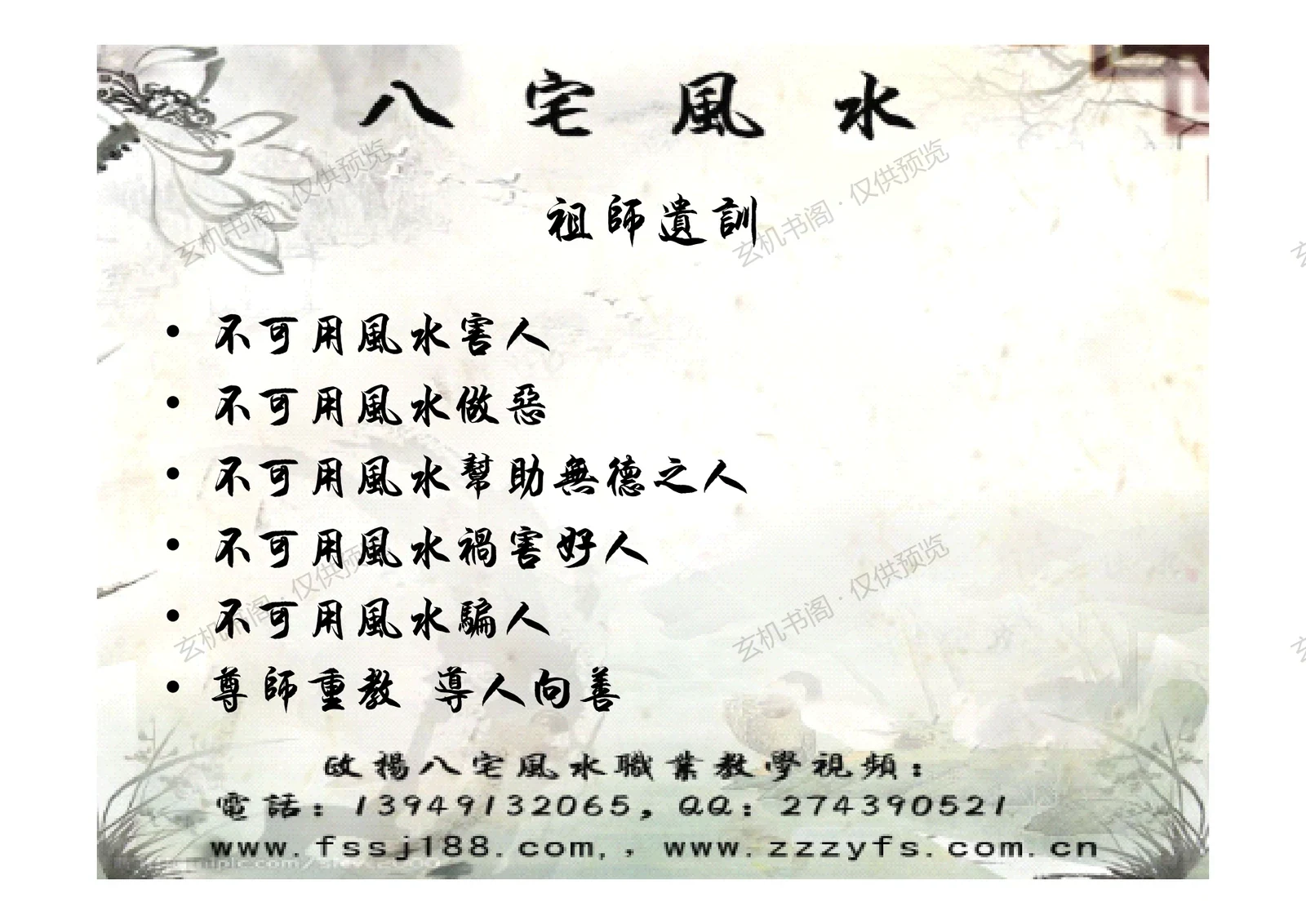
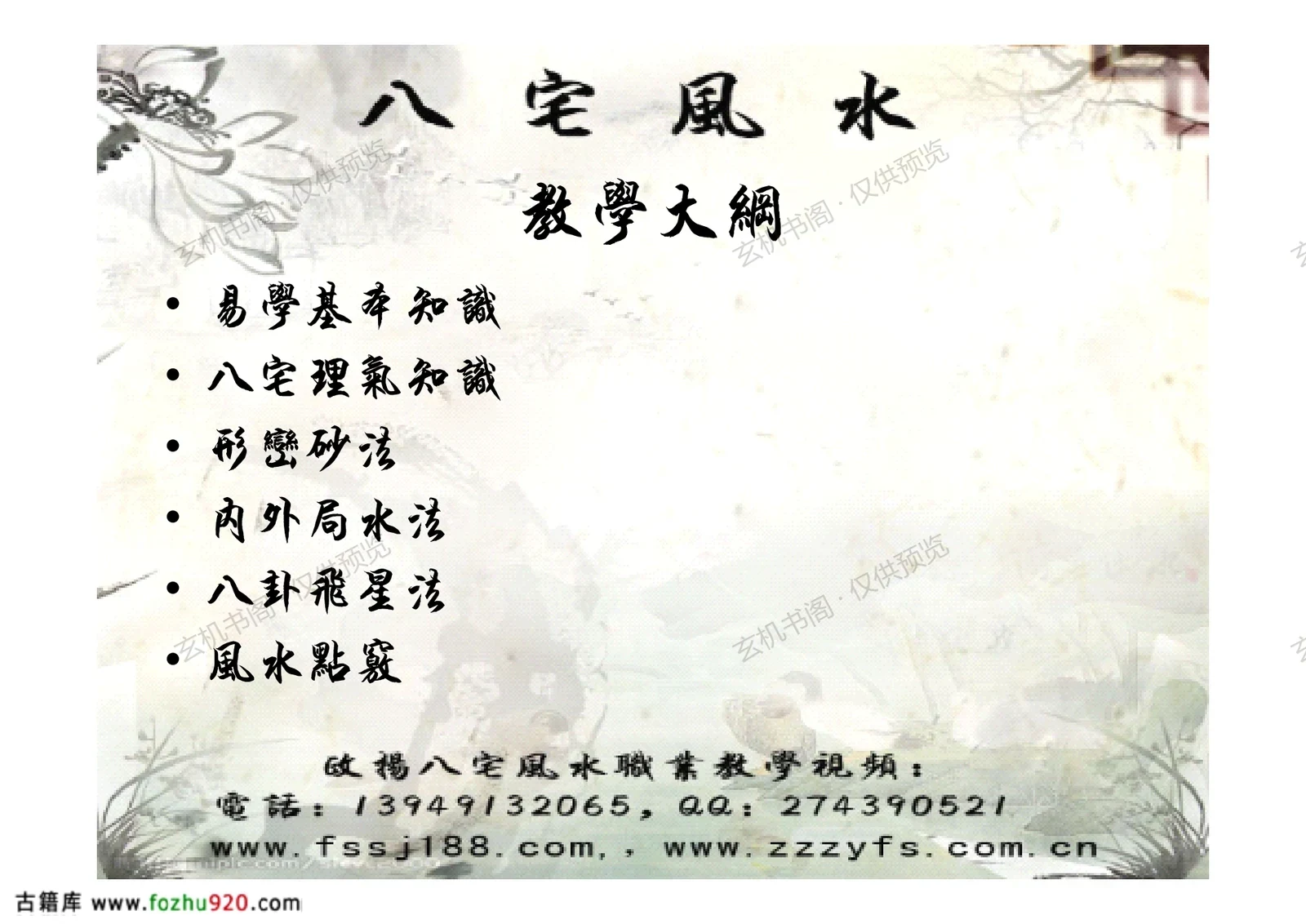
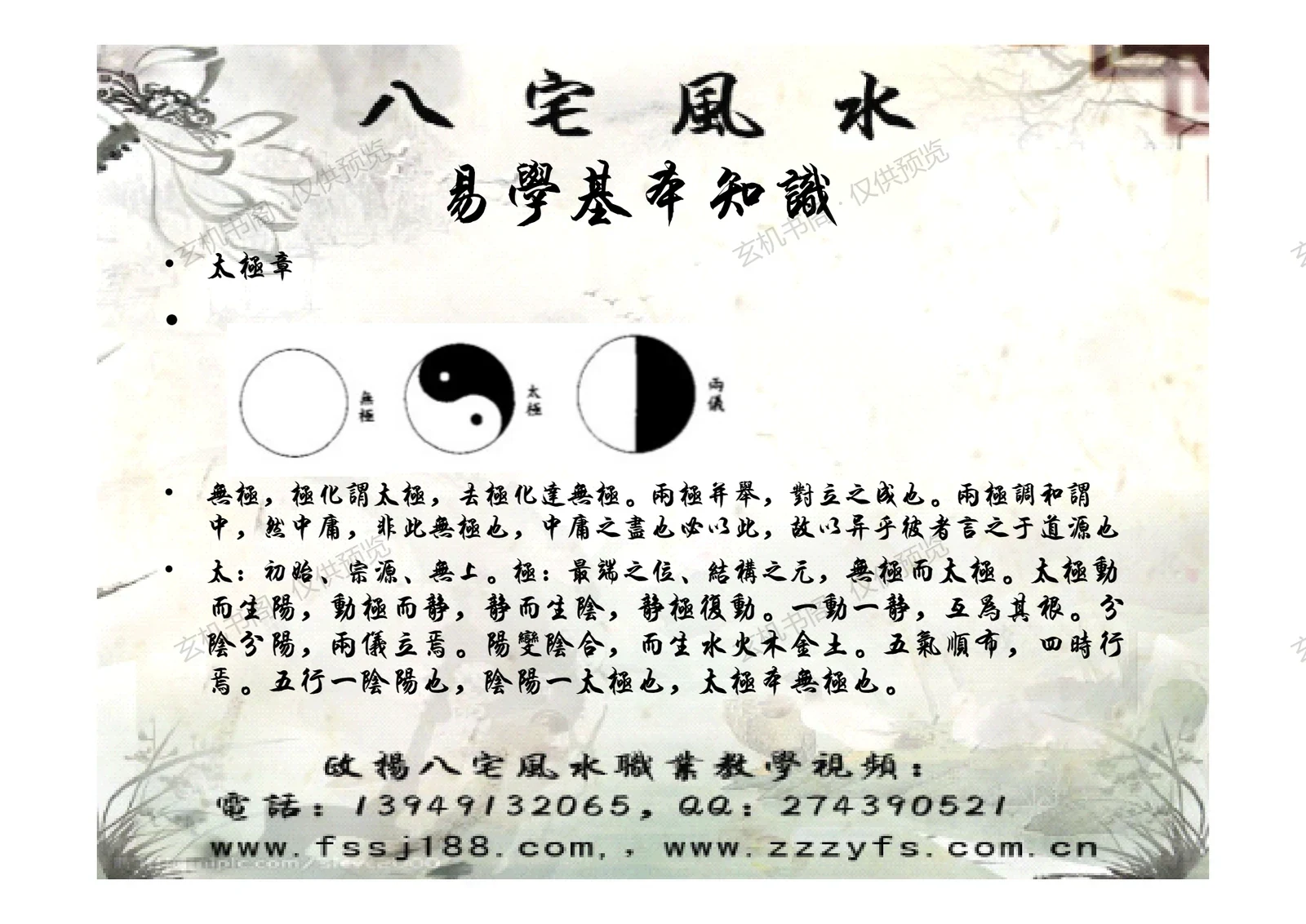
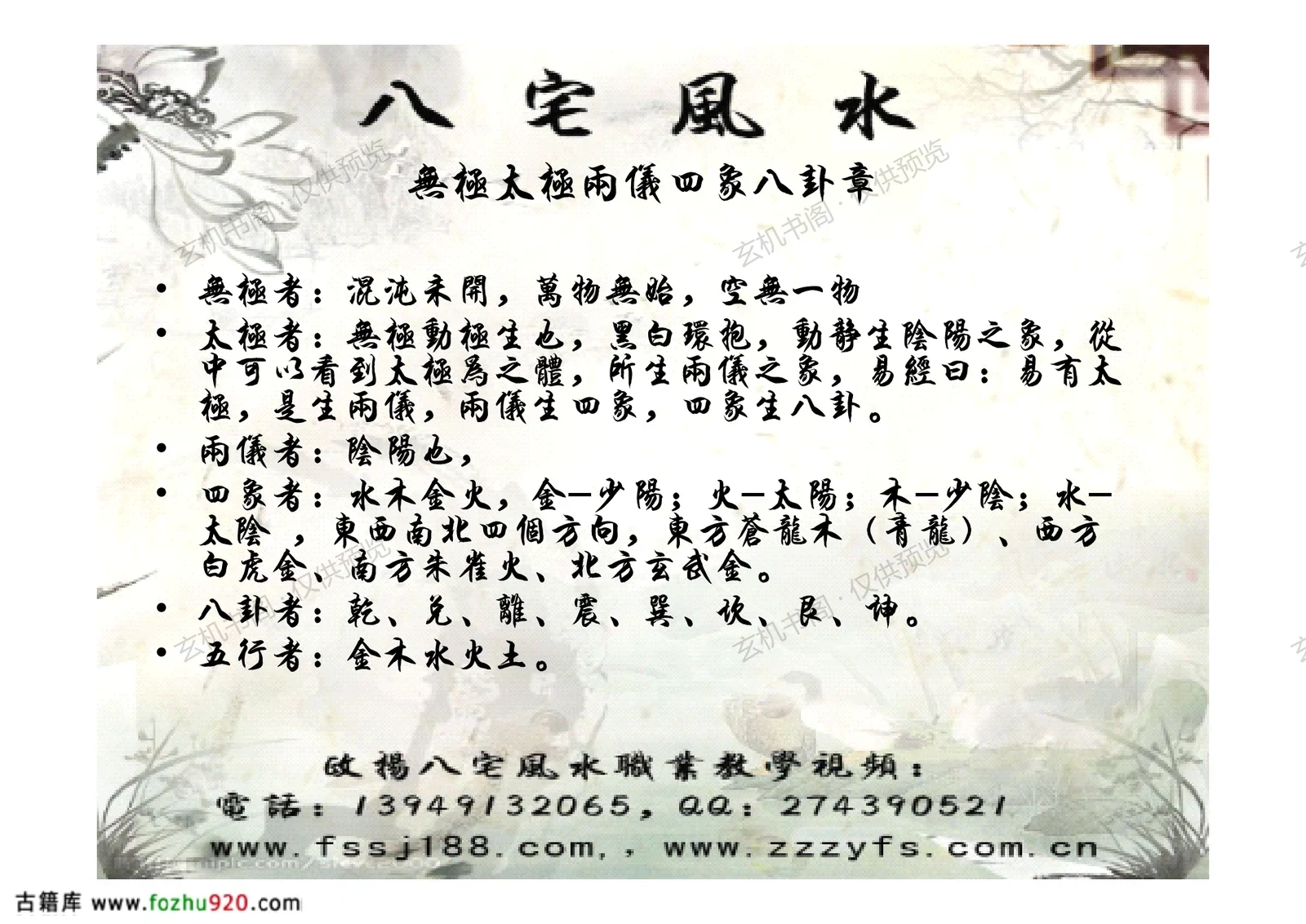
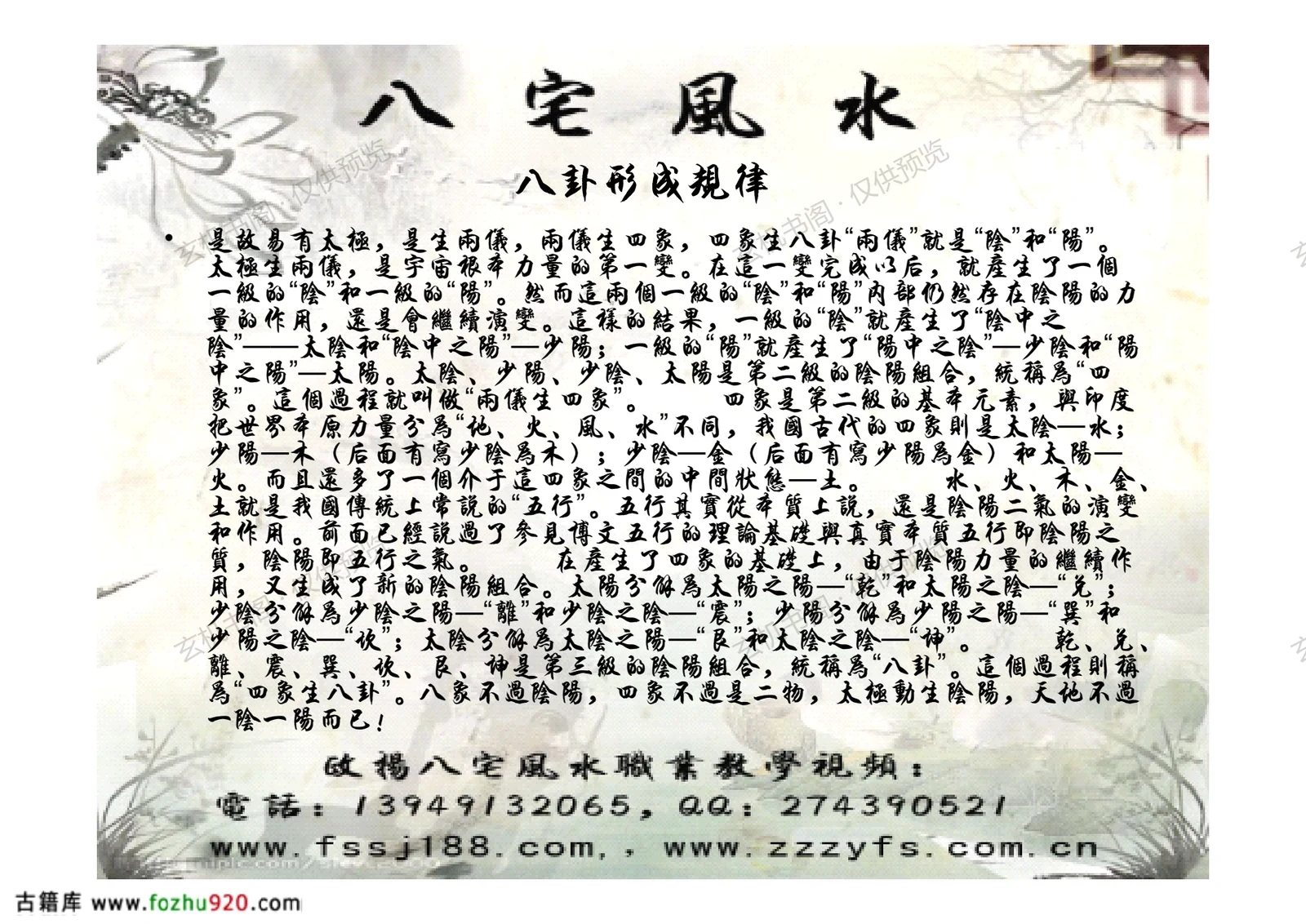
This is an Eight Mansions (Bazhai) feng shui teaching handout. The first page introduces Xu Zhengyang as a transmitter of Bazhai feng shui and lists his teaching and publication background. The second page presents the founder's precepts, six ethical rules forbidding the misuse of feng shui to harm others, assist the unvirtuous, or deceive people. The third page gives the teaching outline: basic Yijing knowledge, Bazhai theory, form and sand methods, interior and exterior water methods, bagua flying star methods, and feng shui key points. The remaining pages begin the main text with the Taiji chapter, using diagrams of Wuji, Taiji, and Liangyi to explain yin-yang generation, then a chapter on Wuji, Taiji, Liangyi, Sixiang, and Bagua, explaining their correspondences with the five phases and detailing the generative sequence from Taiji to Liangyi, Sixiang, and Bagua. The handout offers an introductory path from Yijing principles to the operational framework of Bazhai feng shui.
Contents
Instructor Xu Zhengyang's profile and experience
Founder's precepts: ethical rules for feng shui practitioners
Teaching outline: six course modules
Basic Yijing knowledge: the Taiji chapter
Wuji, Taiji, Liangyi, Sixiang, and Bagua chapter
Detailed explanation of how the Bagua is formed
Key Points
Starts Bazhai feng shui from Taiji and yin-yang theory
Outline covers theory, form, water methods, flying stars, and applications
Founder's precepts stress professional ethics and benevolence
Explains the generative logic from Taiji to Liangyi, Sixiang, and Bagua
Maps Sixiang to the five phases, four directions, and four symbols