Reading guide
Content guideOverview
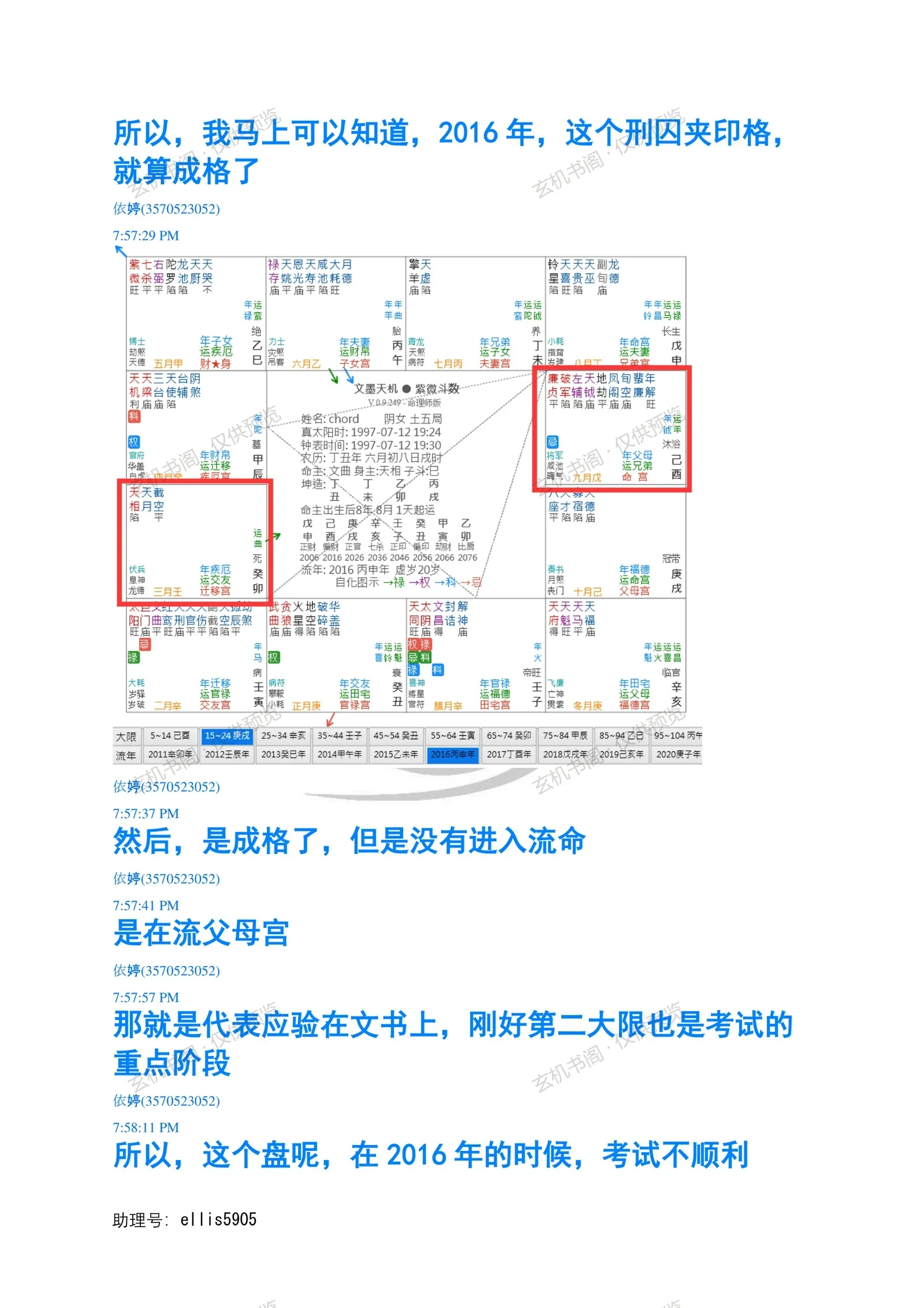
This is a handout from the 13th exercise session of a Ziwei Doushu (Purple Star Astrology) systematic course, led by instructor Yiting. It opens with a real chart and its decade/year tables, then walks through the reasoning step by step: first identifying that Lianzhen, Tianxiang and Qingyang already sit together as a latent structure, then noting that a Hua Ji must activate it to complete the Xingqiu Jia Yin (punishment-and-confinement clamping the seal) pattern. The handout checks where Qingyang falls within the second decade, uses the Bing-stem four-transformation table to confirm Lianzhen Hua Ji, and applies a stem-to-year-digit table to narrow the timing to 2016 (Bing-Shen). It stresses memorizing both tables so timing can be read quickly, and shows how annual, decade, natal-year and annual-parents palaces locate the event, ending with an exam/document-related manifestation. The material is practice-oriented, linking pattern, Hua Ji and timing into one chain, and suits students who already know the basic stars and four transformations and want to rehearse real chart judgments.
Contents
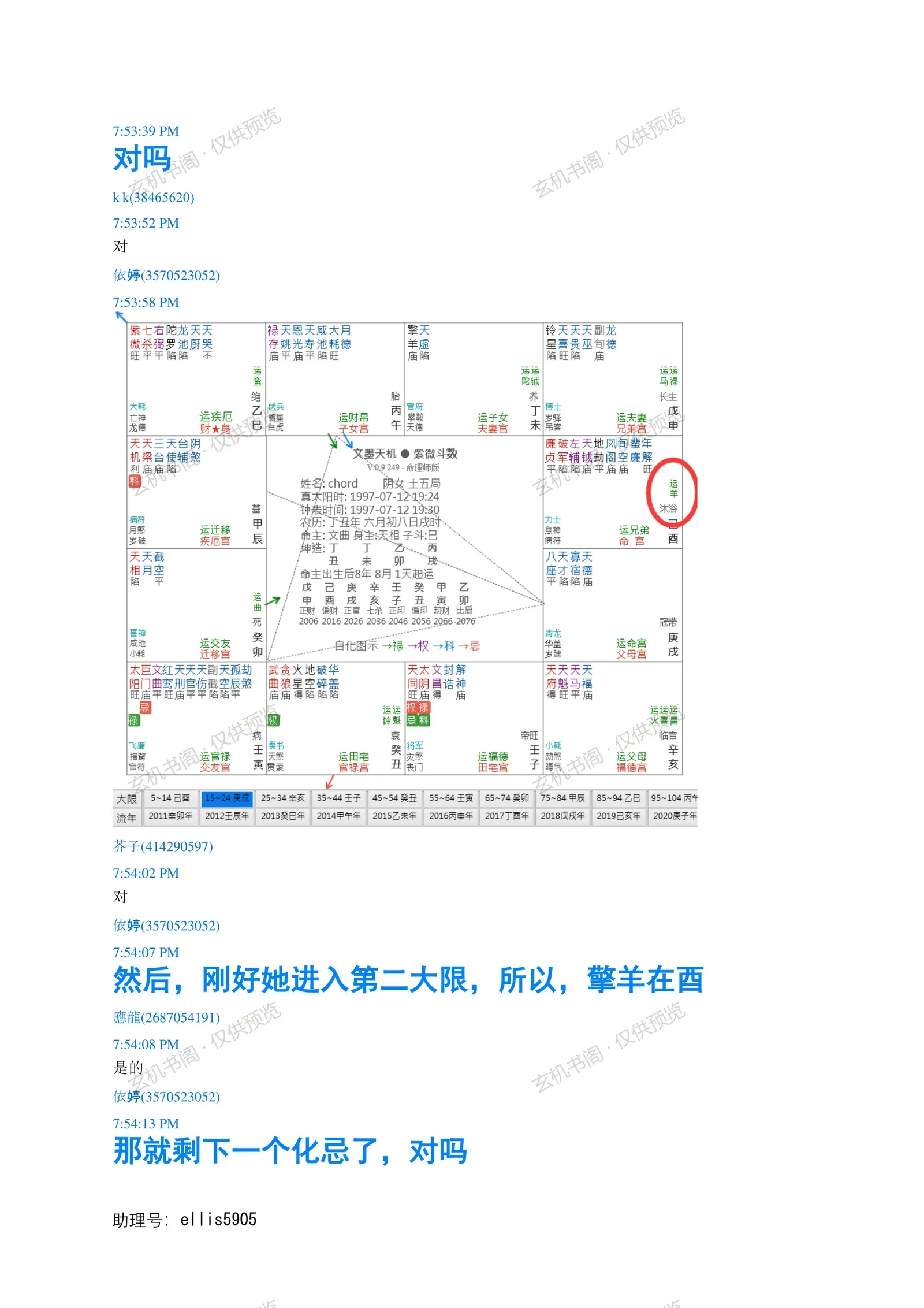
Chart and client data overview
Latent structure: Lianzhen, Tianxiang, Qingyang
Hua Ji activating the Xingqiu Jia Yin pattern
Locating Qingyang in the second decade
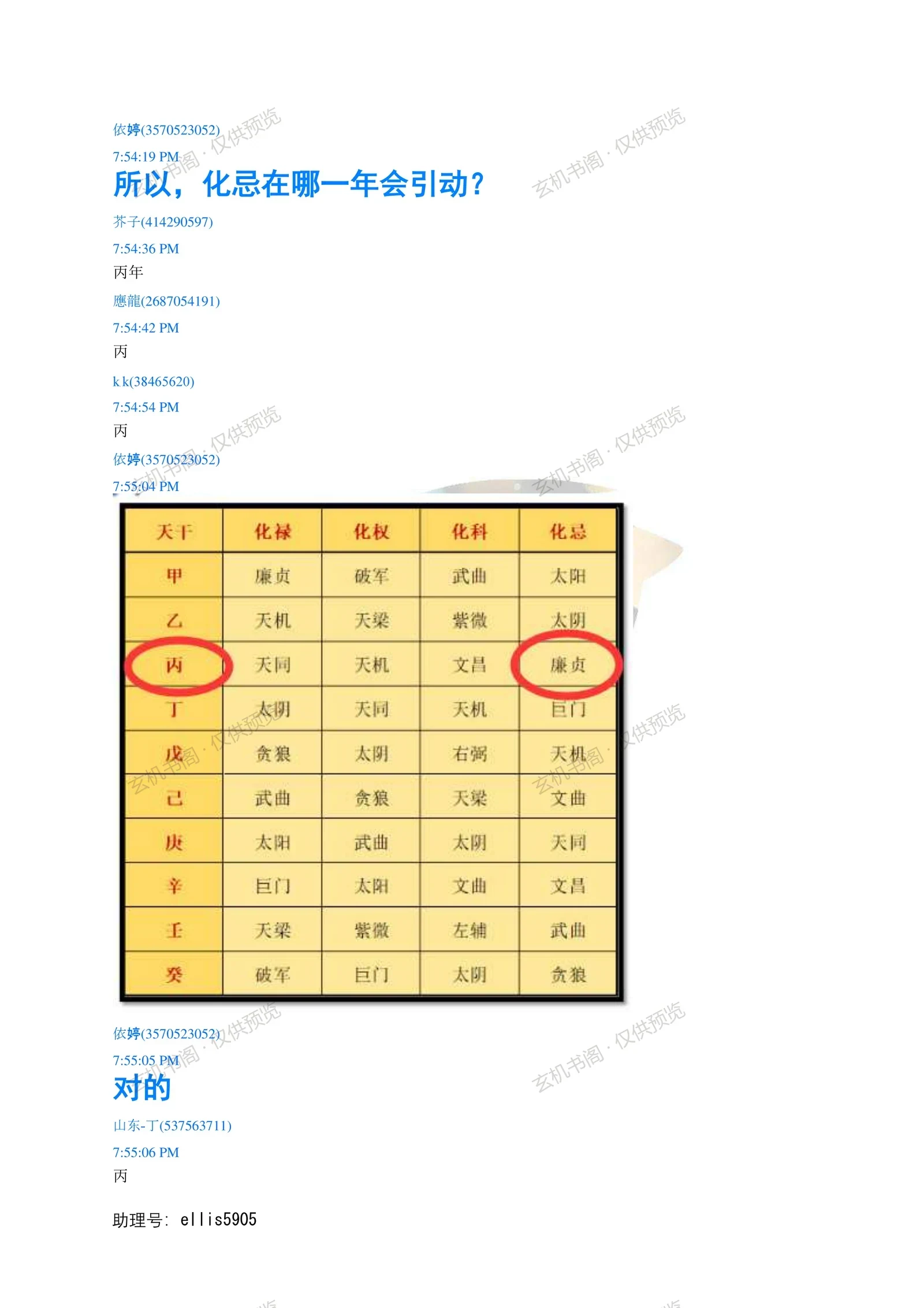
Bing-stem four transformations and Lianzhen Hua Ji
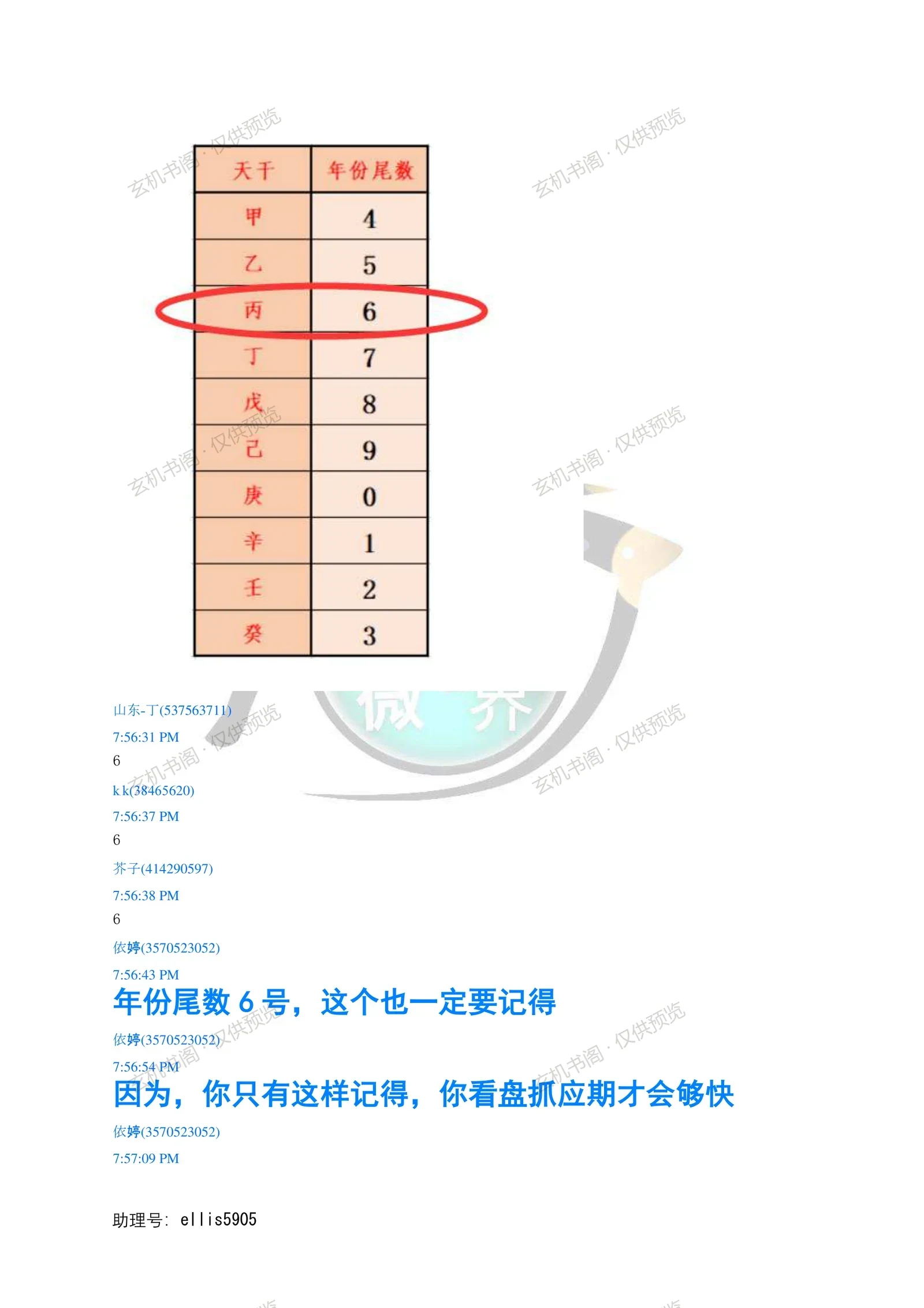
Stem-to-year-digit reference table
Timing at 2016 Bing-Shen and palace placement
Key Points
The pattern exists latently and needs Hua Ji to trigger it
Bing stem: Tiantong Lu, Tianji Quan, Wenchang Ke, Lianzhen Ji
Bing years end in digit 6, giving fast timing lookup
Judge by combining annual, decade, annual-life and annual-parents palaces
Memorizing the transformation and digit tables speeds up chart reading