Reading guide
Content guideOverview
This is a transcript of a Zi Wei Dou Shu class session on auspicious patterns. It first sets the rule that a pattern counts as proper only when auspicious stars gather without malign stars breaking through, and that clashes from sha or ji turn it into a broken pattern. It then lists three ways a pattern is activated: chart placement, the four transformations, and human arrangement such as cooperating with someone born in a certain year. The main example is the Three Wonders gathering, where hua lu, hua quan and hua ke meet across the three directions and four positions; those born with it fare better and it recurs roughly every three years, while versions supplied by major or annual limits are short-lived. The text compares hua lu to joy, hua quan to driven effort and hua ke to cultivated presentation, and asks whether a hua ji caught inside the pattern breaks it, suggesting treating the ji as a separate event from the auspicious pattern. It also uses Ming Zhu Chu Hai and Tai Yin with Qing Yang as examples of broken patterns.
Contents
General rule: auspicious stars gathered, no sha clash
Three activators: placement, four transformations, human effort
Wealth pattern and the annual wealth line
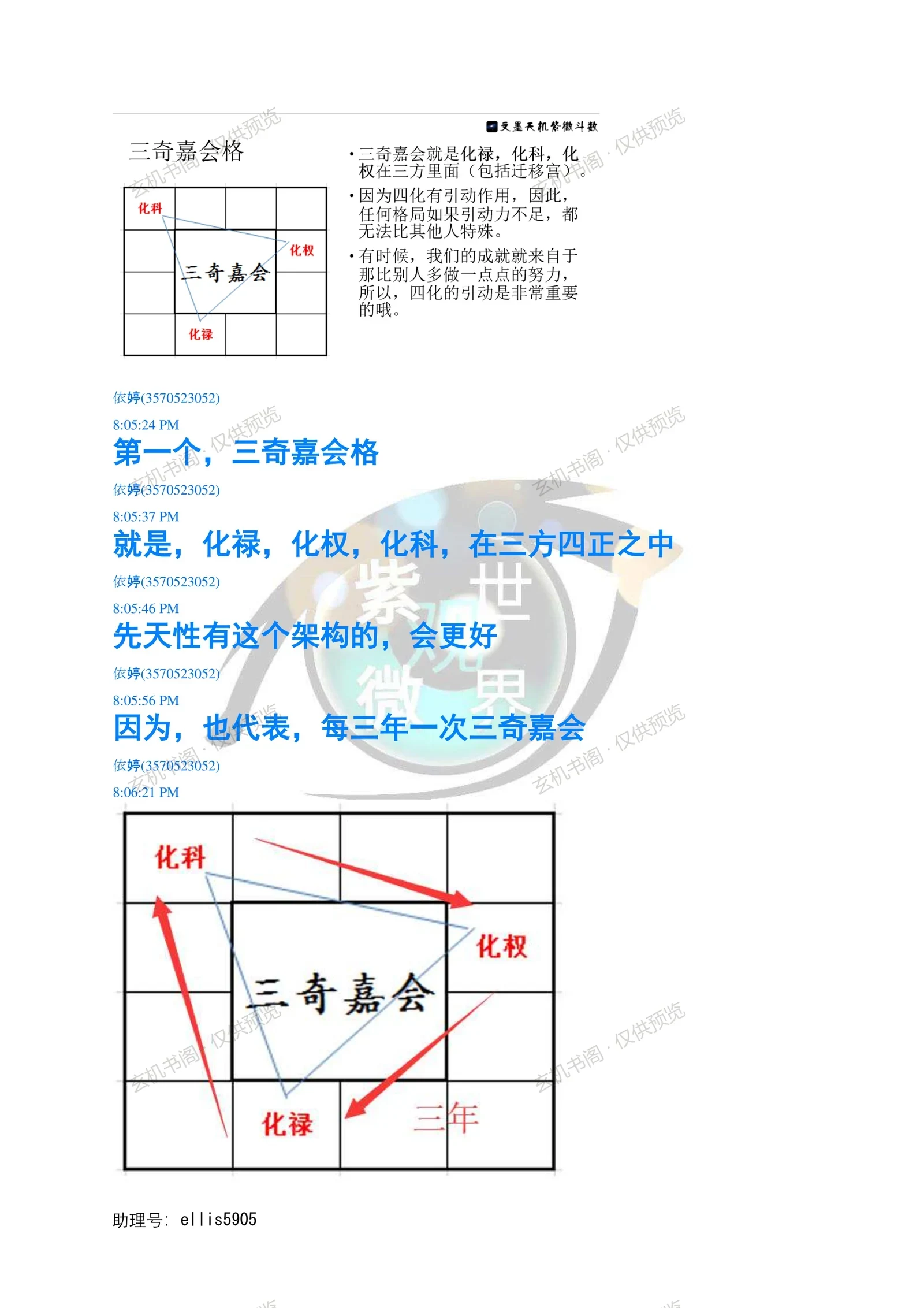
Three Wonders: lu, quan, ke in the three directions
Timing effects and psychological analogies
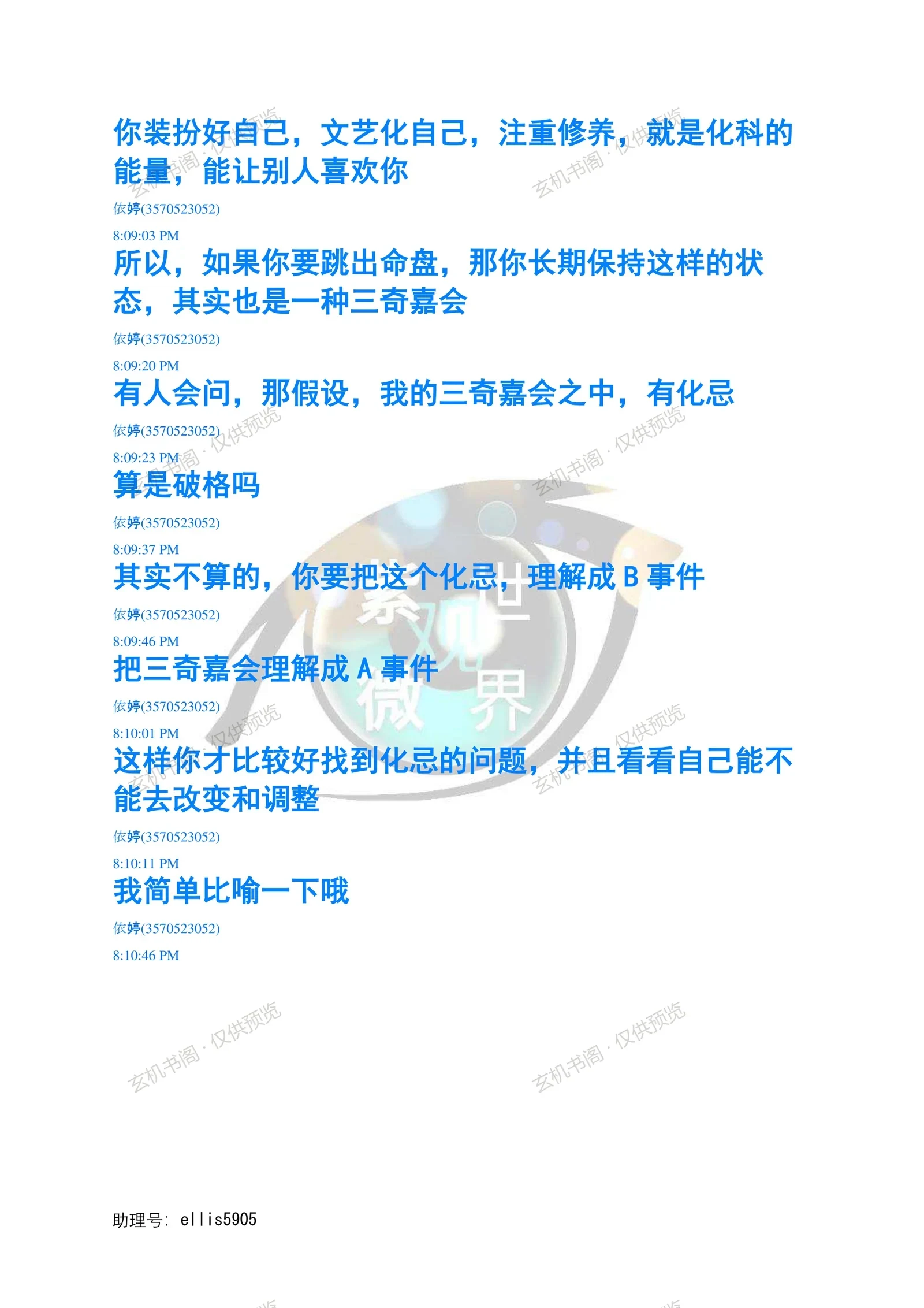
Does a hua ji inside the pattern break it?
Broken-pattern examples
Key Points
A proper pattern needs auspicious stars without sha clash; ji or sha breaks it.
Patterns are activated by placement, four transformations, or human cooperation.
The Three Wonders means lu, quan and ke meeting in the three directions and four positions.
Versions supplied by limits fade once the limit passes.
A hua ji need not automatically break the pattern; treat it as a separate event.