Reading guide
Content guideOverview
This handout compiles a Zi Wei Dou Shu flying-star system class centered on ji-chong (taboo clash). It first explains how clashes among the Life, Spouse, and Parents palaces form divorce patterns, then extends to the Health palace borrowing stars and the effect of Parents clashing Health on marriage. The middle section treats separation from family: Life clashing Property, Tong-Yin in Travel, and Tai Yin in the opposite palace all indicate living away or seeing family rarely. The final section distinguishes an empty Spouse palace from kong-jie sitting there: an empty palace means the partner is not nearby, and the palace stem's flying star reveals the nature of the opposite palace, with peach-blossom stars indicating affairs and career stars like Wu Qu indicating work away. Kong-jie means the person is present but the relationship feels hollow. Numerous square-chart diagrams and classroom Q&A accompany the text, making it intermediate-level flying-star material.
Contents
Ji-chong without affinity: fate analysis and yearly limits
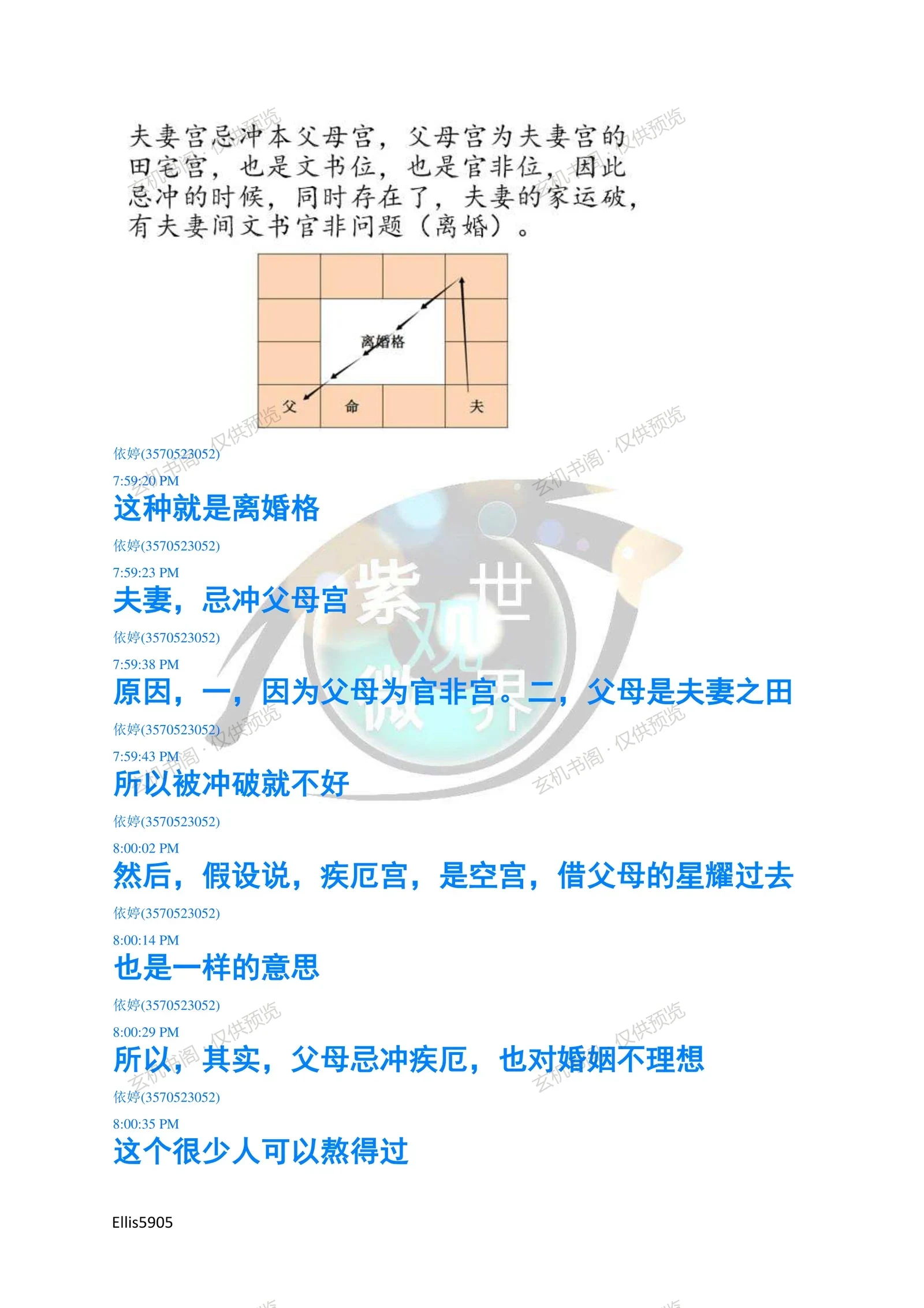
Spouse clashing Parents: the divorce pattern
Parents clashing Health: further marital trouble
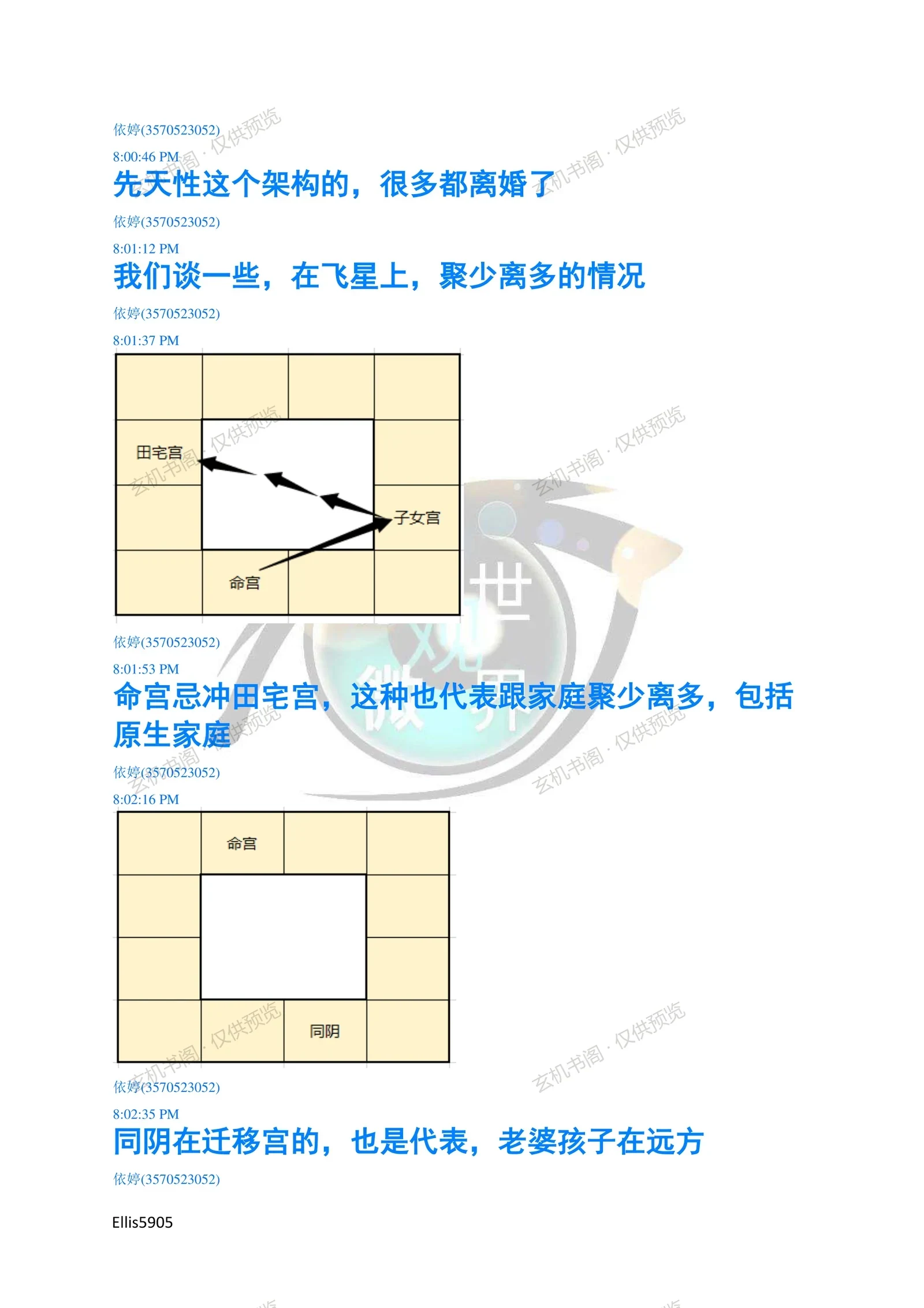
Life clashing Property: separation from family
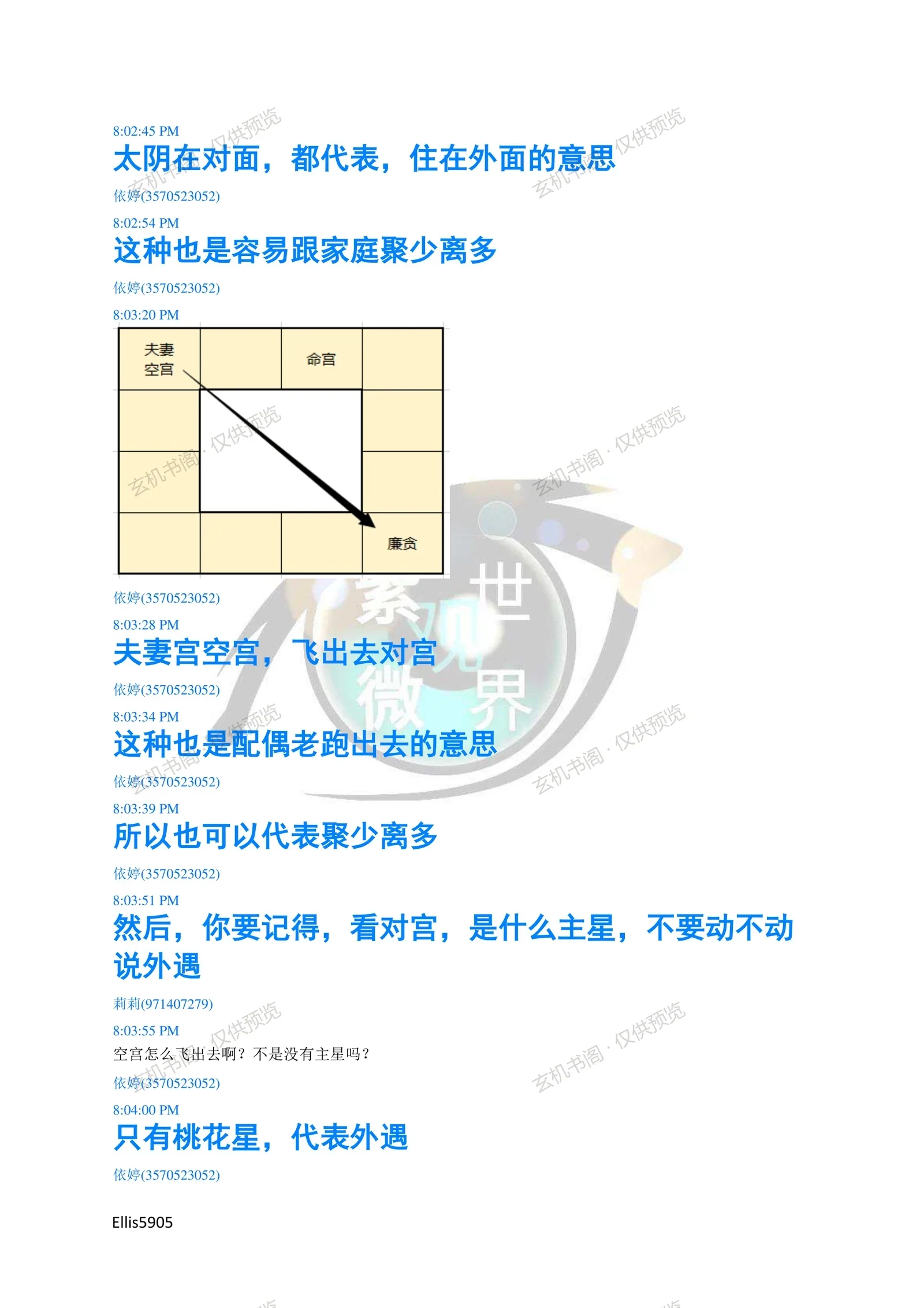
Tong-Yin in Travel and Tai Yin opposite: living away
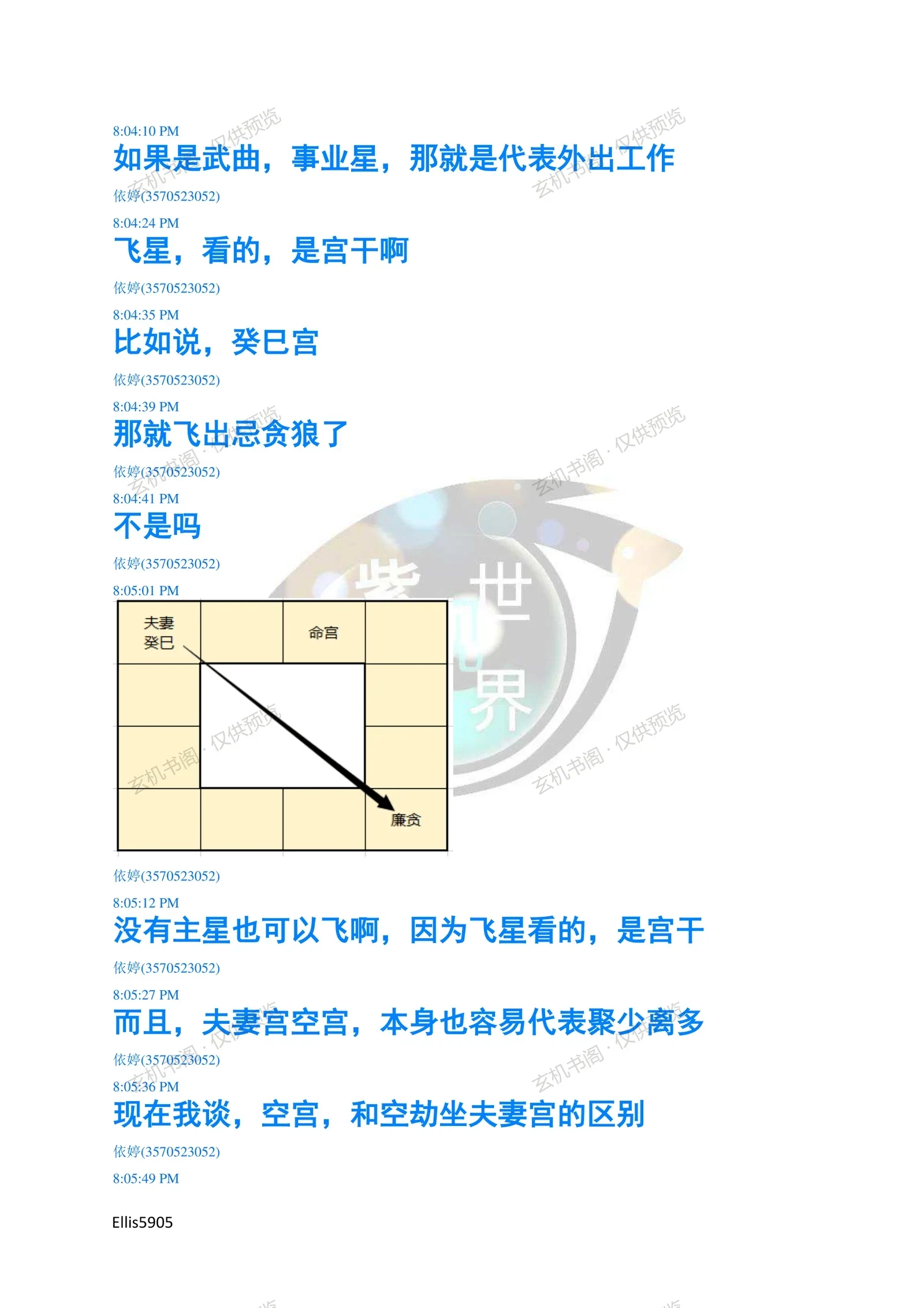
Empty Spouse palace: flying to the opposite palace
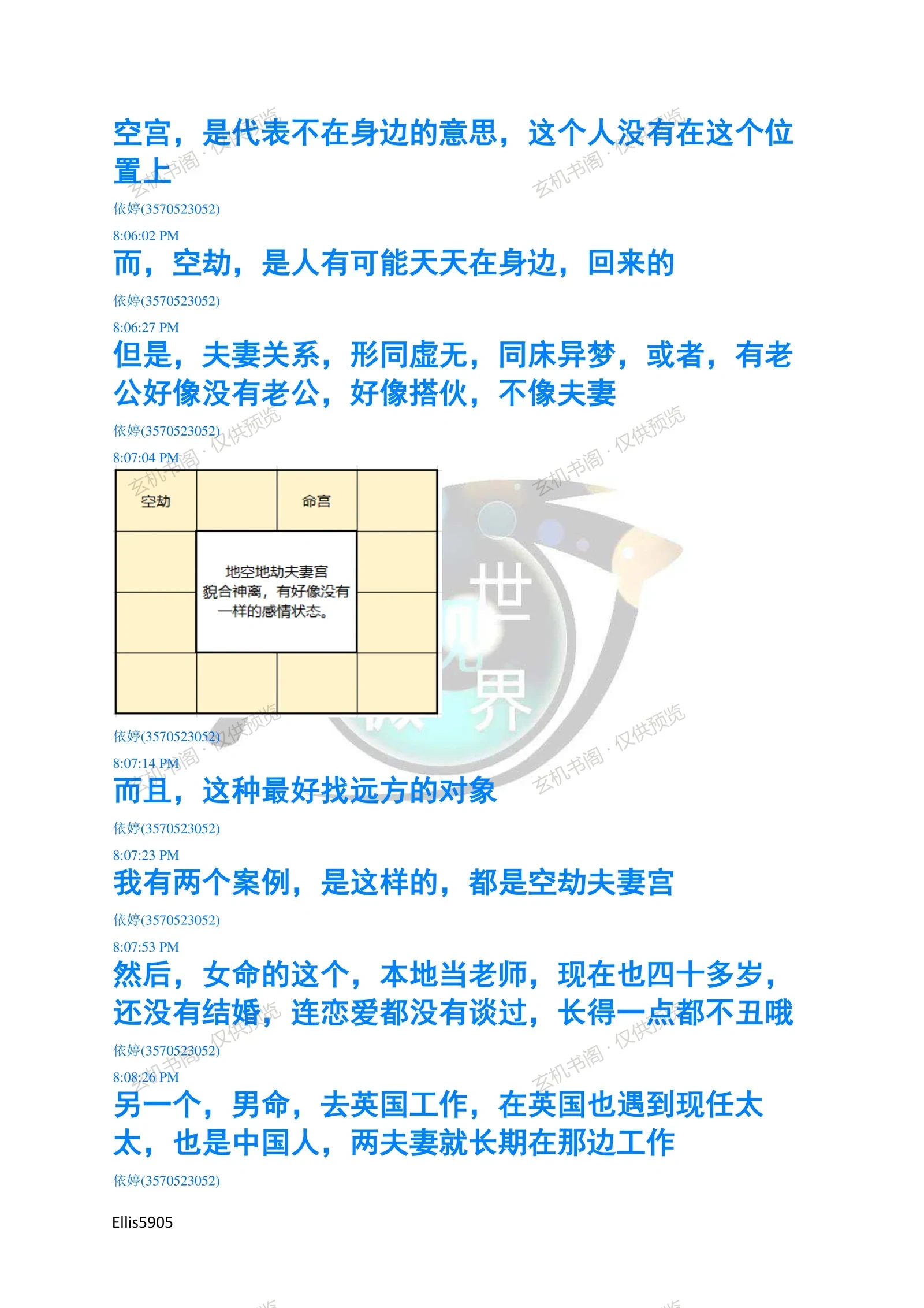
Empty palace versus kong-jie in the Spouse palace
Case examples: long-distance and unmarried
Key Points
Spouse clashing Parents breaks the family fortune, since Parents is the spouse's Property and the litigation palace.
Parents clashing Health also harms marriage; an empty Health palace borrows Parents stars.
Life clashing Property indicates living apart from one's family of origin.
An empty palace still flies: read the star produced by the palace stem.
Peach-blossom stars suggest affairs; career stars like Wu Qu suggest working away.
Kong-jie in the Spouse palace makes the bond feel hollow; a distant partner is advised.