Reading guide
Content guideOverview
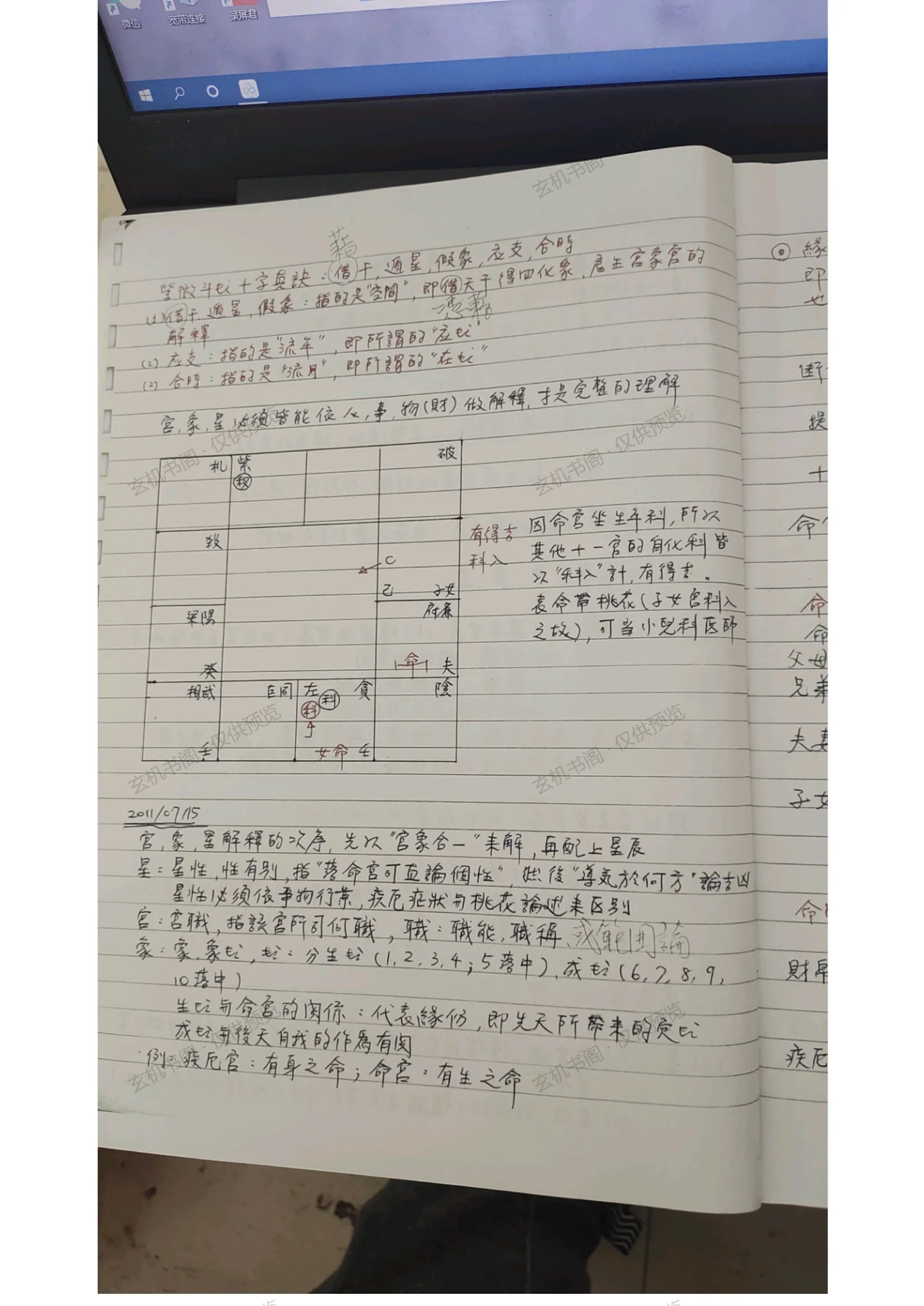
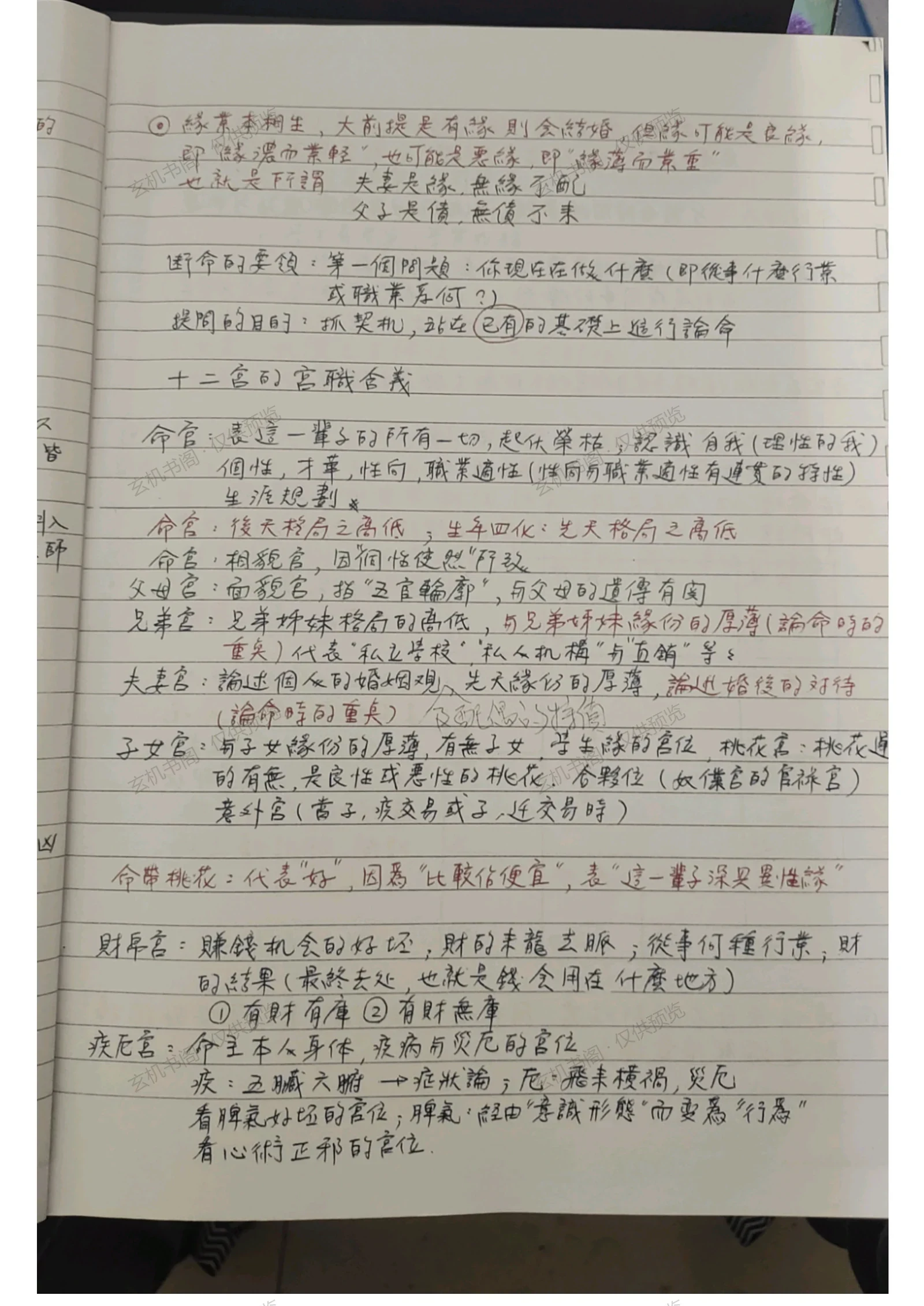
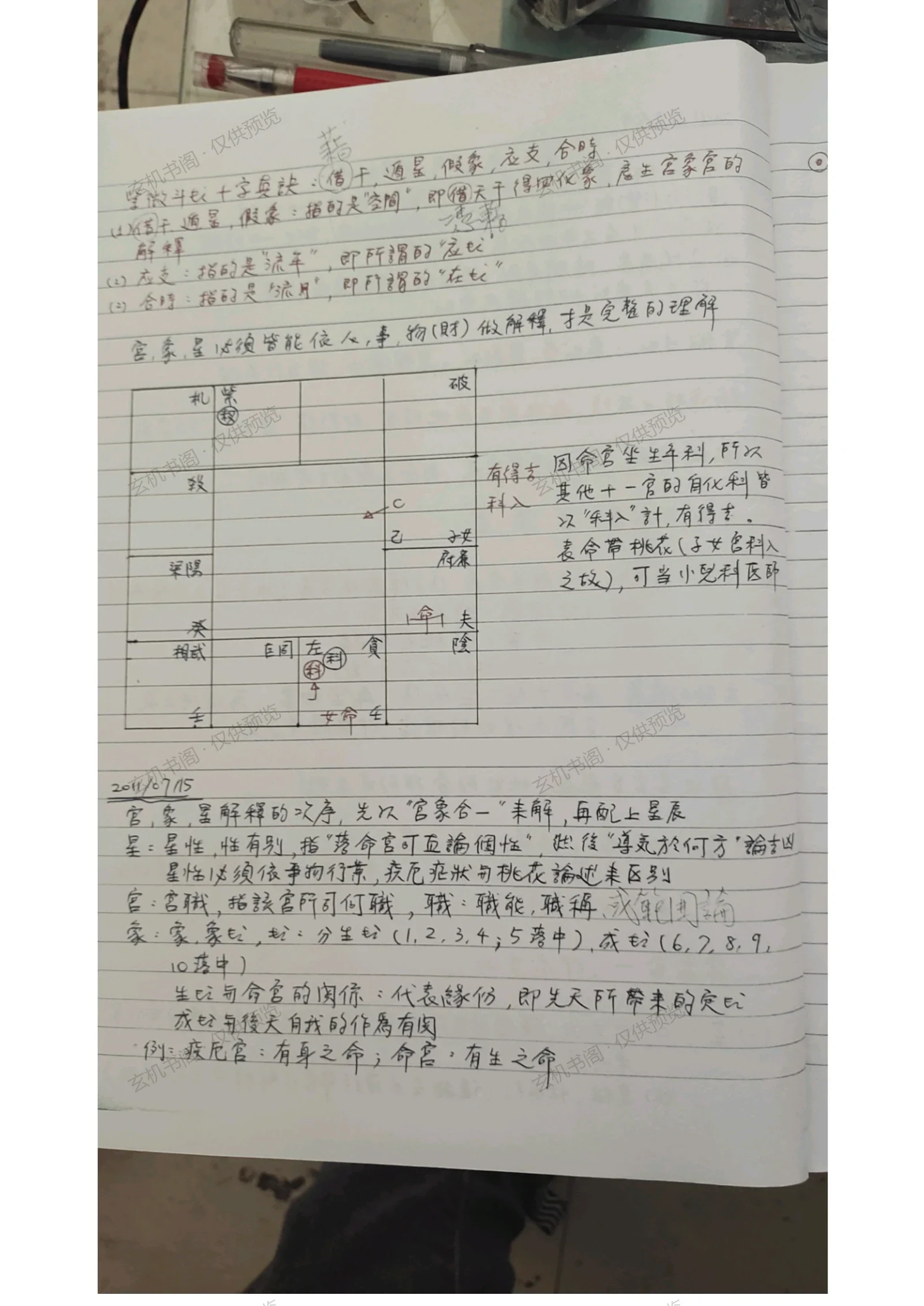
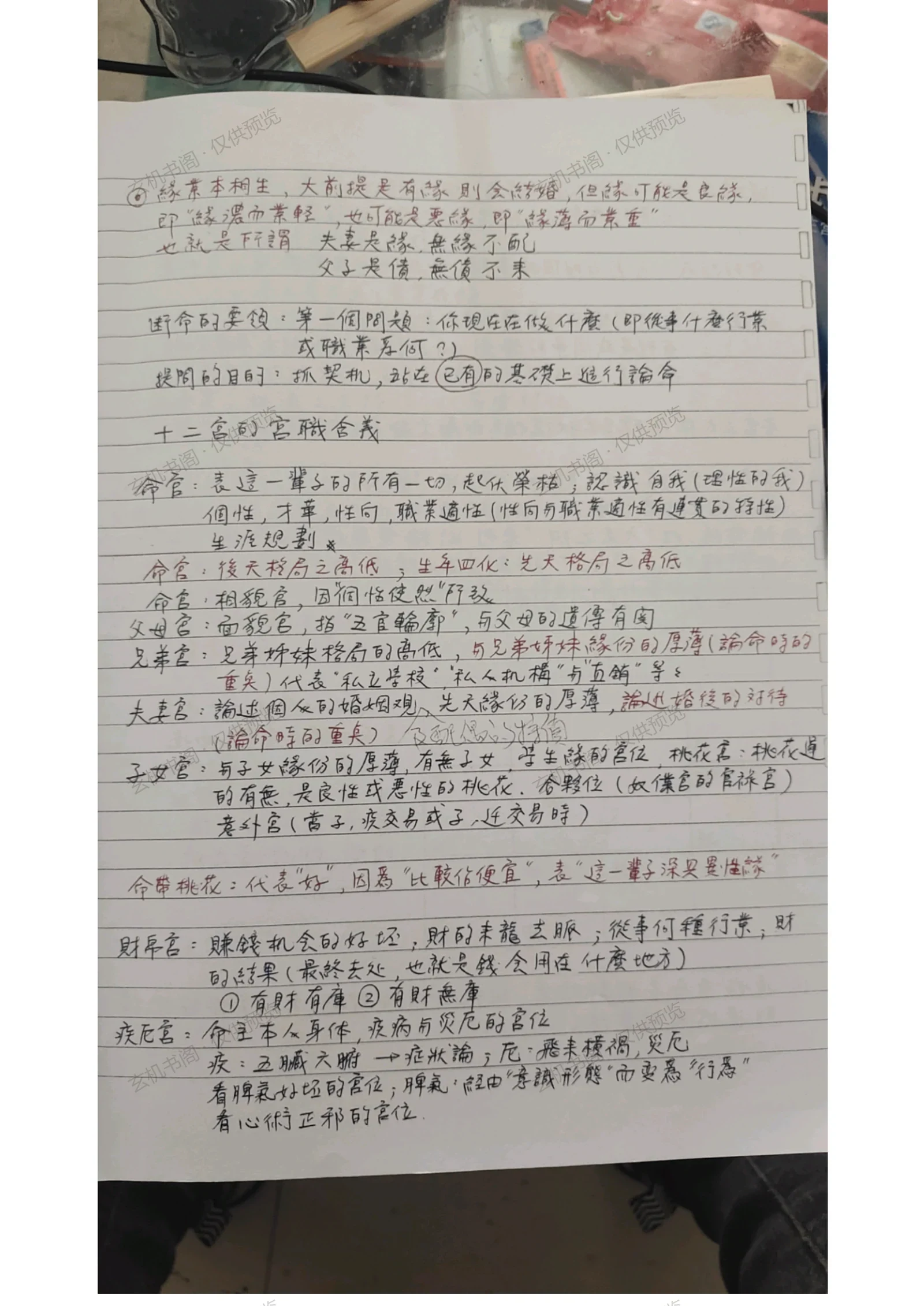
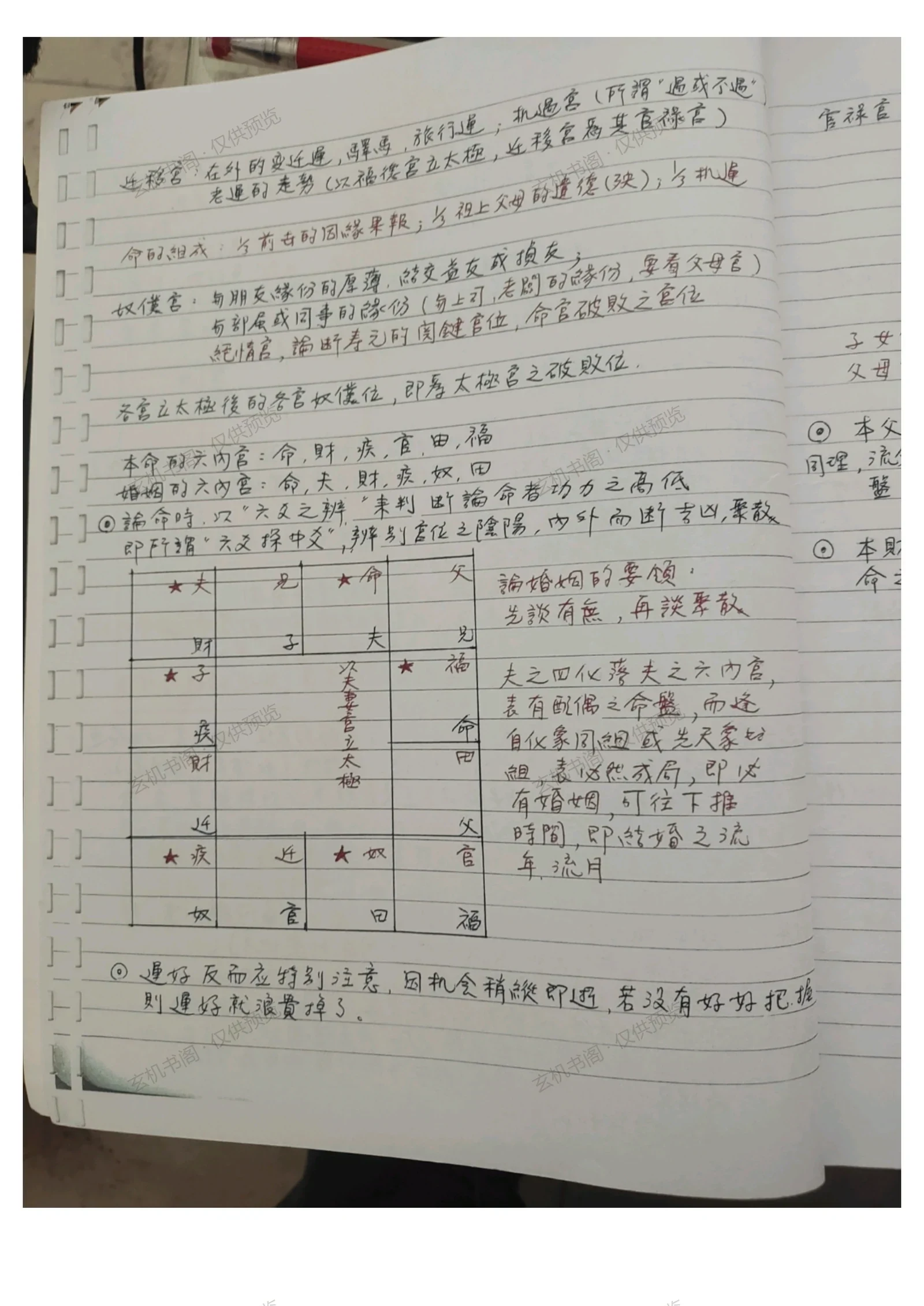
These handwritten notes appear to be compiled from Xu Quanren's advanced Zi Wei Dou Shu class. The title is inferred from the file name rather than a visible cover. The text opens by discussing the relationship between innate structure and acquired fortune, then introduces the three core elements of Dou Shu: palace, image, and star. Palaces carry both basic and hidden meanings; images include birth-year four transformations, flying-palace four transformations, and self-transformation; stars are used to locate good or bad fortune and to describe personality. A hand-drawn chart illustrates how a birth-year transformation sitting in one palace can be interpreted through its entry into the other eleven palaces. The latter half explains the meanings of the twelve palaces one by one, covering life, parents, siblings, spouse, children, wealth, health, travel, and servants, and touches on the six inner and six outer palaces as well as marriage analysis. The notes are dense with terminology and suited to readers who already have some grounding in Zi Wei Dou Shu and want a systematic view of the flying-star four-transformation framework.
Contents
Innate structure and acquired fortune
Three elements: palace, image, star
Basic and hidden meanings of palaces
Four transformations as the functional core
Hand-drawn chart example of transformed entries
Palace-by-palace meanings of the twelve palaces
Six inner and six outer palaces, marriage analysis
Key Points
Uses palace, image, and star as the basic analytical framework
Treats birth-year transformations as substance and flying/self-transformations as function
Combines palace and image to judge specific outcomes
Explains both surface and hidden meanings of the twelve palaces
Approaches marriage by first checking whether a karmic connection exists