Reading guide
Content guideOverview
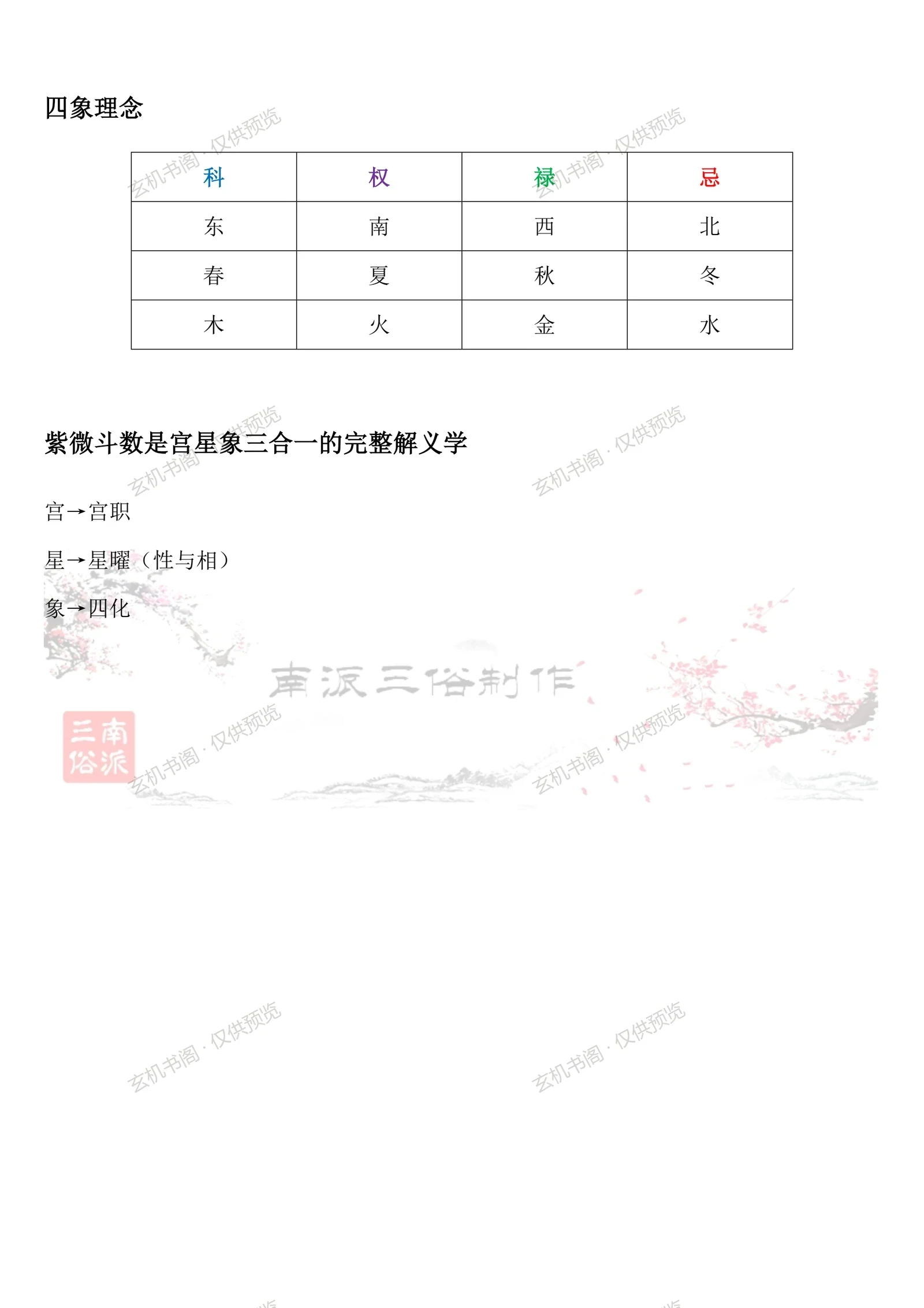
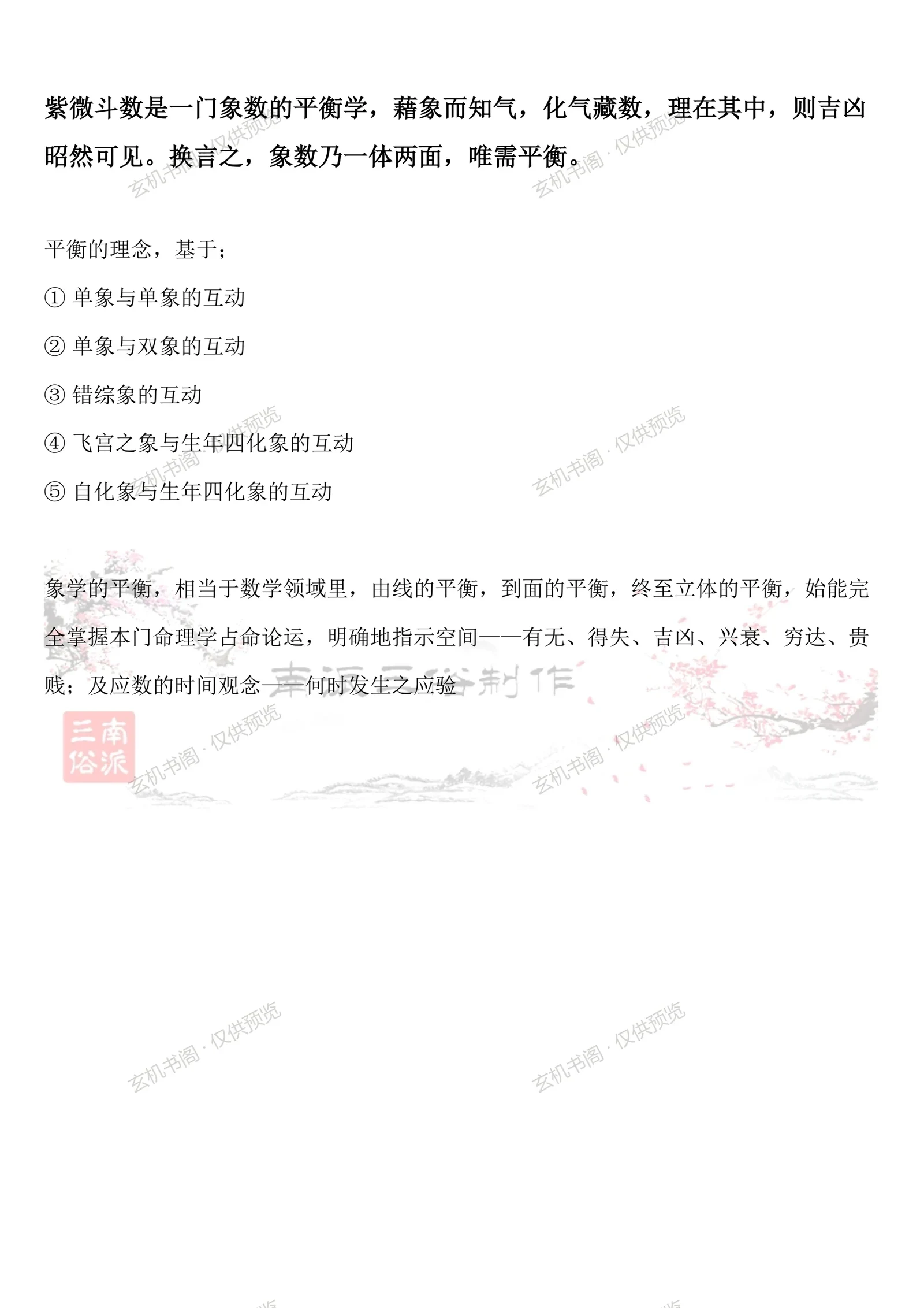
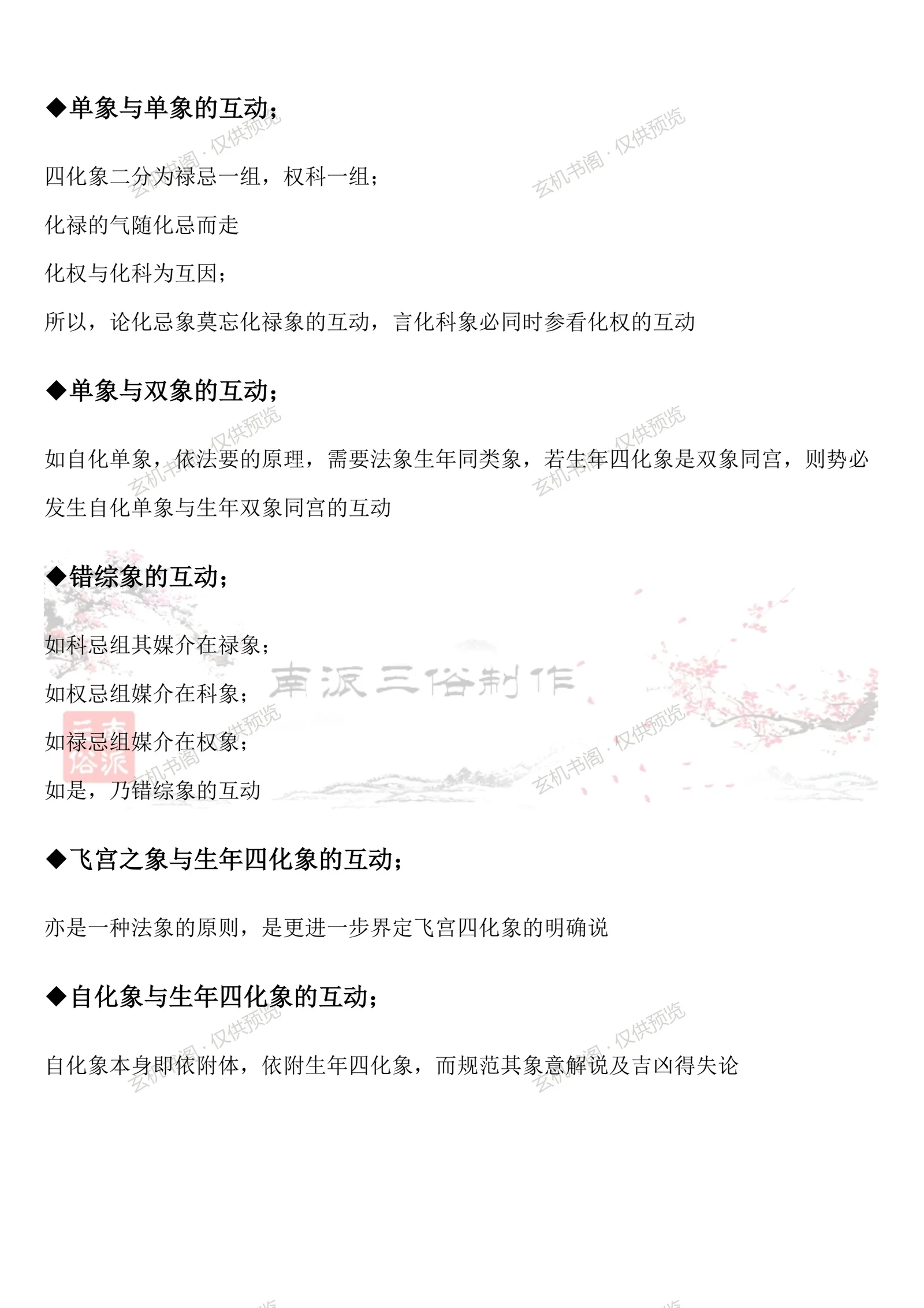
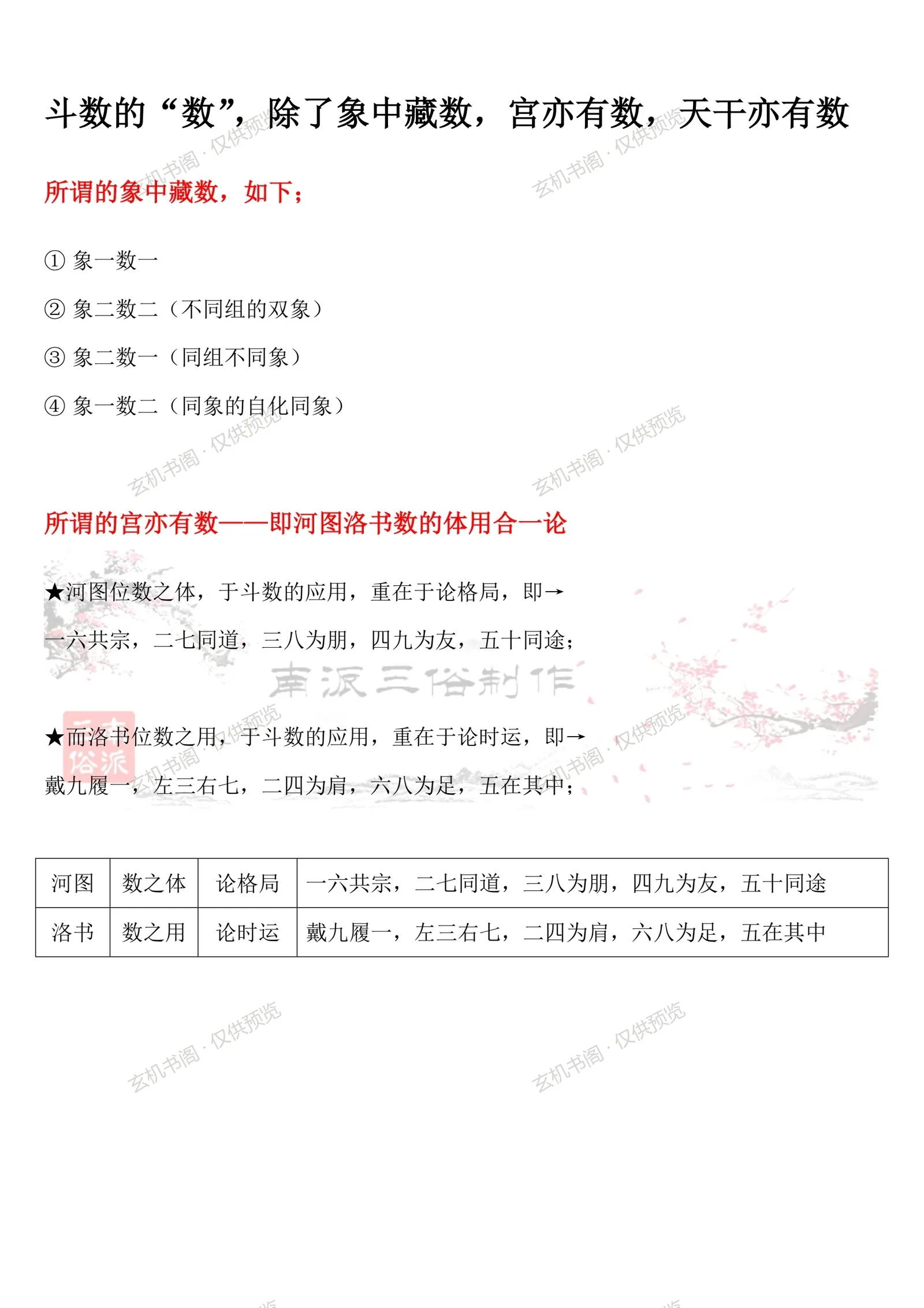
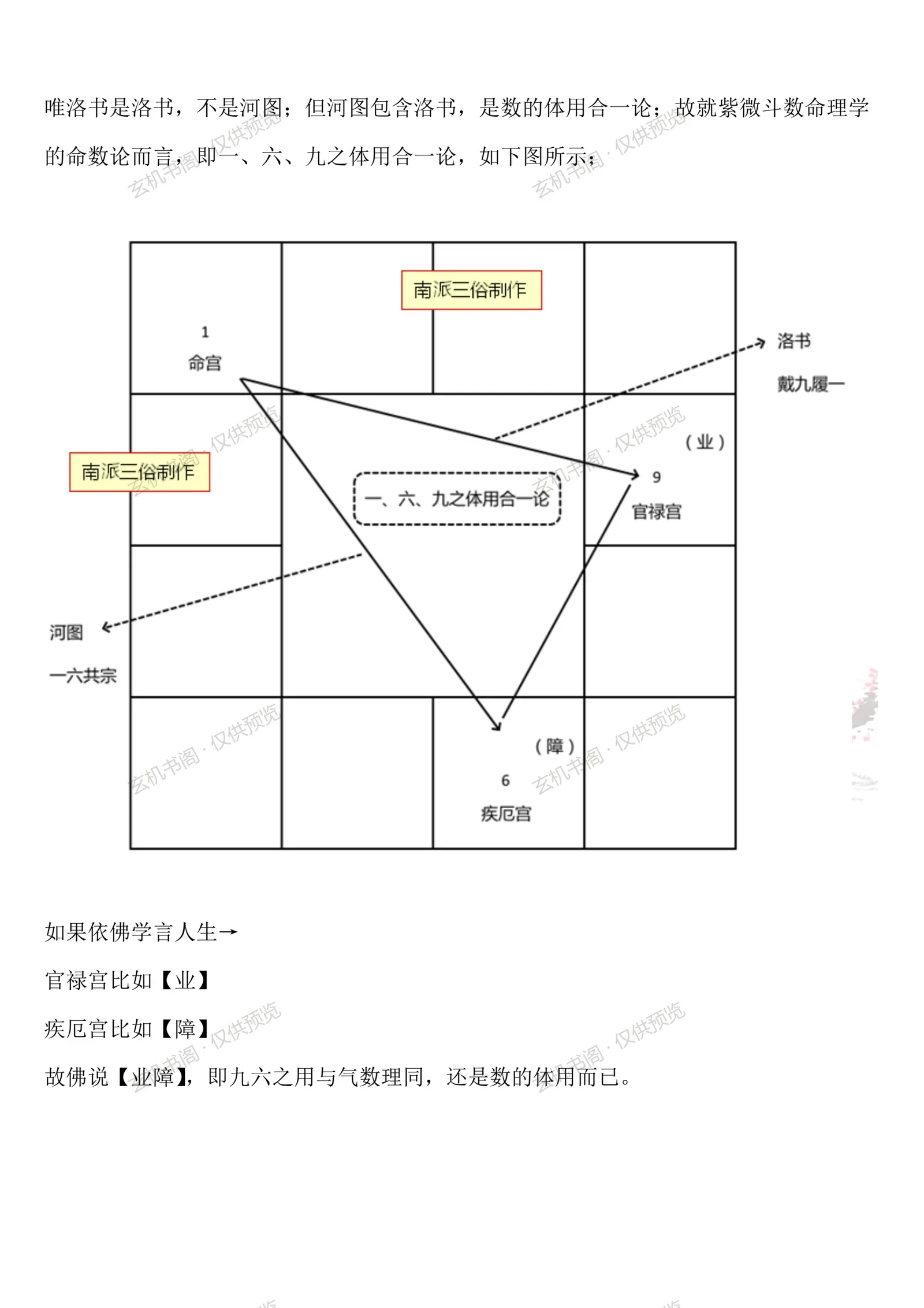
This volume presents Zi Wei Dou Shu as a complete interpretive system built on the trinity of palace, star, and image (gong-xing-xiang). It centers on the four transformations—lu, quan, ke, and ji—and their correspondence with directions, seasons, and the five phases. The text then brings in Hetu and Luoshu numerology: the Hetu numbers are used to discuss structural patterns, while the Luoshu numbers are used to discuss timing. A key concept is the balance of images, analyzed through five levels of interaction: single with single, single with double, complex images, flying-palace images with birth-year transformations, and self-transformations with birth-year transformations. The palaces of life, career, and health are mapped to the numbers one, nine, and six to illustrate the unity of substance and function. The material is advanced and assumes prior familiarity with Zi Wei Dou Shu. Note: this description is based on partial preview pages only.
Contents
Four images and the five-phase correspondences of the four transformations
Palace-star-image as a unified interpretive framework
Five levels of interaction in the balance of images
Single-image and double-image interactions
Complex, flying-palace, and self-transformation interactions
Numbers in Zi Wei Dou Shu: hidden numbers and palace numbers
Hetu-Luoshu substance and function in key palaces
Key Points
Zi Wei Dou Shu is a complete system of palace, star, and image.
The four transformations pair as lu-ji and quan-ke; ji must be read with lu.
The balance of images has five interaction levels.
Hetu numbers address structure; Luoshu numbers address timing.
Life, career, and health palaces map to numbers one, six, and nine.