Reading guide
Content guideOverview
These are classroom notes from Xu Quanren's advanced Zi Wei Dou Shu course. The text opens with a framework of the innate and the acquired, distinguishing the natal chart from later fortune and giving priority to the birth-year four transformations and the laiyin palace. It then explains the three elements of the system: palaces, with their official duties and hidden meanings derived from setting up a taiji; images, split into birth-year transformations, flying-palace transformations and self-transformations, in single, double and triple forms; and stars, treated mainly as qualities that lead qi in a given direction. A set of mnemonic techniques covers borrowing stems, evasive stars, false images, responding branches and matching times, illustrated with a sample chart. The latter half works through all twelve palaces one by one, with special topics on wealth, romance, career and exams, making it a practical record of advanced four-transformation practice.
Contents
Innate and acquired; birth-year transformations and laiyin palace
Three elements: palace, image, star
Borrowing stems, evasive stars and matching times
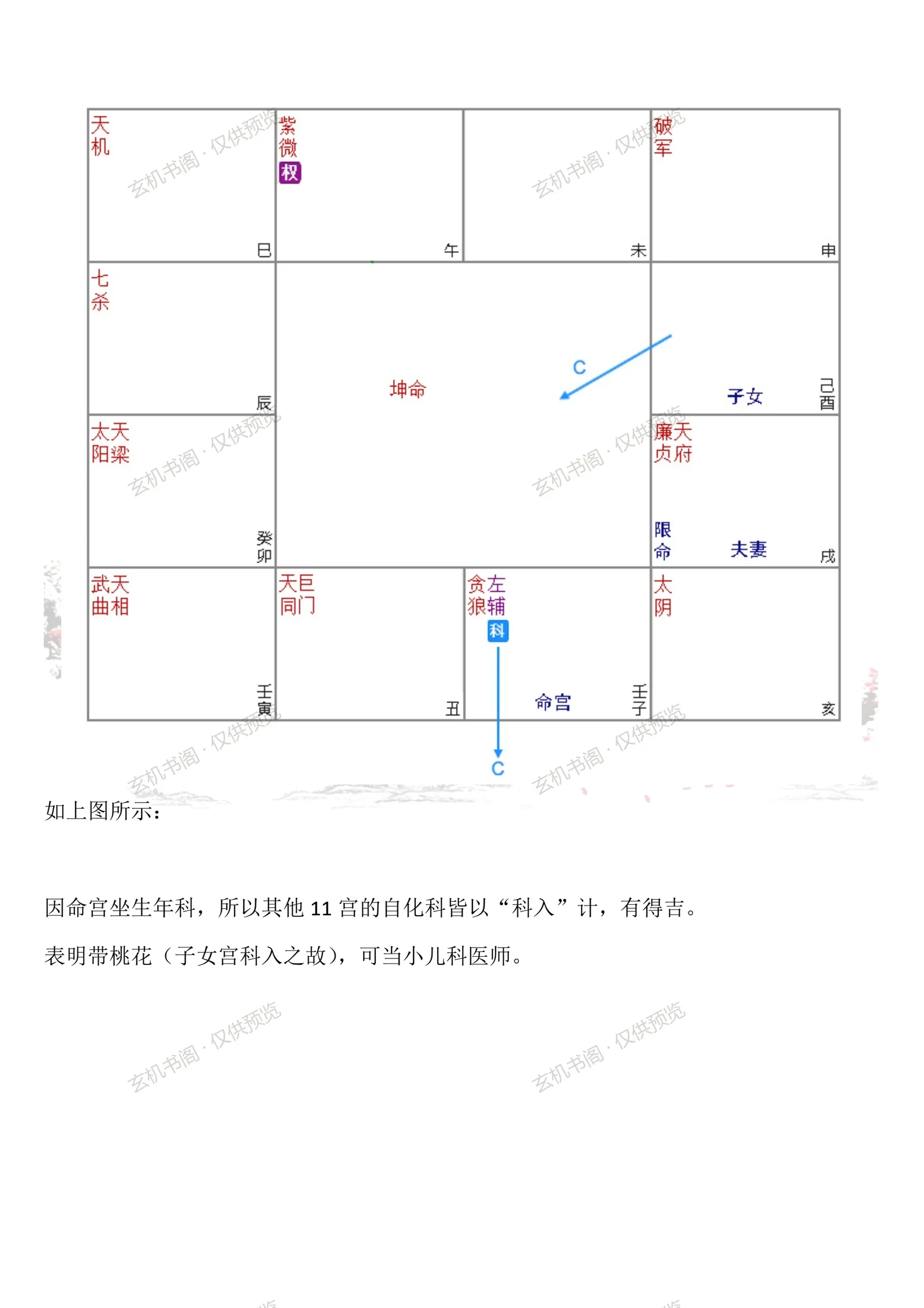
Worked example chart
Order of interpretation and key methods
Duties of the twelve palaces
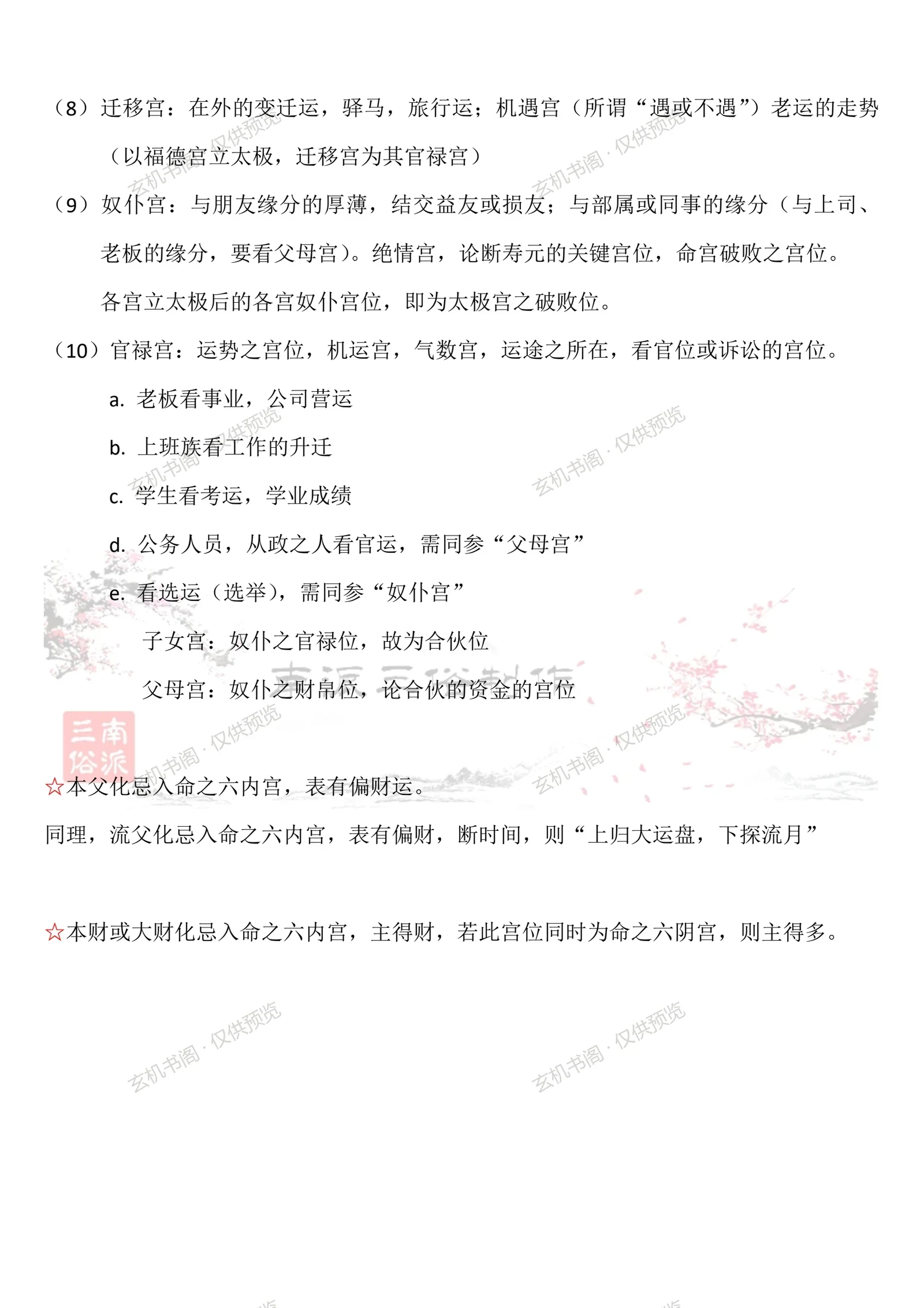
Windfall wealth and transformations entering palaces
Key Points
Start from birth-year transformations and the laiyin palace
Combine palace and image first, then add stars
Birth-year transformations are fixed; flying ones are variable
Each palace has an official duty and hidden taiji meaning
Natal transformations of ji entering inner palaces suggest windfall