Reading guide
Content guideOverview
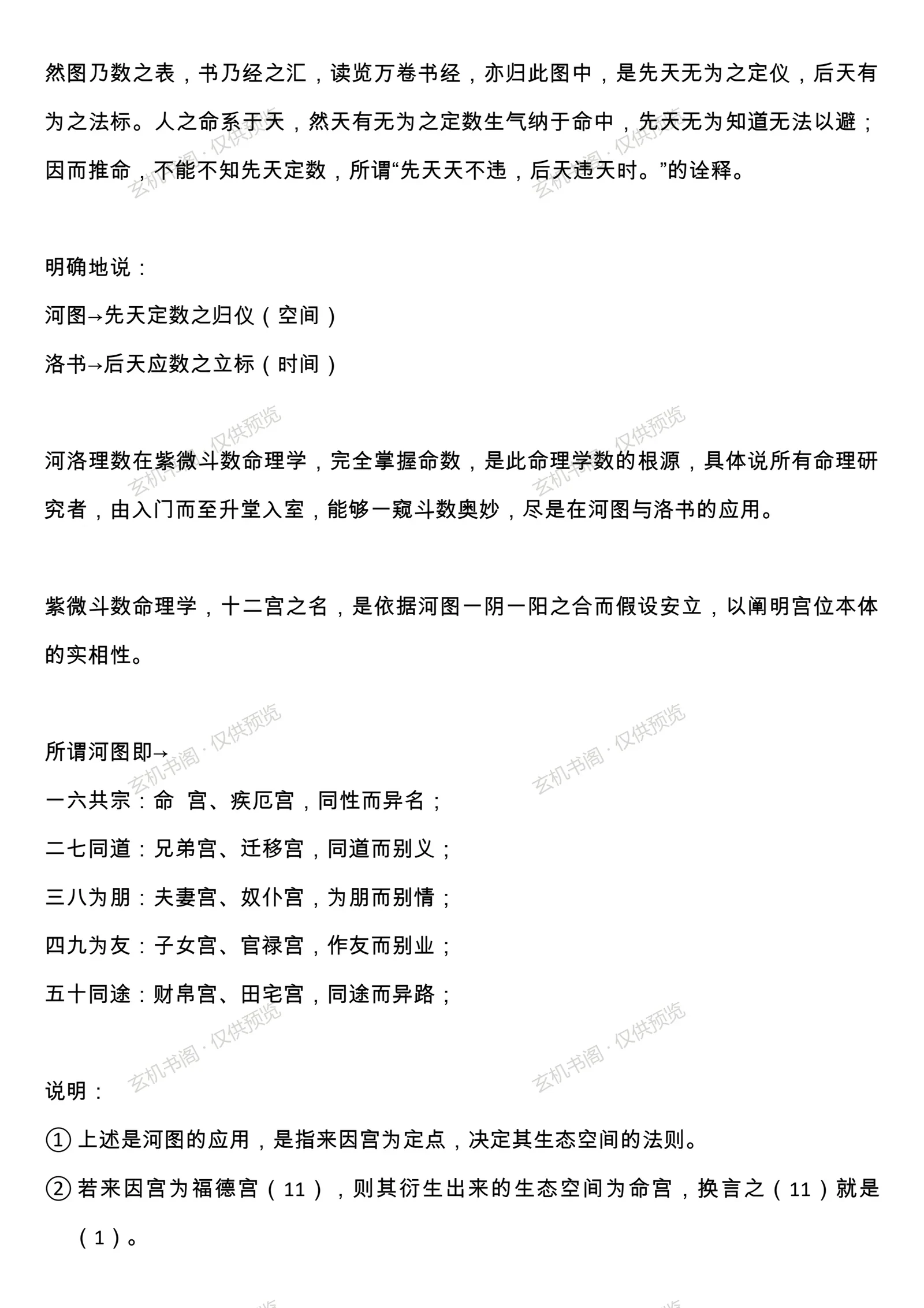
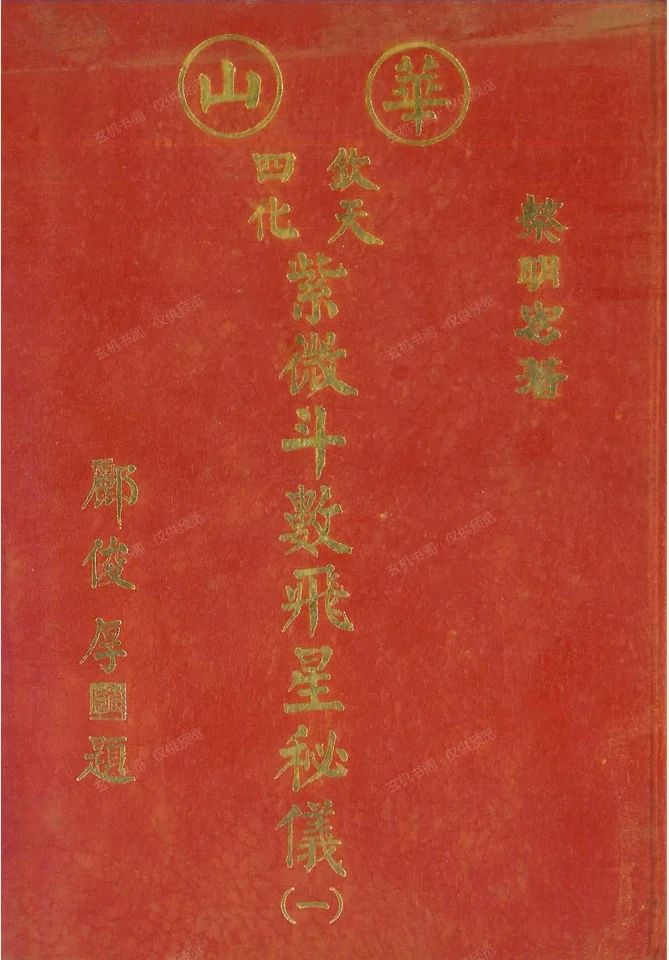
This volume is Xu Quanren's Zi Wei Dou Shu teaching material, compiled with his daughter Xu Yun. Subtitled 'Night Talks on Life,' it opens by redefining 'achievement' as a lifelong process of learning, then centers on the Career Palace, covering study direction, early-career and mid-career planning, and the rise and fall of fortune. The introduction frames ming as the fixed prenatal constant (space) and yun as the postnatal variable (time), stressing that direction and timing must be read together. The first section, 'Hetu-Luoshu Numerology,' traces the system from the Yijing's taiji, two modes, four images, and eight trigrams, and distinguishes yi-li, yi-shu, and yi-xiang. It argues that Zi Wei Dou Shu is rooted in the Hetu and Luoshu, with the Hetu as the measure of prenatal constants and the Luoshu as the marker of postnatal responses, and maps Hetu number pairs onto the twelve palaces: 1-6 for Life and Illness, 2-7 for Siblings and Travel, 3-8 for Spouse and Servants, 4-9 for Children and Career, 5-10 for Wealth and Property. It suits readers with basic Dou Shu knowledge who want a more theoretical grasp of the palaces.
Contents
Preface: the origin of 'Night Talks on Life' and a view of achievement
Chapter One: How to determine one's ecological space
Introduction: ming as prenatal constant, yun as postnatal variable
Section One: Hetu-Luoshu numerology, yi-li, yi-shu, yi-xiang
Hetu and Luoshu as measures of constant and variable
Mapping Hetu numbers onto the twelve palaces
Key Points
Centers on the Career Palace, covering study, job entry, and mid-career planning.
Ming is the fixed prenatal constant (space); yun is the postnatal variable (time).
Zi Wei Dou Shu is rooted in Hetu and Luoshu: Hetu as essence, Luoshu as function.
Hetu number pairs map onto paired palaces of the same nature but different names.
Once a 'cause palace' is fixed, derived ecological spaces can be inferred.