Reading guide
Content guideOverview
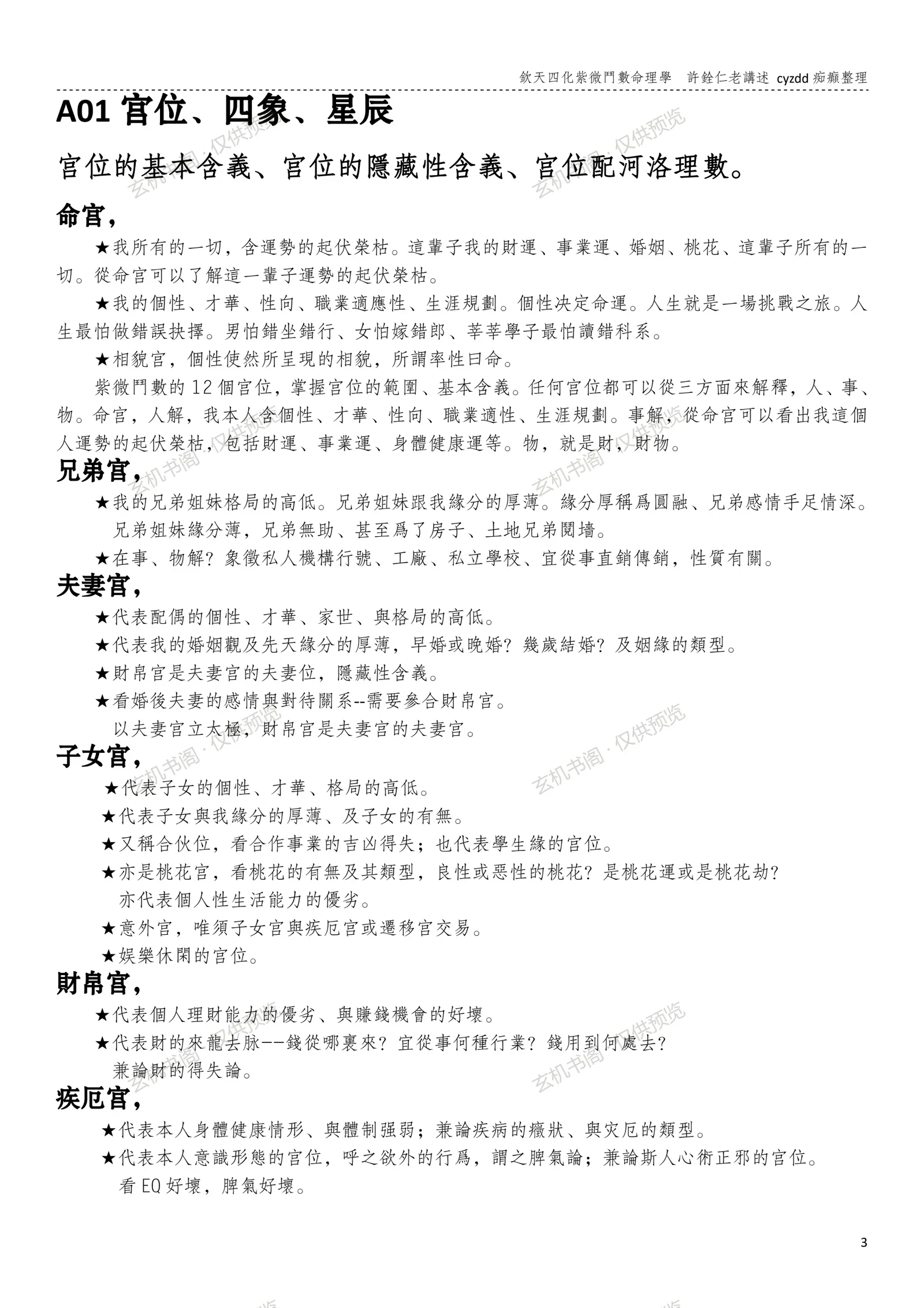
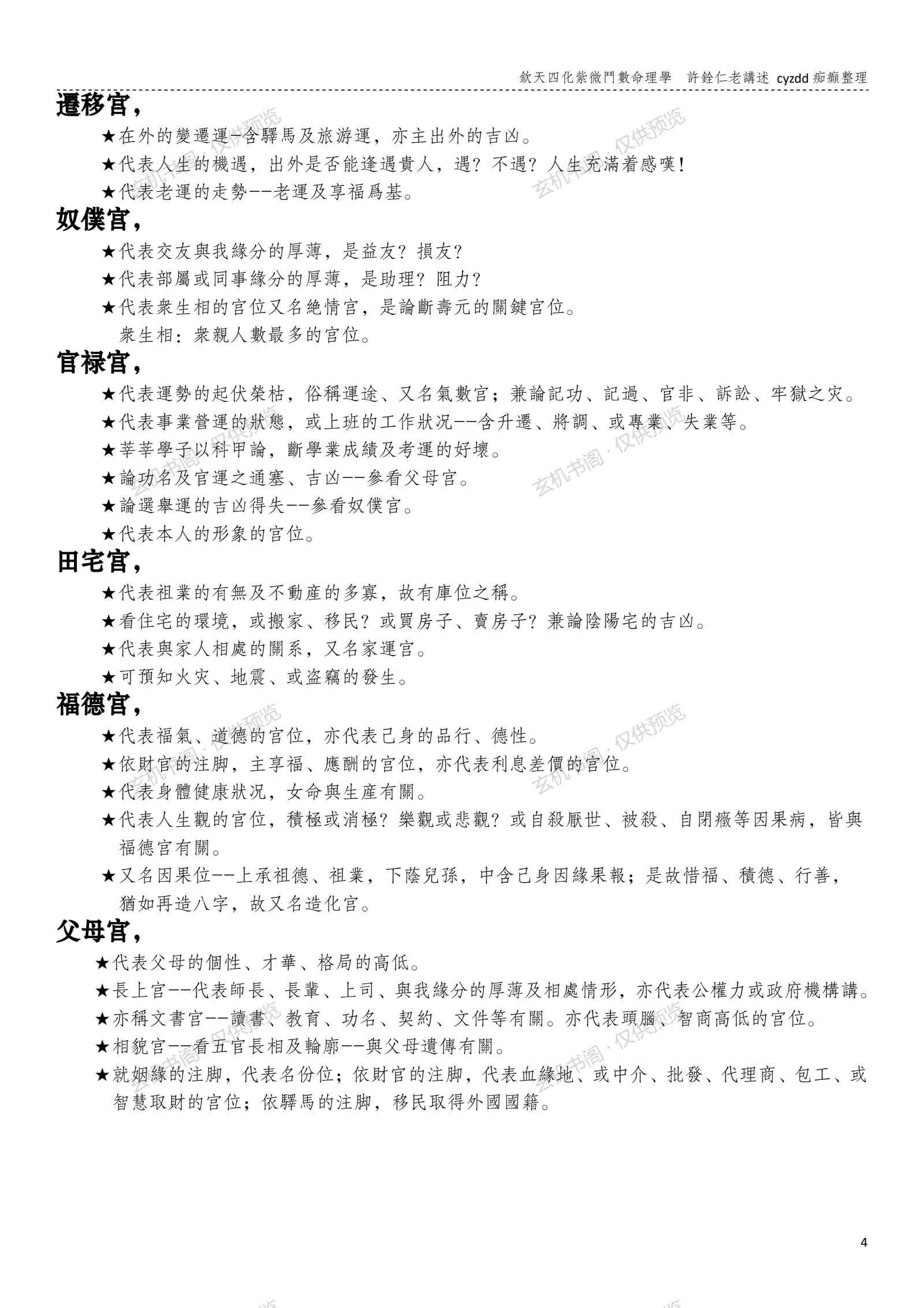
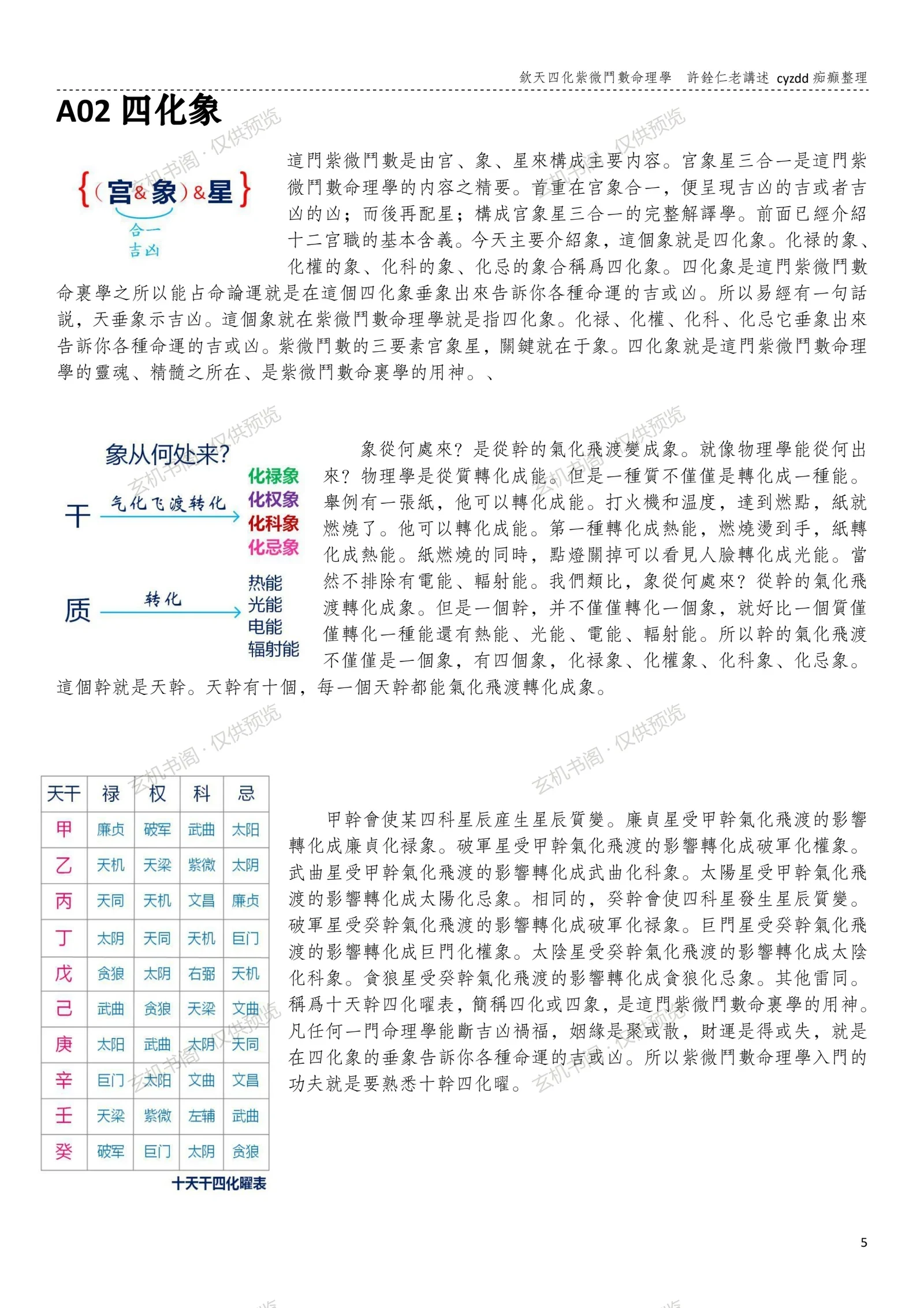
This is a hand-typed lecture note compiled from Xu Quanren's video course on Qintian Four Transformations Zi Wei Dou Shu, organized into 23 lessons under A and B numbering. Part A first explains the twelve palaces, their surface and hidden meanings, and how each palace can be read in terms of people, events, and objects. It then introduces the four transformations—Lu, Quan, Ke, and Ji—using the ten heavenly stems transformation table to show how stem qi produces images, and distinguishes birth-year transformations, flying-palace transformations, and self-transformations. Part B turns to the stars, covering Zi Wei, Tian Ji, Tai Yang, Wu Qu, Tian Tong, Lian Zhen, Tian Fu, Tai Yin, Tan Lang, Ju Men, Tian Xiang, Tian Liang, Qi Sha, Po Jun, and the auxiliary stars Zuo Fu, You Bi, Wen Chang, Wen Qu, Tian Kui, and Tian Yue. The core method is the unity of palace, image, and star, making the book suitable for readers with some Zi Wei Dou Shu background who want to study Qintian Four Transformations alongside the videos.
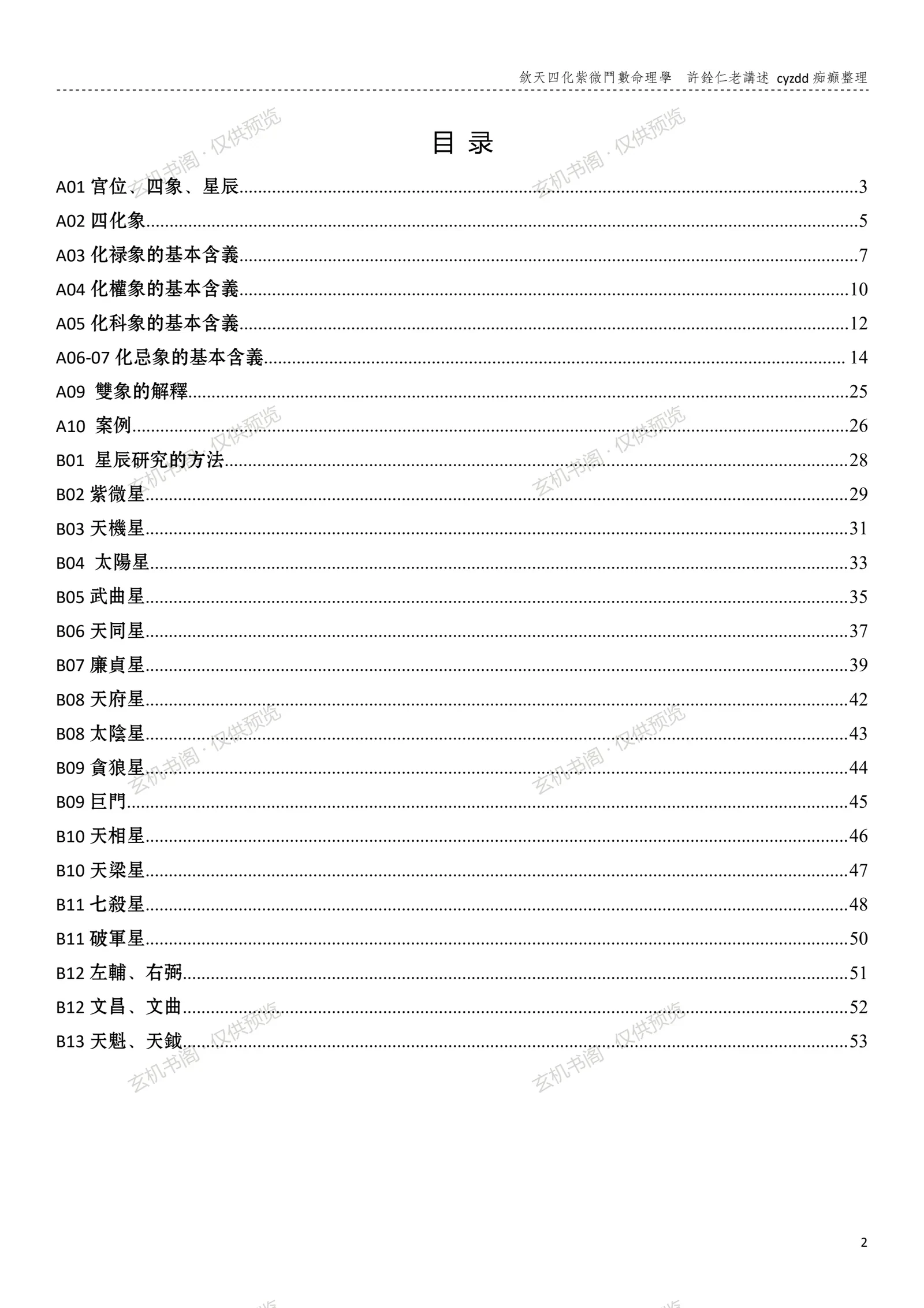
Contents
A01 Overview of palaces, images, and stars
A02–A06 The four transformations and their meanings
A07–A10 Double-image interpretation and cases
B01 Methods for studying the stars
B02–B11 The fourteen major stars one by one
B12–B13 Auxiliary stars, Wen Chang and Wen Qu, Tian Kui and Tian Yue
Key Points
Palace, image, and star together form the core framework
Each of the twelve palaces can be read as people, events, or objects
The ten-stem transformation table is the key to flying transformations
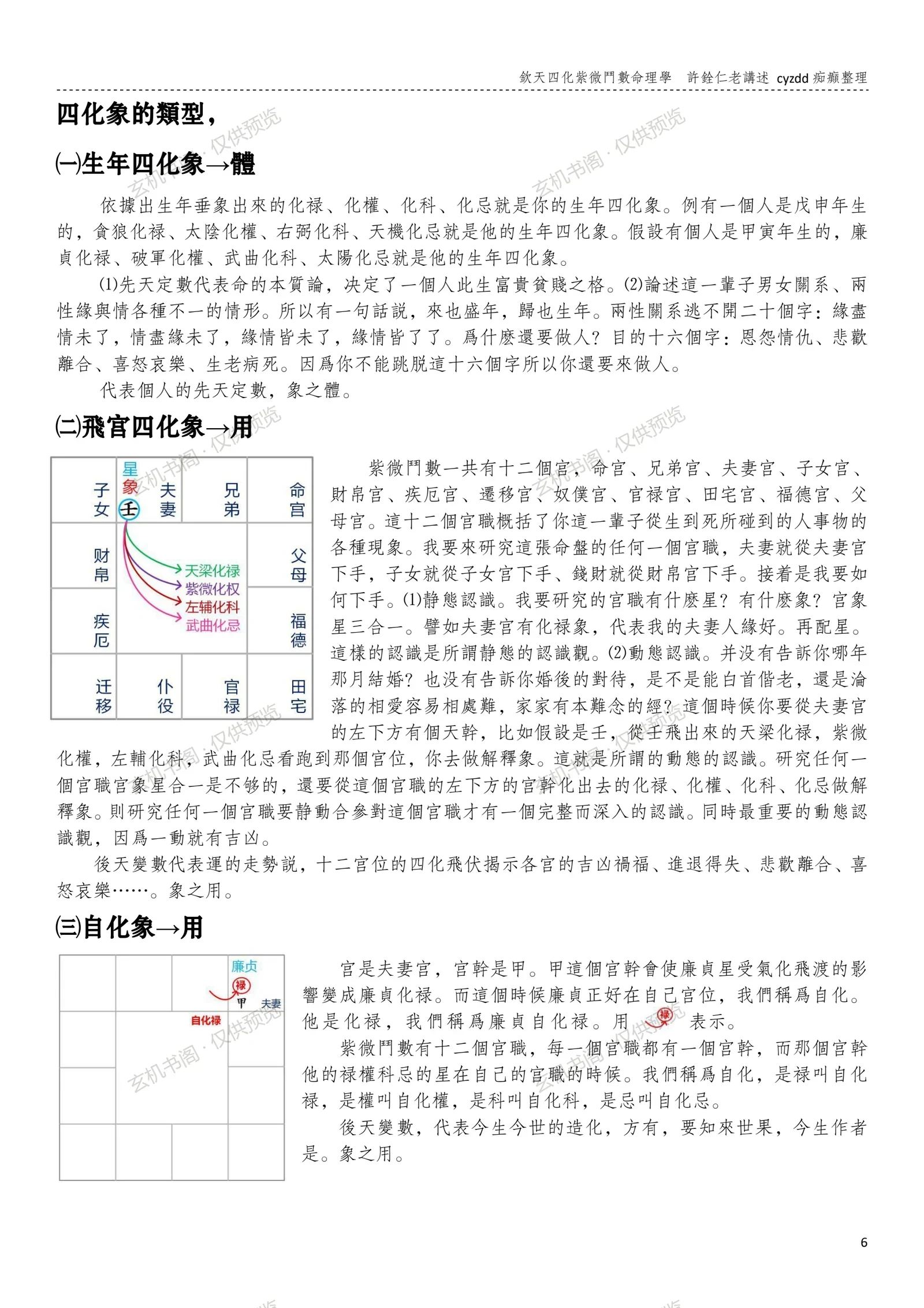
Distinguishes birth-year, flying-palace, and self-transformations
Explains the fourteen major stars and key auxiliary stars one by one