Reading guide
Content guideOverview
These study notes, compiled from Xu Quanren's beginner Zi Wei Dou Shu course and credited to "Bangzhu," cover two main areas. The first explains the basic and hidden meanings of the twelve palaces—Life, Siblings, Spouse, Children, Wealth, Health, Travel, Friends, Career, Property, Fortune, and Parents—showing how each palace can be read for people and events. The second introduces the core concept of the four transformations: birth-year transformations, flying transformations, self-transformations, and self-transformations seen in the opposite palace, along with a ten-stem transformation table and detailed explanations of Hua Lu and Hua Quan by palace. The notes are itemized and include classroom blackboard screenshots with the instructor's image, making them useful for review and reference.
Contents
Basic meanings of the twelve palaces
Hidden meanings of the palaces
Palaces and the Luoshu
Where images come from: four transformations as the functional spirit
Ten-stem four-transformation flying star table
Types of four transformations: birth-year, flying, self, and seen-in-opposite
Basic meanings of Hua Lu and its palace placements
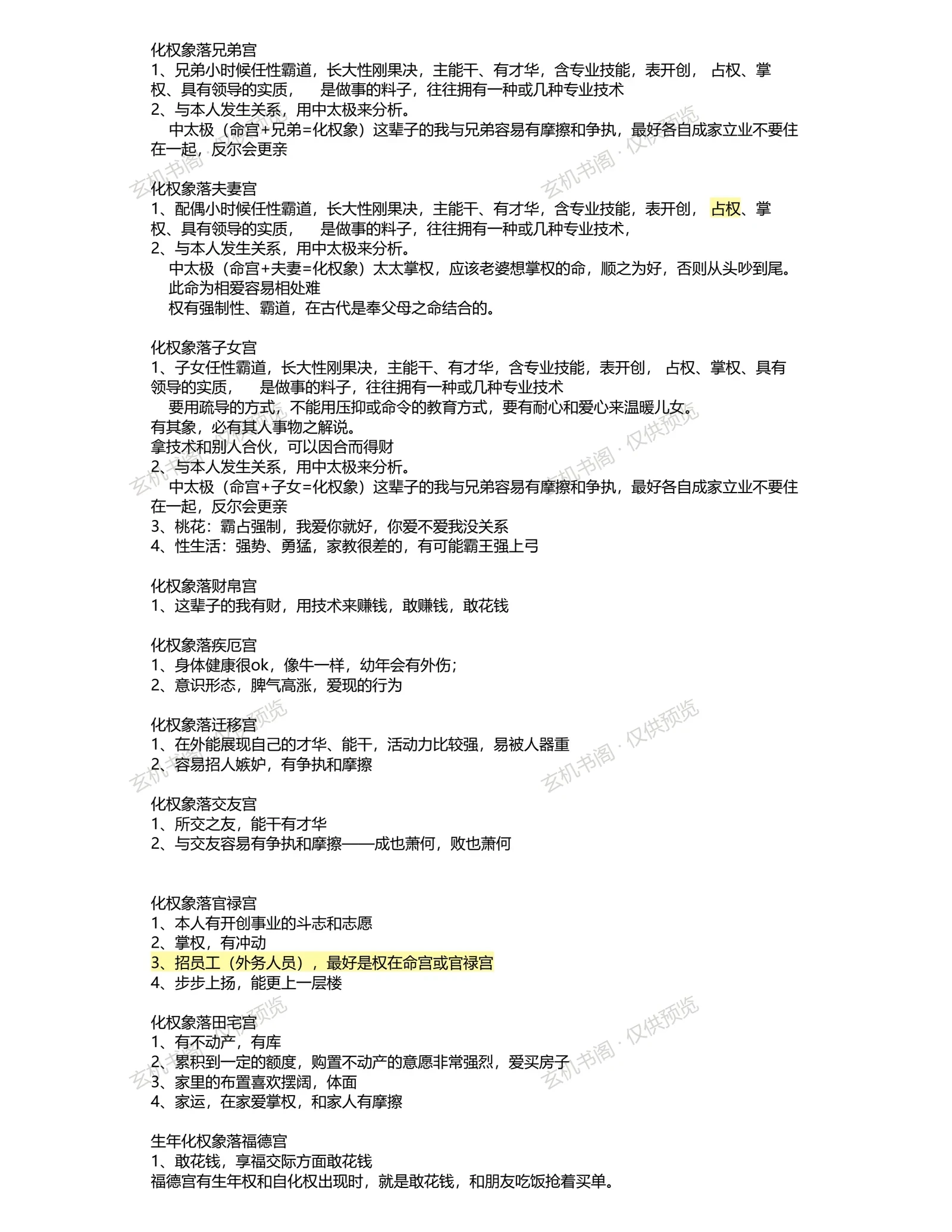
Basic meanings of Hua Quan and its palace placements
Key Points
Each of the twelve palaces has multiple readings for people and events.
The four transformations are the functional spirit of Zi Wei Dou Shu, with self-transformations especially important.
Four transformations include birth-year, flying, self, and seen-in-opposite types.
Birth-year transformations represent innate fixed patterns; flying transformations describe life's changes.
Hua Lu signifies wealth, food, fortune, popularity, and romance.
Hua Quan signifies power, authority, dignity, conflict, and external injury.