Reading guide
Content guideOverview
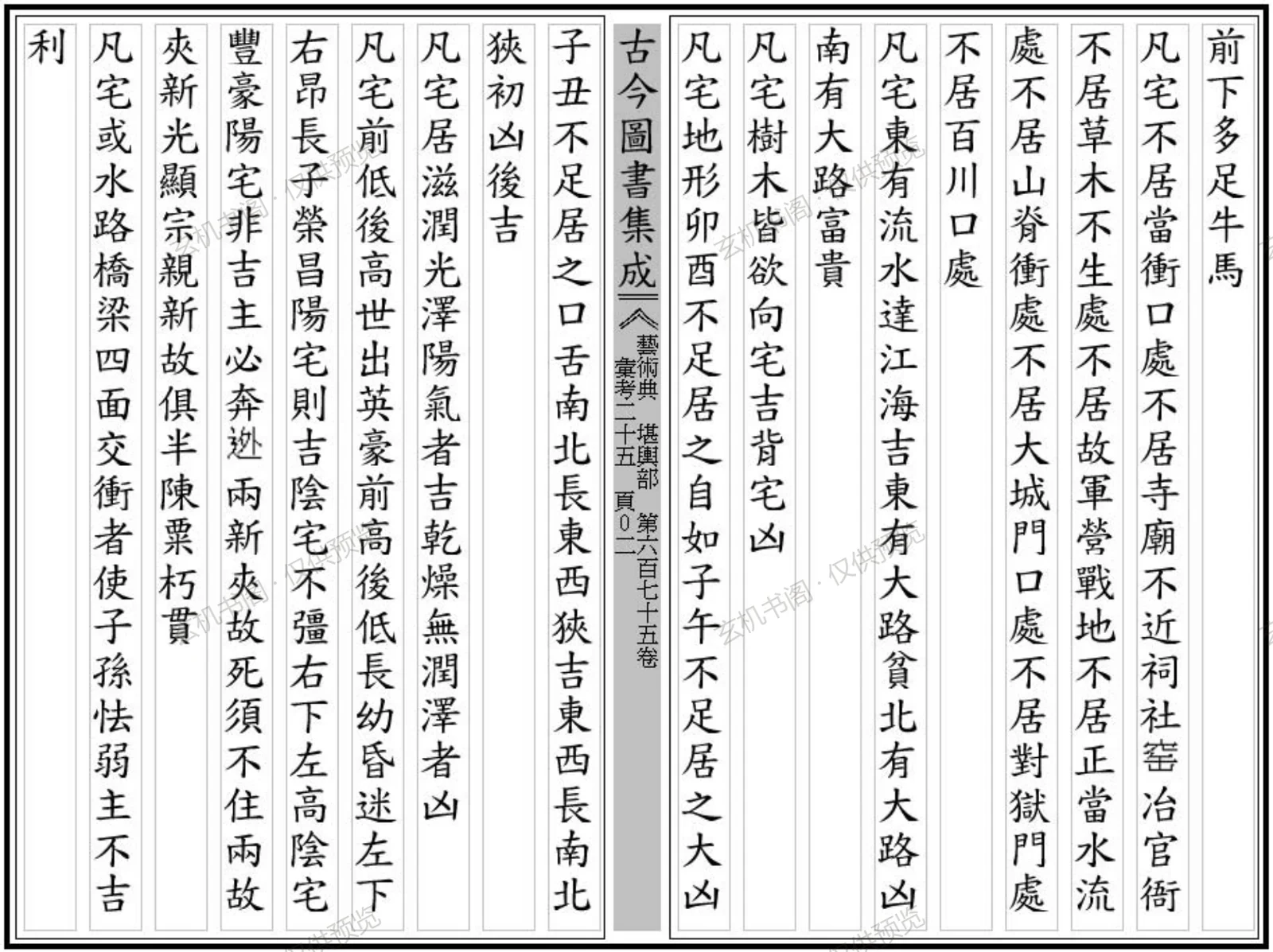
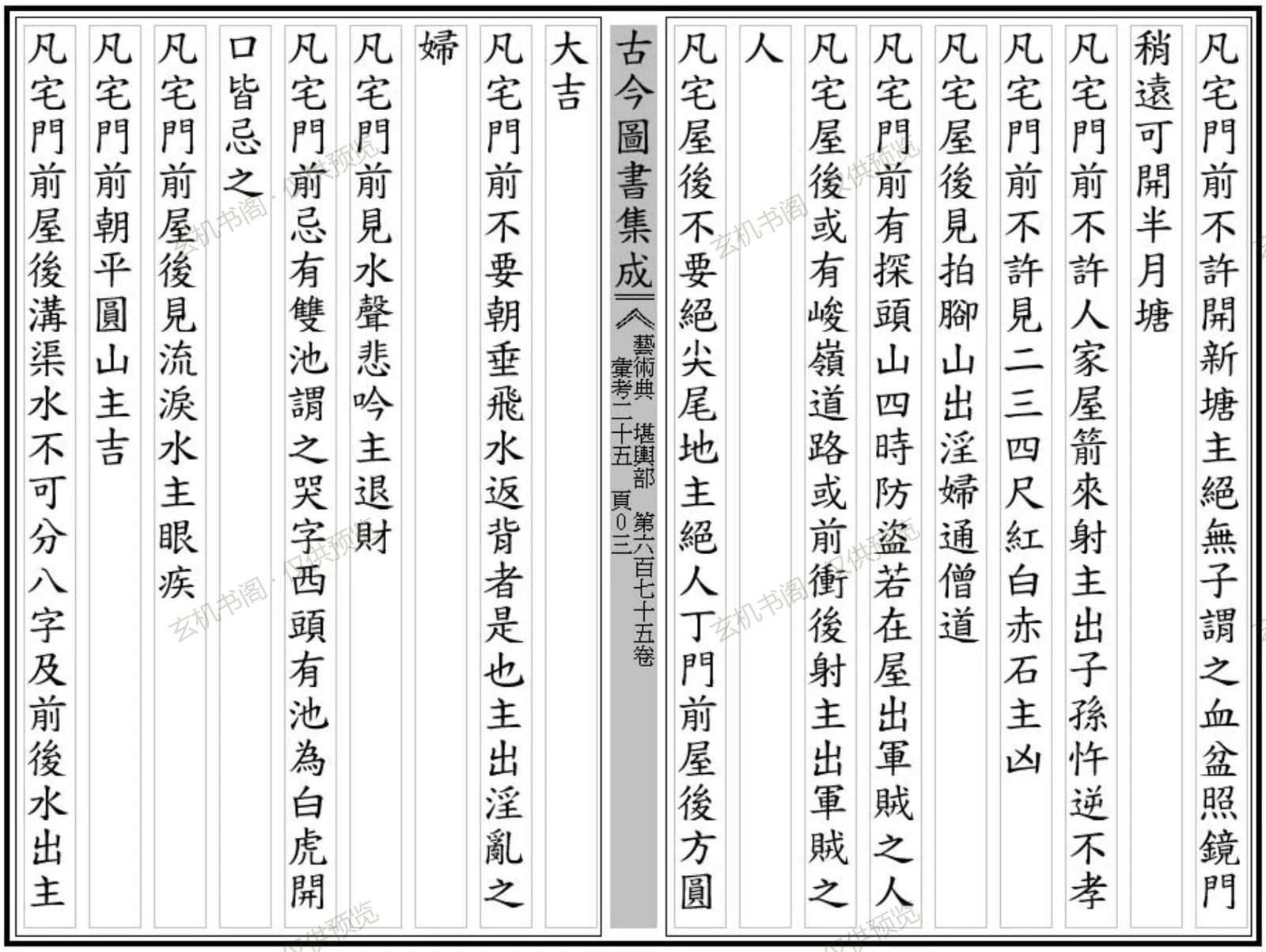
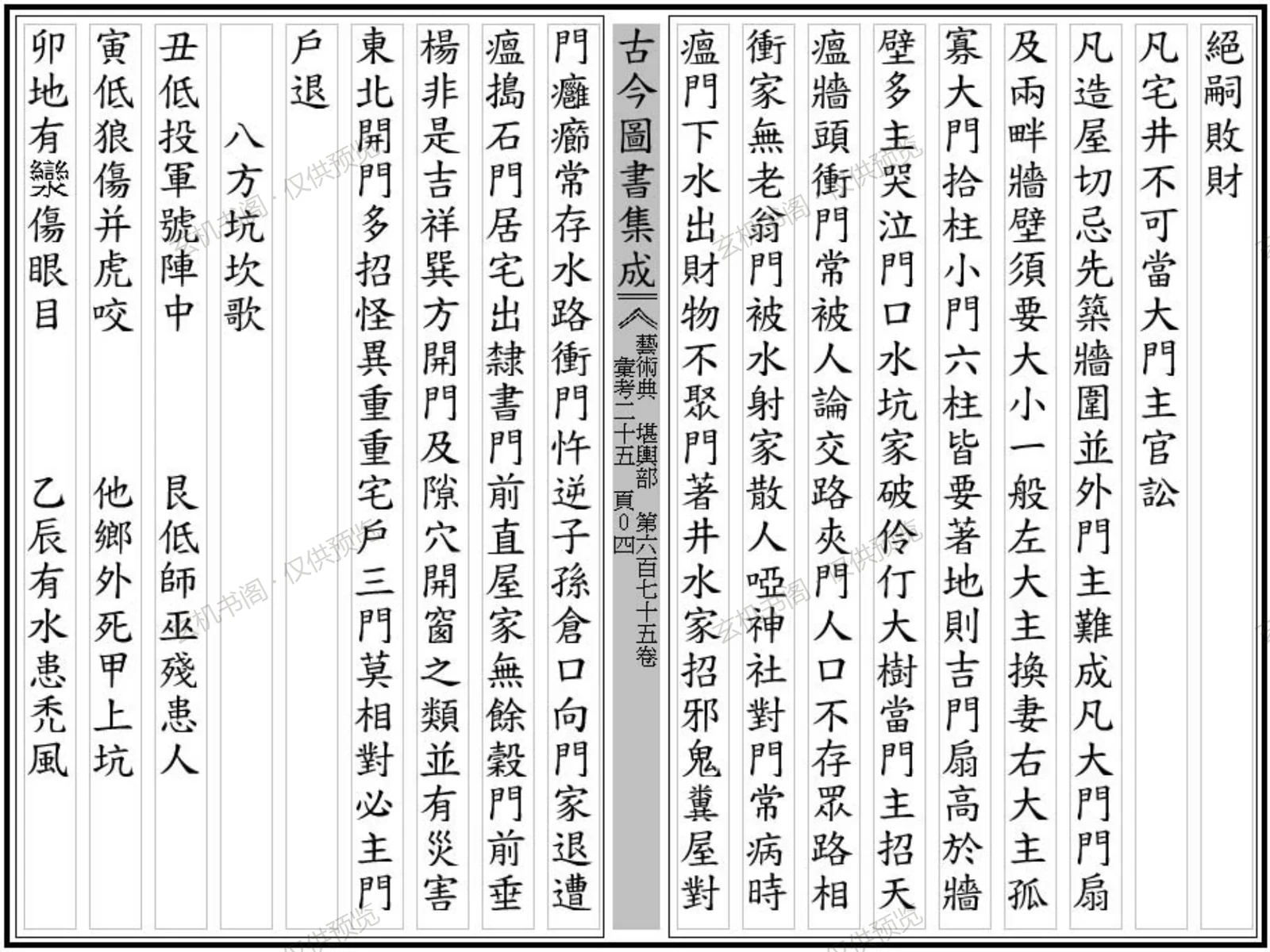
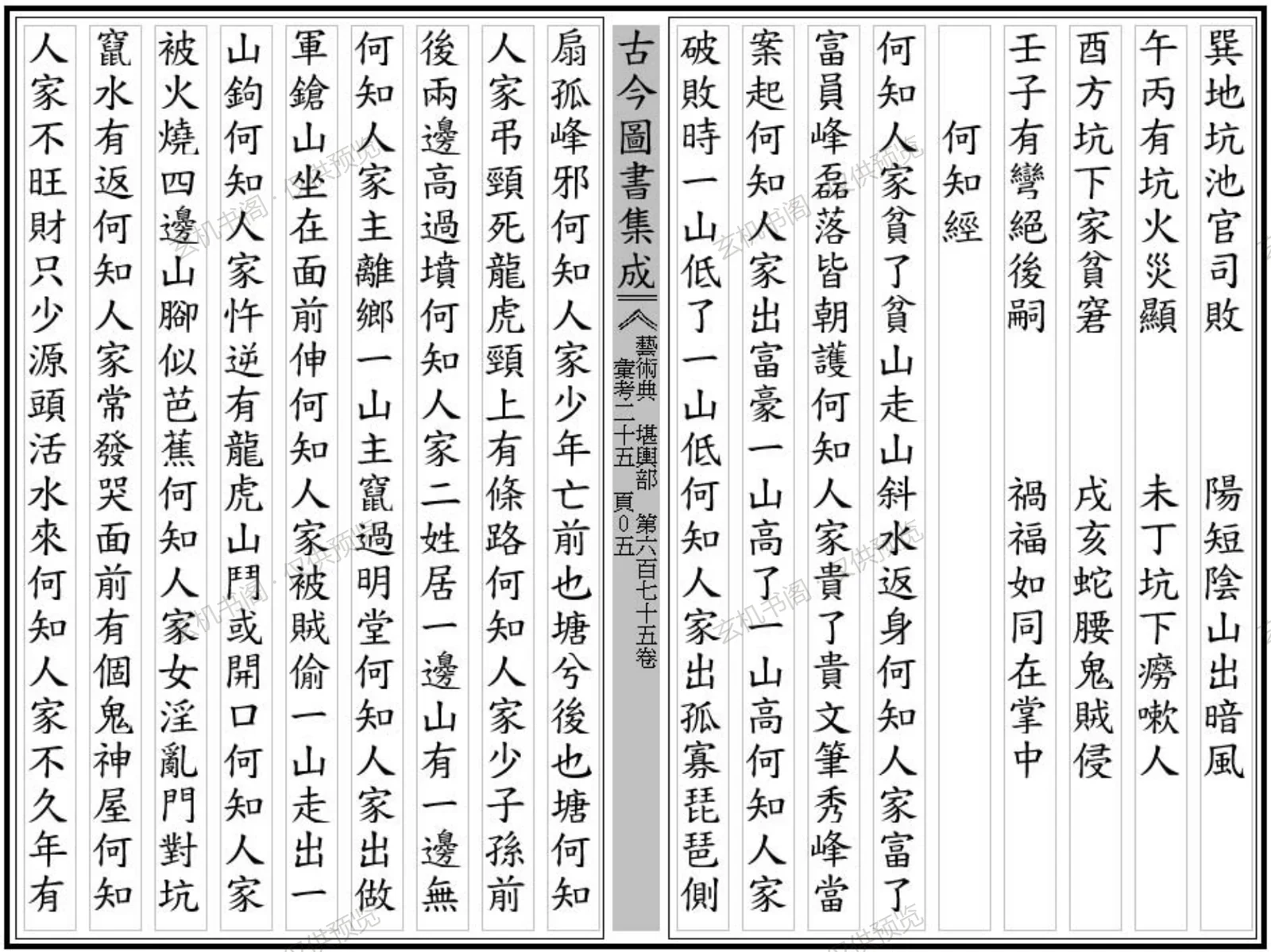
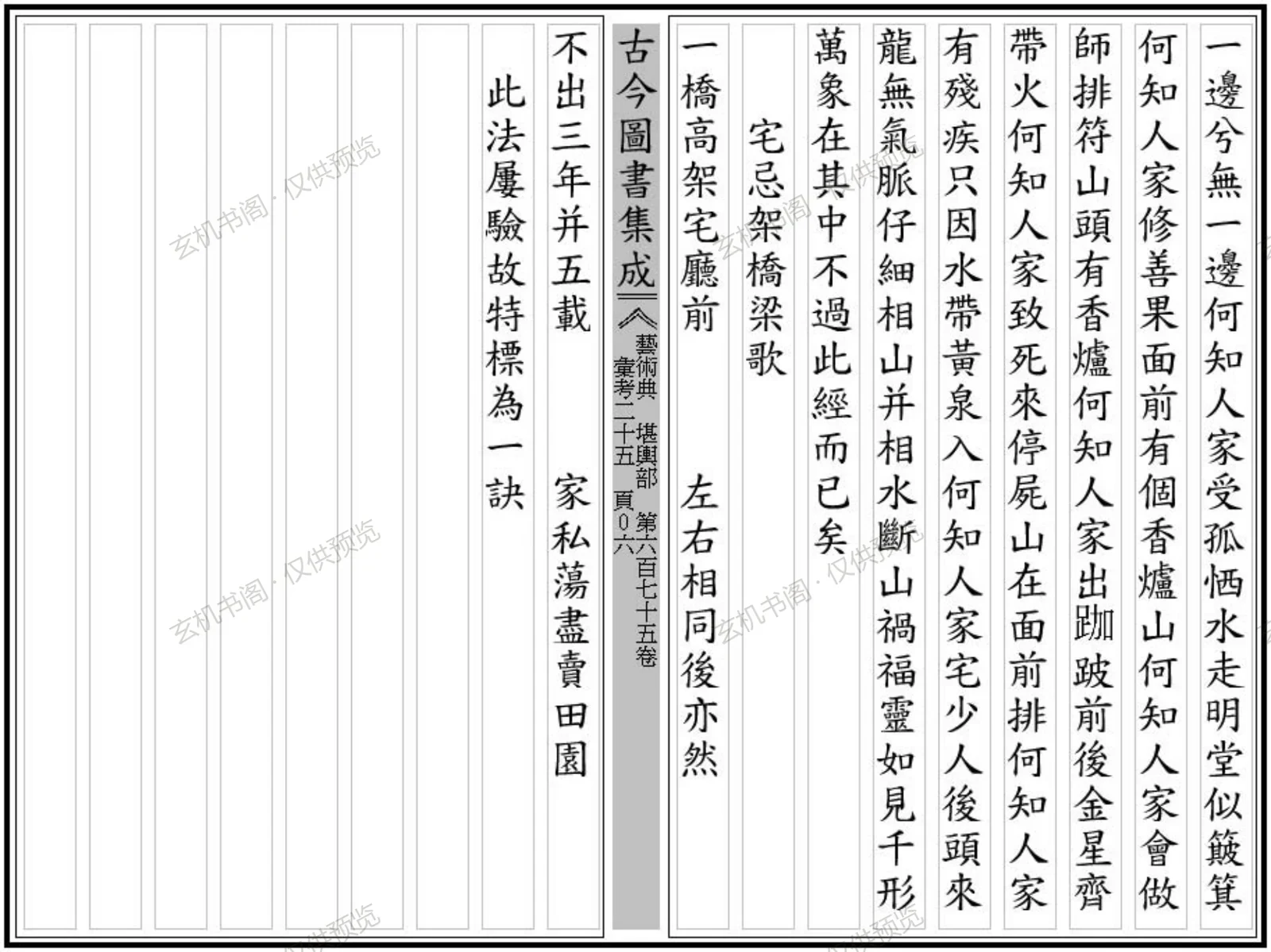
This old edition of the Ten Books on Yangdwellings, Part One, reproduces the section on yangdwelling form (xingfa) from the Kanyu chapter of the Comprehensive Compendium of Illustrations and Books. Opening with 'On the External Form of Dwellings', it sets out the principle that human dwellings should take the great earth and mountains and rivers as their basis, stressing the importance of incoming vein energy (laimai qishi) and the proper arrangement of the inner form. It then lists criteria for judging the surrounding mountains, waters, roads, water mouths, bright halls, case mountains, and the four directional animals, giving verdicts such as 'auspicious', 'inauspicious', 'greatly auspicious', 'greatly inauspicious', 'loss of wealth', and 'extinction of heirs'. The text also covers the opening and closing directions of gates, the shapes of ponds before the door, pointed tails behind the house, bridges, wells, stoves, temples, military camps, kilns, and government offices. It concludes with the seven-character mnemonic 'Hezhi Jing' and the 'Eight Directions Pit and Mound Song', summarizing the fortunes associated with pits and mounds in the eight directions. The work is primarily formalist, emphasizing field observation and empirical correspondence, and is an important source for the study of traditional environmental siting and its evaluative system.
Contents
On the External Form of Dwellings: general principles and incoming energy
Entries on the auspicious and inauspicious forms of mountains, waters, and roads
Gates, ponds, house shapes, and front-and-back feng shui
Taboos regarding surrounding temples, camps, kilns, bridges, and wells
Hezhi Jing: seven-character mnemonic on judging dwellings
Eight Directions Pit and Mound Song: fortunes of pits in the eight directions
Key Points
Takes the surrounding earth, mountains, and rivers and incoming vein energy as the general principle of dwelling assessment.
Lists verdicts on terrain, waterways, bright halls, and case mountains one by one.
Emphasizes gate directions, pond shapes, and the form behind the house.
Includes surrounding temples, military camps, kilns, bridges, and wells in its judgments.
Summarizes empirical judgments in the mnemonics Hezhi Jing and Eight Directions Pit and Mound Song.