Reading guide
Content guideOverview
This is a six-page excerpt from Yiting's Zi Wei Dou Shu systematic course, Part 04 of the 09-19 series. It moves from the decade chart (da xian) to the annual chart (liu nian), noting that the annual chart rotates around the year's tai sui palace and is the only chart that includes monthly palaces. The text shows how natal, decade, and annual palaces stack into two- or three-layer structures with added transit stars, then explains that decade four transformations derive from the decade palace stem while annual four transformations follow the year stem in the perpetual calendar; for the ji-hai year the four are ji, wu, tan, liang, qu. The same annual transformations apply to everyone and represent the broader environment. A full four-transformation table follows, with a correction noting that the xin stem's hua ke and hua ji are printed in reverse and should be qu for ke and chang for ji. The final pages present a 2019 annual chart module and mention spirits and stars (shen sha) as an alternative way to forecast the year's trend. The material is practical and structural rather than a complete treatise.
Contents
Decade chart versus annual chart
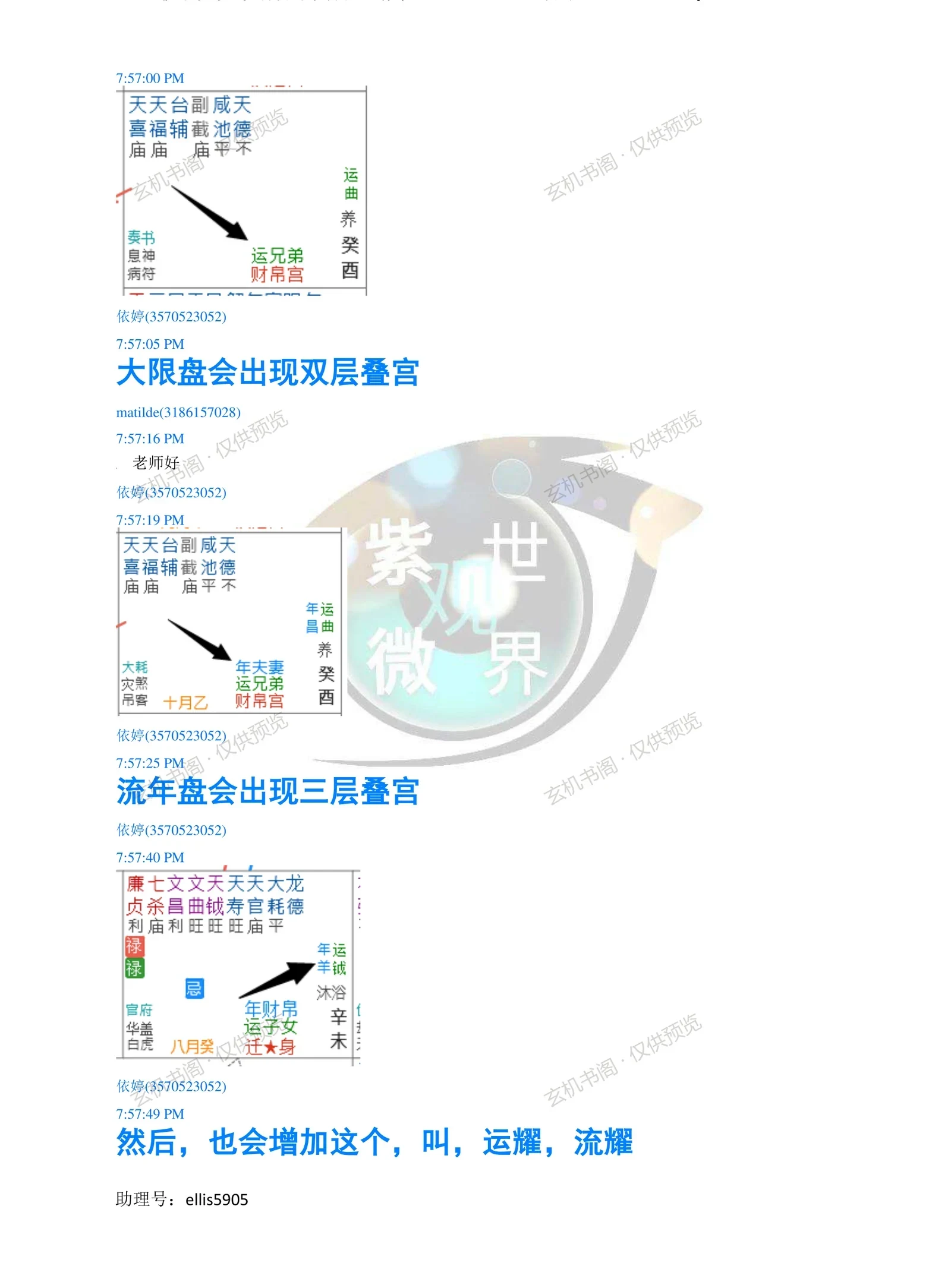
Three-layer palace stacking in the annual chart
Adding transit and annual stars
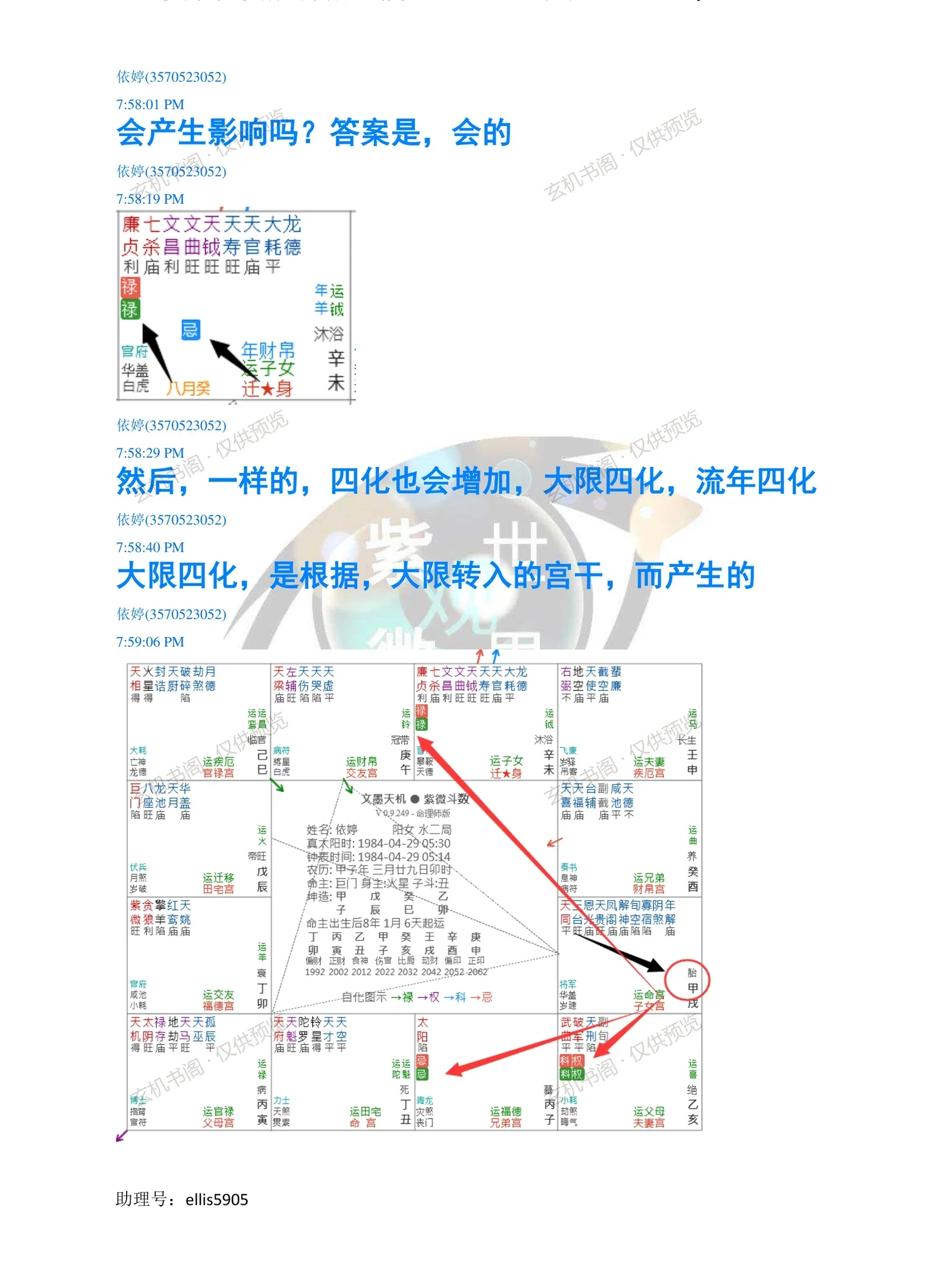
Sources of decade and annual four transformations
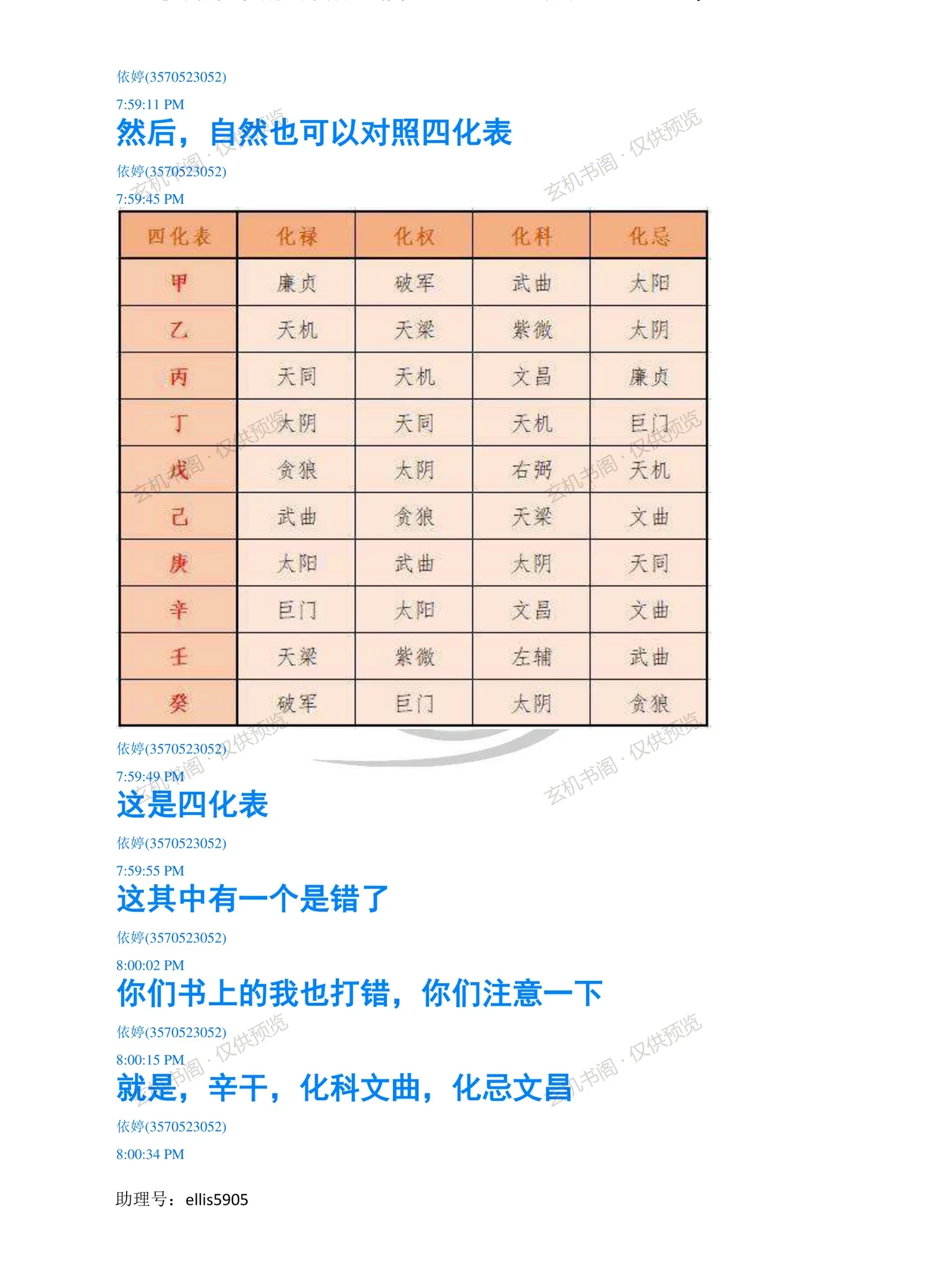
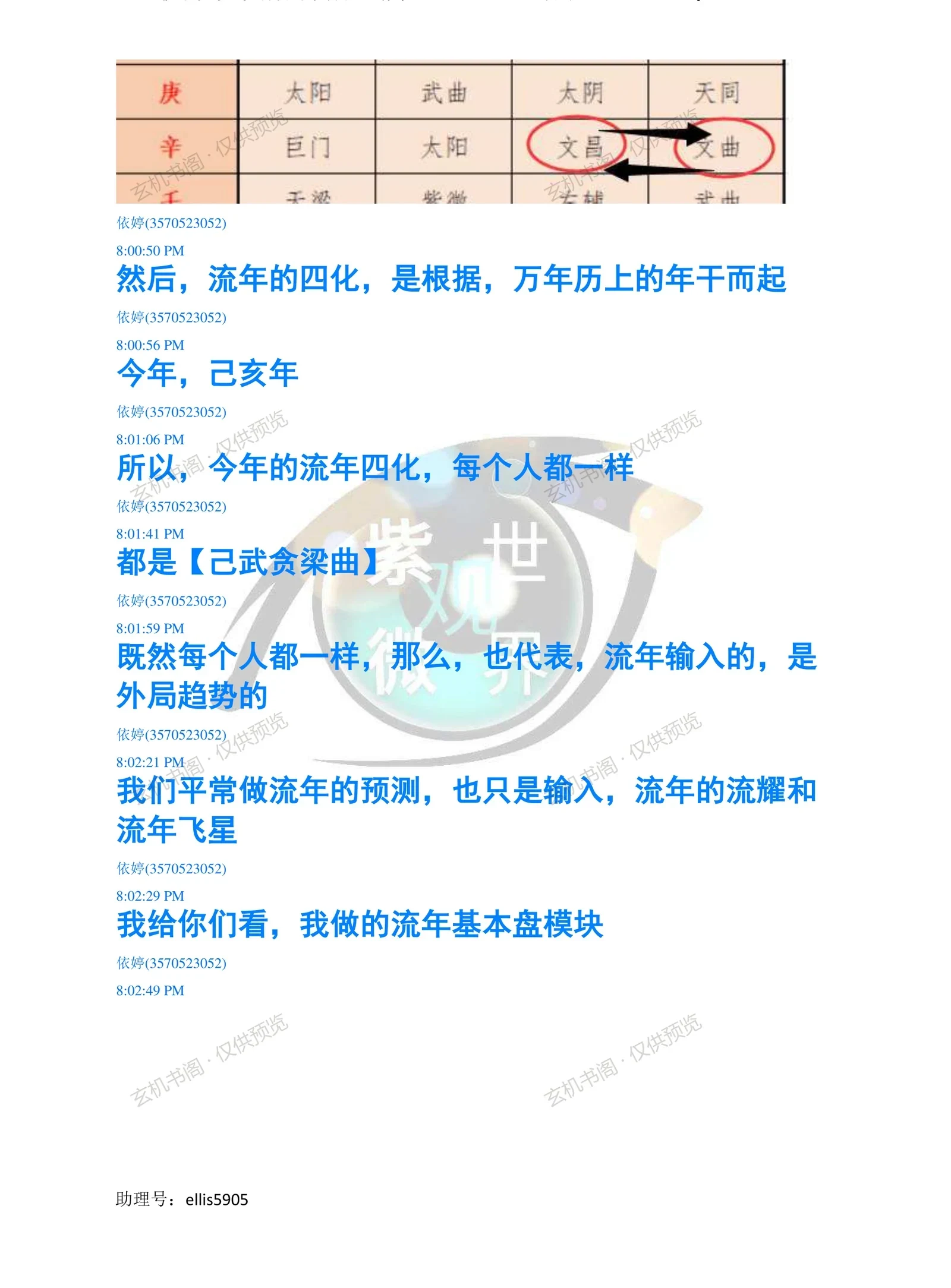
Four-transformation table and the xin-stem correction
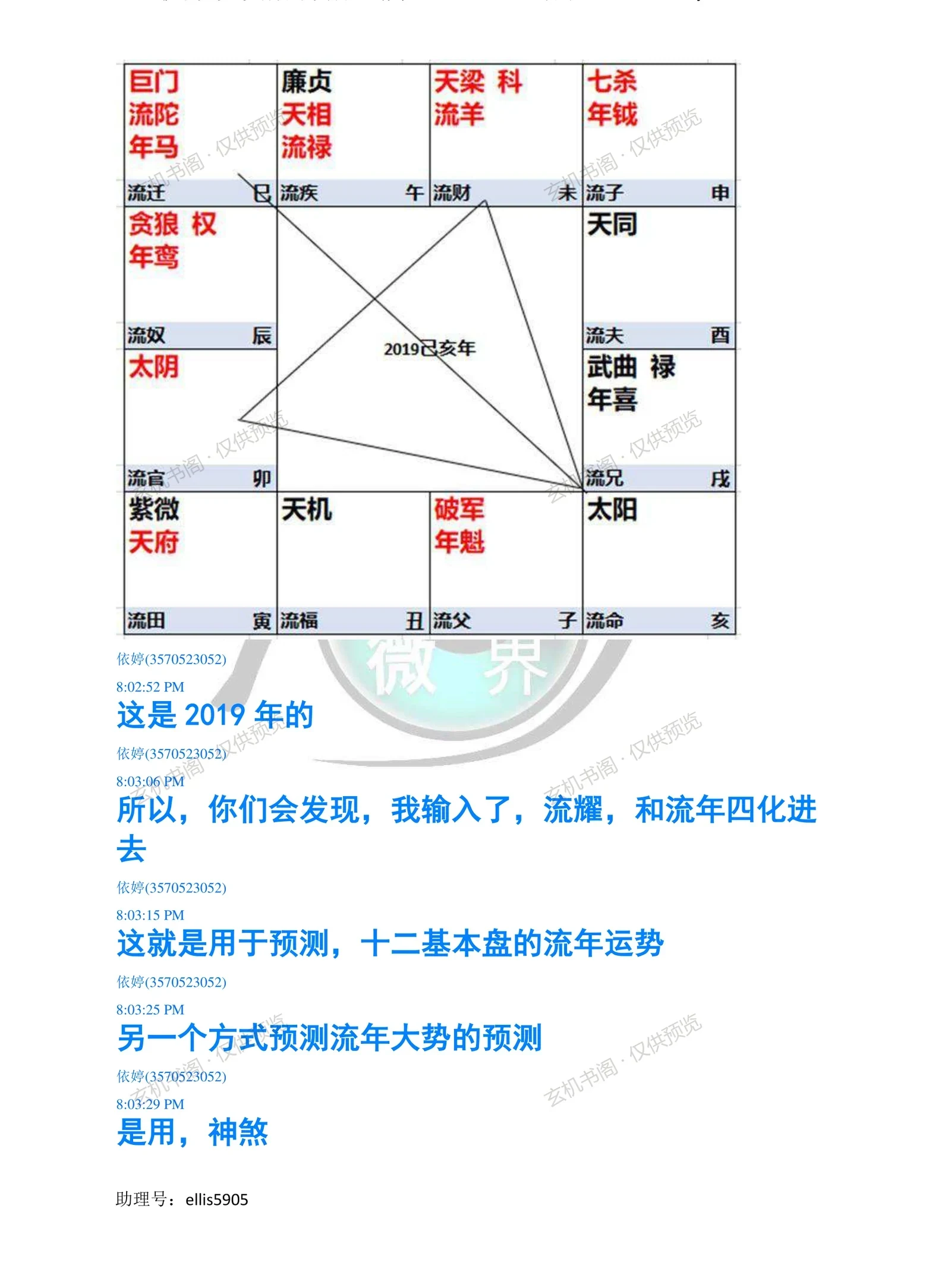
Sample 2019 annual chart module
Using shen sha to forecast annual trends
Key Points
The annual chart rotates with the tai sui palace and is the only one with monthly palaces.
Natal, decade, and annual palaces stack into two or three layers, with transit stars added.
Decade transformations follow the decade palace stem; annual ones follow the year stem.
Annual transformations are the same for everyone and reflect the external environment.
The handout's xin-stem hua ke and hua ji are reversed and need correcting.
Shen sha offer an alternative route for annual forecasting.