Reading guide
Content guideOverview
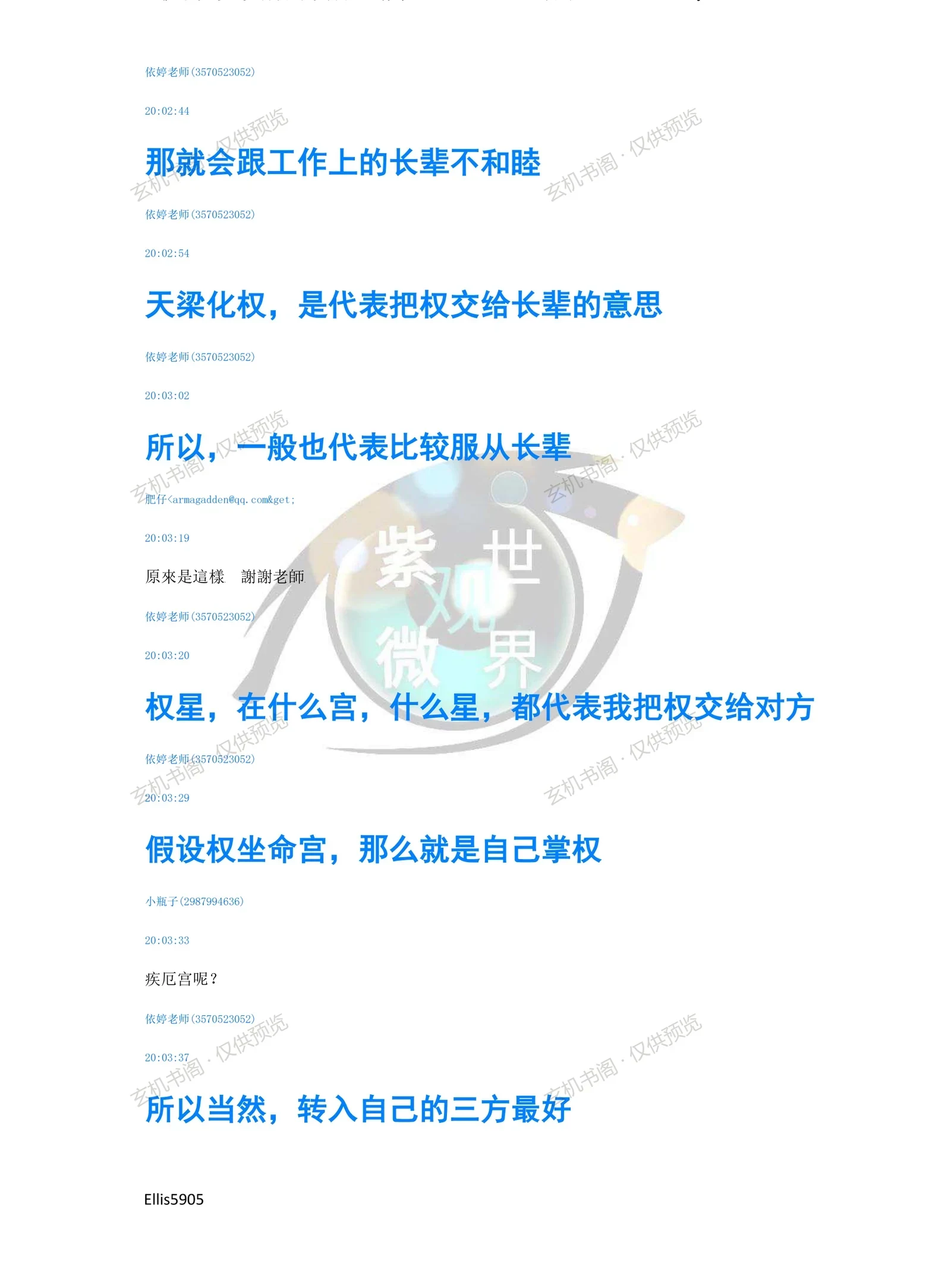
This volume is a transcript of Yi Ting's online Zi Wei Dou Shu (Purple Star Astrology) systematic course held on the evening of September 19, 2019, preserved with chat timestamps and student questions rather than reorganized into formal chapters. The lesson centers on the Tian Liang star: a comparison table first contrasts Tian Liang meeting auspicious stars with meeting malefic ones, covering elder and mentor support, relations with superiors, temper, and in-law tensions in marriage. Yi Ting then explains her reasoning method—Tian Liang with auspicious stars brings help from elders, with malefic stars it indicates discord with elders—and extends this to the Spouse Palace and annual transit palaces. A case example describes a client whose annual transit entered the Spouse Palace with Tian Liang, Qing Yang, and Tian Ji Hua Ji opposing, from which she judged family elders would object. The later section turns to the Four Transformations, arguing that Tian Liang Hua Quan means handing authority to elders and deferring to them, that a Quan star in any palace means giving authority to that palace's affairs, and that Quan in the Life Palace means holding authority oneself. The material suits readers who already know basic chart construction and want to see how star combinations and palace transits are used in concrete judgments.
Contents
Auspicious vs. malefic stars meeting Tian Liang
Using Tian Liang with malefic stars to judge in-law ties
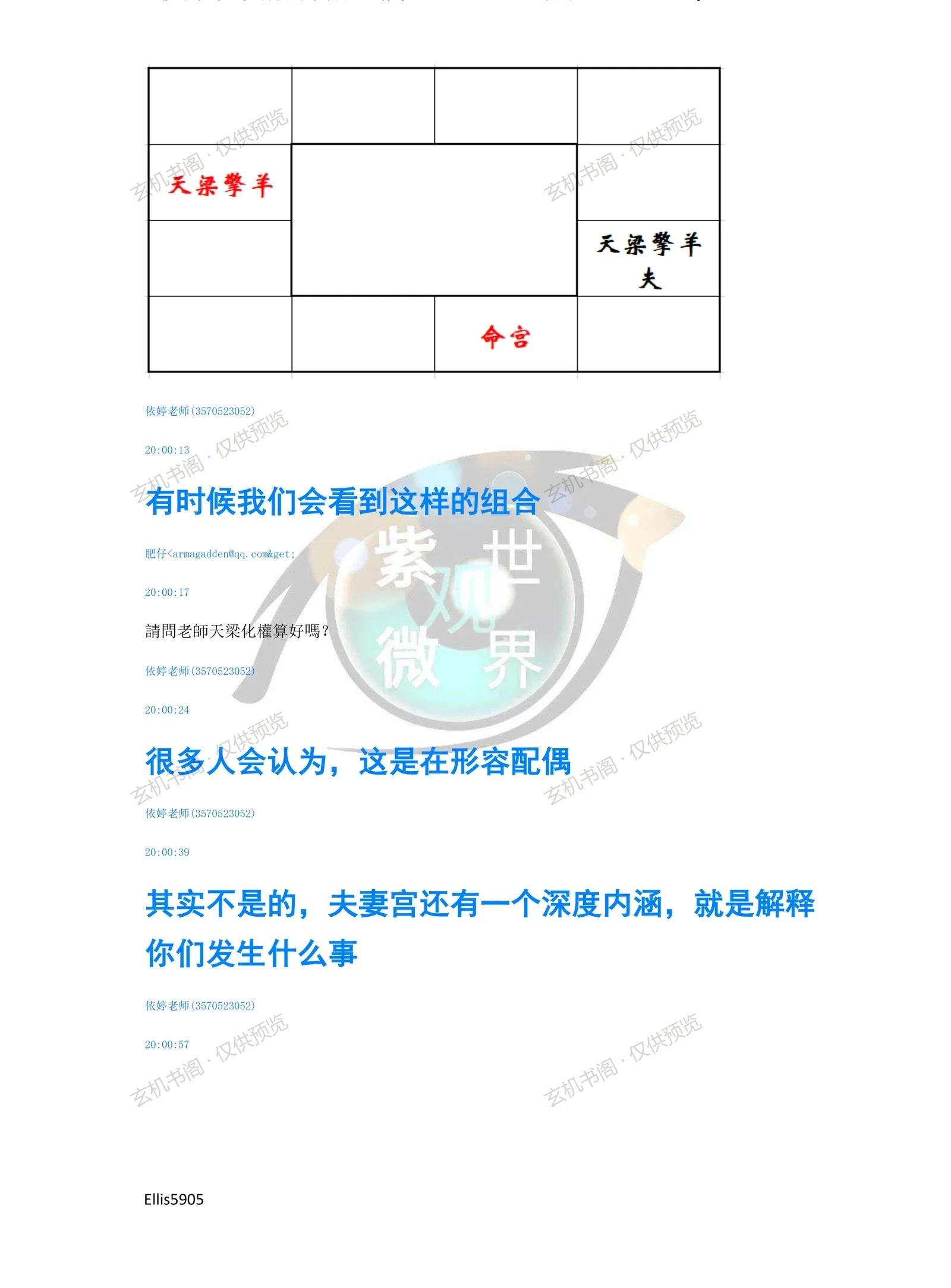
Tian Liang and Qing Yang in Spouse and Life palaces
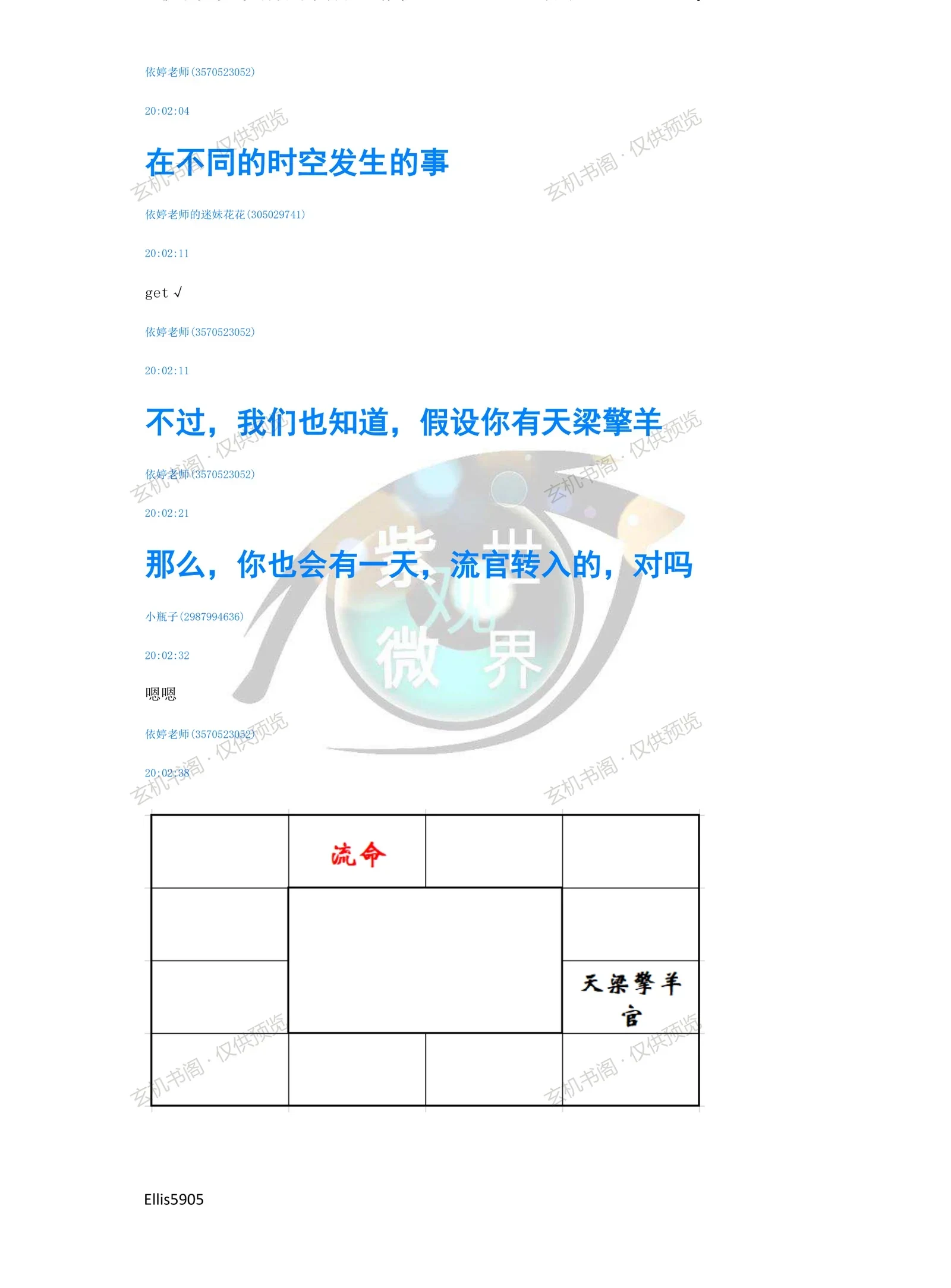
Case study of annual transit and twelve-palace reasoning
Tian Liang Hua Quan and the meaning of the Quan star's palace
Key Points
Tian Liang with auspicious stars brings elder support; with malefic stars, discord
The Spouse Palace also describes events and elders' attitudes
Case: annual transit in Spouse Palace with Tian Liang, Qing Yang, Tian Ji Hua Ji
Tian Liang Hua Quan means yielding authority to elders
Where the Quan star sits shows to whom authority is given