Reading guide
Content guideOverview
This book is a lecture record from Yi Ting's systematic Zi Wei Dou Shu course, focusing on astrological health assessments. The author shares her journey in the field, detailing how she moved beyond judging disease severity solely by the Illness Palace. Noting that the natal chart tends to align with TCM diagnoses rather than Western medicine, she introduces the concepts of the 'Cause Palace' and the 'Onset Palace'. The text explains that the inauspicious palace is the source (Cause), while the weakest palace in its trine is the site of the disease (Onset), with empty palaces often being affected first. Furthermore, the lecture details the integration of the Meridian Clock chart and palm diagnosis into the astrological chart. By correlating the Hua Ji star (associated with water and blockage) with TCM theories of phlegm and stagnation, the author demonstrates a novel, interdisciplinary approach to early health evaluation without relying on medical scans.
Contents
Origins and development of Yi Ting's health topic
Limitations of using the Illness Palace alone
Conflicts between chart readings and Western medicine
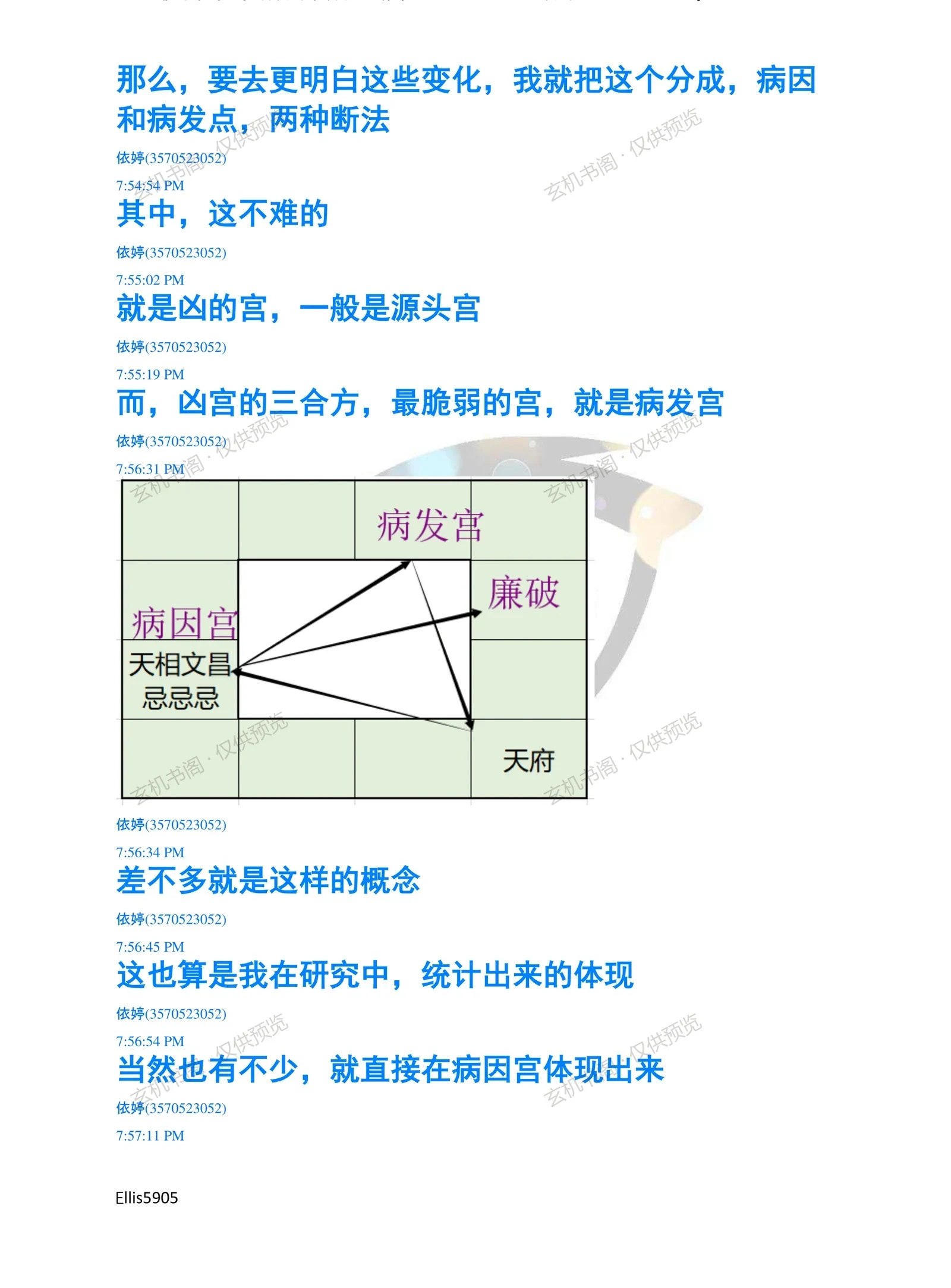
Differentiation between the Cause Palace and Onset Palace
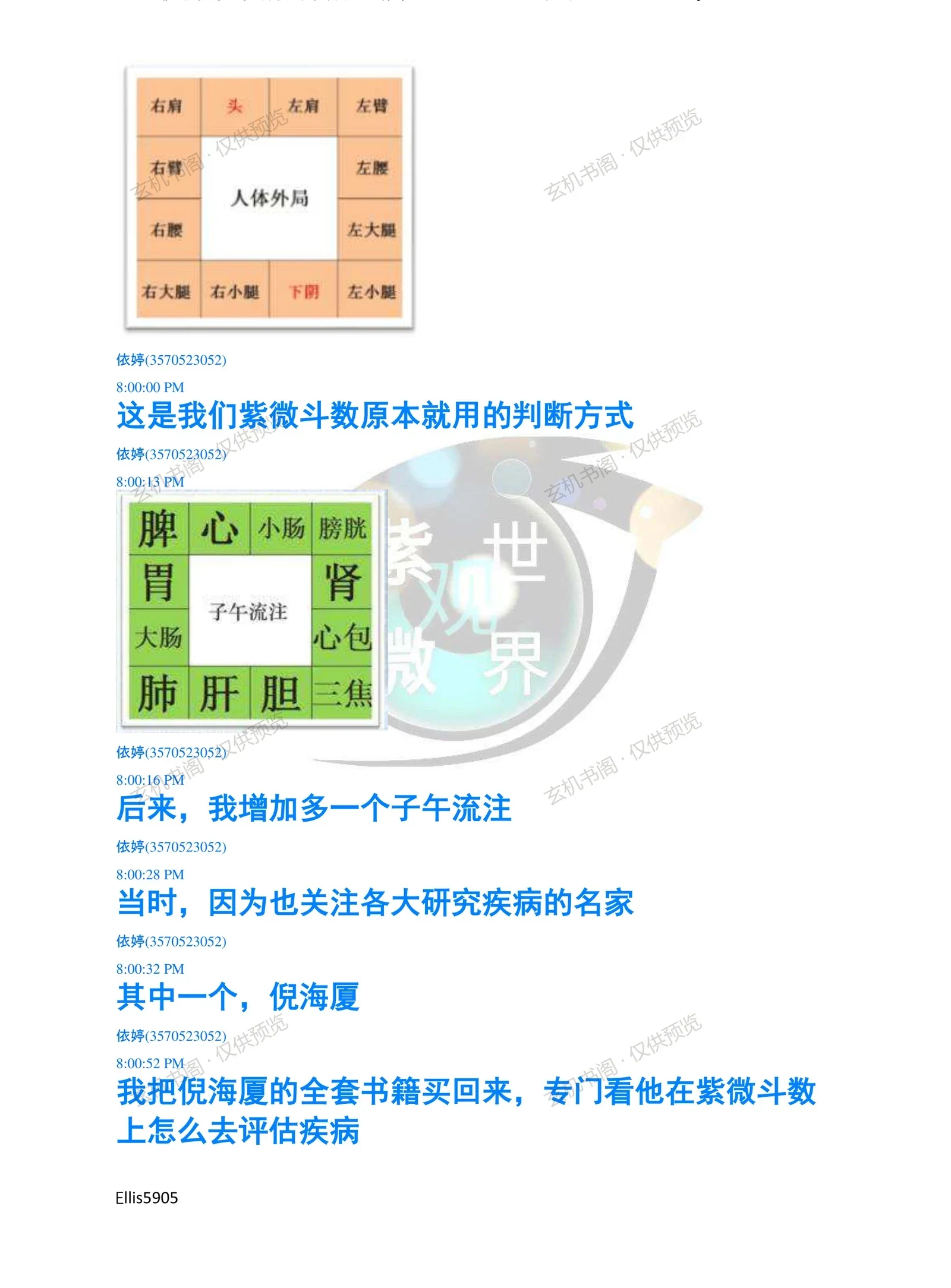
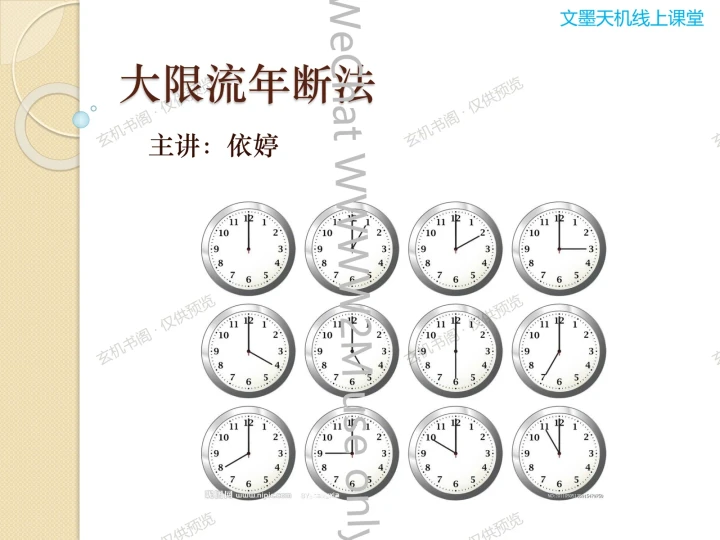
Integrating palm diagnosis and the Meridian Clock chart
Correlating TCM stagnation with Hua Ji in Zi Wei
Key Points
Explains that judging severity purely by the Illness Palace is unreliable, requiring analysis of three generations of palaces.
Divides the pathological process into the 'Cause Palace' (inauspicious palace) and the 'Onset Palace' (weakest in the trine).
Uses palm diagnosis as a preliminary assessment method to verify consistency with the natal chart.
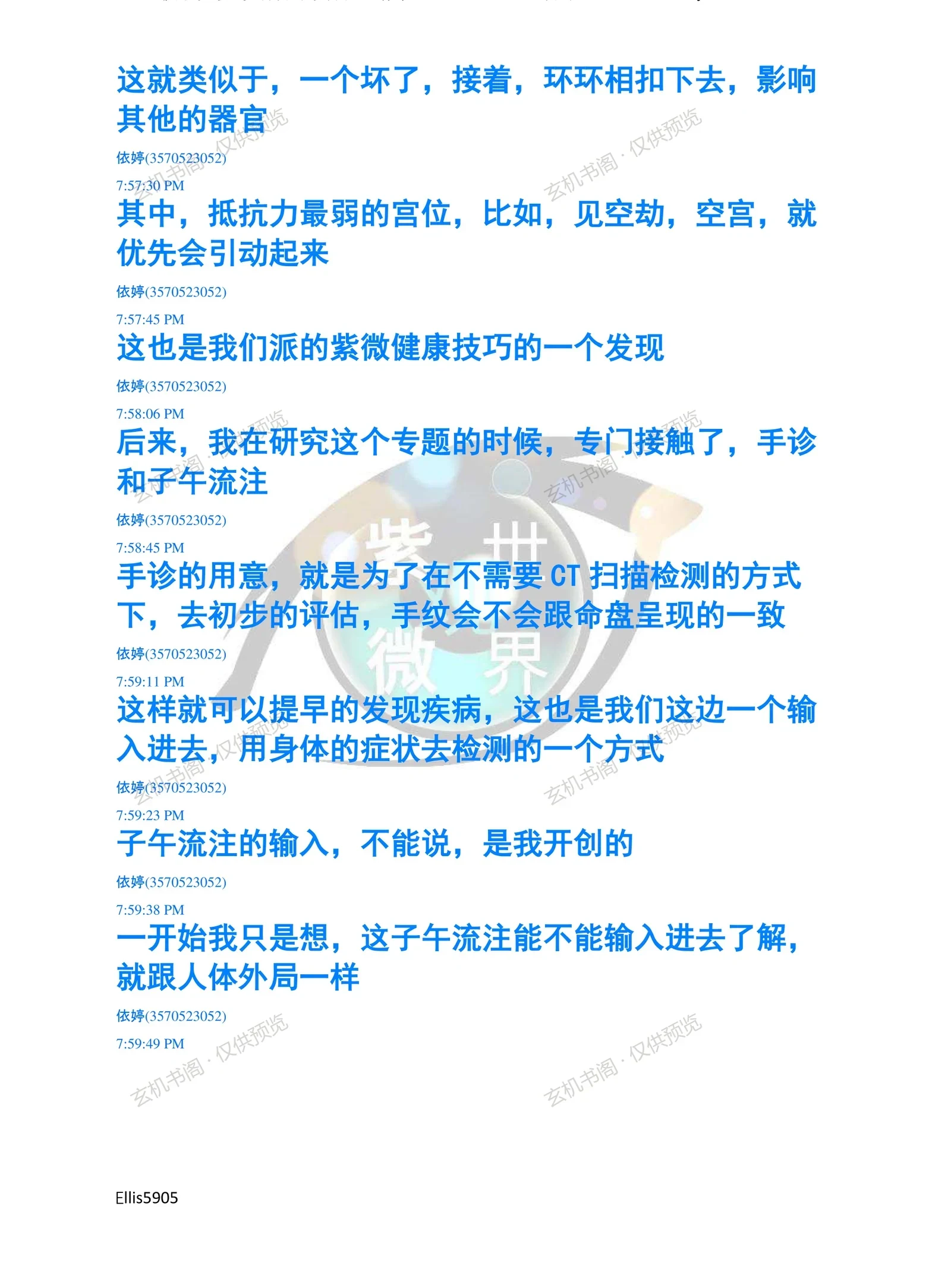
Incorporates the Meridian Clock chart into the Zi Wei chart as a representation of the human body's external structure.
Applies TCM theory, interpreting the Hua Ji star (water) as blockages in meridians or blood vessels.