Reading guide
Content guideOverview
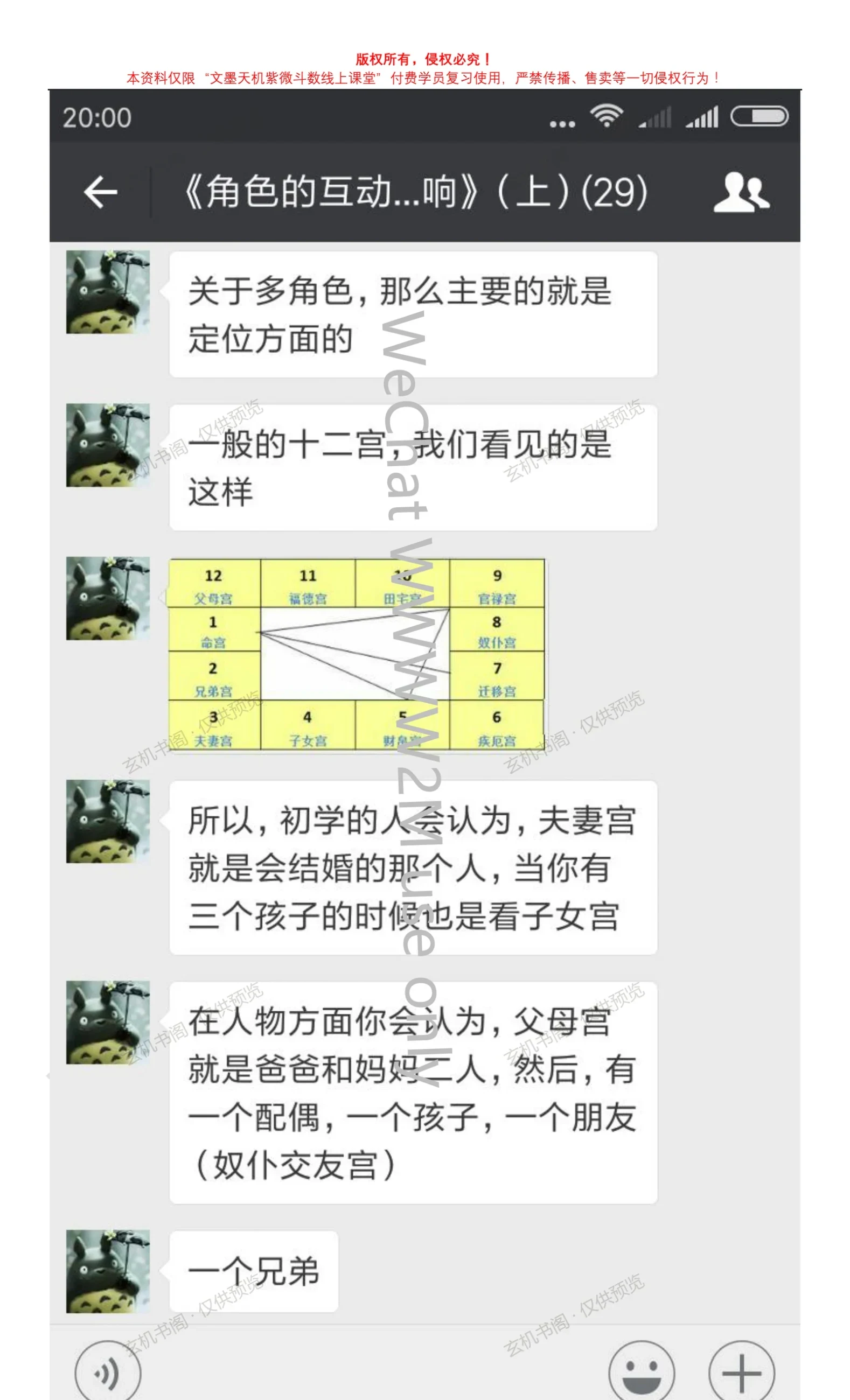
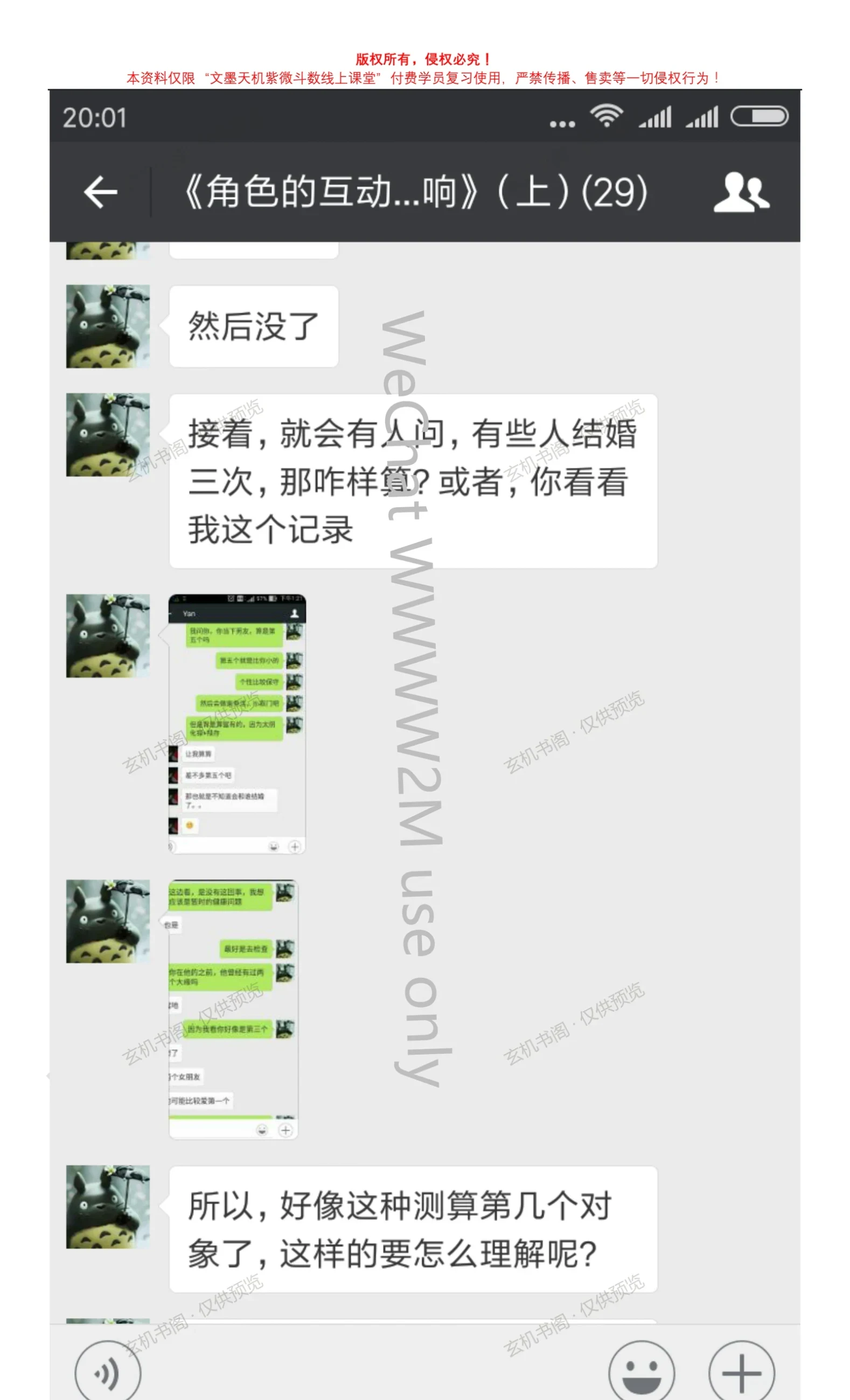
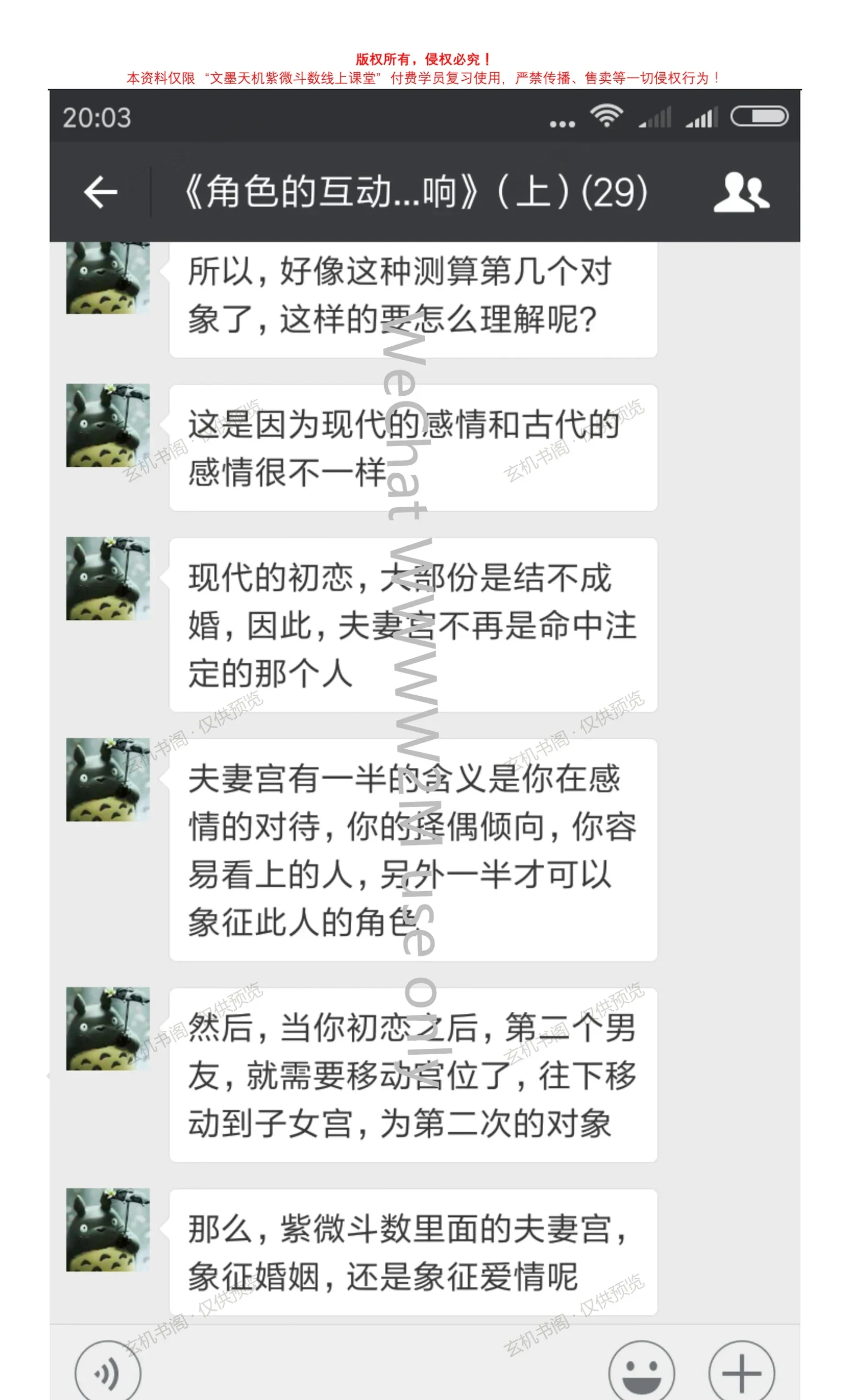
This volume collects the materials of the second session of the Wenmo Tianji Zi Wei Dou Shu online classroom, taught by Yi Ting, Part One of Role Interaction and Influence. Presented as classroom chat logs and slide captures, it begins with the question of what multiple roles mean: a person's fate is not read from a single angle but emerges from social interaction, so several palaces must be weighed together. The lecture reviews the standard twelve palaces — Life, Siblings, Spouse, Children, Wealth, Health, Travel, Friends and Servants, Career, Property, Fortune, and Parents — then challenges beginners who assume one palace equals one person, such as the Spouse palace being the marriage partner or the Parents palace being father and mother. It argues that multiple children or successive relationships require reading the relevant palaces in turn. The latter half contrasts modern and classical romance: first loves rarely end in marriage, so the Spouse palace half describes one's own attitude toward love and taste in partners and only half symbolizes the partner; a second partner is traced by shifting to the Children palace. The session closes by asking whether the Spouse palace signifies marriage or love. The informal, example-driven format suits readers who already know the basic chart and want to study palace overlap and multi-person inference.
Contents
What multiple roles mean: fate as social chemistry
Names and fixed positions of the twelve palaces
Beginner pitfalls: one palace, one person or event
Modern romance and the dual meaning of the Spouse palace
Tracing successive partners by shifting palaces
Does the Spouse palace mean marriage or love?
Key Points
Fate is read from social interaction, not a single angle
Multi-role inference builds on the basic twelve-palace layout
The Spouse palace also reflects one's own taste in partners
A second partner may be read through the Children palace
Modern first loves rarely lead to marriage, changing how charts are read