Reading guide
Content guideOverview
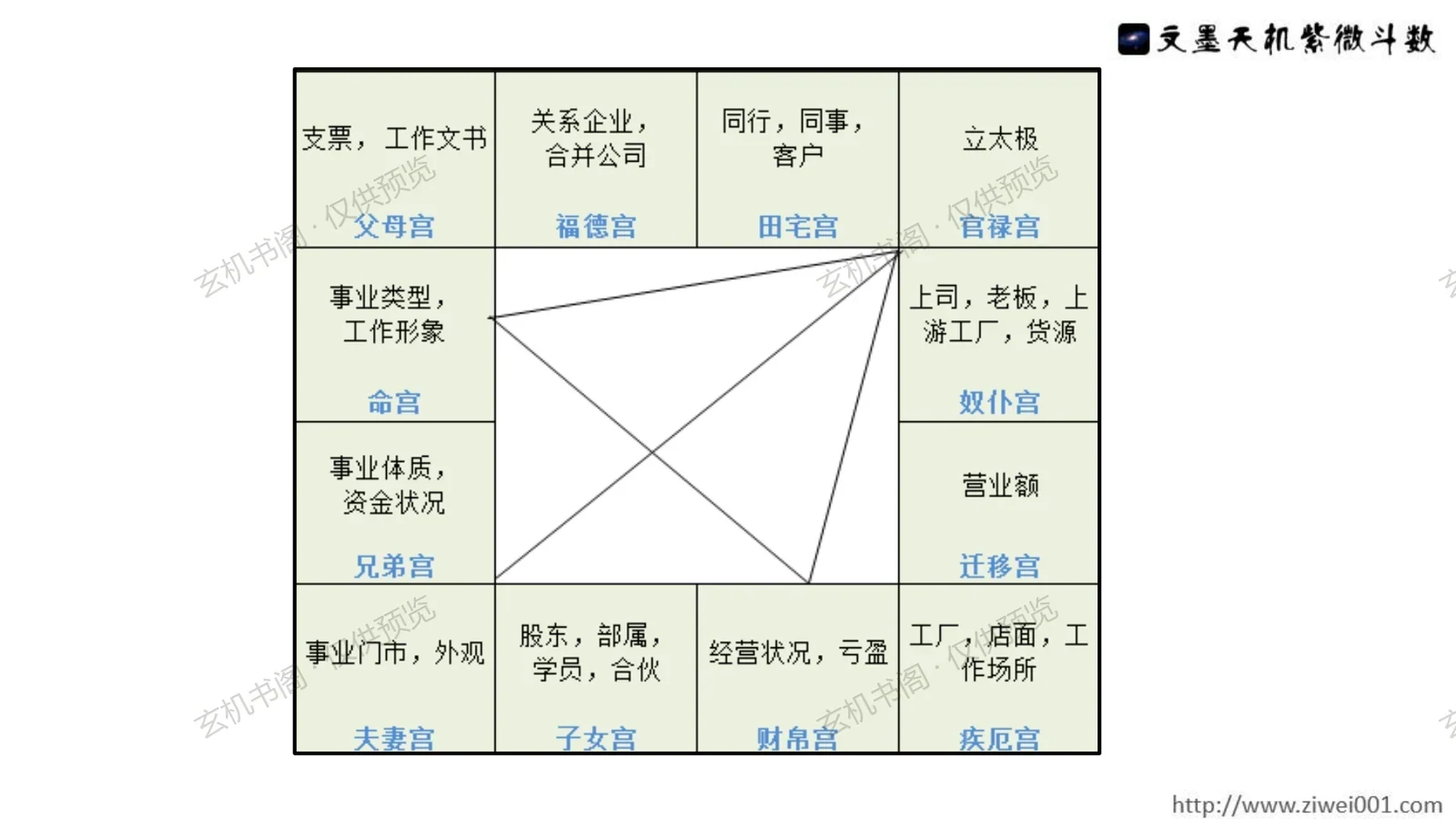
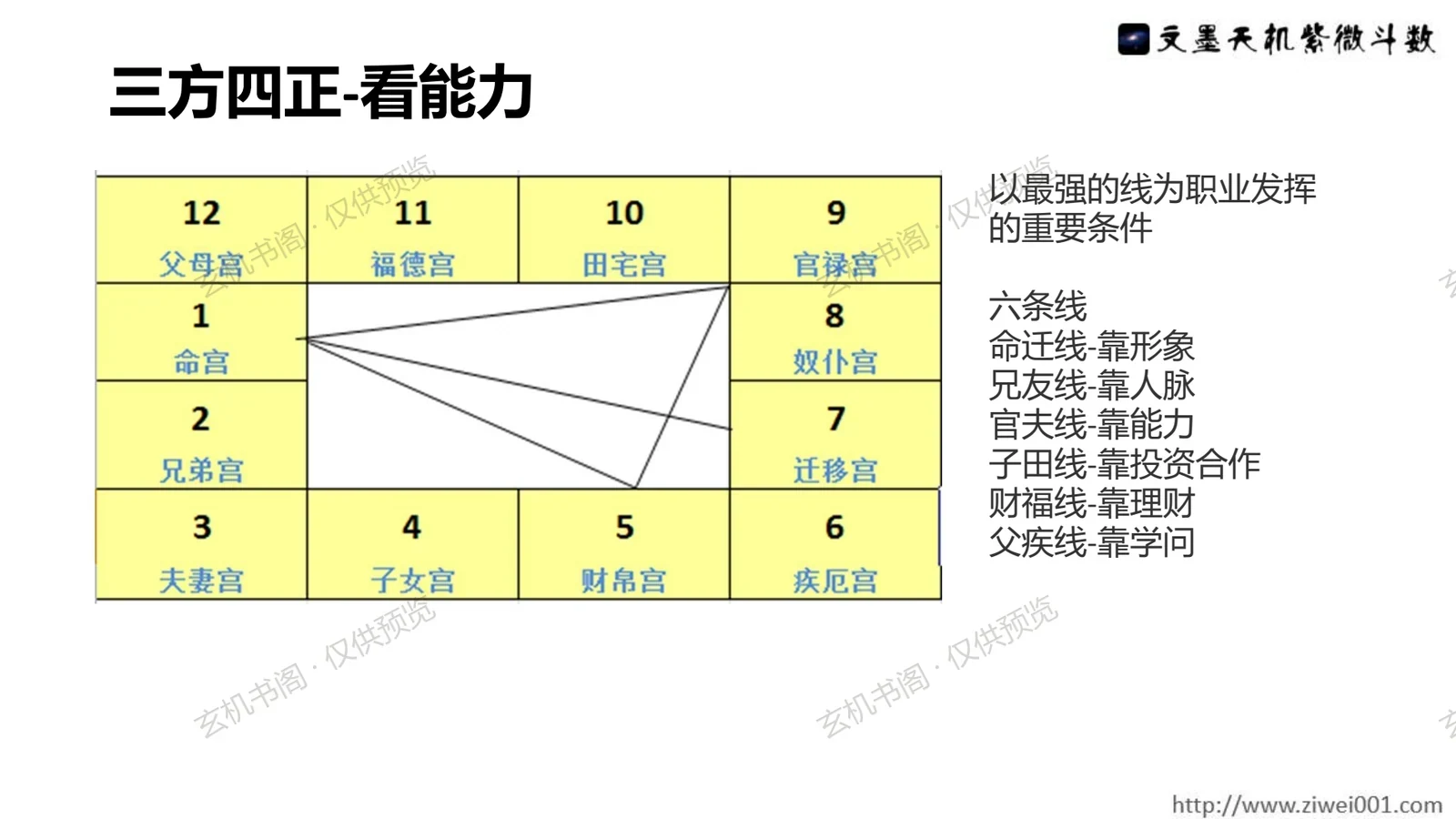
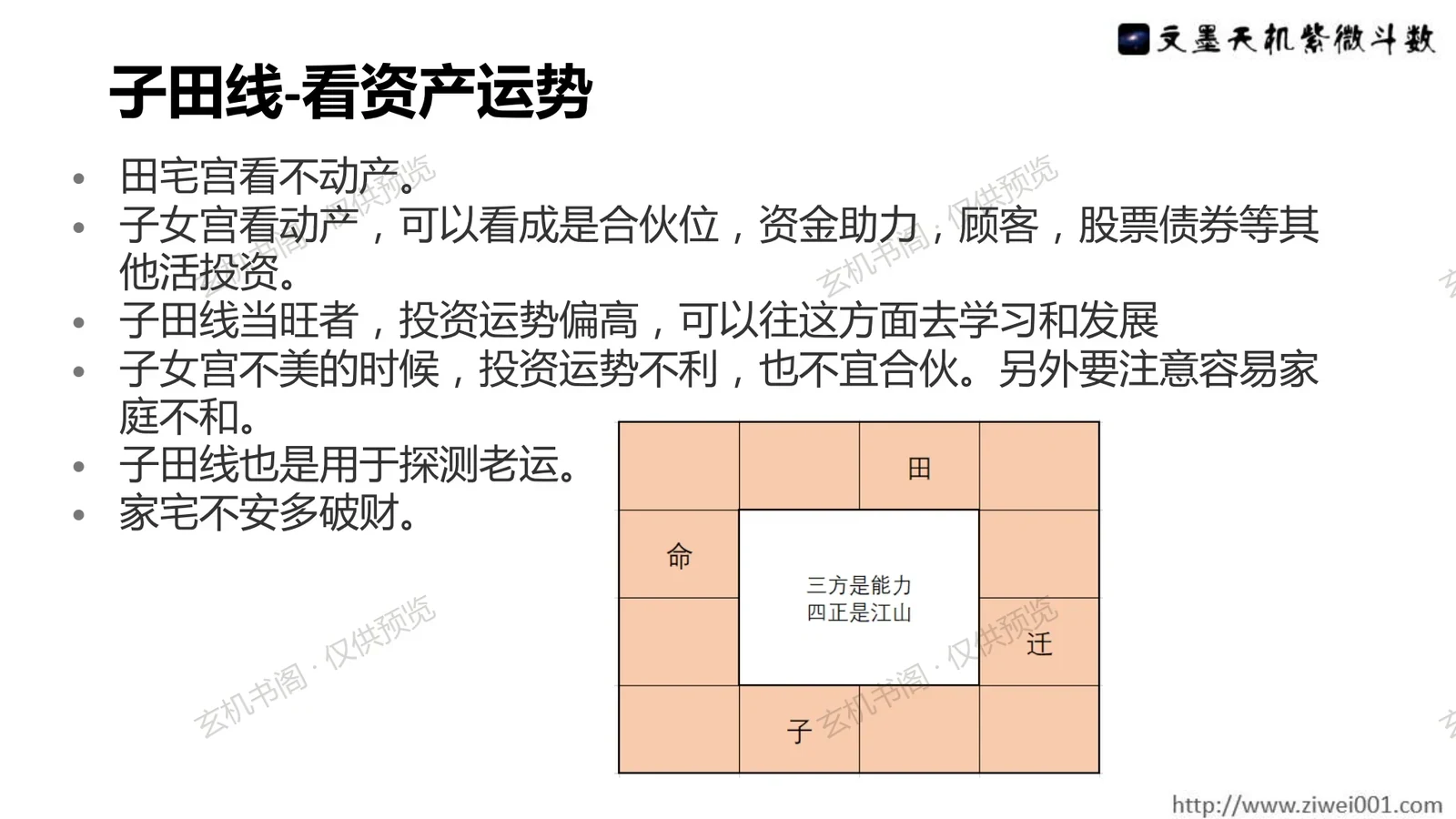
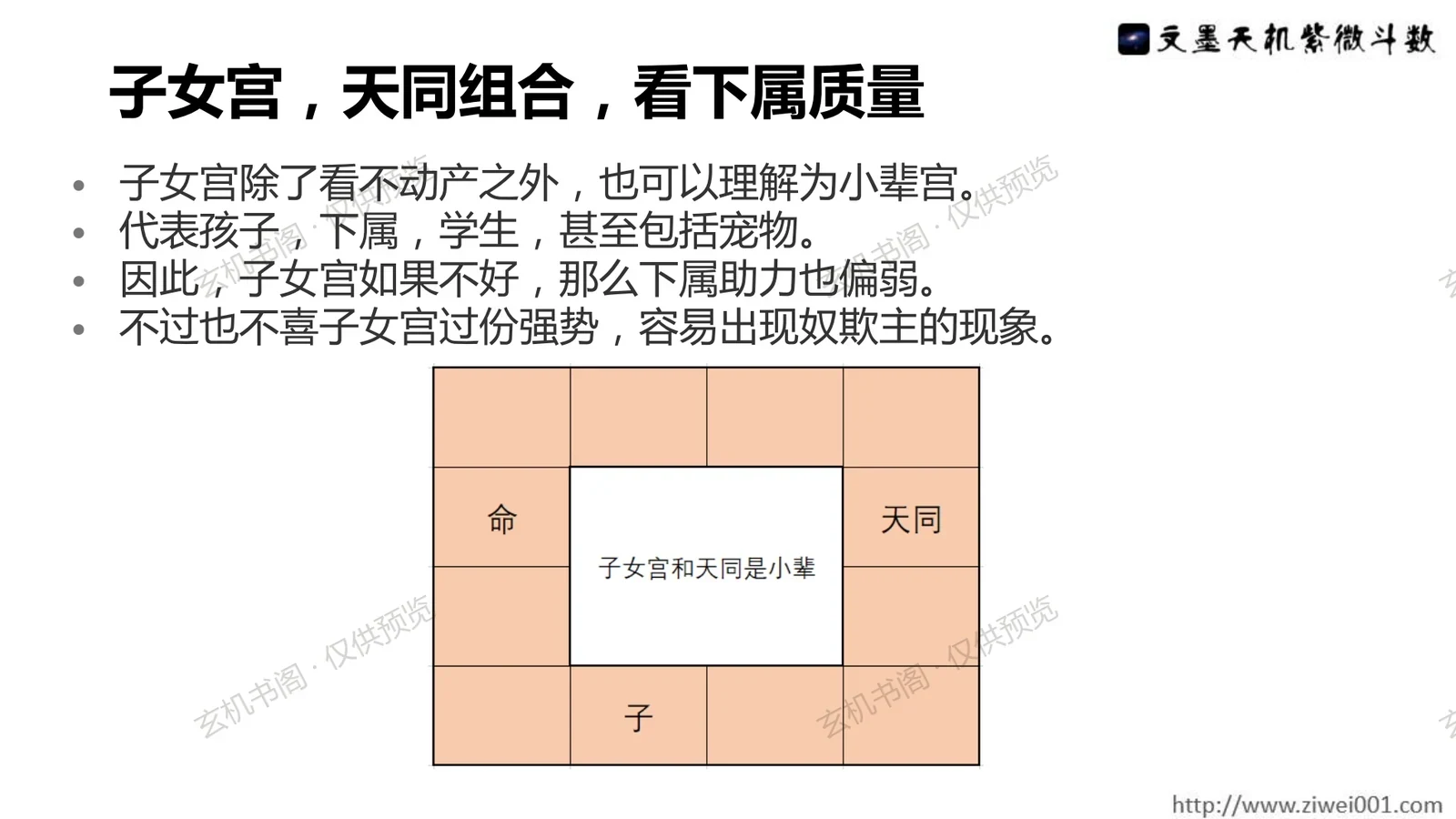
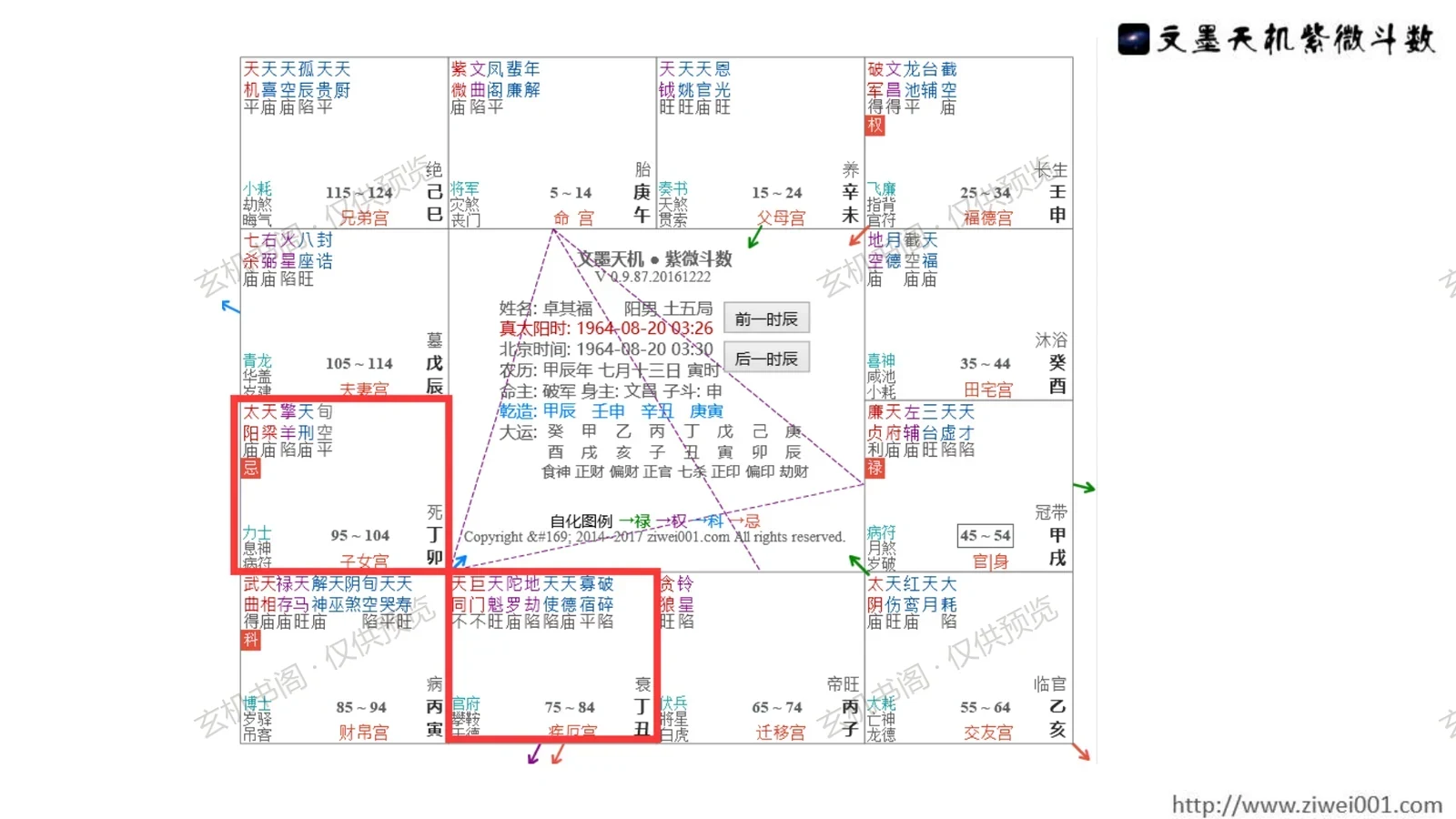
This is a beginner-level lecture in the career series of Zi Wei Dou Shu, centered on the meanings of the twelve palaces in career analysis. The chart is presented with each palace annotated for work-related significance, such as the Life Palace for career type and image, the Career Palace for superiors and supply sources, the Wealth Palace for business performance and profit or loss, the Property Palace for peers, colleagues, and clients, and the Bliss Palace for affiliated enterprises and mergers. It then explains the Three Directions and Four Positions for assessing ability, listing six lines: Life-Travel for image, Brother-Friend for connections, Career-Spouse for competence, Child-Property for investment and partnership, Wealth-Bliss for financial management, and Parent-Illness for learning, with the strongest line indicating the main career direction. It also covers the Child-Property line for asset fortune and the Child Palace with Tian Tong for subordinate quality, making it a palace-study reference for Zi Wei Dou Shu career beginners.
Contents
Basic meanings and chart layout of the twelve palaces
Three Directions and Four Positions: six lines for ability
Child-Property line for asset fortune
Child Palace with Tian Tong for subordinate quality
Key Points
Each of the twelve palaces has a specific career-related meaning
The Three Directions and Four Positions yield six ability lines
The Child-Property line relates to assets and investment fortune
The Child Palace can indicate subordinates, students, and partnership support