Reading guide
Content guideOverview
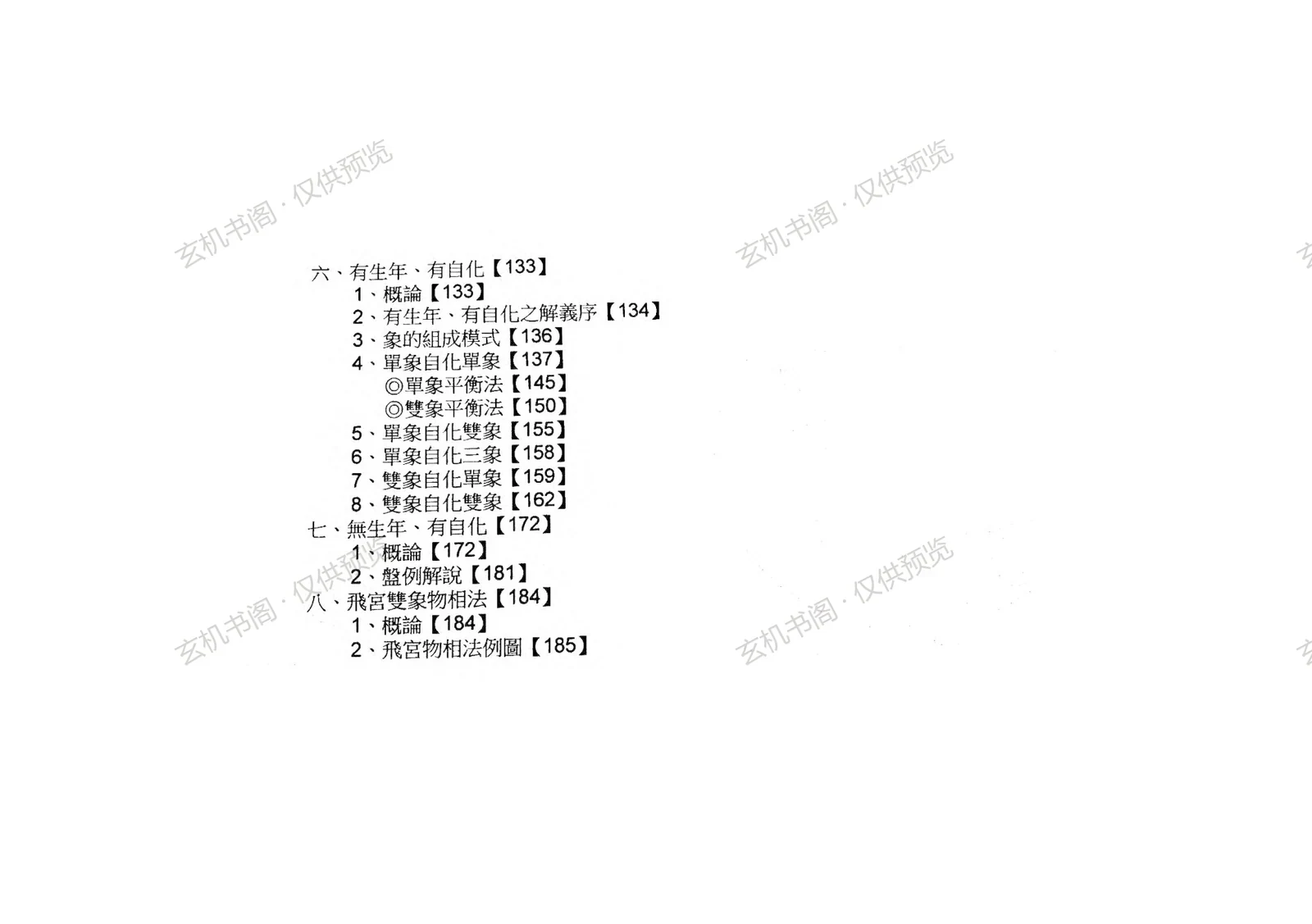
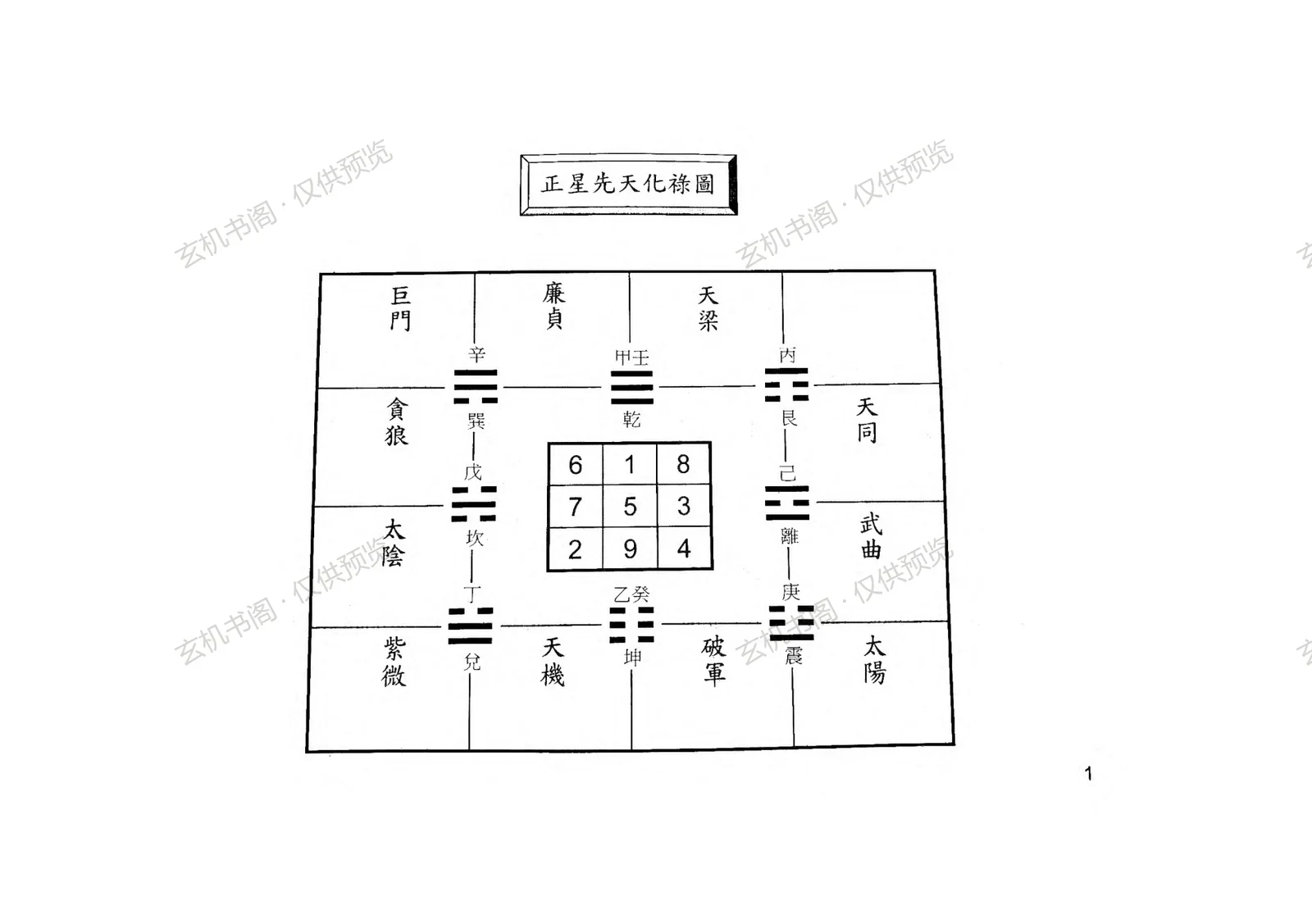
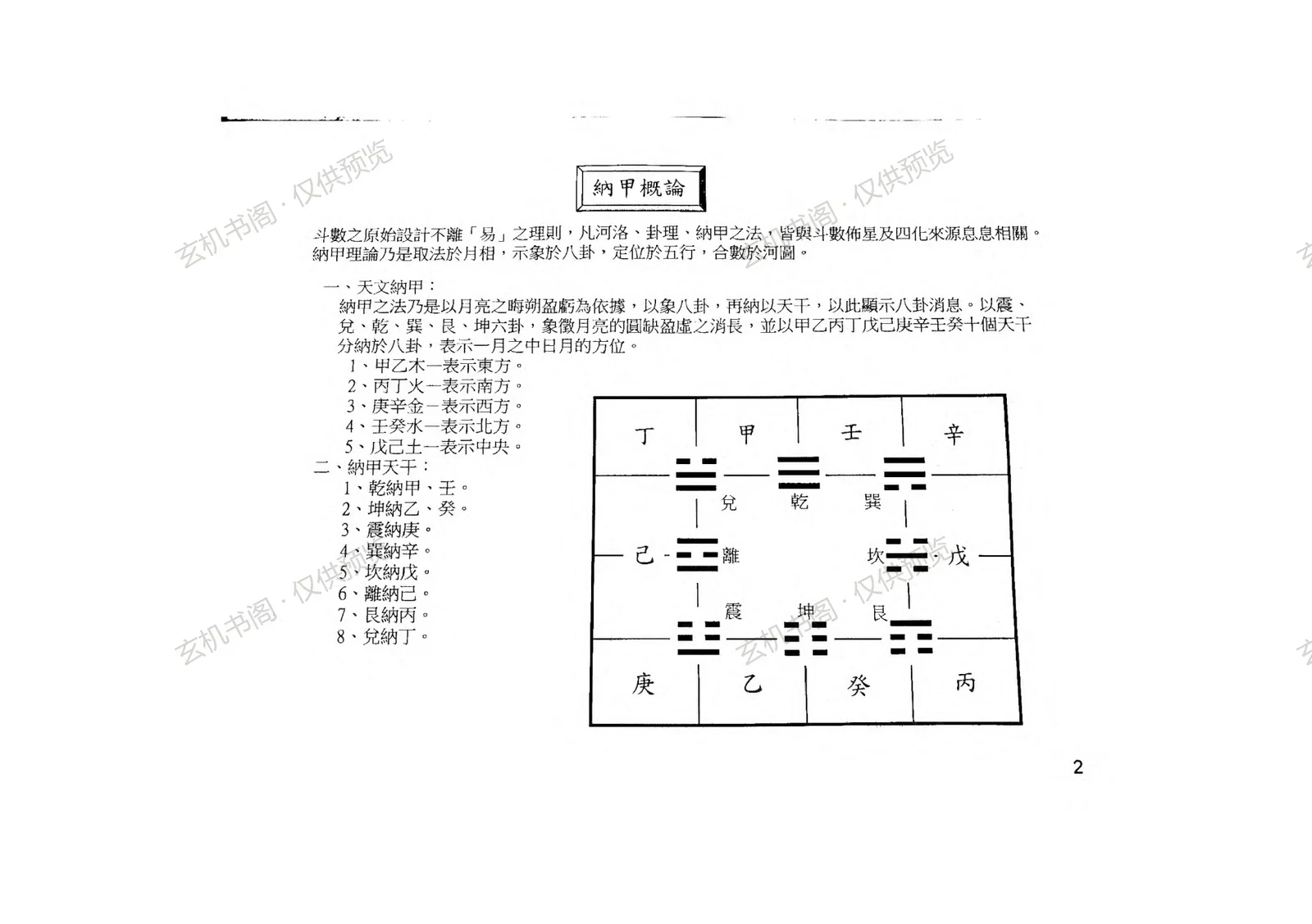
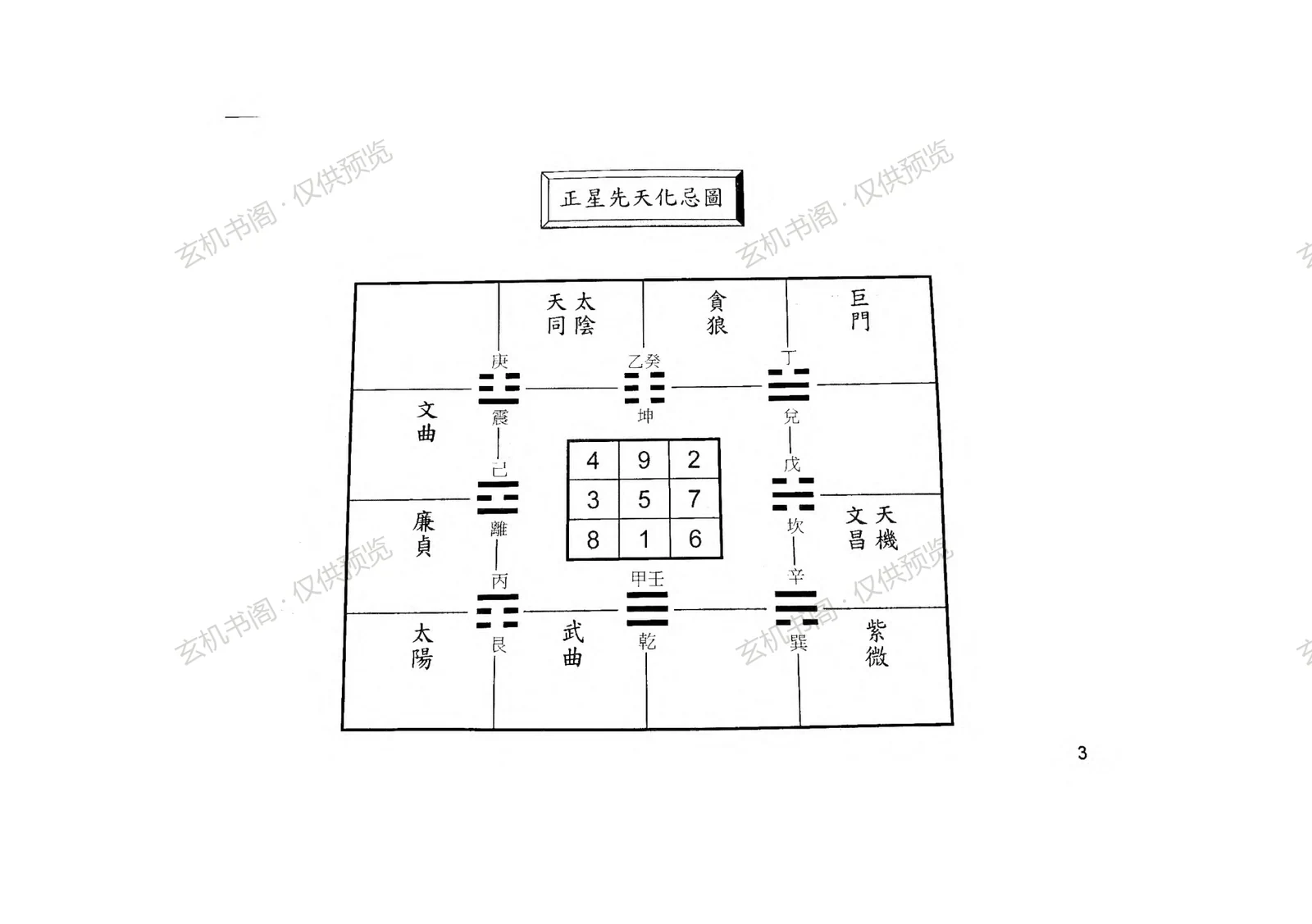
This is an auxiliary reference collection for the Qintian school of Zi Wei Dou Shu. Its table of contents divides the work into three parts: Concepts, Palace Functions, and Imagery Methods. The Concepts section establishes the prenatal transformation-lu chart, an introduction to na-jia, the prenatal transformation-ji chart, body-and-function theory, and He-Luo numerology. The Palace Functions section covers palace division, the palace system, and the lai-yin palace, down to the twelve nidana palaces, lai-yin palace patterns, ecological space, inner and outer emptiness, and resolving lai-yin palace with birth-year four transformations. It then discusses the three talents of palace functions, the unity of heaven and humanity, applications and overlapping applications, and distinguishing overlapping palace functions. The Imagery Methods section is the core: it classifies four-transformation images into birth-year, flying-palace, and self-transformation types, discusses their nature, then treats dual-image combinations with rules, forms, and basic meanings; it also discusses the breaking of images, the structure of image-numbers, principles of four-transformation image division, and the method of things-and-images, including the rule that lu follows ji, forming on earth, dual images in the same palace, and birth-year same-group thing-image methods. Later chapters cover having birth-year with self-transformation, no birth-year with self-transformation, and flying-palace dual-image thing-image methods. The visible text includes the prenatal transformation-lu chart, the prenatal transformation-ji chart, an introduction to na-jia, and the prenatal transformation general chart, with explanations that na-jia takes the moon phases as its basis, images in the eight trigrams, positions in the five elements, and numbers in the He Tu.
Contents
Concepts: prenatal transformation-lu chart, na-jia introduction, prenatal transformation-ji chart, body and function, He
Palace Functions: palace division, palace system, lai-yin palace patterns and ecological space
Three Talents of Palace Functions: unity of heaven and humanity, applications, overlapping palace functions
Imagery Methods: types of four-transformation images (birth-year, flying-palace, self-transformation) and their nature
Dual-image combinations and breaking of images: rules, forms, basic meanings, forms of image-breaking
Thing-image methods: structure of image-numbers, principles of four-transformation image division
Birth-year without self-transformation, birth-year with self-transformation, no birth-year with self-transformation
Flying-palace dual-image thing-image methods and example charts
Key Points
Organizes systematic material on the four transformations of Zi Wei Dou Shu within the Qintian school.
Begins with foundational concepts: prenatal transformation-lu and ji charts, na-jia, and He-Luo numerology.
The Palace Functions section details the lai-yin palace, twelve nidana palaces, three talents, and overlapping palace functions.
The Imagery Methods section distinguishes birth-year, flying-palace, and self-transformation images, and discusses dual-image combinations and image-breaking.
The thing-image section covers image-number structure, forming on earth, and birth-year same-group thing-image methods.