Reading guide
Content guideOverview
This volume, the Principles section of the Supplementary Materials for Qintian Four Transformations, sets out the core interpretive logic of the Qintian school of Zi Wei Dou Shu. Starting from the relation between body and function, it explains how natal four transformations serve as the body while self-transformation and flying palaces serve as function. The table of contents covers palace correspondence theory, the emergence of images, categories and variations of self-transformation, the rule that wealth follows misfortune, three-image and unified-image theories, flying palace techniques, and methods for judging annual cycles. Diagrams and worked examples accompany the text, making it suitable for readers with a foundation in Zi Wei Dou Shu who wish to deepen their understanding of the Qintian system.
Contents
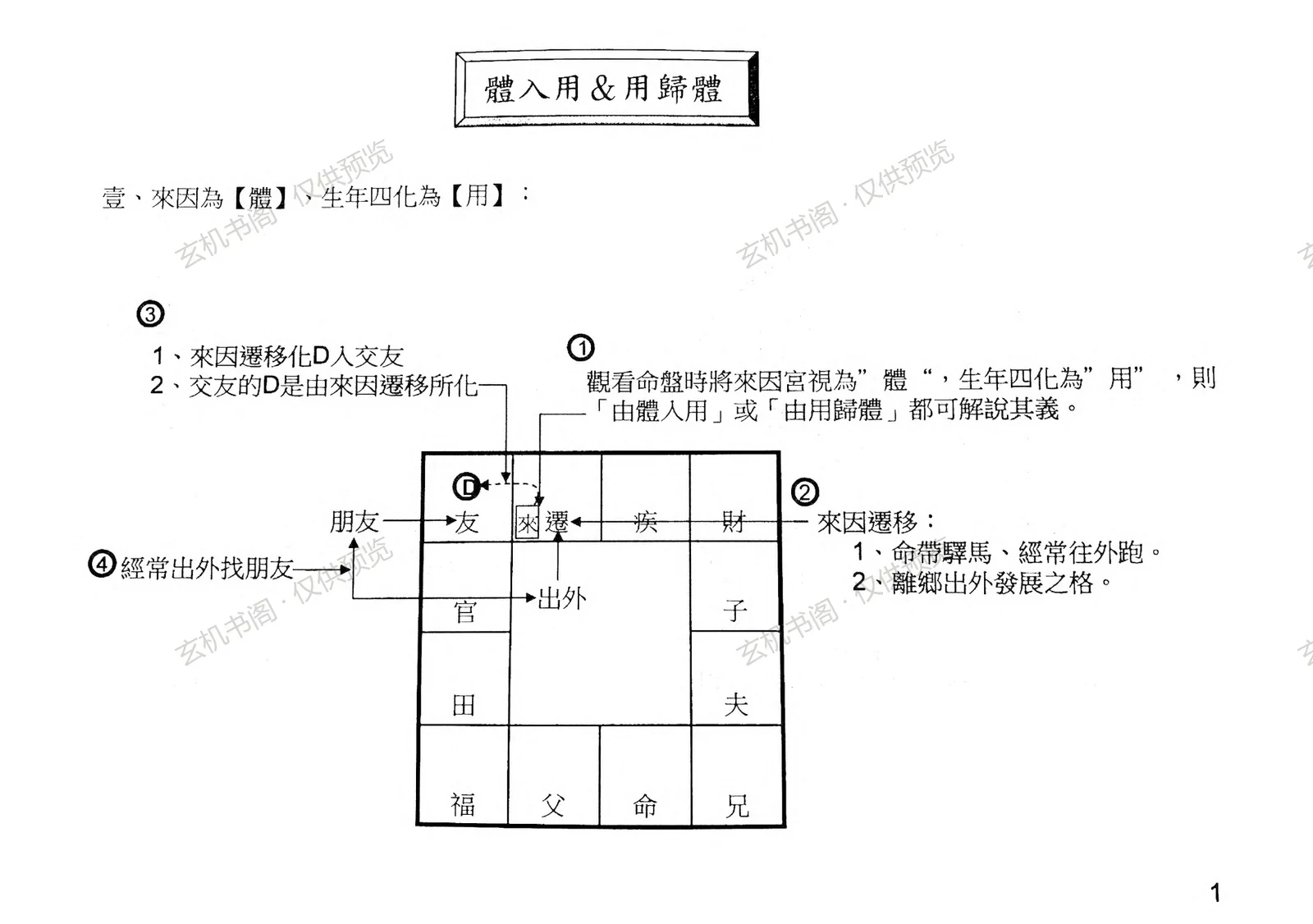
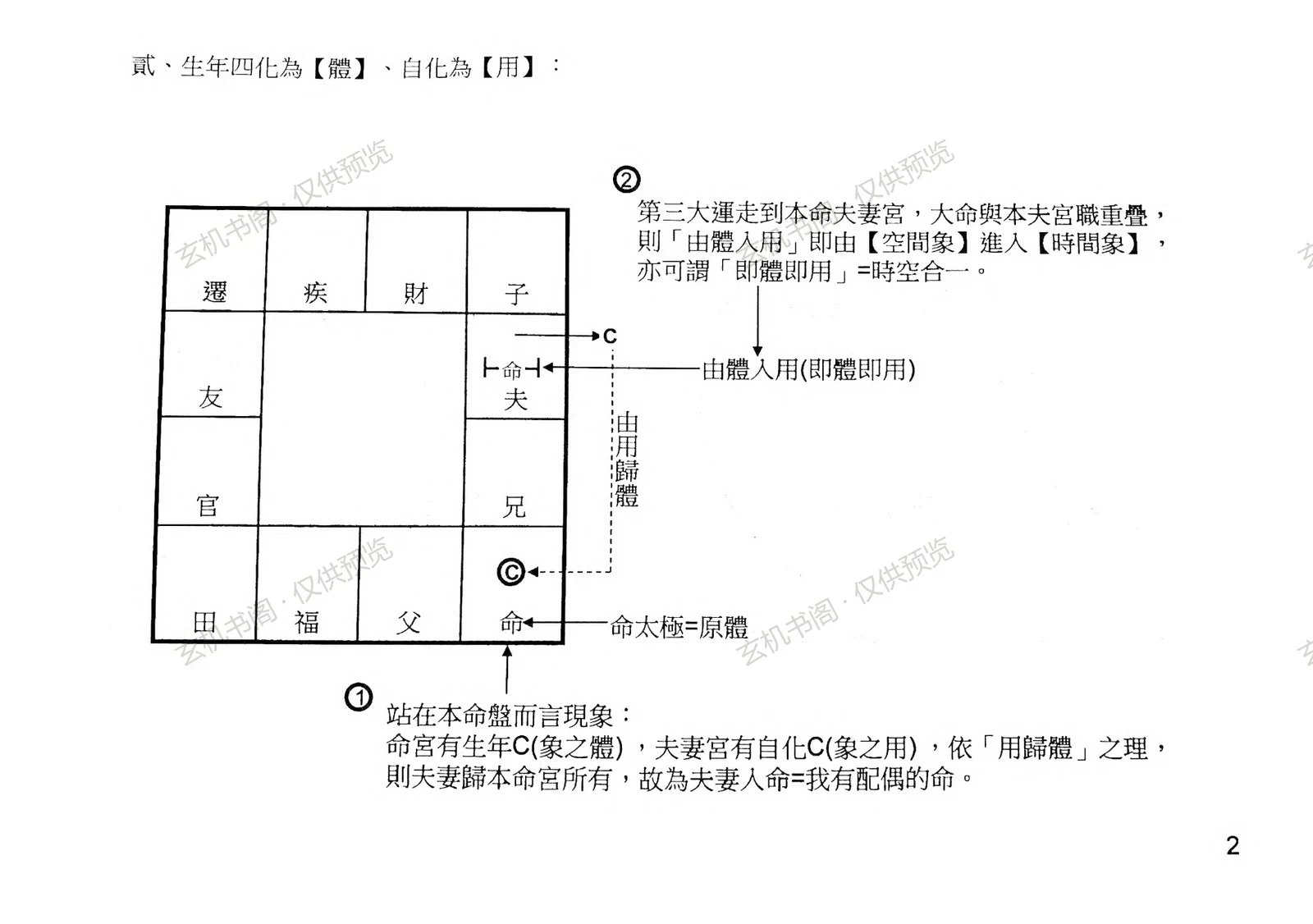
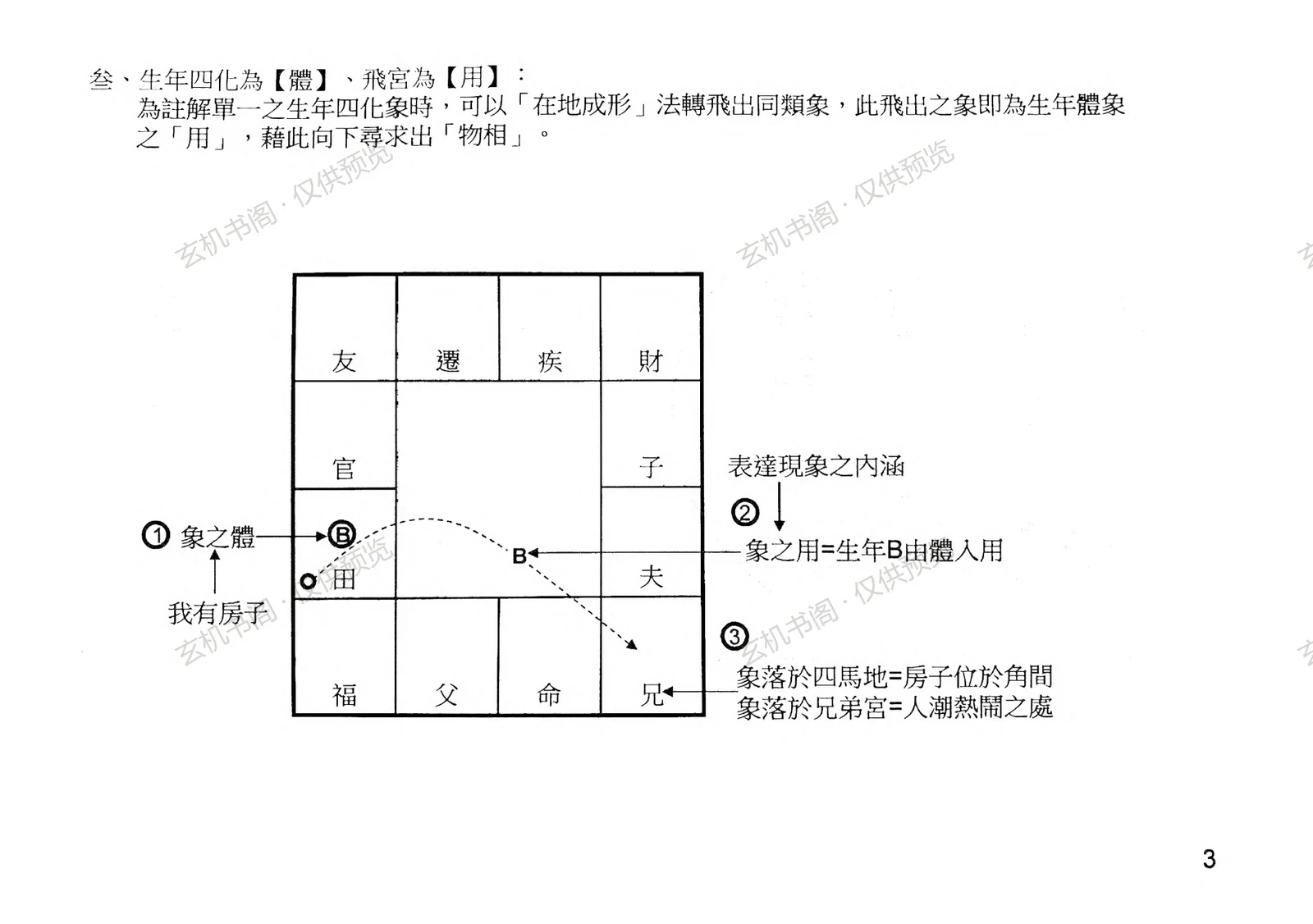
Body entering function and function returning to body
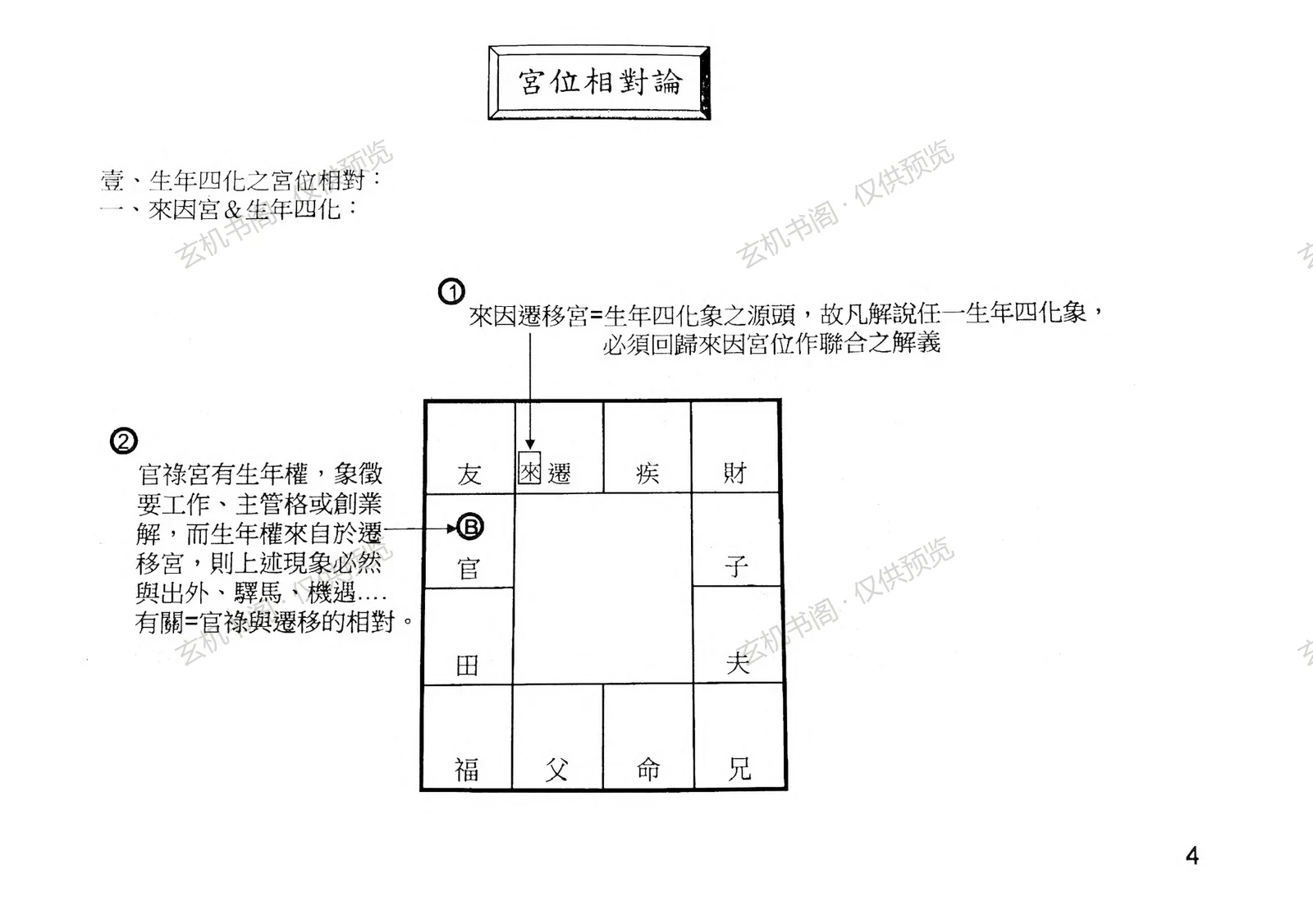
Palace correspondence theory
Emergence of images
Categories and variations of self-transformation
Wealth following misfortune and four transformation outputs
Temporal order and image determination
Flying palace techniques, connection and blockage
Methods for judging annual cycles
Key Points
Body–function framework: natal transformations as body, self-transformation and flying palaces as function.
The cause palace is the source of natal four transformations and must be revisited in interpretation.
Systematic treatment of self-transformation categories and dual-image applications.
Unified image theories such as three images as one object and all images returning to one origin.
Practical principles for judging annual cycles.