Reading guide
Content guideOverview
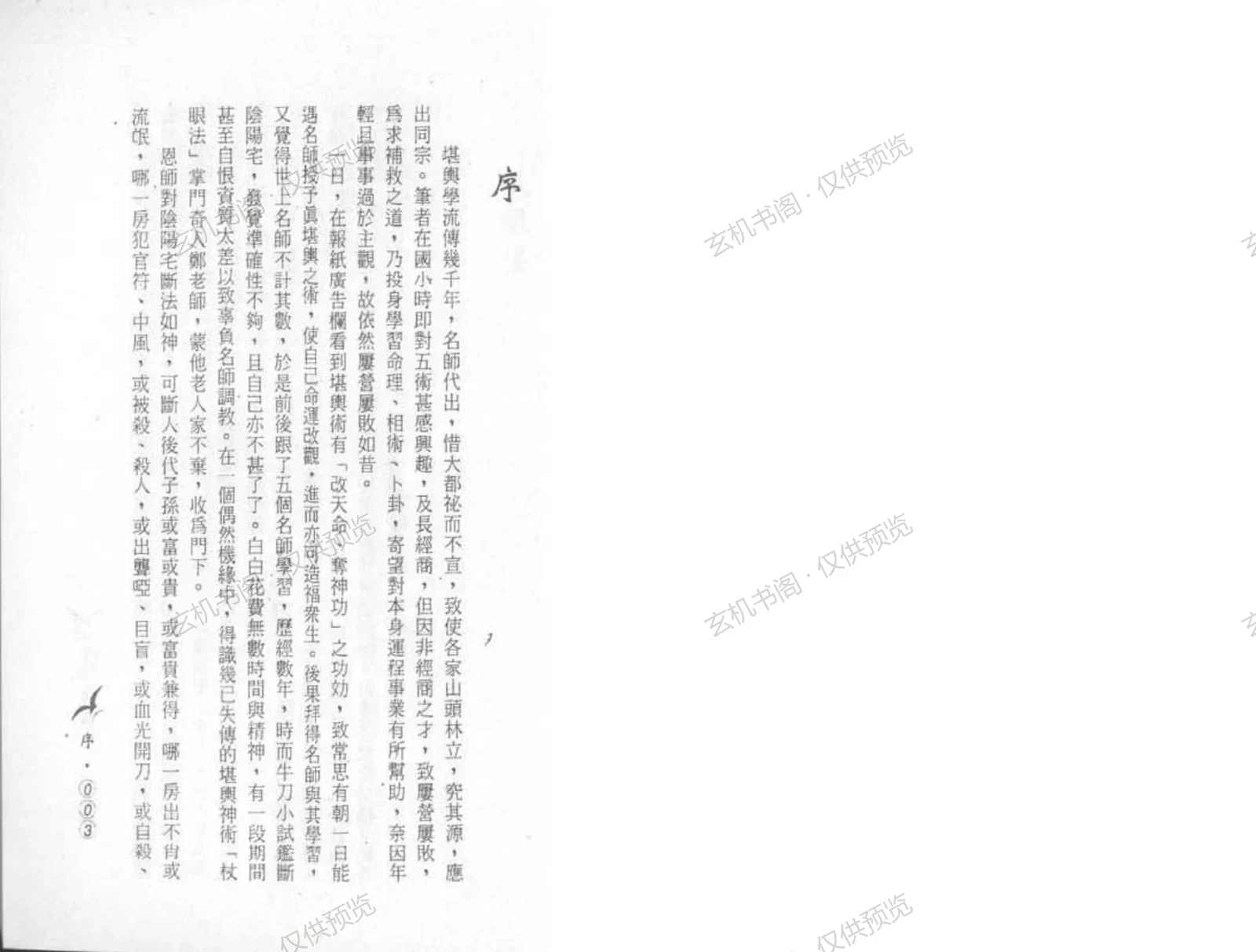
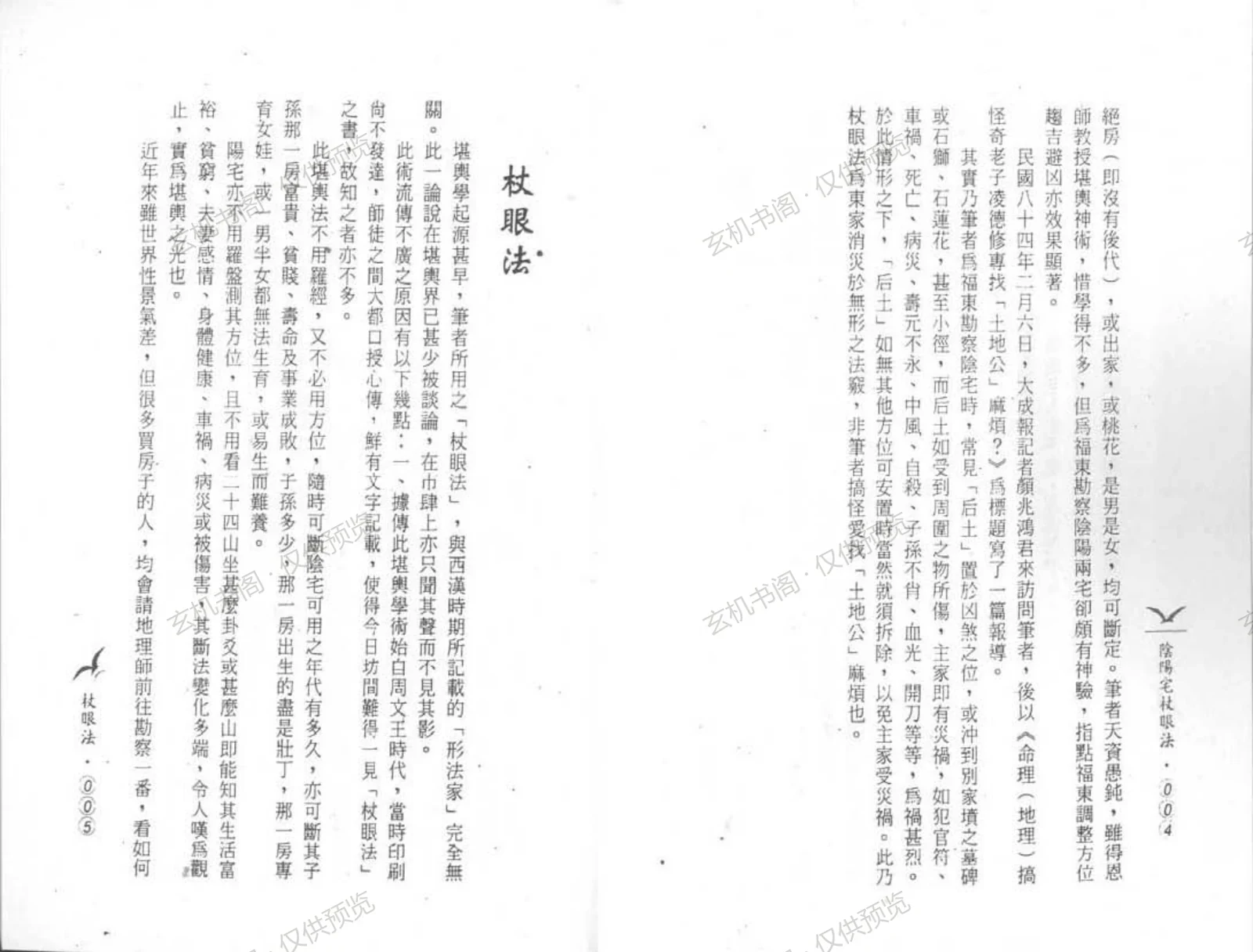
Written by Ling Dexiu, this is a practical manual of the form school (xingfa) of feng shui. In the preface, the author recounts his path from business and fate calculation to geomancy, arguing that the 'staff-eye method' (zhangyan fa) descends from the Han-dynasty form school and works without a compass or trigram positions, relying instead on visual inspection of landforms. The book is organized around yin dwellings (graves) and yang dwellings (houses). The Yinzhai chapter discusses the relationship between the earth shrine (houtu) and the tomb, the lore of tombstones, methods for assigning fortune to branches of a family, and how small flaws near a grave may not spoil an otherwise good site. Later sections address declining auspicious energy due to environmental change, tilted tombstones and misfortune, and the Mutou chapter covers墓 shapes, sand and water around graves, water mouths, road clashes, earth-shrine height, and sha energies. Many entries are posed as questions and answers, making the book a catalog of visual diagnostic rules rather than a systematic theoretical treatise.
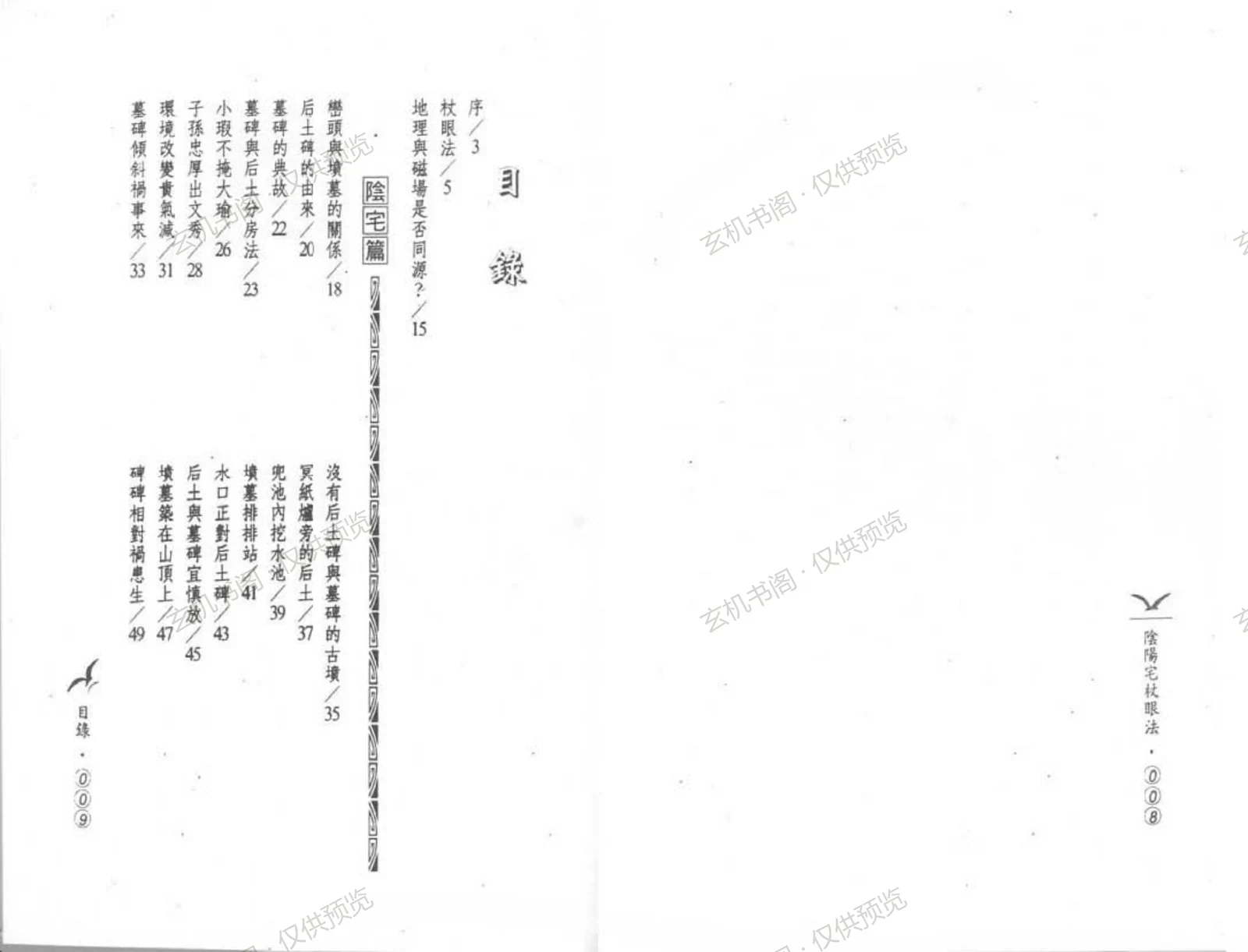
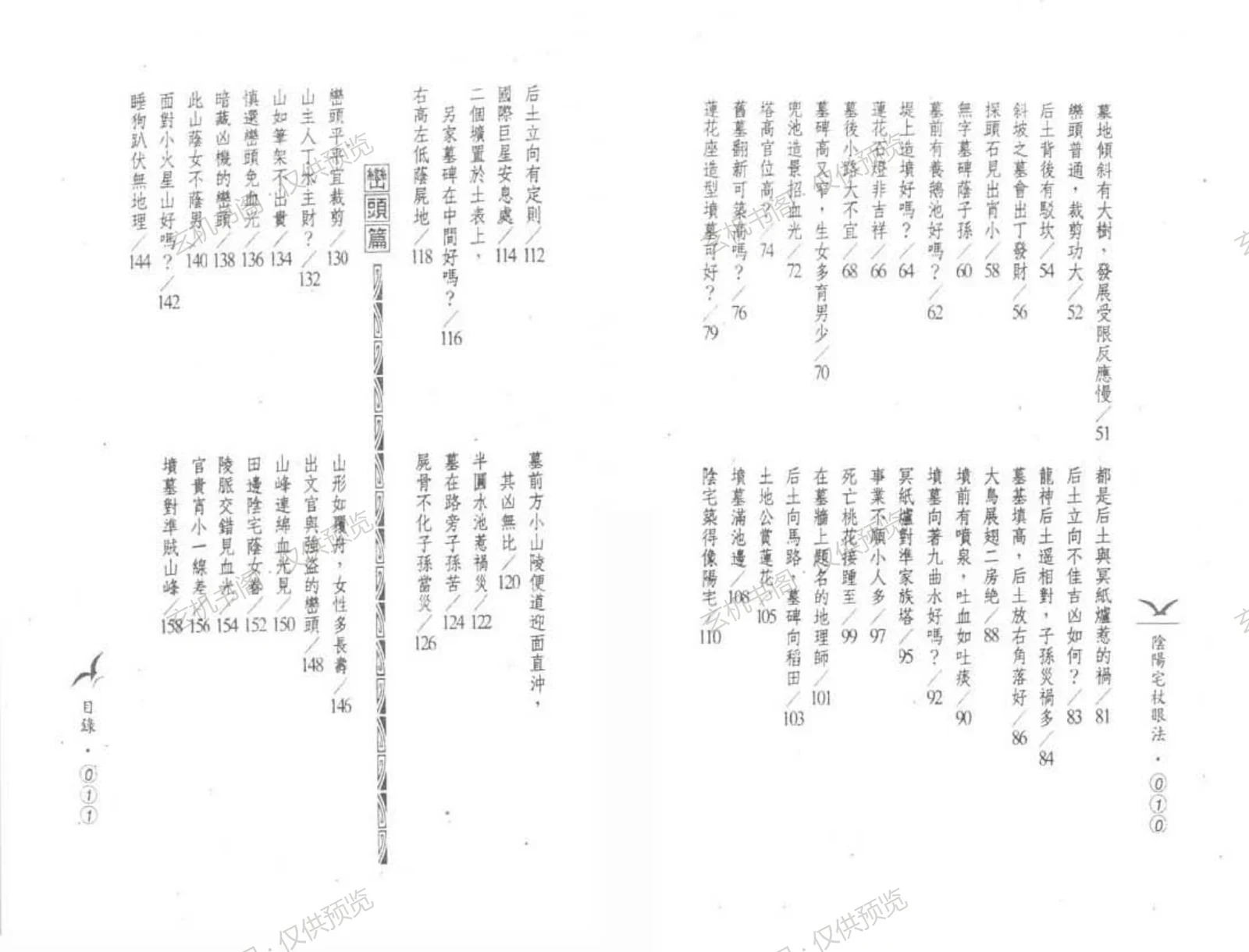
Contents
Preface: origins of the staff-eye method
Are geomancy and magnetic fields related?
Yinzhai chapter: earth shrine and tomb
Yinzhai chapter: tomb shape, sand, water
Yinzhai chapter: environmental change and fortune
Mutou chapter: water mouths, roads, sand
Mutou chapter: earth shrine height and sha
Q&A on tomb collapse, termites, flooding
Key Points
Judges fortune by visual landform inspection, not compass readings.
Focuses on details like tombstone and earth-shrine placement and tilt.
Organized into Yinzhai and Mutou chapters with many Q&A entries.
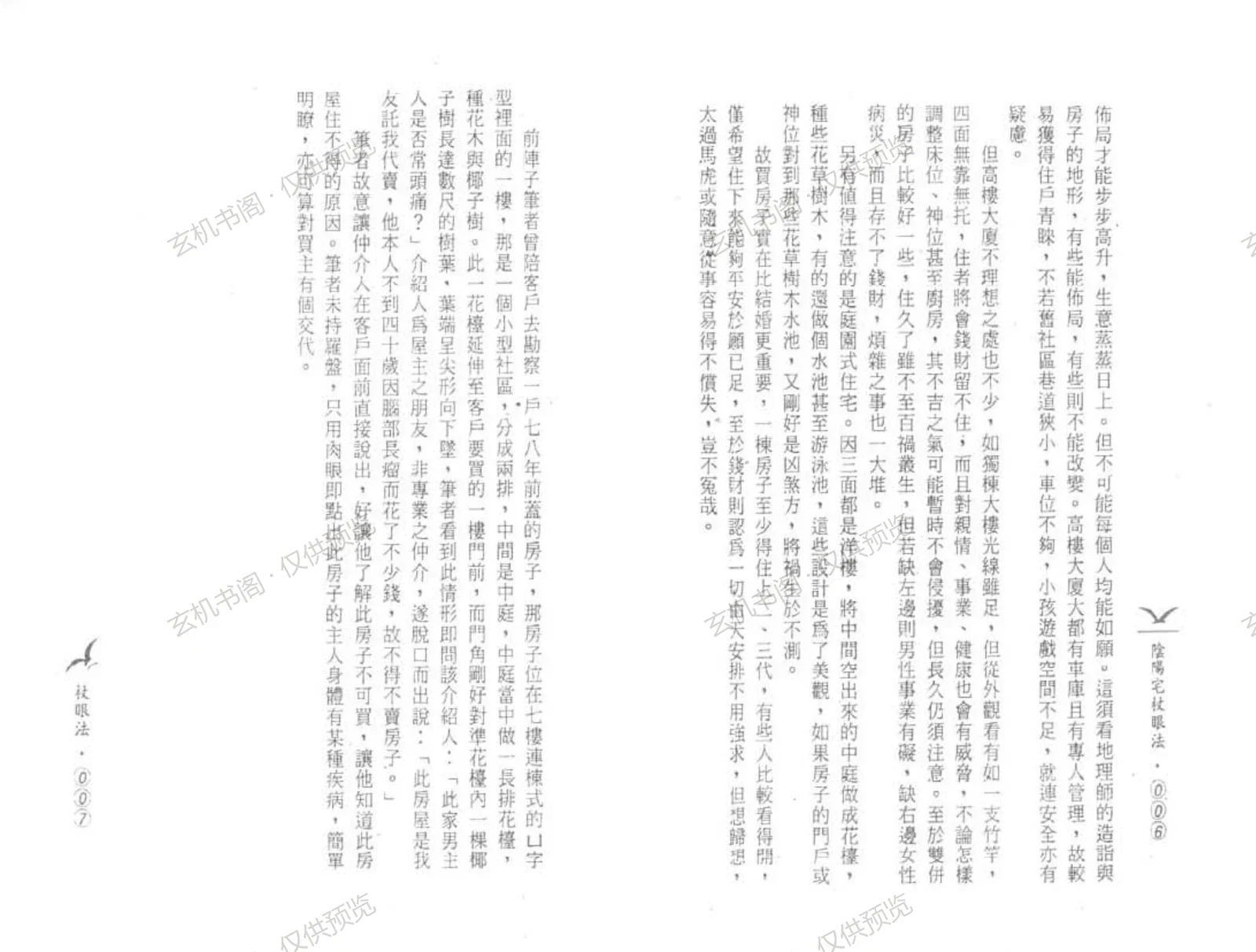
Uses concrete cases to show how terrain changes affect descendants.
Traces the form method back to Han-dynasty shape-based geomancy.