Reading guide
Content guideOverview
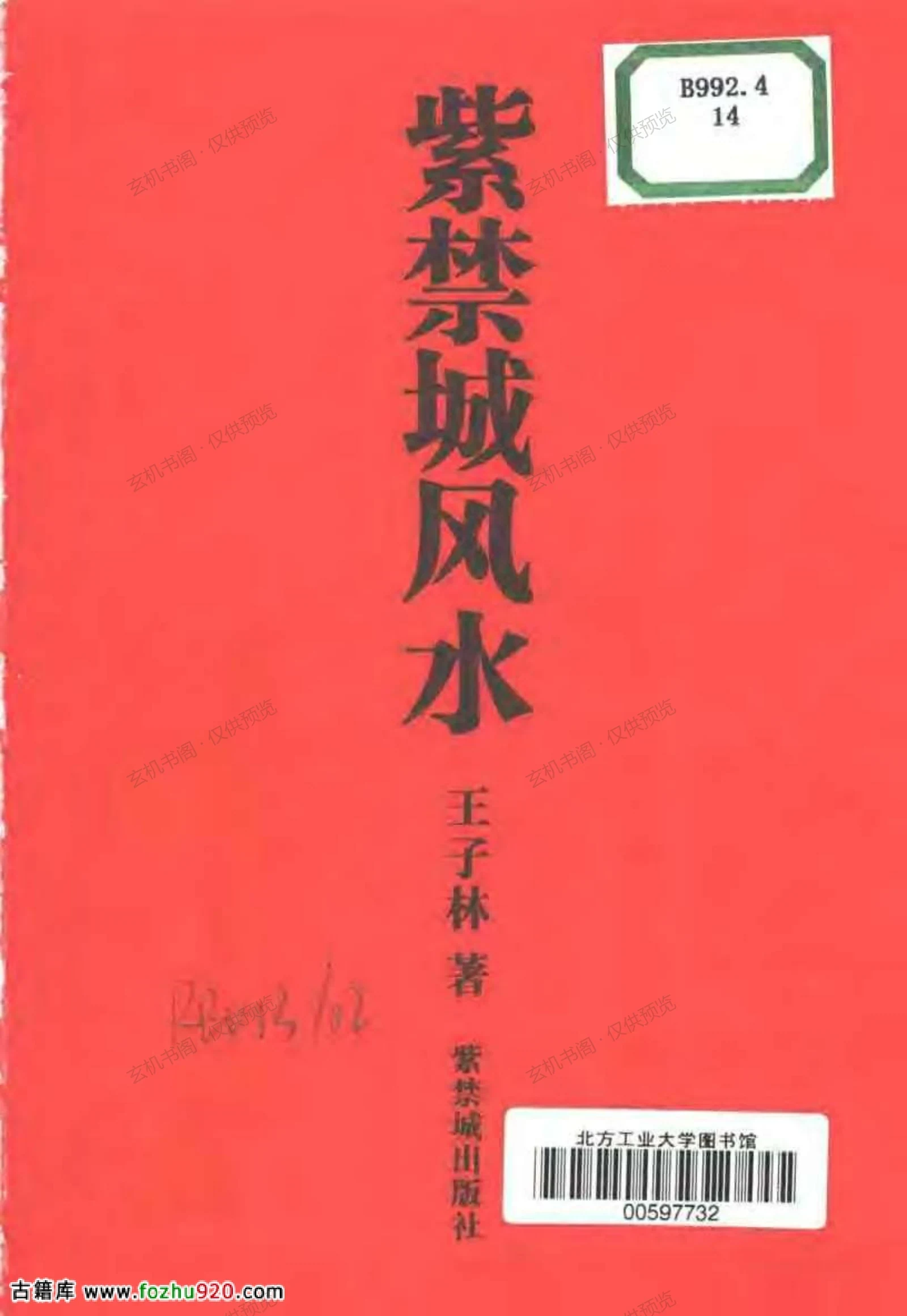
This book examines the feng shui framework of the Forbidden City, beginning with its dragon vein and dragon point in relation to Beijing's mountains and waterways. It then focuses on the central axis, explaining how the palace city modeled itself on the North Star and embodied a cosmological view of rulership. Further chapters discuss the interplay of mountains and water, yin-yang and the Five Phases, the Three Enclosures star pattern, the overall feng shui layout of Beijing, the buildings along its central axis, talismans and guardian deities of the palace, the binary time-space system, the feng shui model of the Ming imperial tombs, and a comparison of Chinese and Western architecture. It is a cross-disciplinary read for those interested in imperial architecture, Beijing's urban history and traditional geomantic culture.
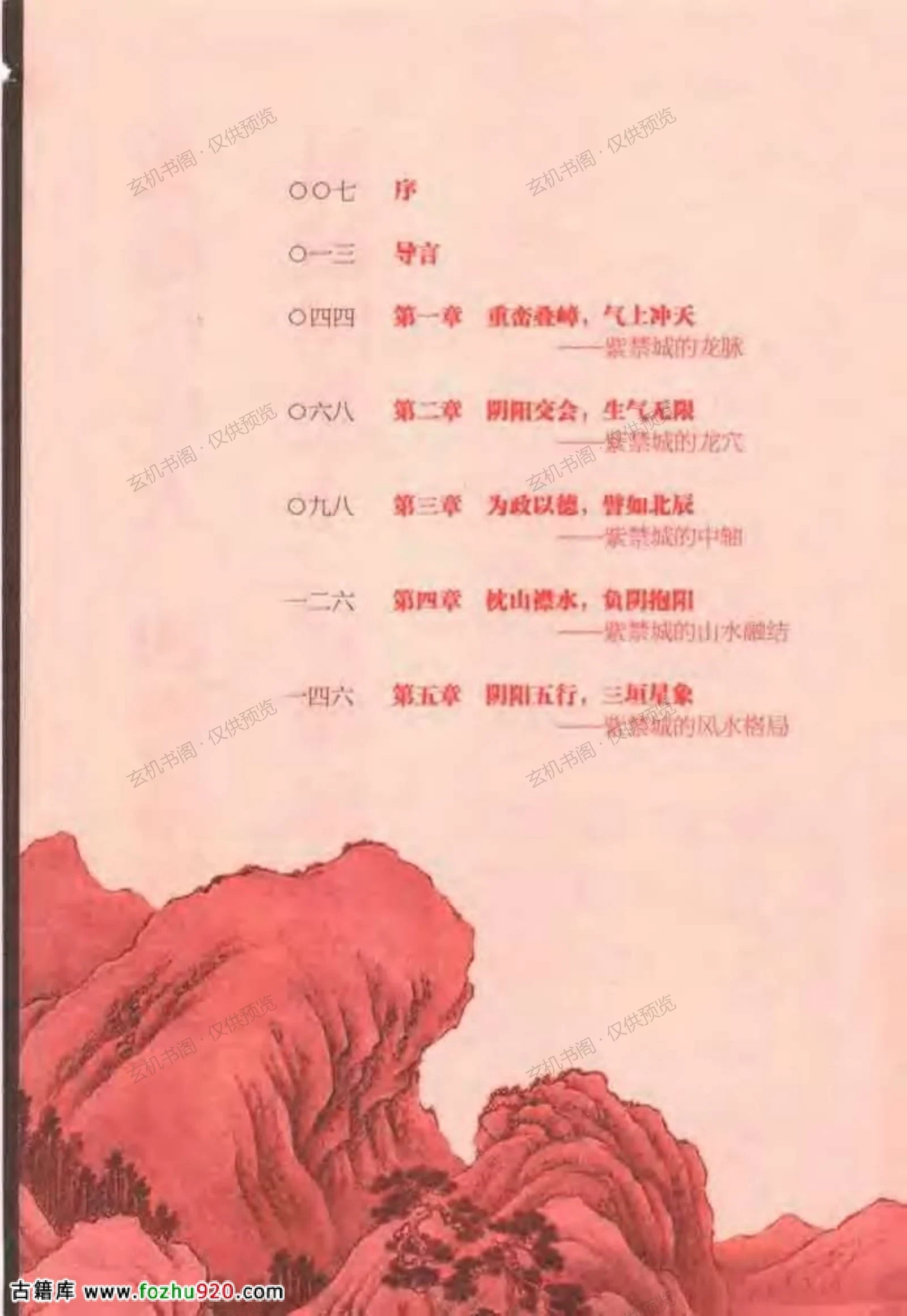
Contents
Ch.1 Dragon vein of the Forbidden City
Ch.2 Dragon point and vital energy
Ch.3 The central axis and the North Star
Ch.4 Mountains, water and yin-yang embrace
Ch.5 Five Phases and Three Enclosures
Ch.6 Feng shui layout of Beijing
Ch.7 Buildings along Beijing's central axis
Ch.8 Talismans and guardian deities
Ch.9 Sundial, measures and binary time-space
Ch.10 The Dark Warrior as guardian
Ch.11 Feng shui of the Ming imperial tombs
Ch.12 Chinese and Western architecture compared
Key Points
Connects dragon vein, dragon point, central axis, landscape and star patterns into a feng shui reading of the palace.
Highlights the central-axis cosmology modeled on the North Star.
Discusses yin-yang, Five Phases and Three Enclosures as symbolic design tools.
Extends to the Ming tombs and a comparison with Western architecture.