Reading guide
Content guideOverview
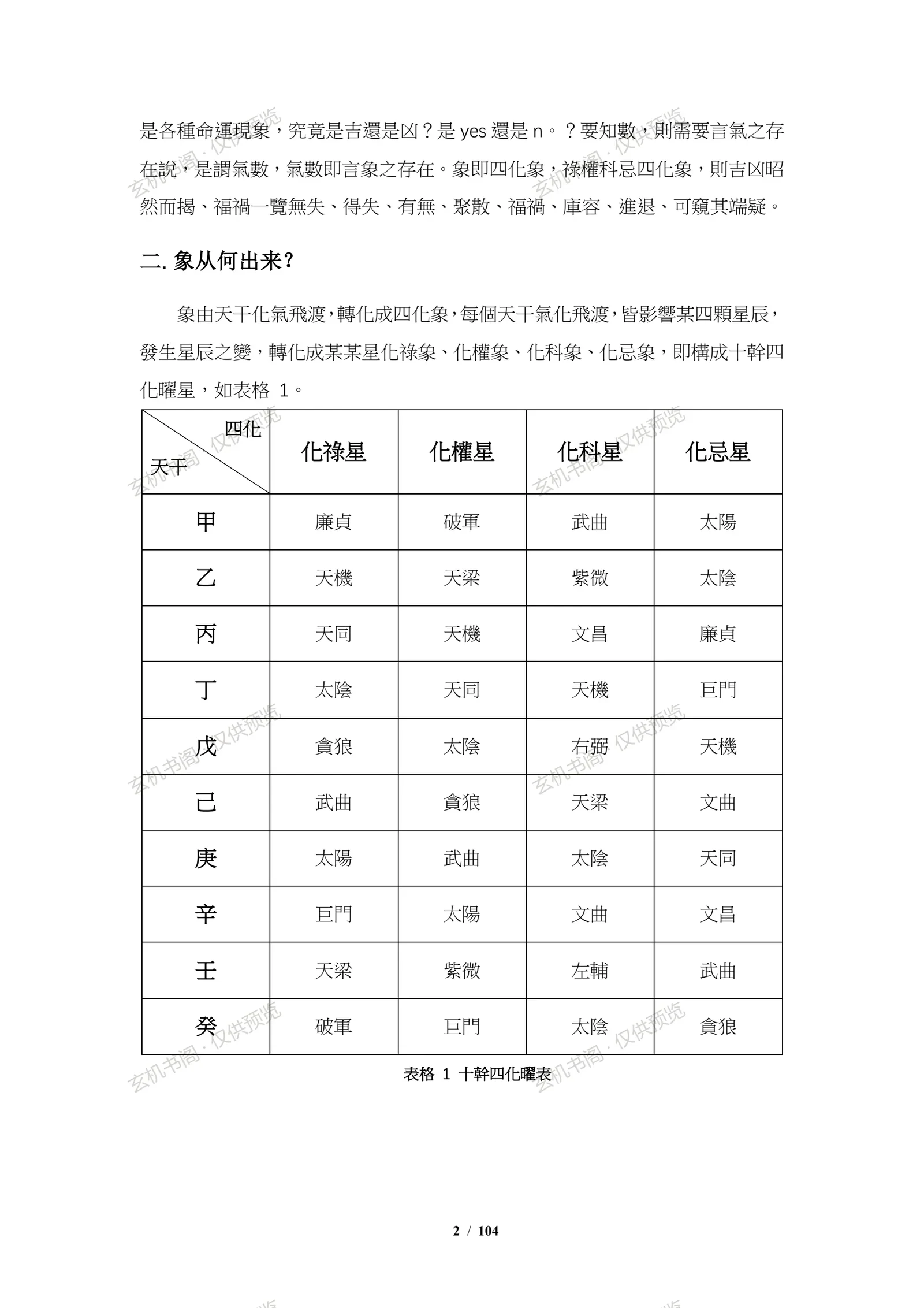
This book introduces the fundamentals of Zi Wei Dou Shu through the framework of the Four Transformations. It begins by distinguishing ming (innate destiny) from yun (acquired fortune), explaining how birth-year transformations and flying-palace transformations interact to shape judgments on a chart. The second chapter discusses how transformations arise from heavenly stems, with a reference table of the Four Transformations for the ten stems. The third chapter presents the three essentials of Dou Shu—palace, image, and star—then walks through the twelve palaces one by one, from the Life Palace and Siblings Palace to the Spouse, Children, Wealth, Health, Travel, Friends, and Career palaces. It stresses that each palace should be read both statically and dynamically through its stem transformations, making it suitable for readers seeking a structured foundation in the Four Transformations school.
Contents
Chapter 1: Why destiny and fortune?
Chapter 2: The ultimate study of life
Where do images come from? Table of ten-stem transformations
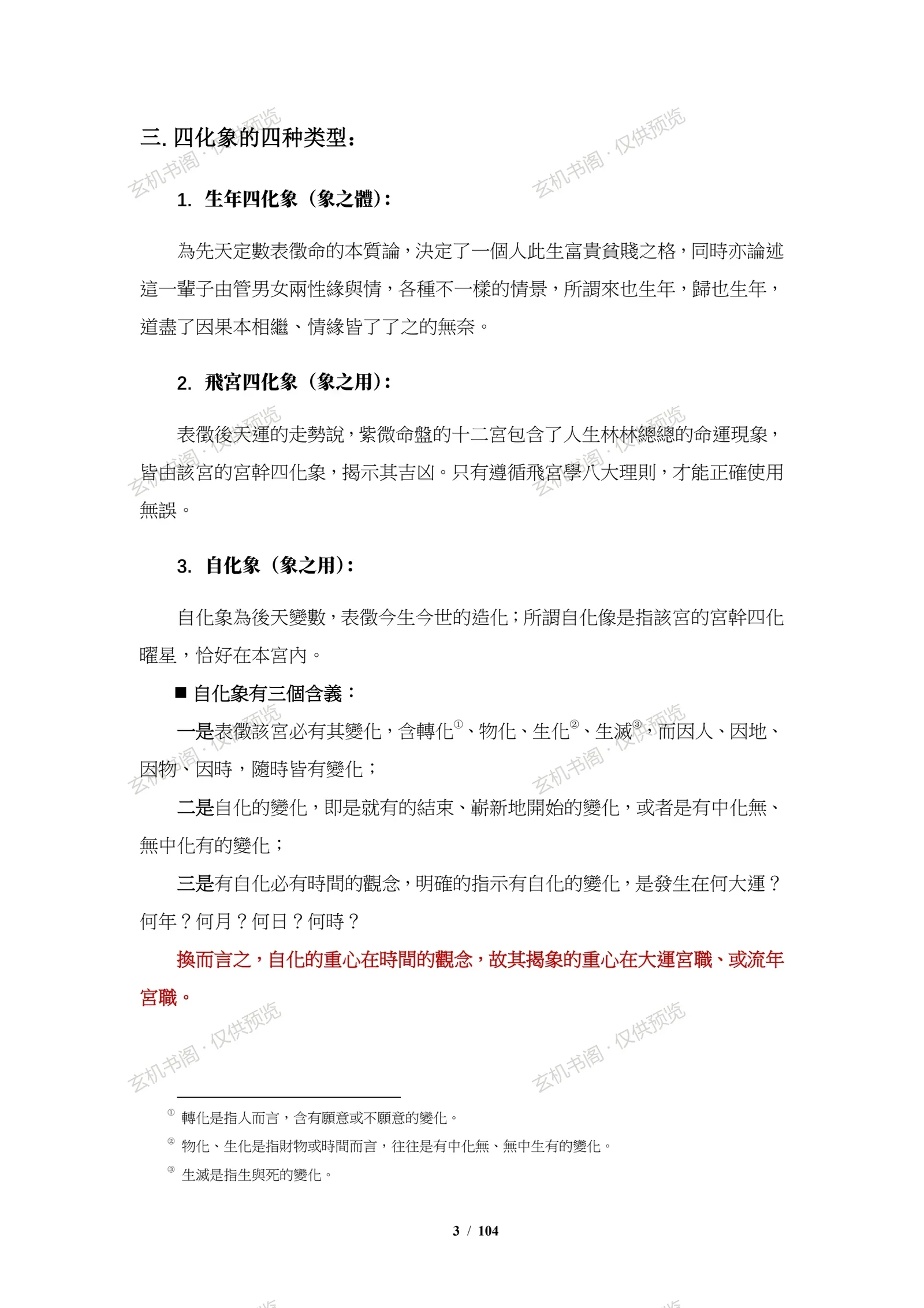
Four types of transformation images
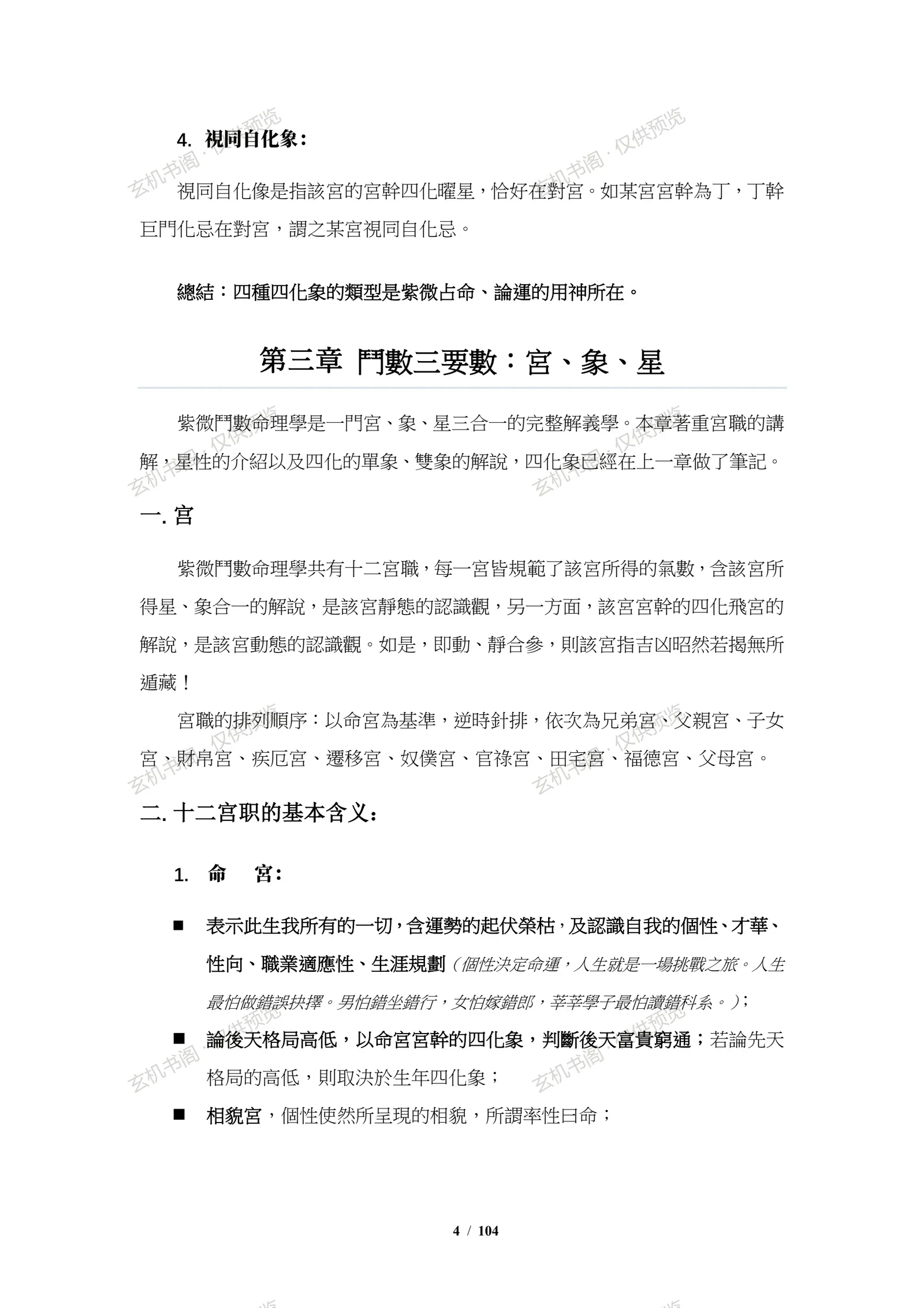
Chapter 3: Three essentials—palace, image, star
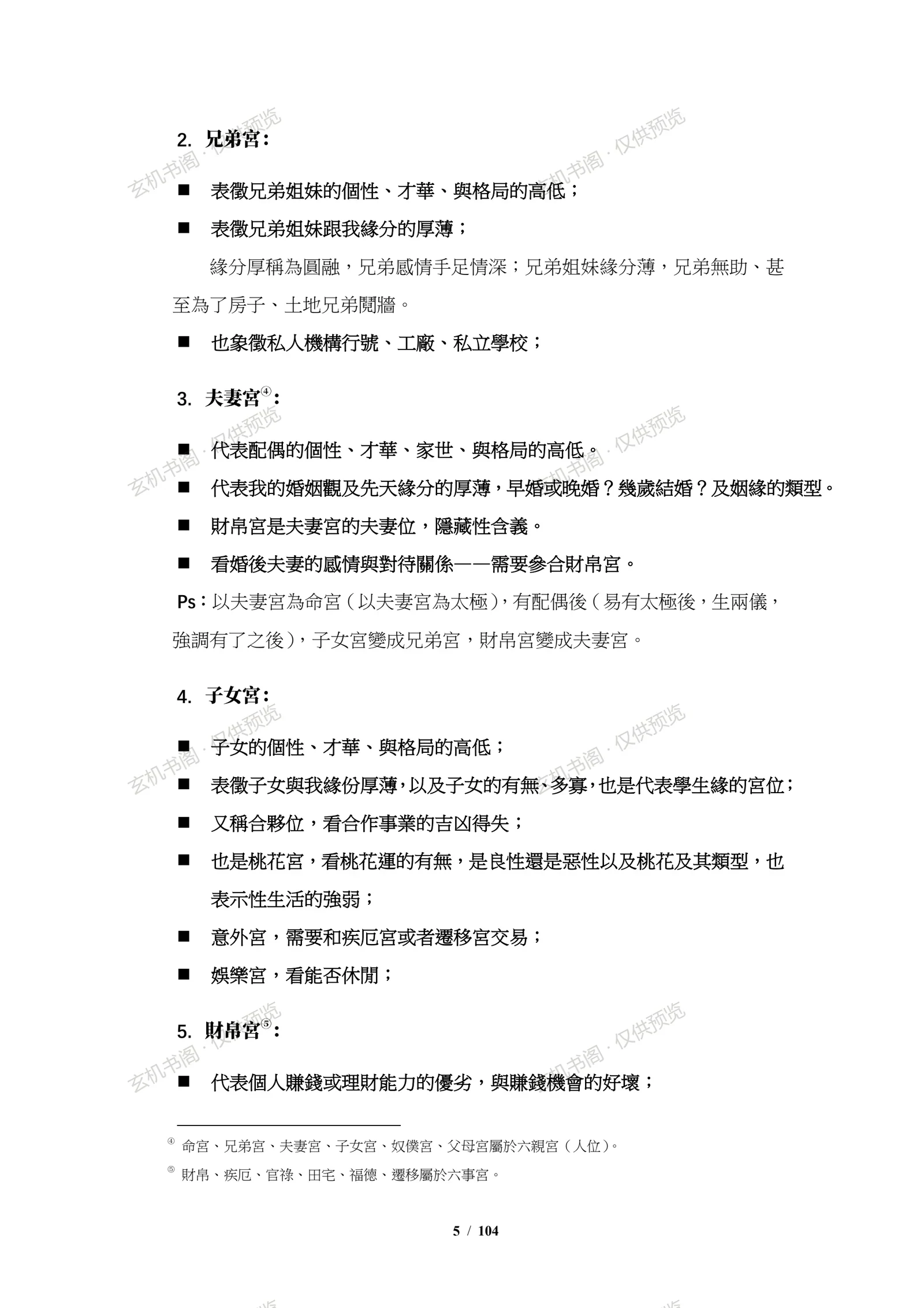
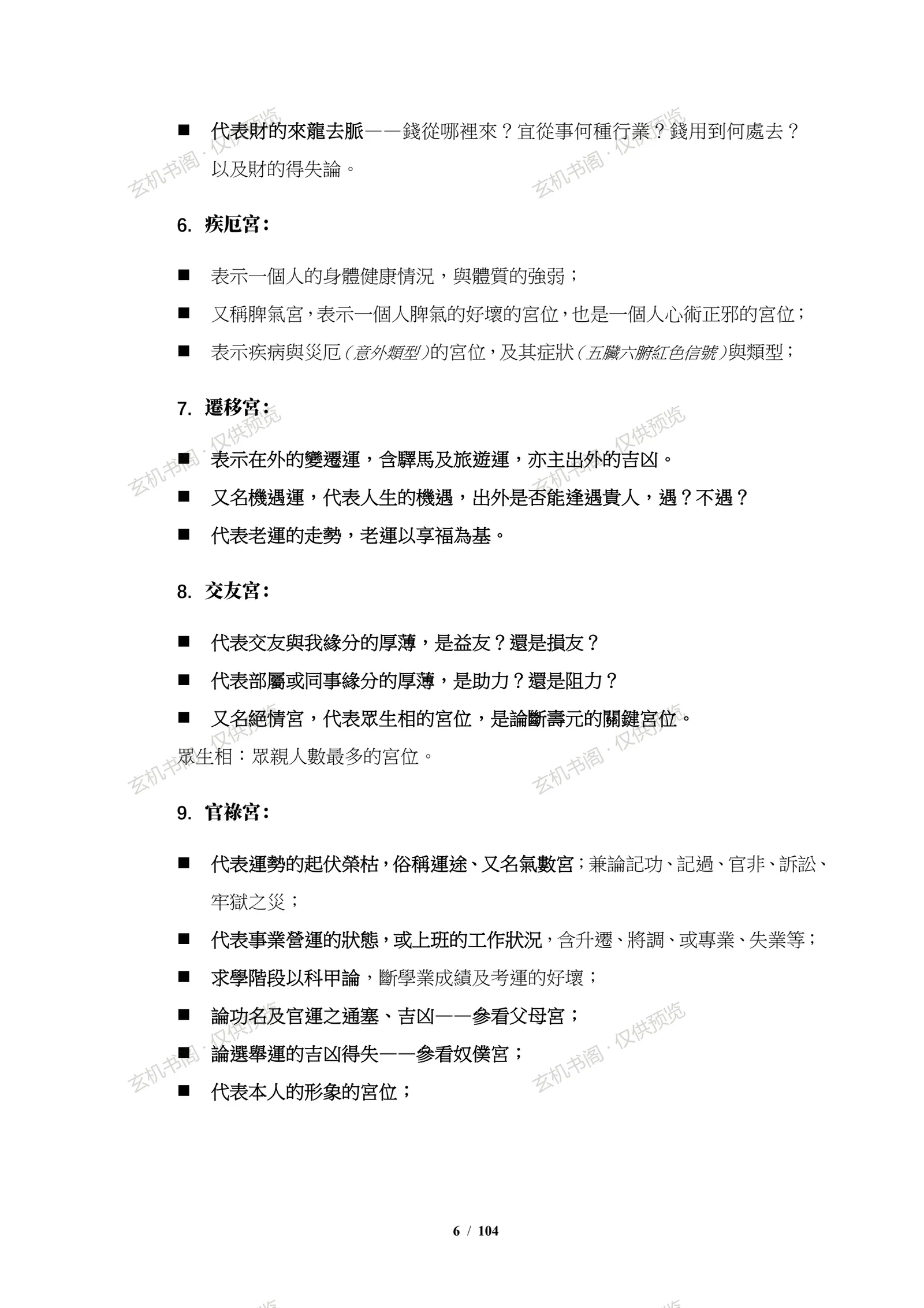
Basic meanings of the twelve palaces
Key Points
Destiny is innate and fixed; fortune is acquired and variable.
Birth-year transformations show innate nature; flying-palace transformations show later trends.
Transformations fall into four types: birth-year, flying-palace, self-transformation, and treated-as self-transformation.
The twelve palaces must be read both statically and dynamically, with palace-stem transformations as the key.
Palace meanings are detailed and interconnected, e.g. the Spouse Palace is read with the Wealth Palace.