Reading guide
Content guideOverview
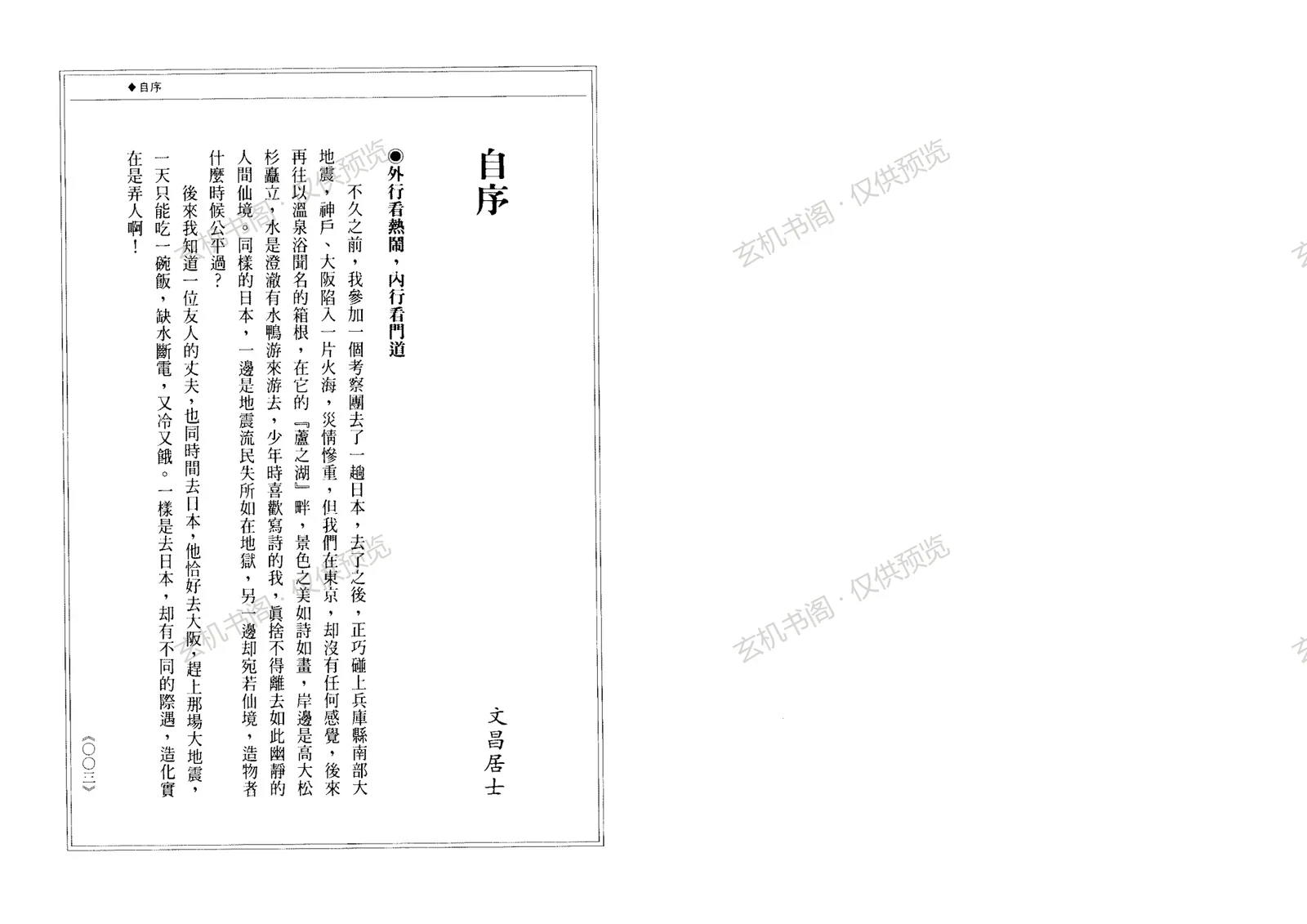
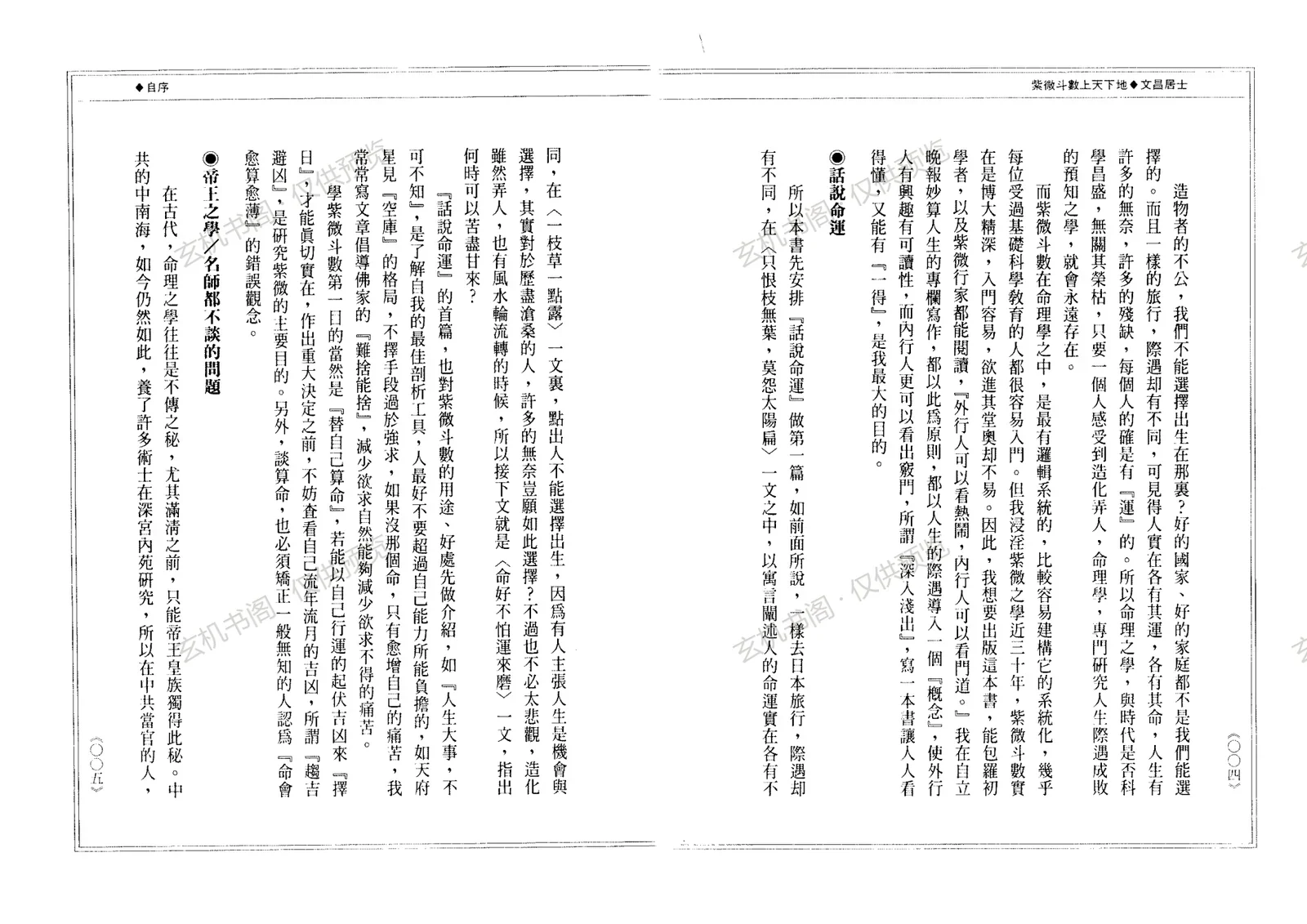
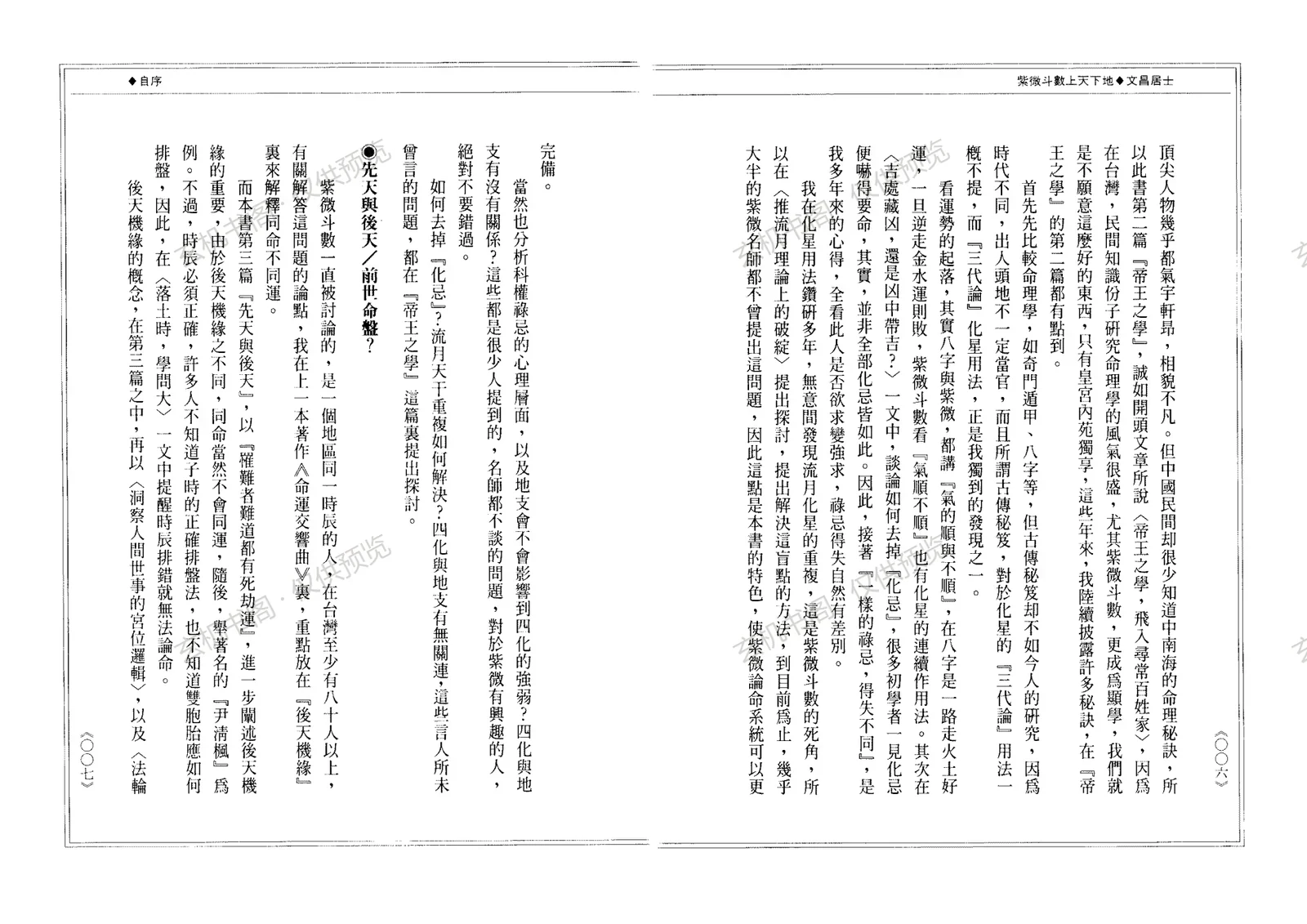
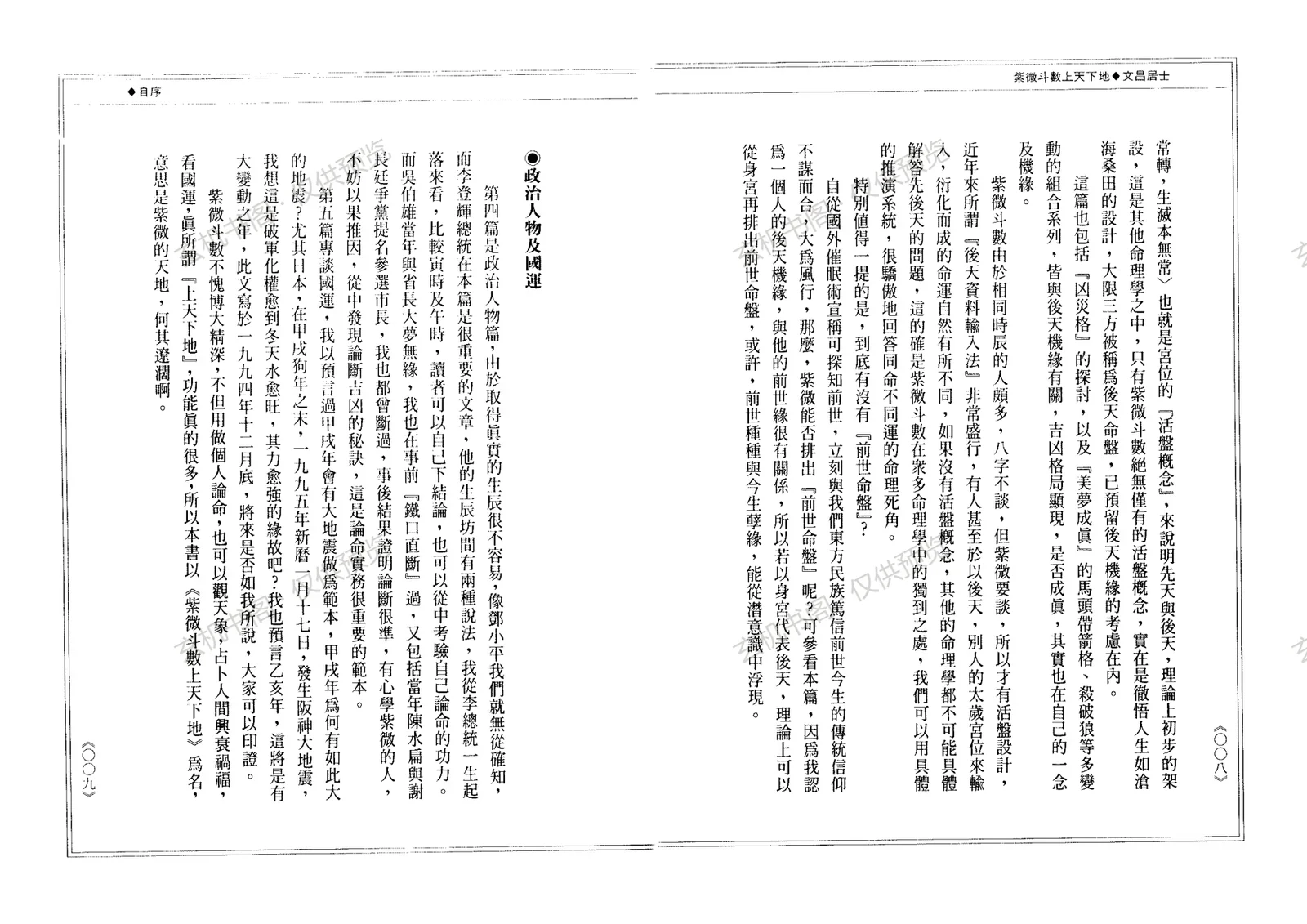
This book, Zi Wei Dou Shu: Heaven and Earth, by Wenchang Jushi, reinterprets Zi Wei Dou Shu through the 'living chart' concept. It is divided into five chapters: 'On Fate', 'The Study of Emperors', 'Innate and Acquired / Past Life Chart?', 'Political Figures and National Fortunes', and 'Conclusion'. The author argues that Zi Wei Dou Shu is not superstition but a systematic method for analyzing personal destiny, past-life karma, and even national events and political figures using the twelve palaces and four transformations. The book discusses practical issues such as the difference between living and dead charts, the mystery of the Geng stem's four transformations, and methods for calculating monthly and daily fortunes, supported by case studies of political figures and earthquake predictions. It is suitable for readers with a basic understanding of Zi Wei Dou Shu who wish to deepen their knowledge of living chart applications and national fortune analysis.
Contents
Preface: Fate and Life
Chapter 1: On Fate
Chapter 2: The Study of Emperors
Chapter 3: Innate and Acquired / Past Life Chart?
Chapter 4: Political Figures and National Fortunes
Chapter 5: Conclusion
Key Points
Introduces the 'living chart' concept, emphasizing flexible application of the chart according to time and events.
Explores the four transformations and the mystery of the Geng stem, analyzing the relationship between transformed taboos and chart strength.
Combines past-life charts and karma to infer personal past and present fortunes.
Uses political figures' charts as examples to analyze national fortunes and major events such as earthquakes.
Covers detailed calculation methods for monthly, daily, and hourly fortunes, and discusses their accuracy and limitations.