Reading guide
Content guideOverview
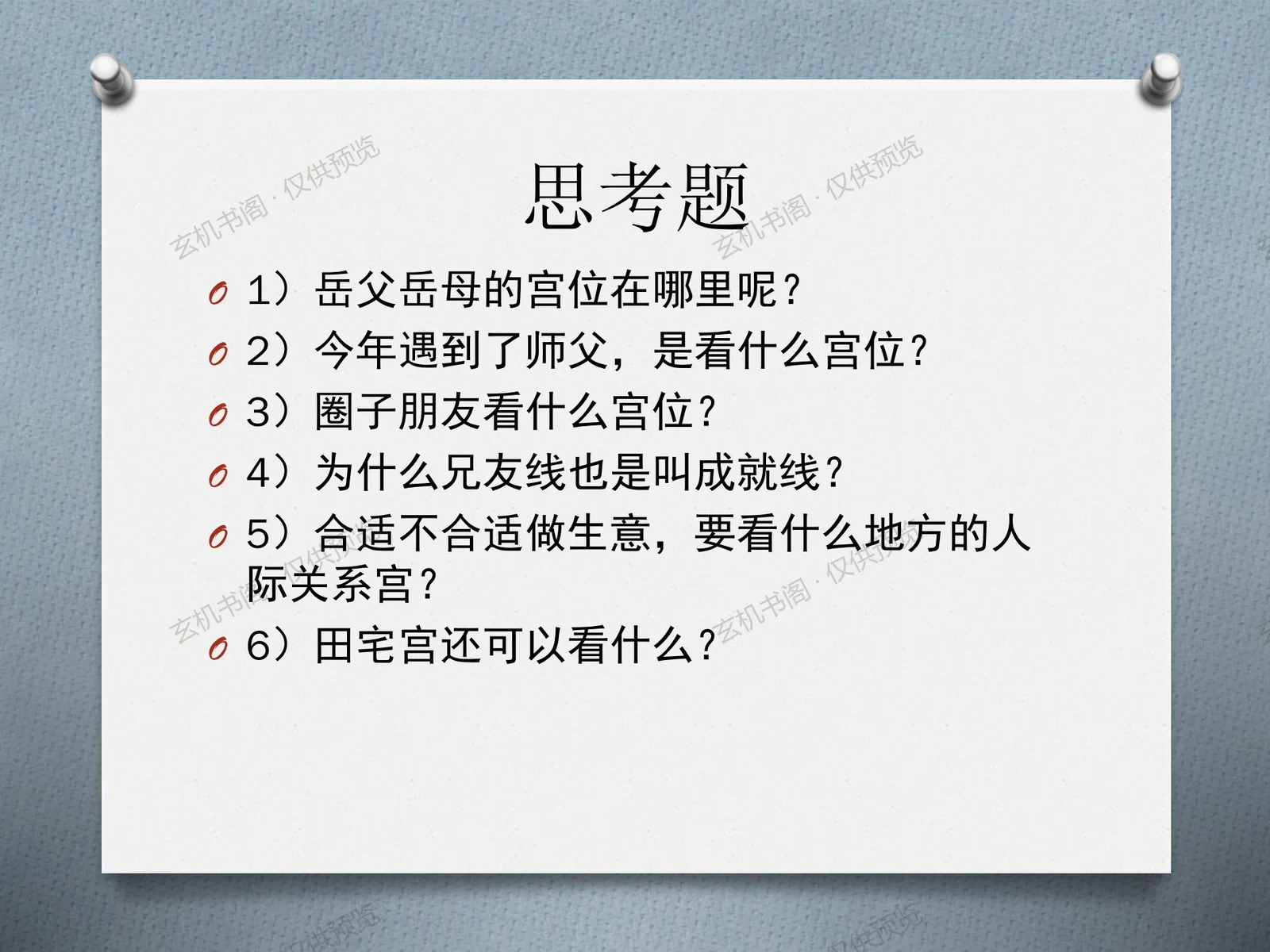
Multi-Role Interaction in Zi Wei Dou Shu, presented by Yi Ting, is a lecture-style text on using the Zi Wei Dou Shu palace system to analyze relationships. It begins by arguing that a person’s fate is not decided from a single angle but emerges from social interaction, and it mentions traditional compatibility matching as background. The family section maps the twelve palaces to grandmother, father, elder sister, grandfather, second sister, mother, elder brother, spouse, second brother, eldest son, and third brother, and touches on extended relations such as the spouse’s spouse. The work section explains that the opposite palace is the main interaction partner: for businesspeople the Wealth palace’s opposite, the Bliss palace, represents customers; for employees the Career palace’s opposite, the Spouse palace, represents service targets; superiors sit in the Servants palace and partners in the Children palace. The final part presents an “activated palace” approach to the Career palace, turning the twelve palaces into workplace roles such as documents, affiliated companies, colleagues, bosses, revenue, shareholders, profit and loss, and premises. Review questions invite readers to work out where parents-in-law, mentors, and social-circle friends belong. The structure is clear and suited to readers with basic palace knowledge who want to extend it to relationship analysis.
Contents
What multi-role means: fate and social interaction
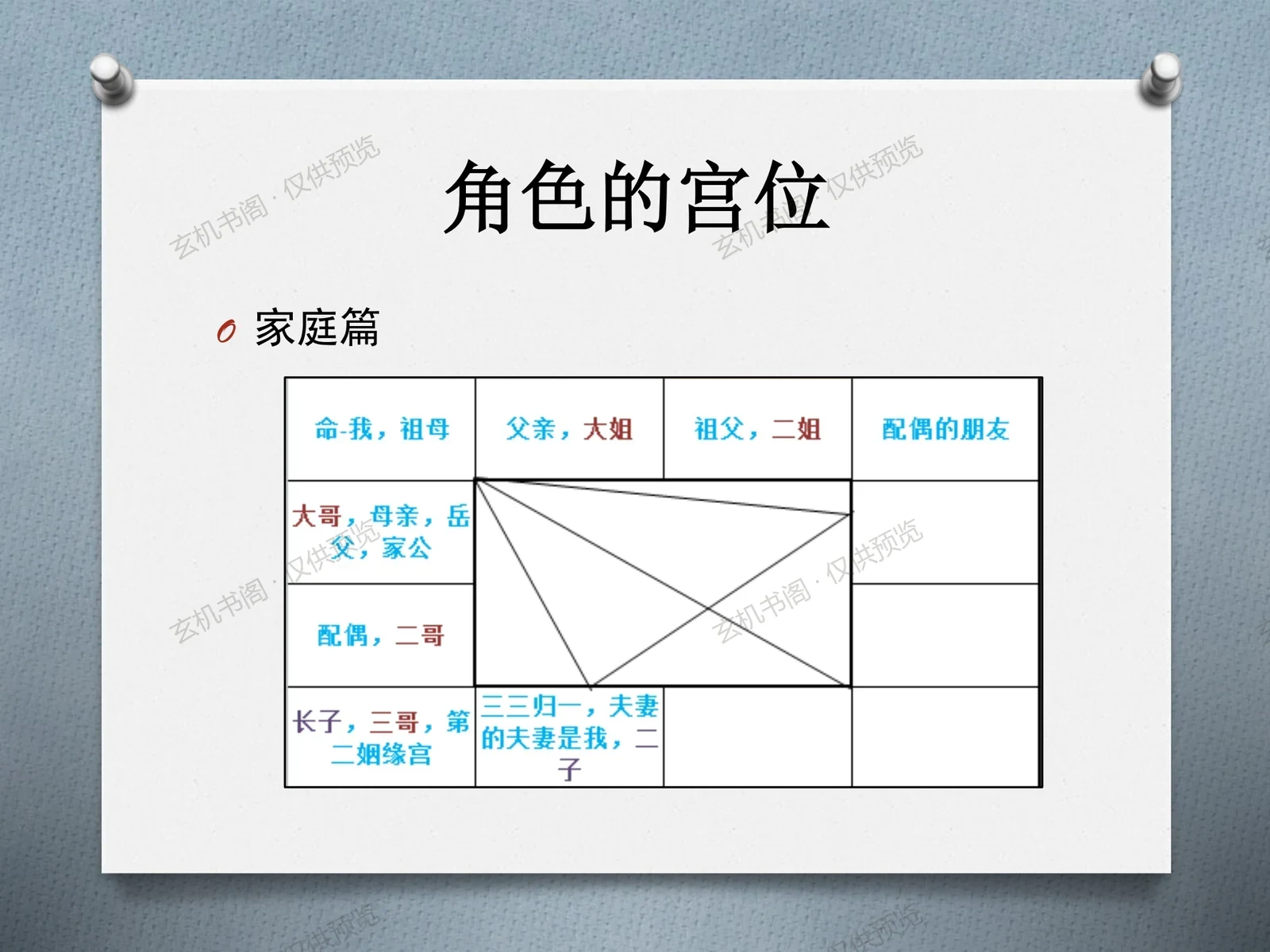
Palaces of roles: family section with twelve palaces
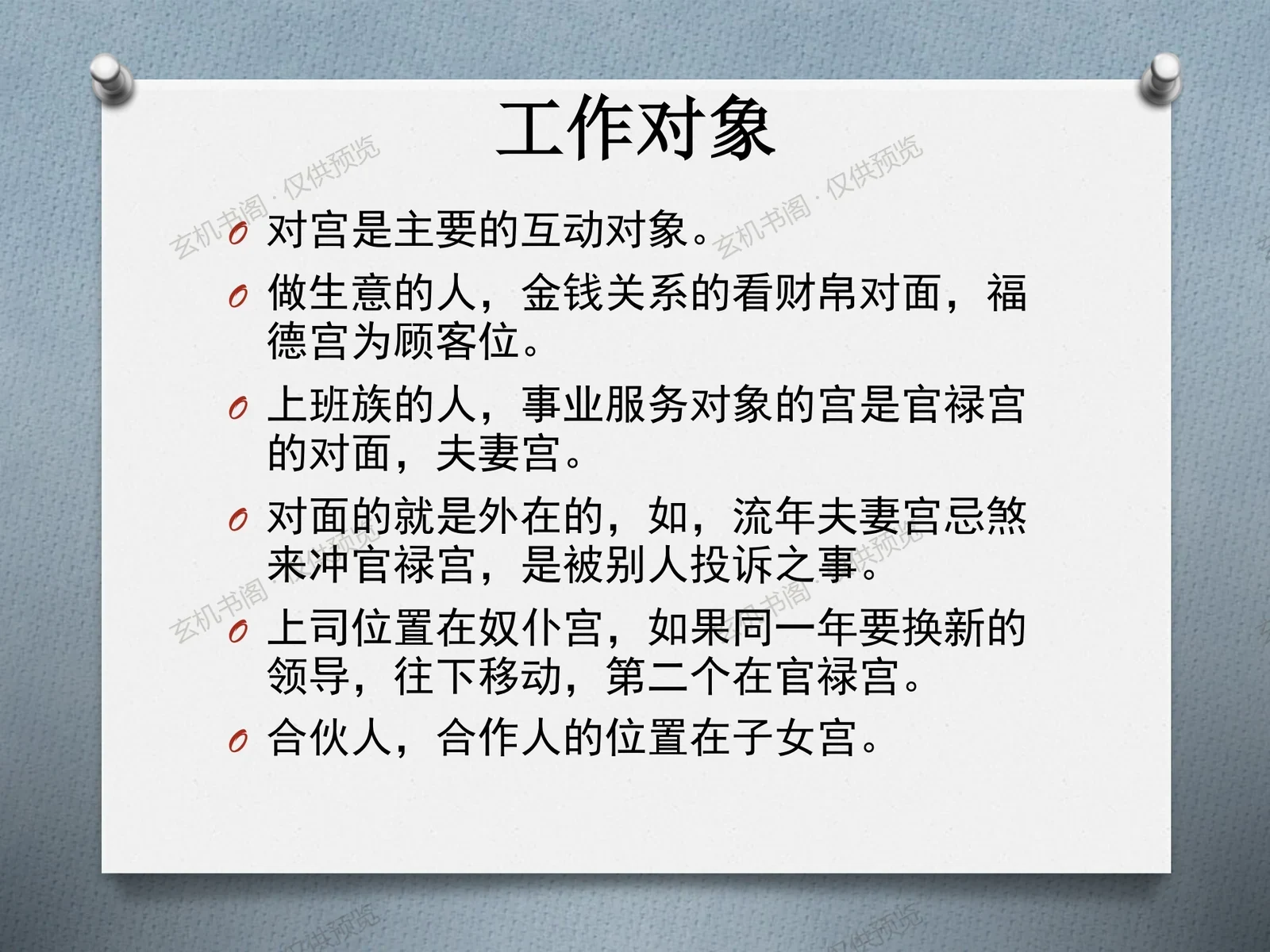
Work targets: opposite palace, superiors, and partners
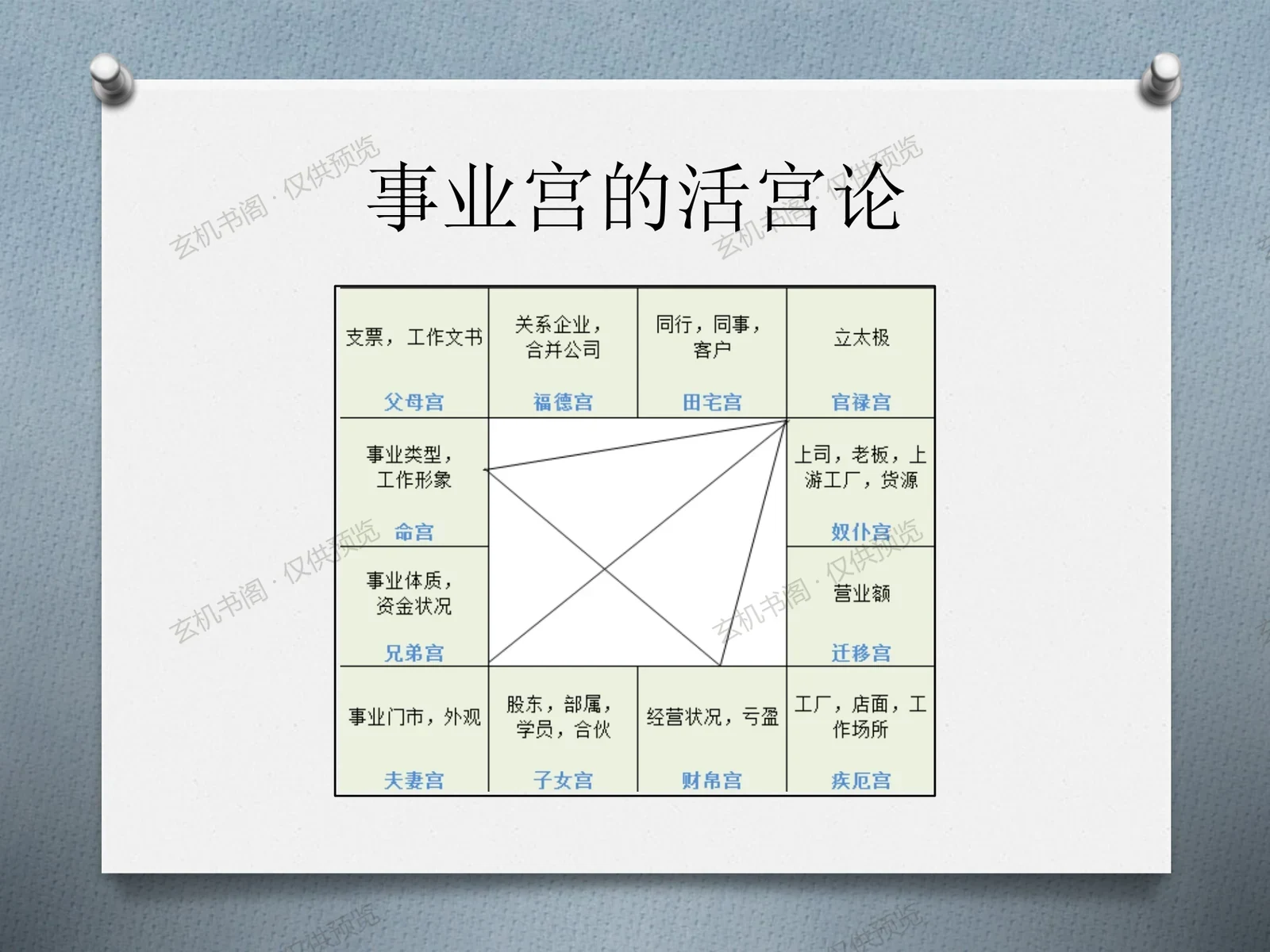
Activated Career palace: turning twelve palaces into work roles
Review questions: in-laws, mentors, and social circles
Key Points
Uses palaces as mirrors to map the twelve palaces to specific people
Family section assigns palaces to parents, spouse, and siblings
The opposite palace marks the main interaction partner
Superiors in the Servants palace, partners in the Children palace
Activated Career palace extends twelve palaces to workplace roles