Reading guide
Content guideOverview
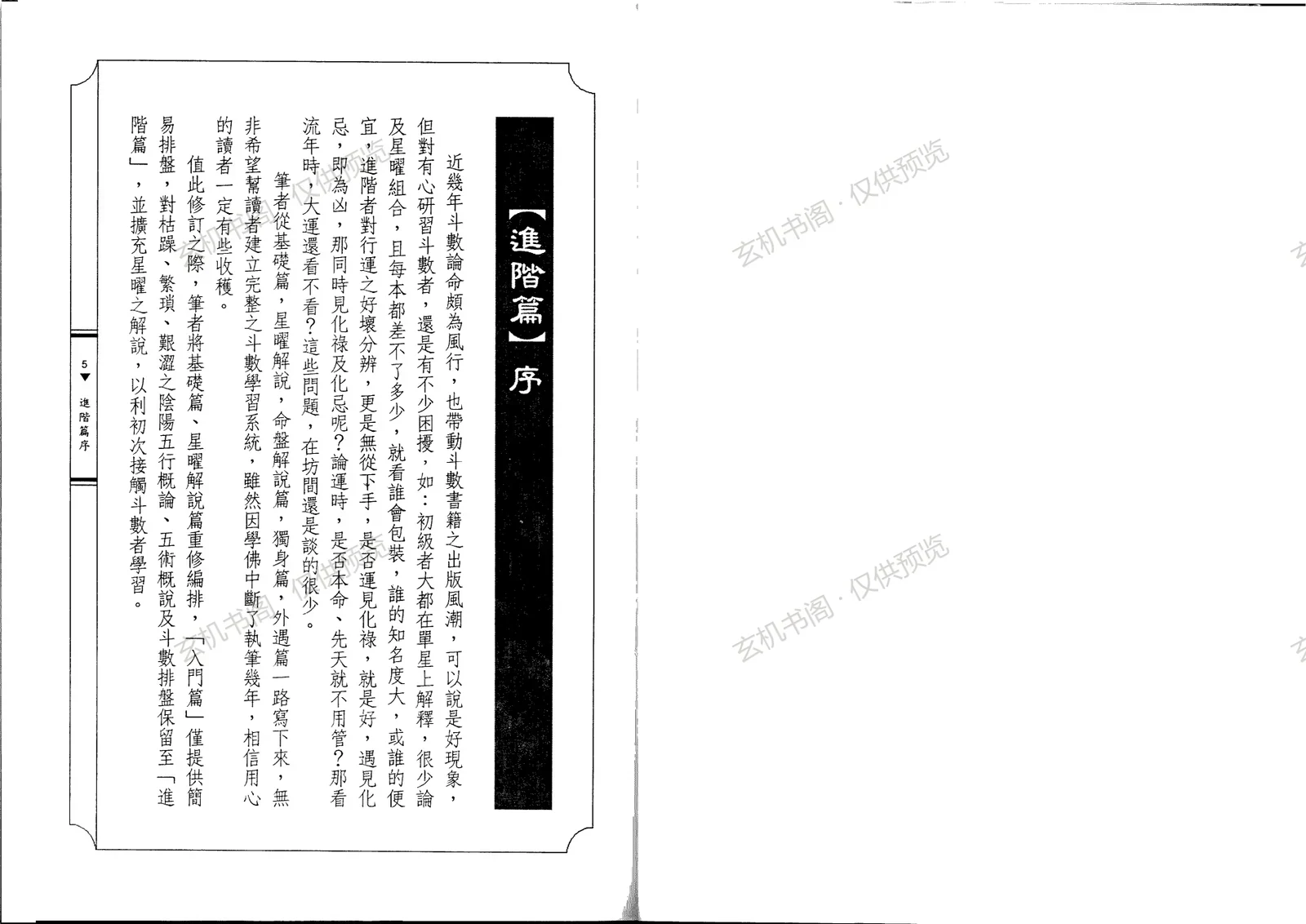
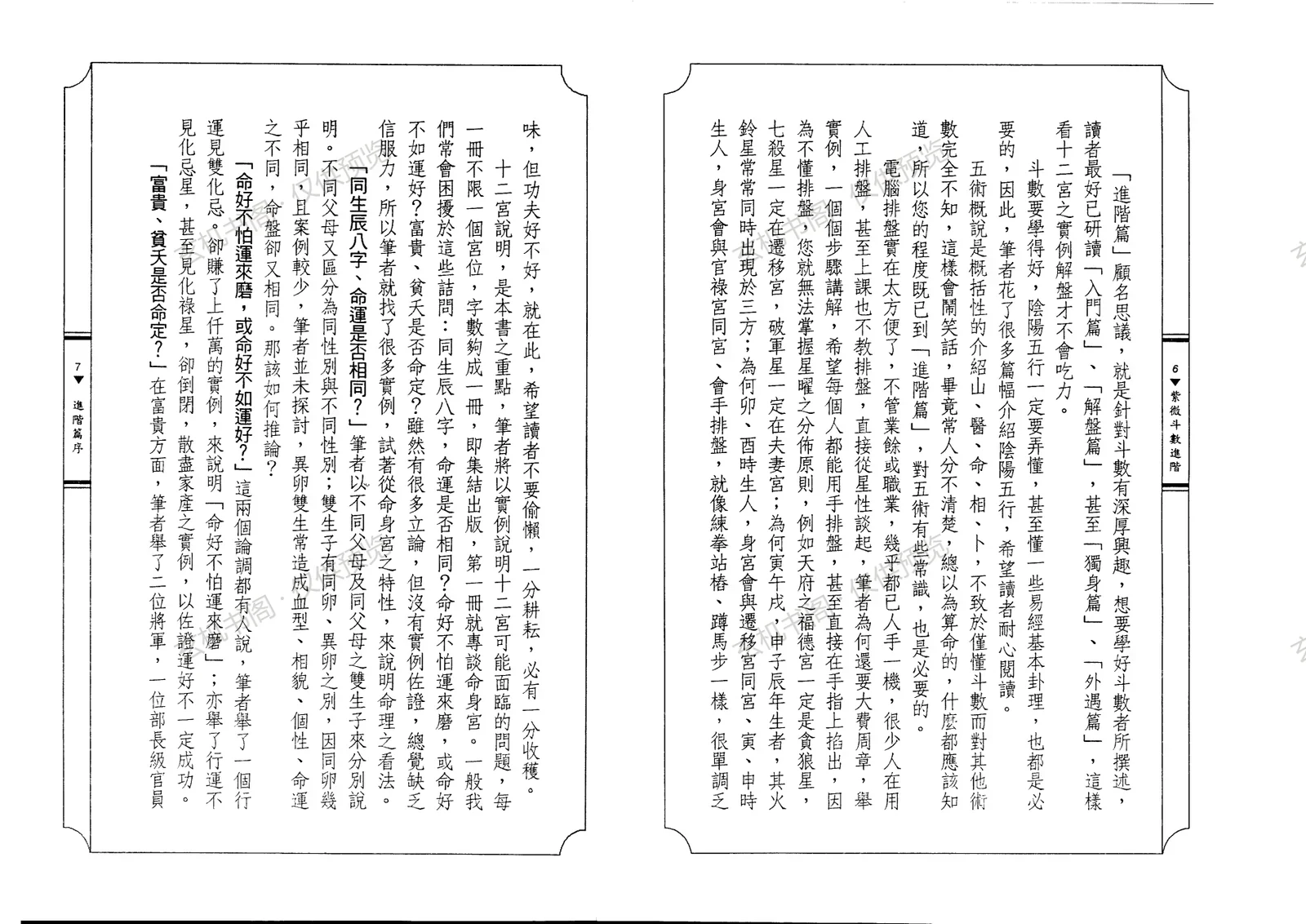
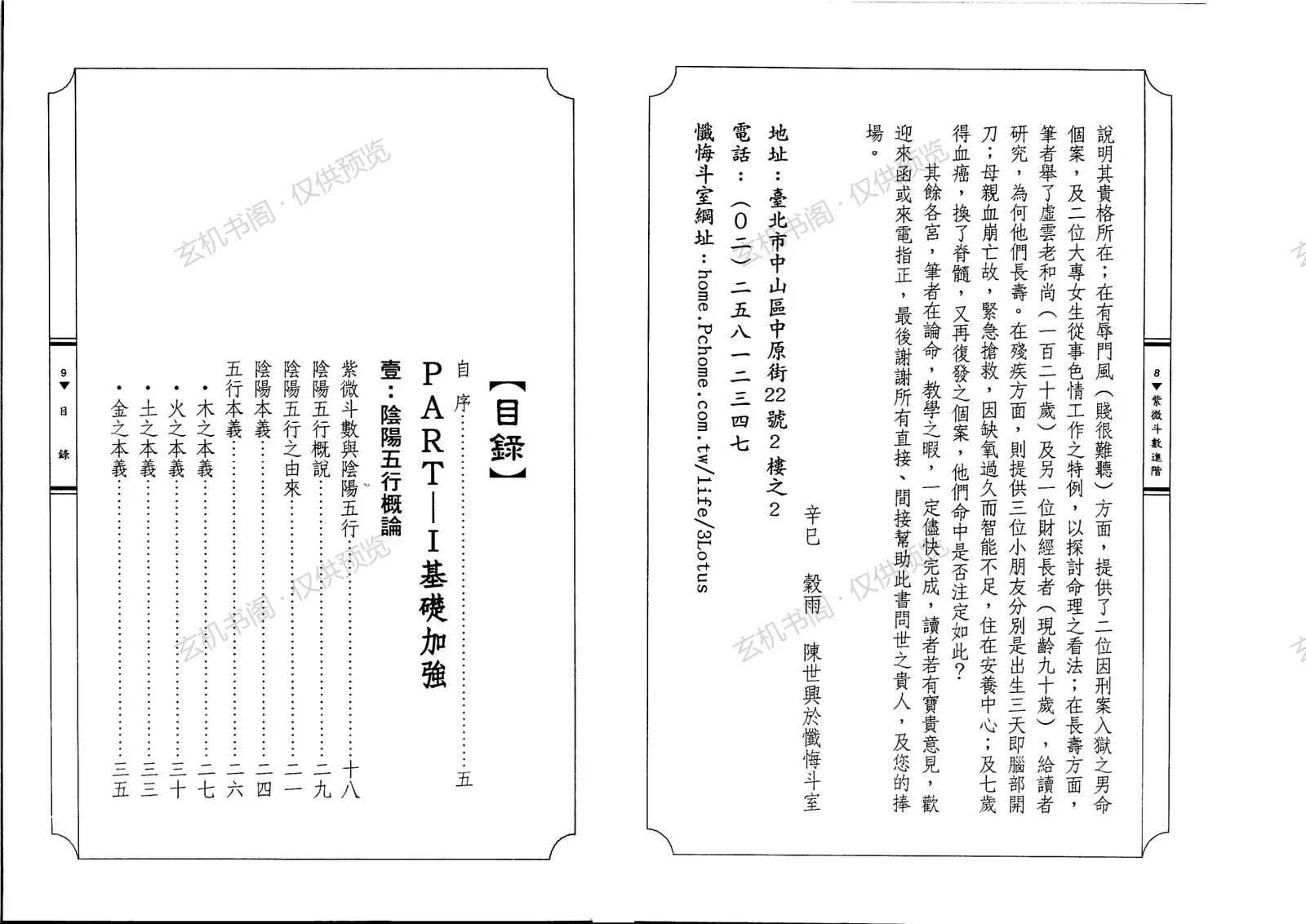
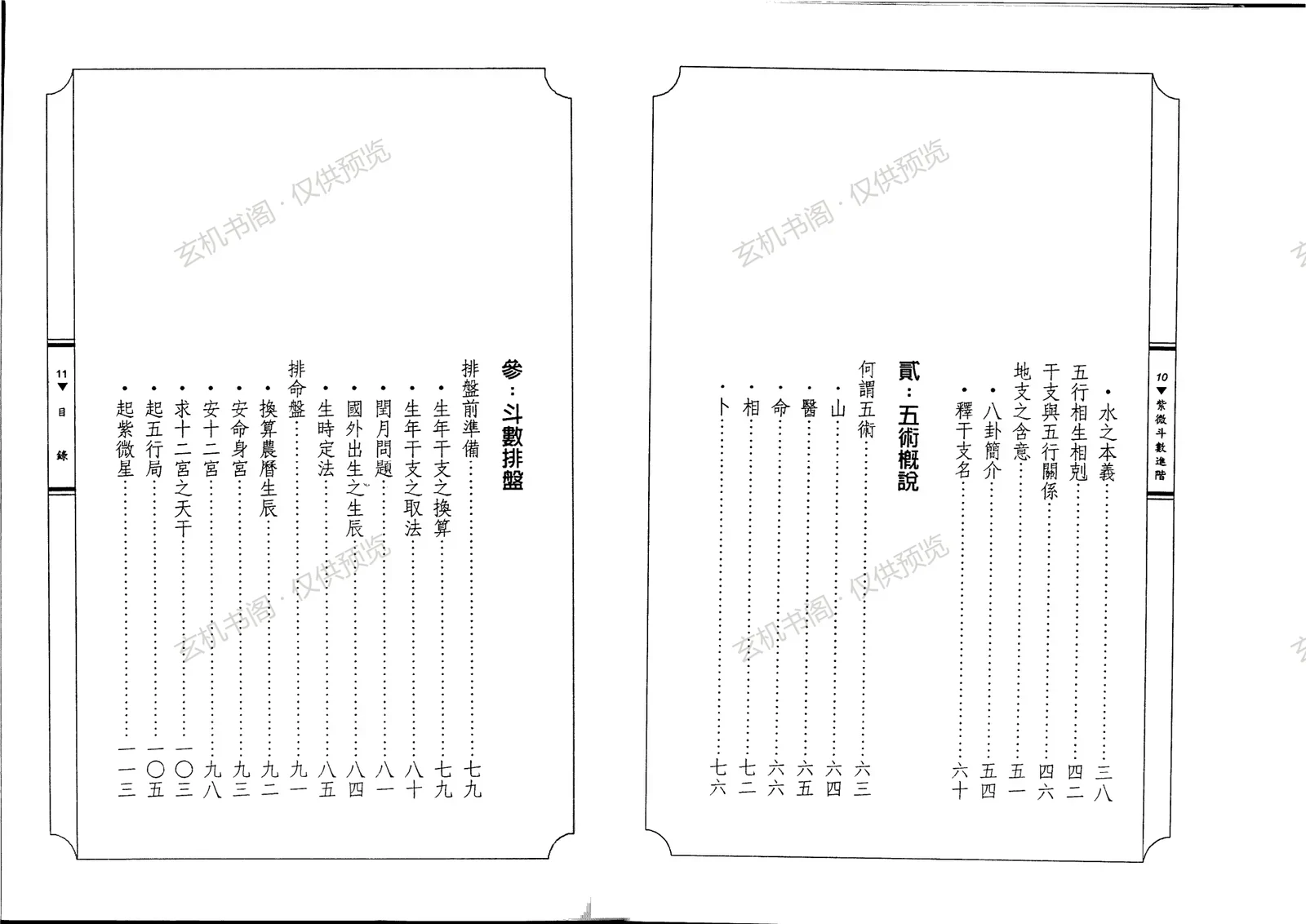
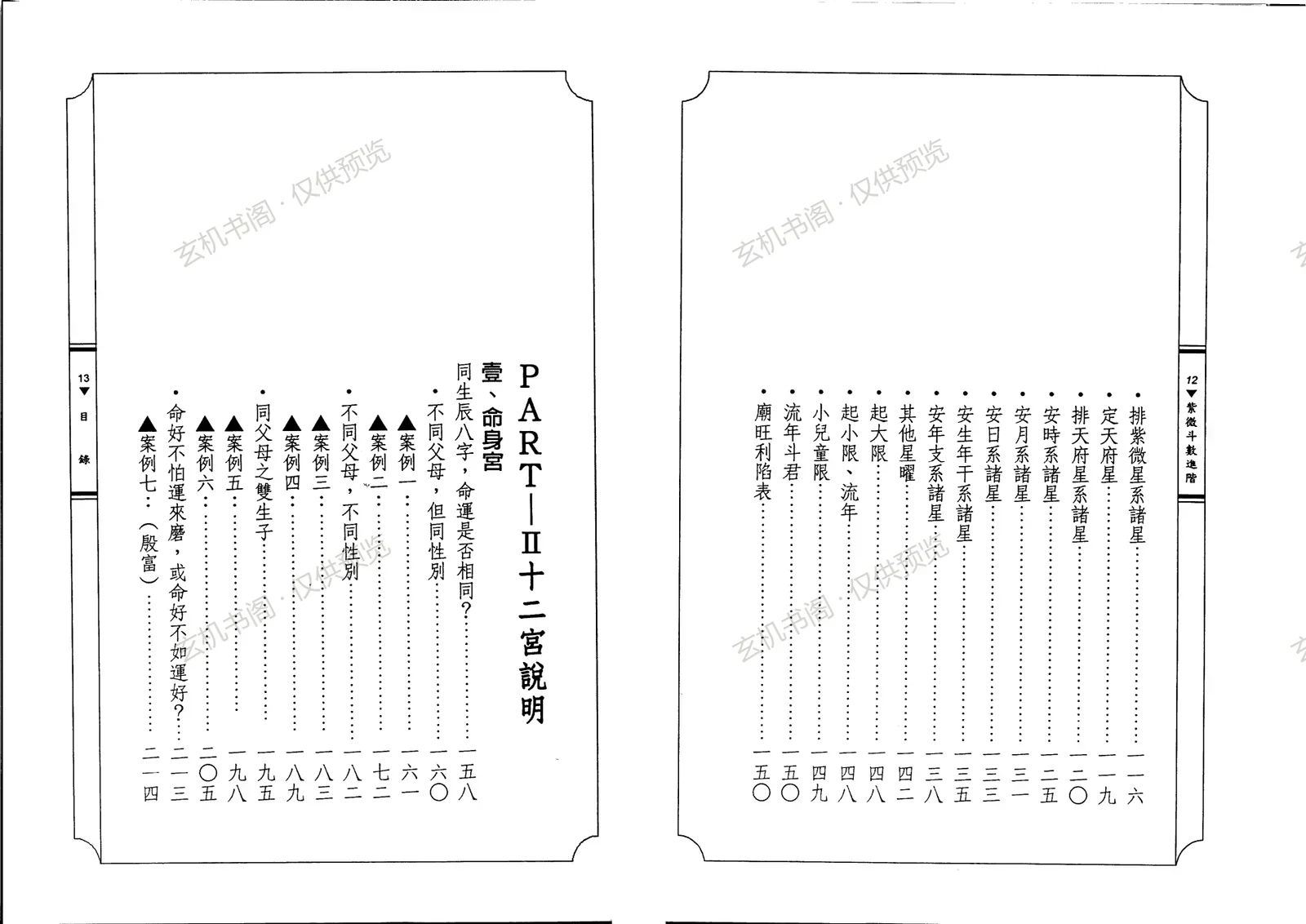
This is Chen Shixing's advanced reader on Zi Wei Dou Shu, following an introductory volume. According to the preface and table of contents, it opens with a foundations section on yin-yang and the five phases, heavenly stems and earthly branches, the eight trigrams and the five arts. A chapter on chart construction explains how to convert the birth year's stem-branch, handle leap months and birth times in and outside China, place the life and body palaces, set the twelve palaces, determine the five-phase bureau and locate the Purple Star. The book then works through the twelve palaces—life and body, siblings, spouse, children, wealth, health, travel, friends, career, property, fortune and parents—with case studies comparing people born at the same time but with different fates, twins, and different genders born on the same date. The preface also mentions star explanations, annual and decade limits, and a table of star dignity. The author notes that many Dou Shu books explain single stars but few discuss star combinations and the effects of transformations, leaving beginners unsure how to proceed; he therefore stresses step-by-step chart construction and practical examples. The structure moves from basic theory to chart building to palace interpretation, suiting readers who already know the basics and want to strengthen practical judgment.
Contents
Preface: why this advanced volume was written
Foundations: yin-yang, five phases, stems, branches, trigrams and the five arts
Chart construction: birth data, leap months, hours and star placement
The twelve palaces: life, siblings, spouse, children, wealth and more
Case studies: same birth time, twins and different genders
Stars, annual and decade limits, and a dignity table
Key Points
Starts with yin-yang, five phases, stems, branches and trigrams to fill foundational gaps.
Details the chart-building process, including birth-data conversion, leap months and palace placement.
Uses the twelve palaces as the main thread for interpreting star combinations and life events.
Includes case studies on people with the same birth data but different fates.
The preface stresses manual chart construction and examples over rote formulas or software.