Reading guide
Content guideOverview
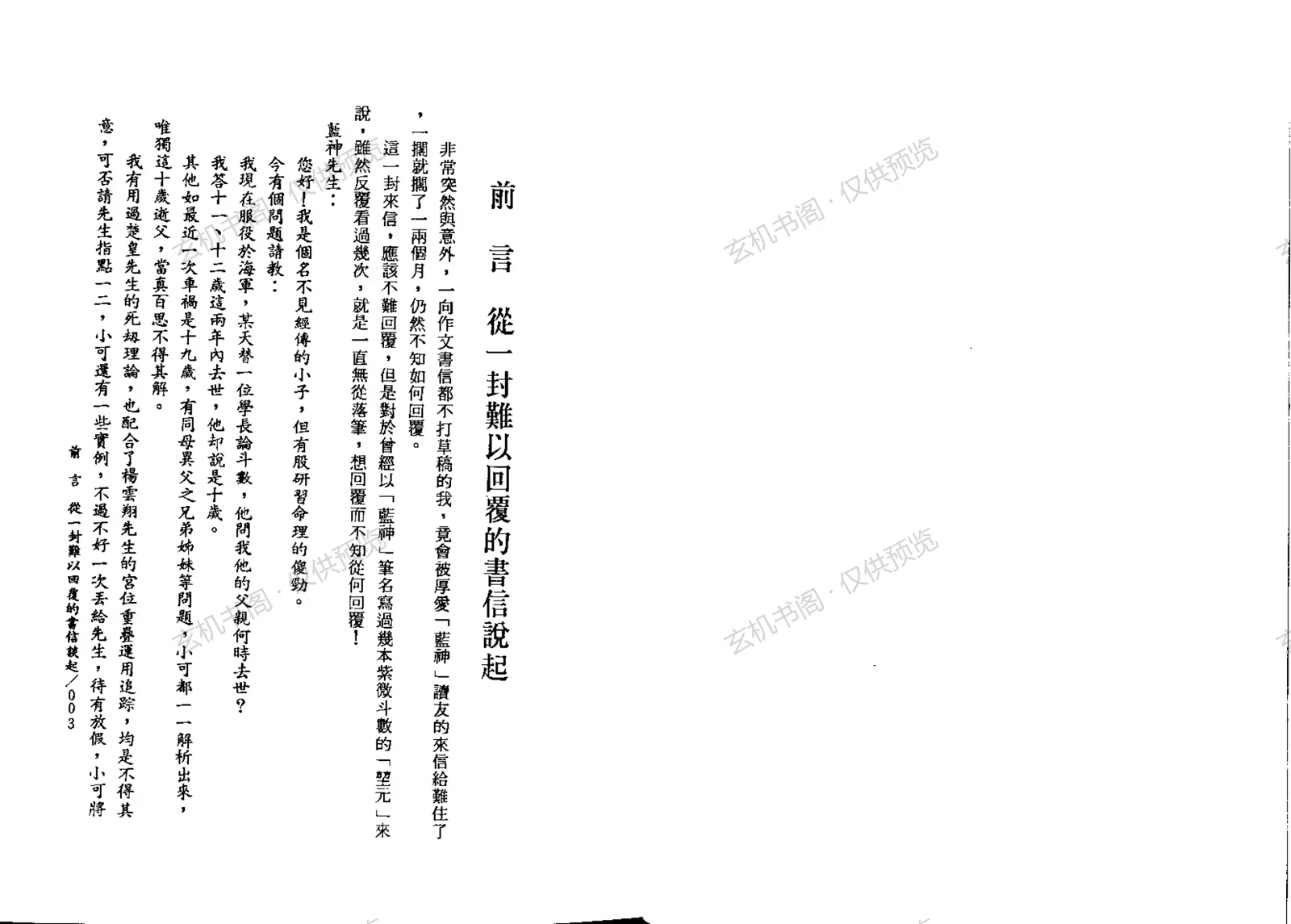
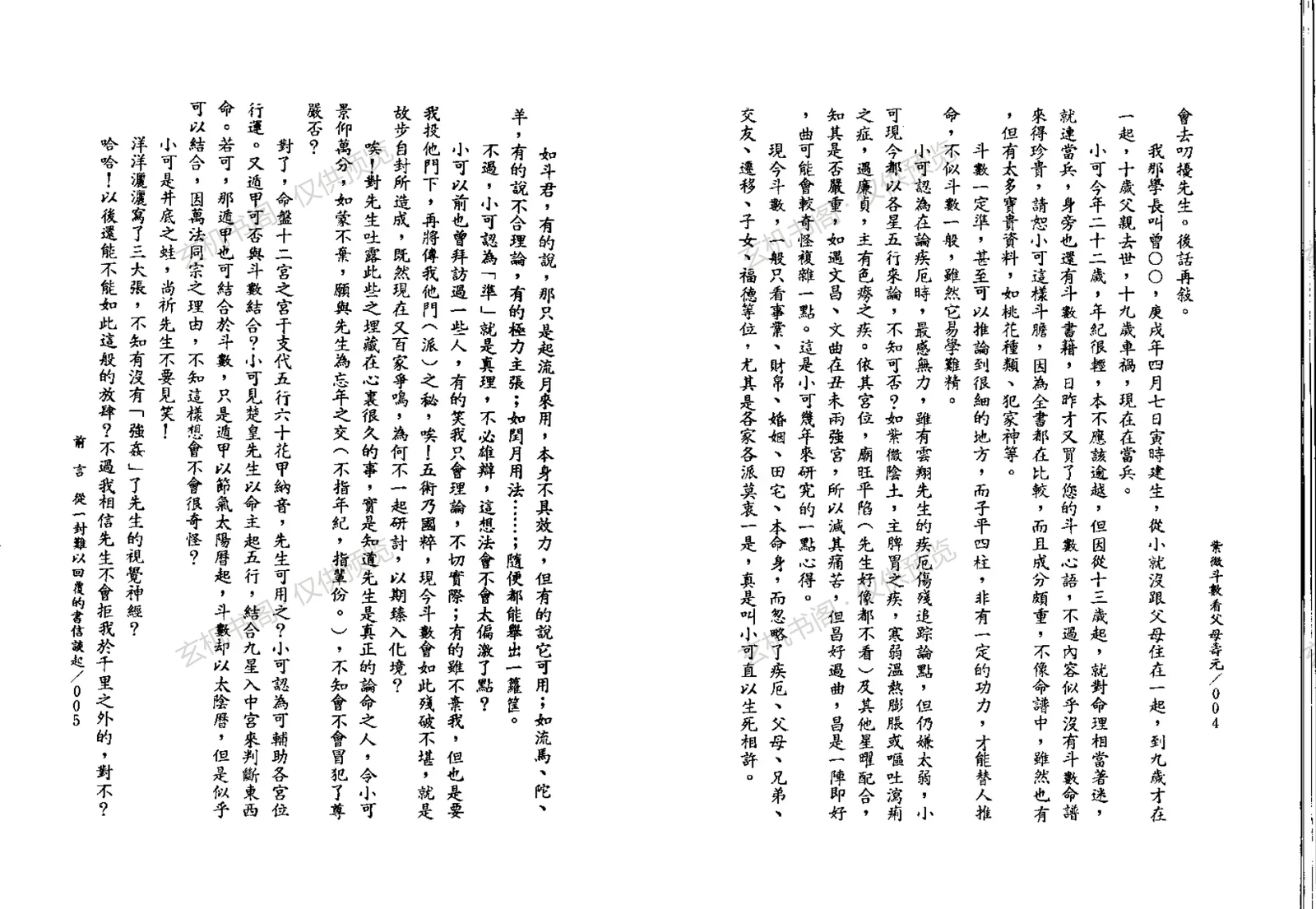
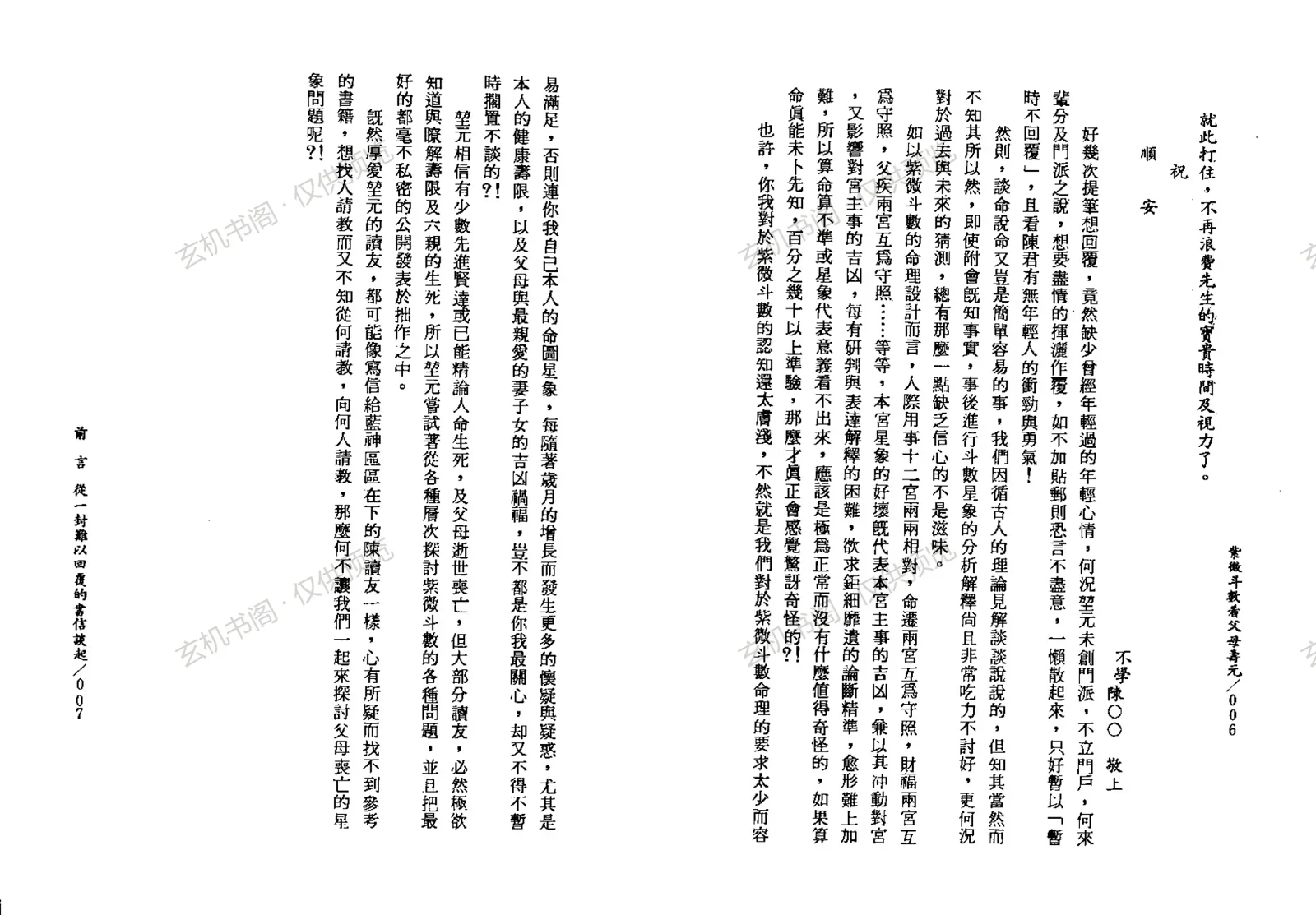
This book examines how Zi Wei Dou Shu is used to assess parents' longevity, with the subtitle pointing to health judgments based on the auspicious or inauspicious quality of period limits. It opens with a reader's letter asking about a father's time of death, a mother's lifespan, and siblings' circumstances, using the letter to frame the limits and difficulties of astrological prediction. The main chapters discuss theoretical views on death indications, including the role of Yang, Tuo, Hua Qi, and Ji, the use of major limits, and a reader's chart example. Later sections turn to palace overlap, covering Dou Jun transitions, major and minor limit methods, borrowed palace theory, the duties of the twelve palaces, and the practical importance of overlapping palaces. The book combines theory with case discussion and is suited to readers with basic Zi Wei Dou Shu knowledge who are interested in parental health and lifespan analysis.
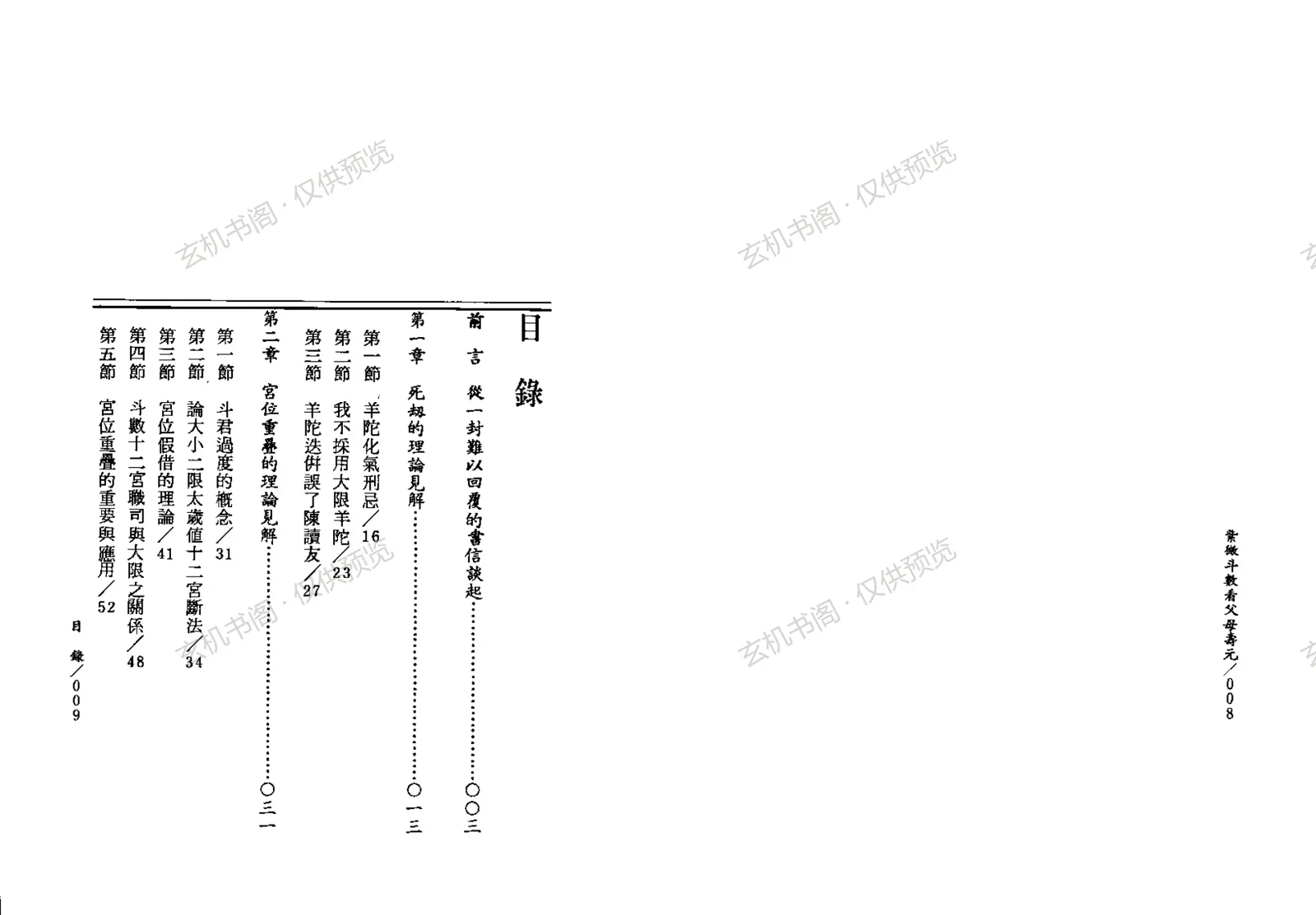
Contents
Preface: starting from a hard-to-answer letter
Chapter 1: theoretical views on death indications
Discussion of Yang, Tuo, Hua Qi, and Ji
Choosing whether to use Yang and Tuo in major limits
Analysis of a reader's chart example
Chapter 2: theoretical views on palace overlap
Dou Jun transitions and major/minor limit methods
Borrowed palaces and the duties of the twelve palaces
Key Points
Uses the Parents Palace, Illness Palace, and period limits to judge parental health and lifespan
Discusses Yang, Tuo, Hua Qi, and Ji in disease and death judgments
Examines whether major limits should use Yang and Tuo, and the theory of borrowed palaces
Stresses the practical importance of overlapping palaces in chart reading