Reading guide
Content guideOverview
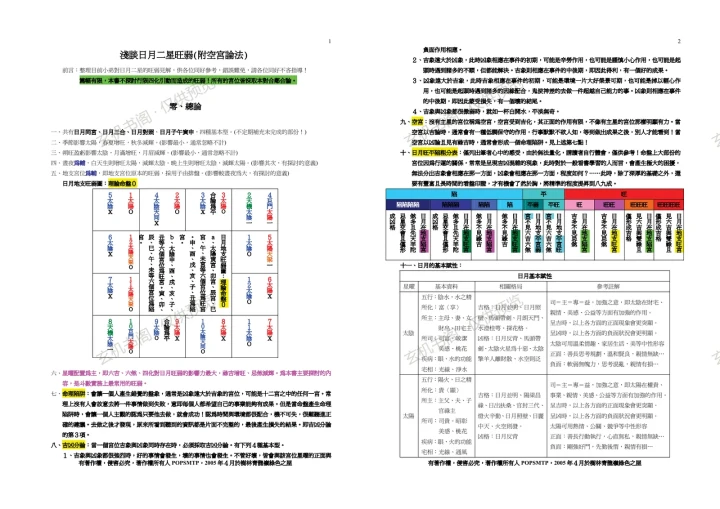
This handout is a course record from Yi Ting's systematic class on Zi Wei Dou Shu, concentrating on the foundational step of installing heavenly stems into the twelve palaces. The first page states the core method: take the birth-year stem and use the Five Tiger Escape (Wu Hu Dun) starting from the Yin palace, then proceed in order; because there are only ten stems for twelve branches, the stems of Yin and Mao are repeated in the Zi and Chou palaces. Pages 2–3 turn the mnemonic 'For Jia and Ji years, Bing starts' into a number memory method: 甲乙丙丁戊 = 12345, 己庚辛壬癸 = 67890, and the third row takes 35791, restored to 丙戊庚壬甲. Page 4 adds the Five Rat Escape (Wu Shu Dun) for hour stems, with the mnemonic 'Jia and Ji return to Jia Zi', and explains that Tiger means the Yin palace and Rat means the Zi palace. Page 5 uses a perpetual calendar example to stress that the first lunar month is always the Yin month. Page 6 presents a grid of branches, months, solar terms, and five elements, reiterating that the stem of the Yin month is derived from the year stem via the Five Tiger Escape, using the Ji Hai year as an example. The format is a conversational class transcript, practical and mnemonic-oriented.
Contents
General principle of installing stems in the twelve palaces
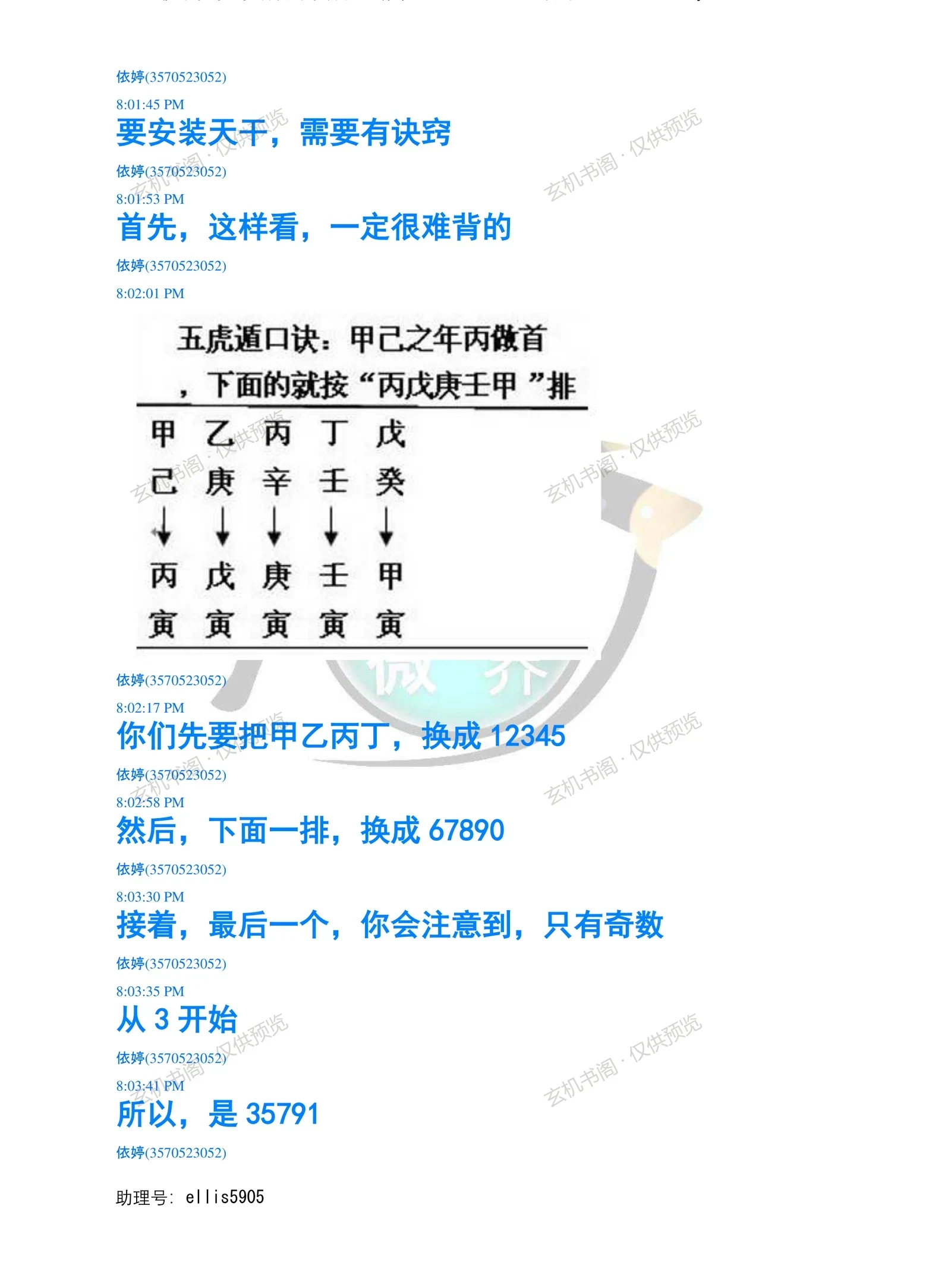
Five Tiger Escape mnemonic and number conversion
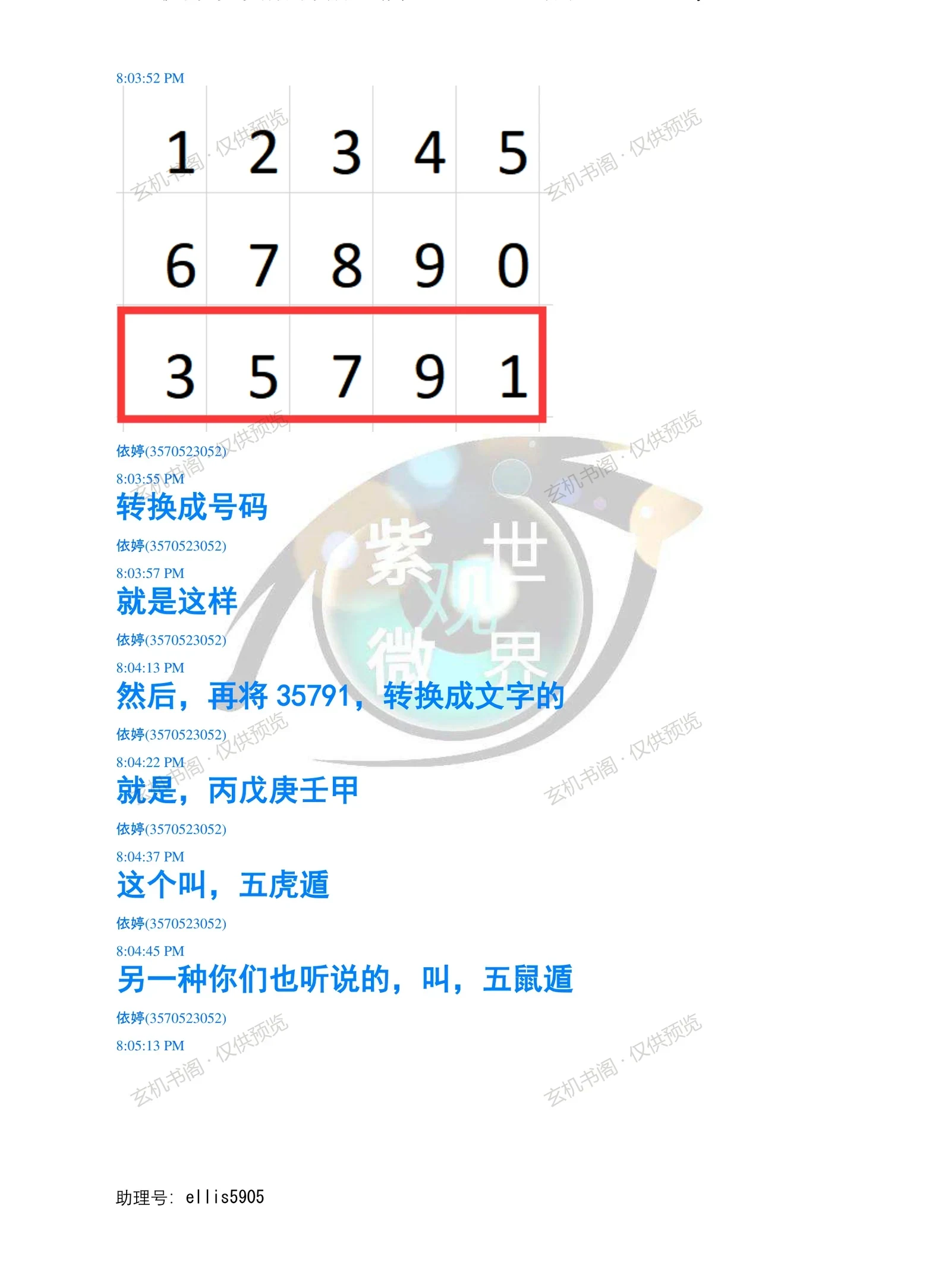
Origin of the 35791 number sequence
Five Rat Escape and its difference from Five Tiger Escape
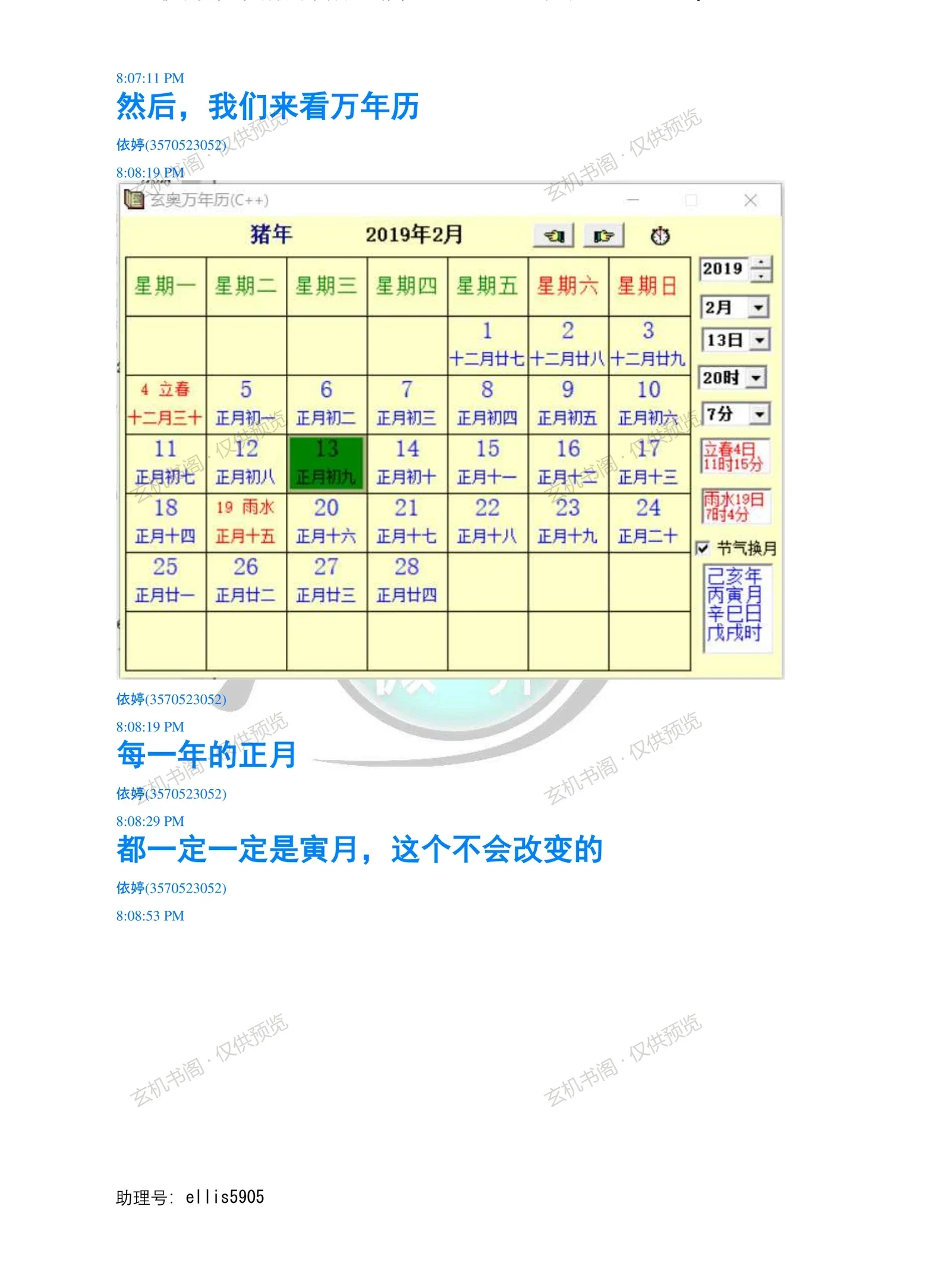
Fixed rule of Yin month as first month in the calendar
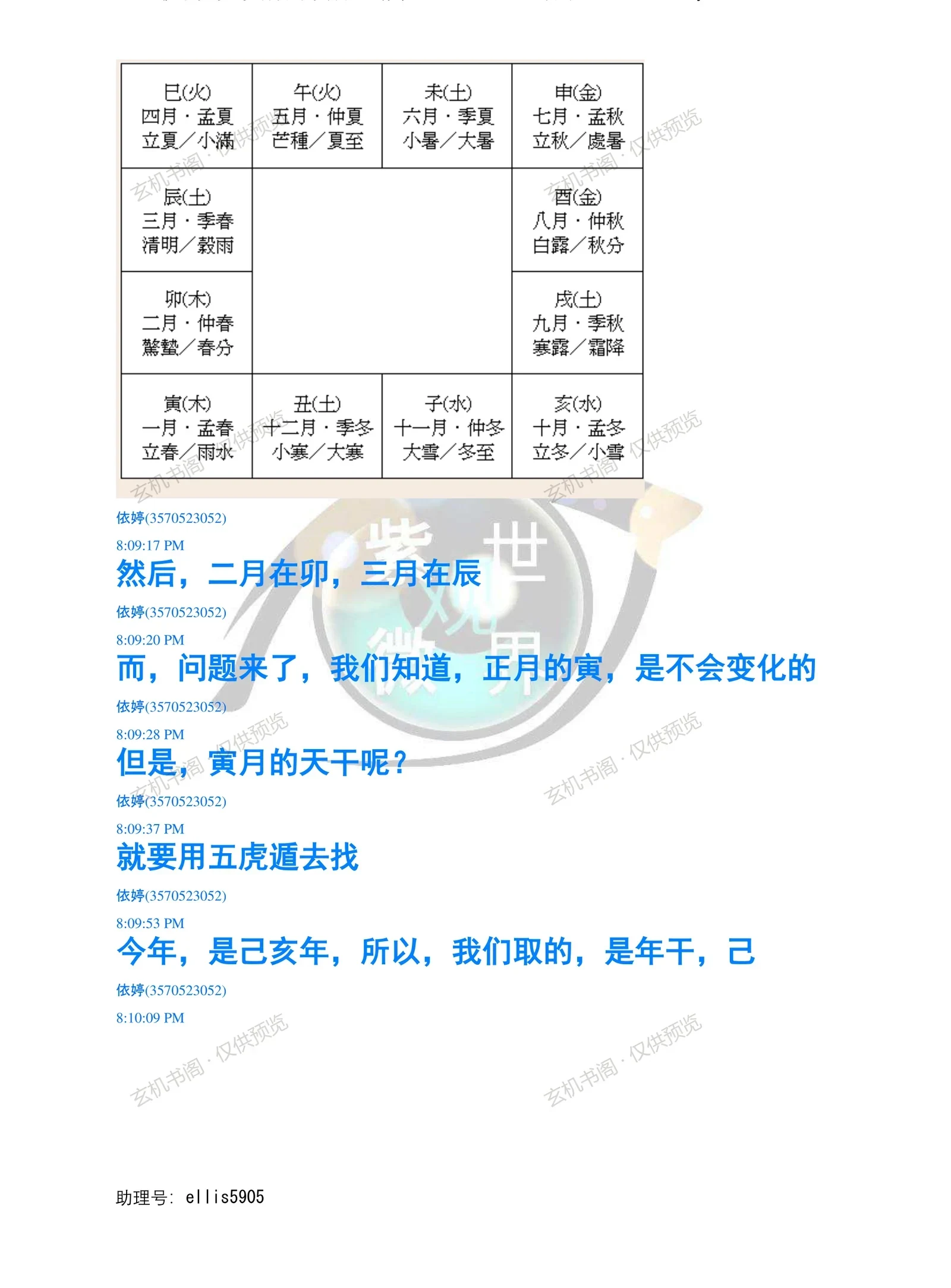
Grid of branches, months, solar terms, and five elements
Key Points
Earthly branches of the twelve palaces are fixed; stems are installed via Five Tiger Escape from the birth-year stem
Five Tiger Escape: for Jia and Ji years, Bing starts; then follow Bing, Wu, Geng, Ren, Jia
Number method: 甲乙丙丁戊=12345, 己庚辛壬癸=67890, third row uses 35791
Five Rat Escape is used for hour stems, with mnemonic 'Jia and Ji return to Jia Zi'
The first lunar month is always the Yin month; its stem must be derived from the year stem
With only ten stems for twelve palaces, Zi and Chou repeat the stems of Yin and Mao