Reading guide
Content guideOverview
This handout explains the nature of the Zi Wei star group in Zi Wei Dou Shu. It first sets out five principles for reading star nature: stars express essence through yin-yang and the five phases; star nature can be read at the levels of people, events, objects, environment, color, and number; the palace a star falls in shifts its meaning; the time line of natal chart versus annual flow changes interpretation; and star combinations plus temple/fallen status affect how much energy a star can express. It then lists the yin-yang and five-phase attributions of the fourteen major stars and uses the Life Palace and Spouse Palace to explain yang-over-yang and yin-over-yin as merciless clashes, yang-over-yin and yin-over-yang as merciful clashes, and how generating and overcoming relations translate into helping or restraining the spouse. The final page moves to distinguishing complex generating and overcoming relations, demonstrating how to turn star nature into readable imagery. The structure is clear and example-driven, suited to readers who already know basic Zi Wei Dou Shu and want a firmer foundation in star nature.
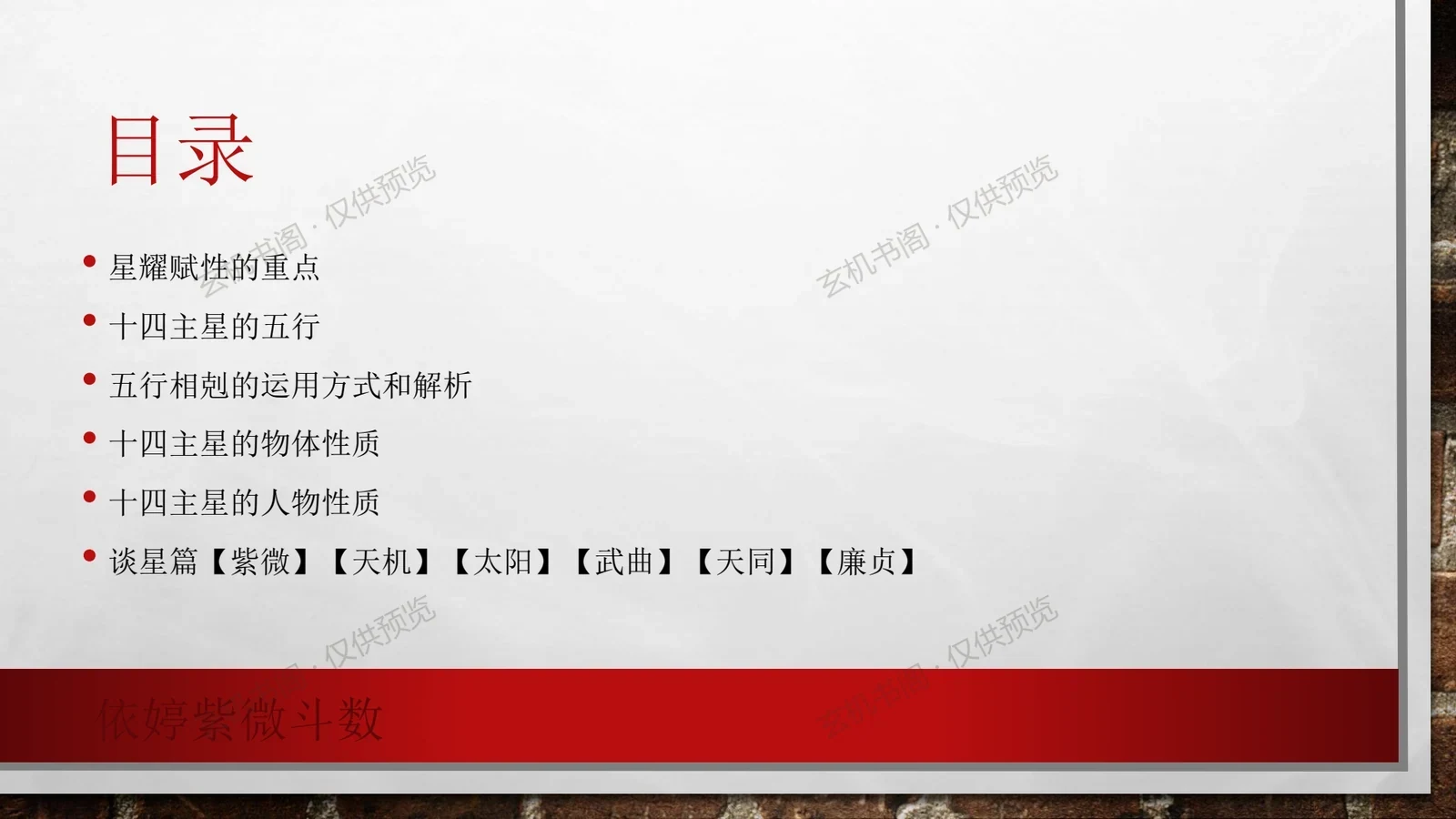
Contents
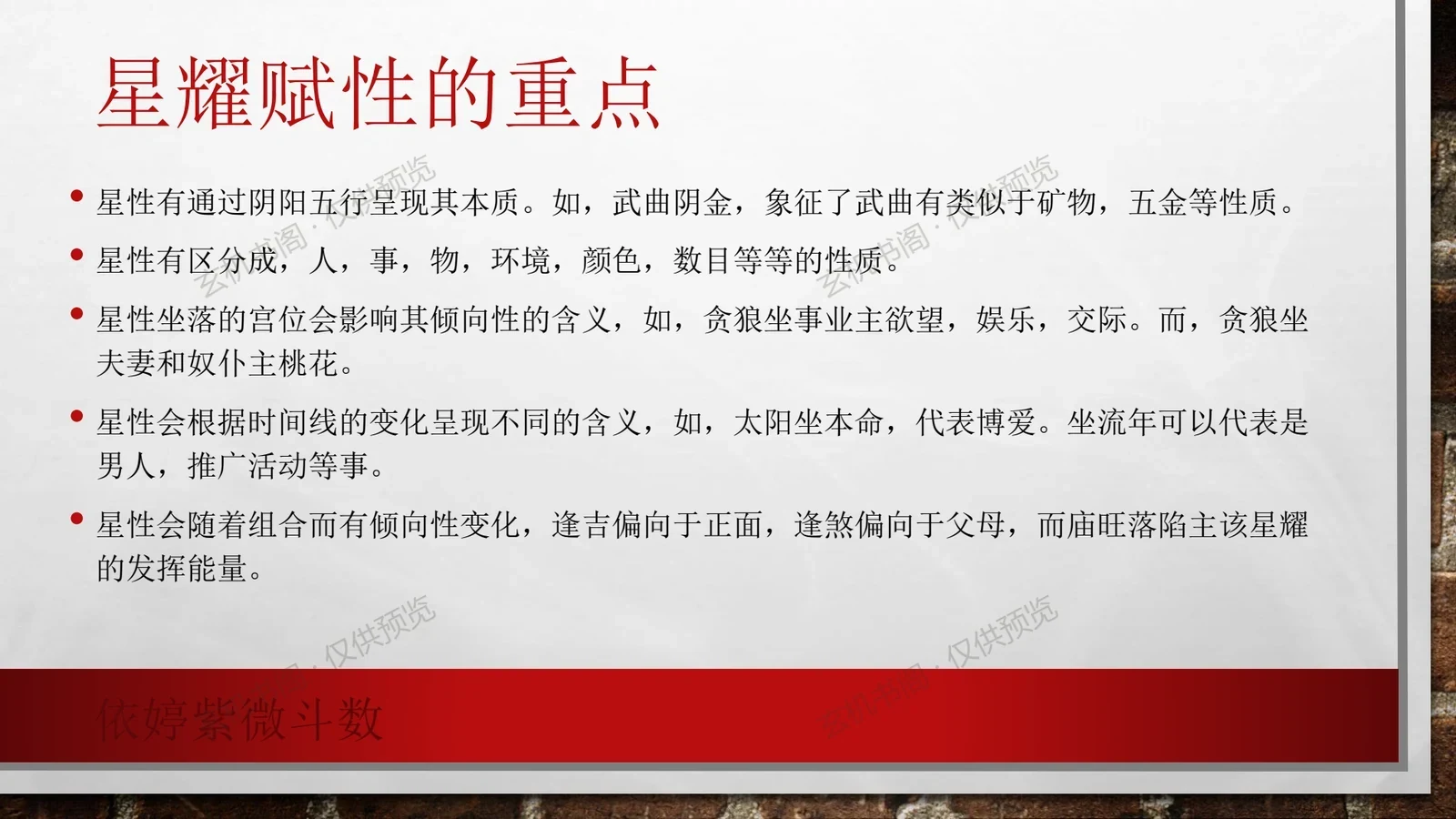
Key points in reading star nature
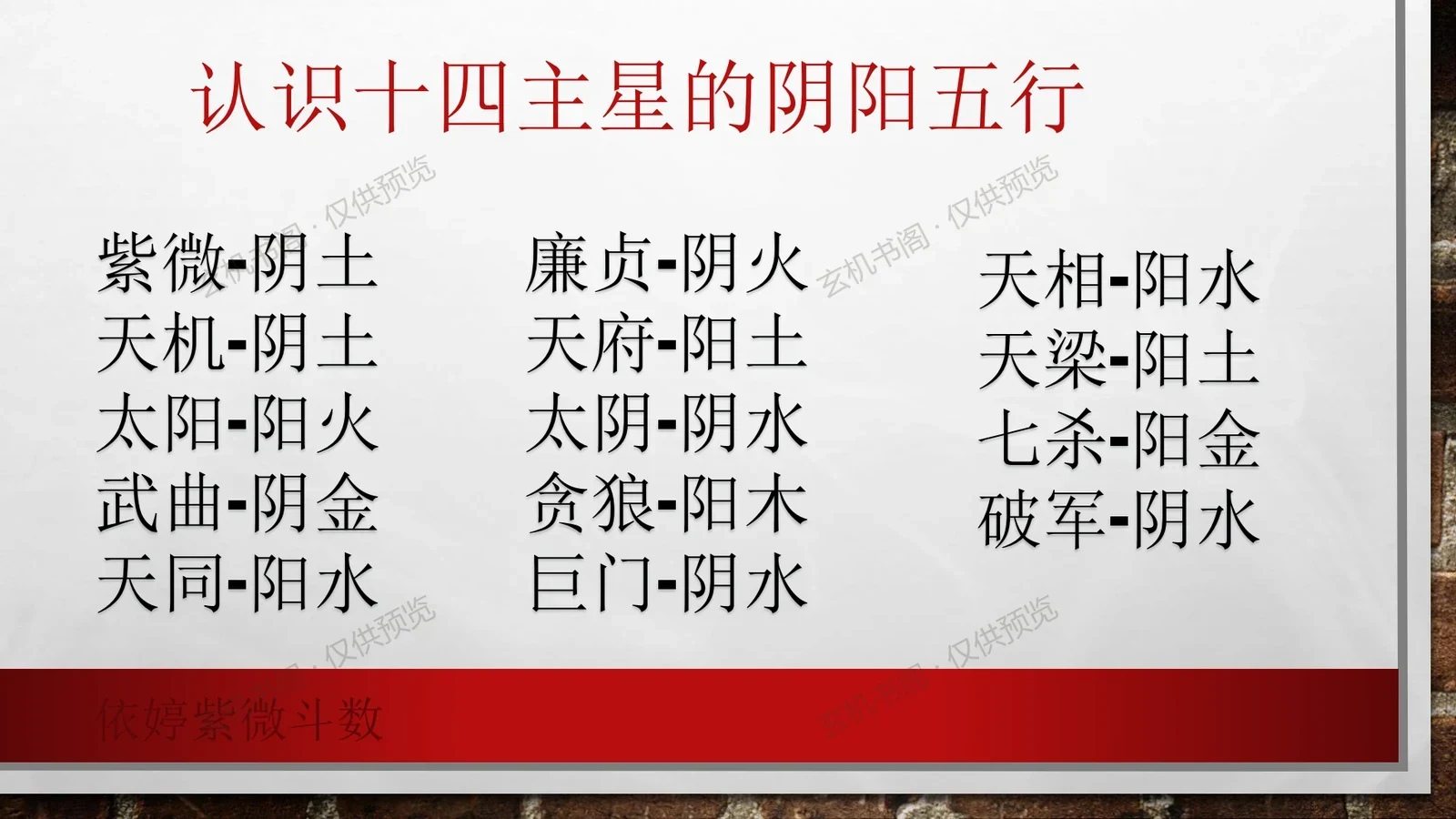
Yin-yang and five phases of the fourteen major stars
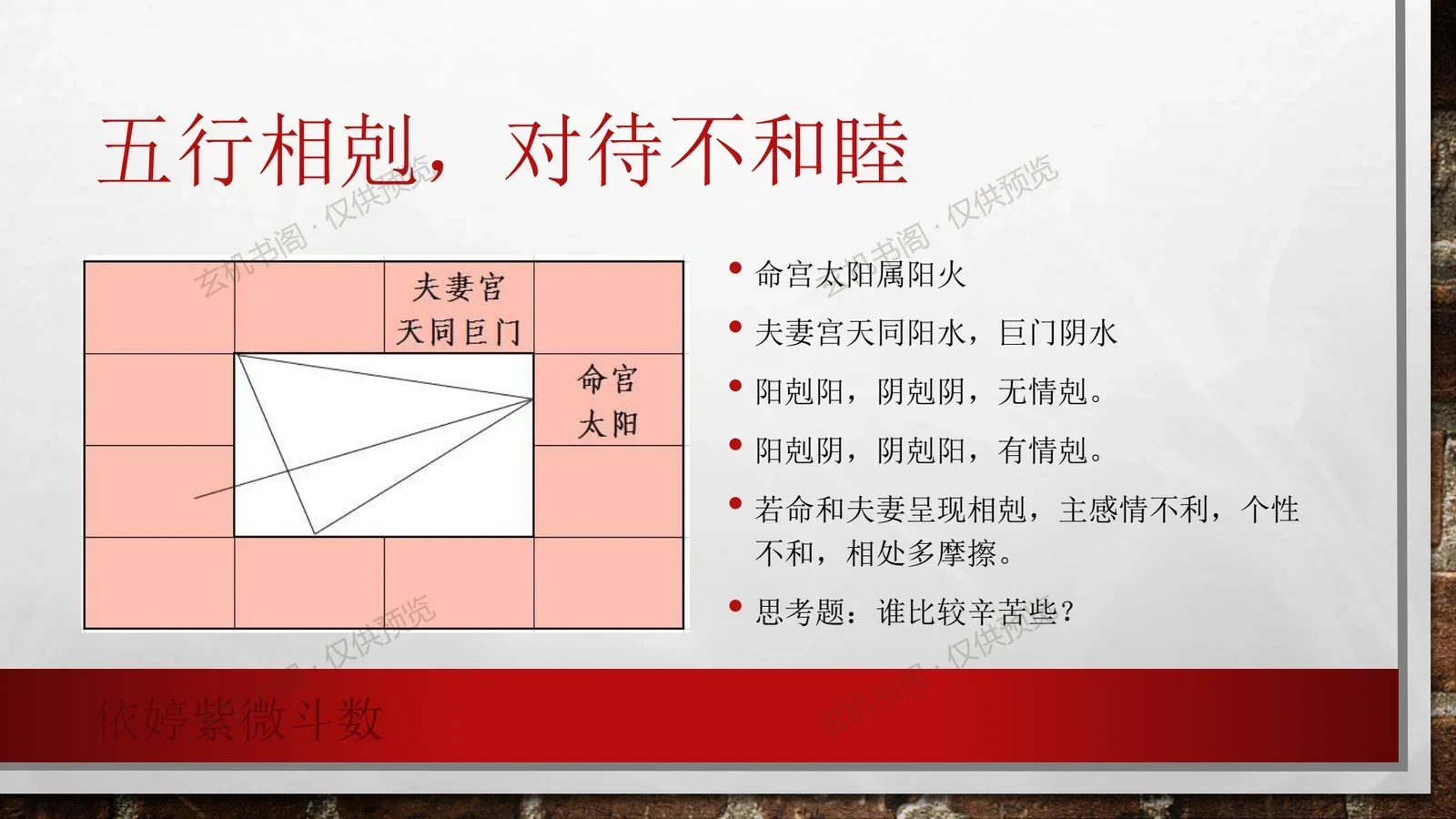
Five-phase clashes and discord
Object nature of the fourteen major stars
Human nature of the fourteen major stars
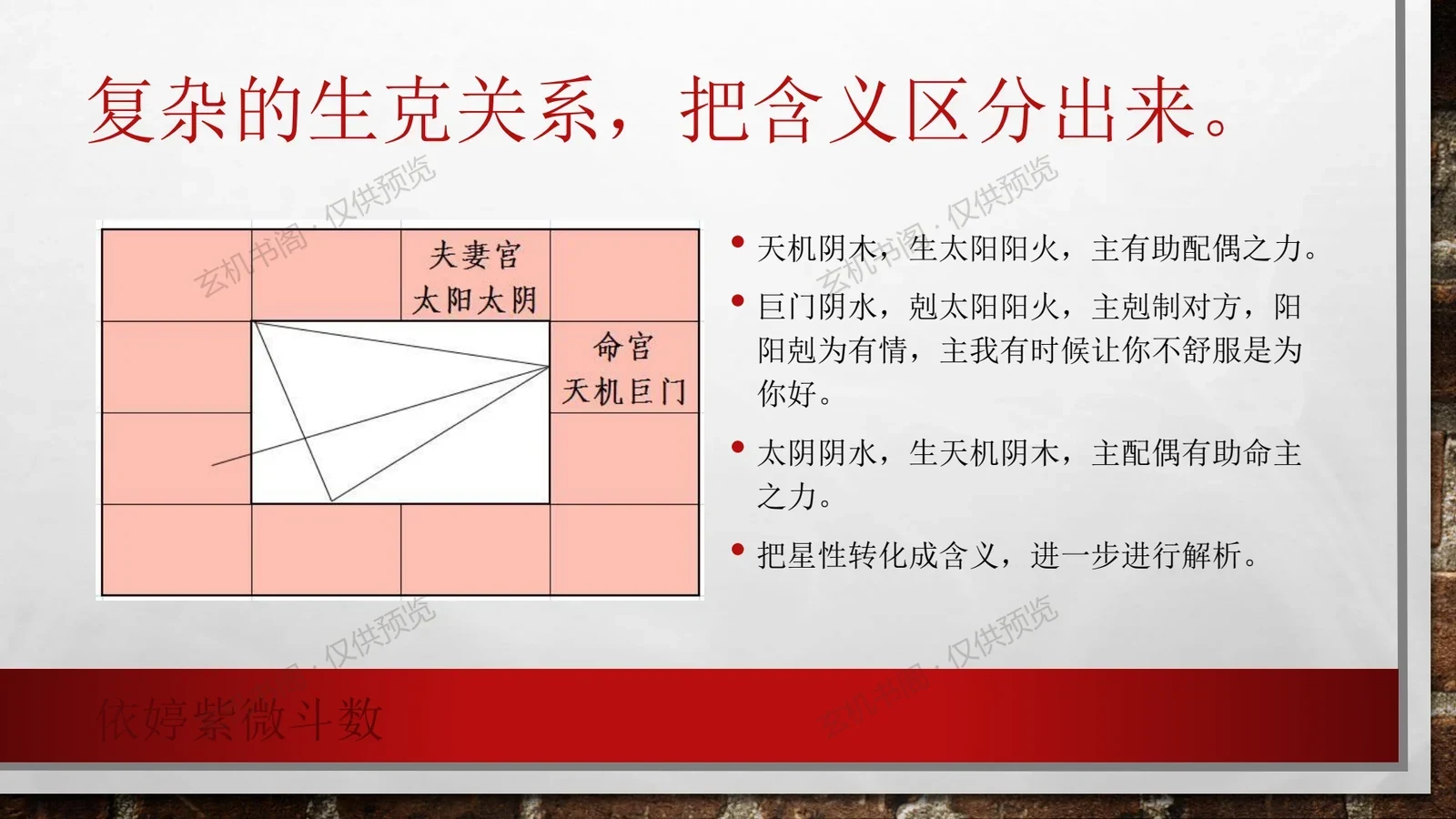
Distinguishing meanings in complex generating and overcoming relations
Star discussions: Zi Wei, Tian Ji, Tai Yang, Wu Qu, Tian Tong, Lian Zhen
Key Points
Star nature is expressed through yin-yang and five phases and spans people, events, objects, environment, color, and number.
The palace a star falls in changes its tendency and meaning.
Natal and annual time lines shift the focus of interpretation.
Yang-over-yang and yin-over-yin are merciless clashes; yang-over-yin and yin-over-yang are merciful clashes.
Generating and overcoming relations must be combined with palace and star combination to yield concrete imagery.