Reading guide
Content guideOverview
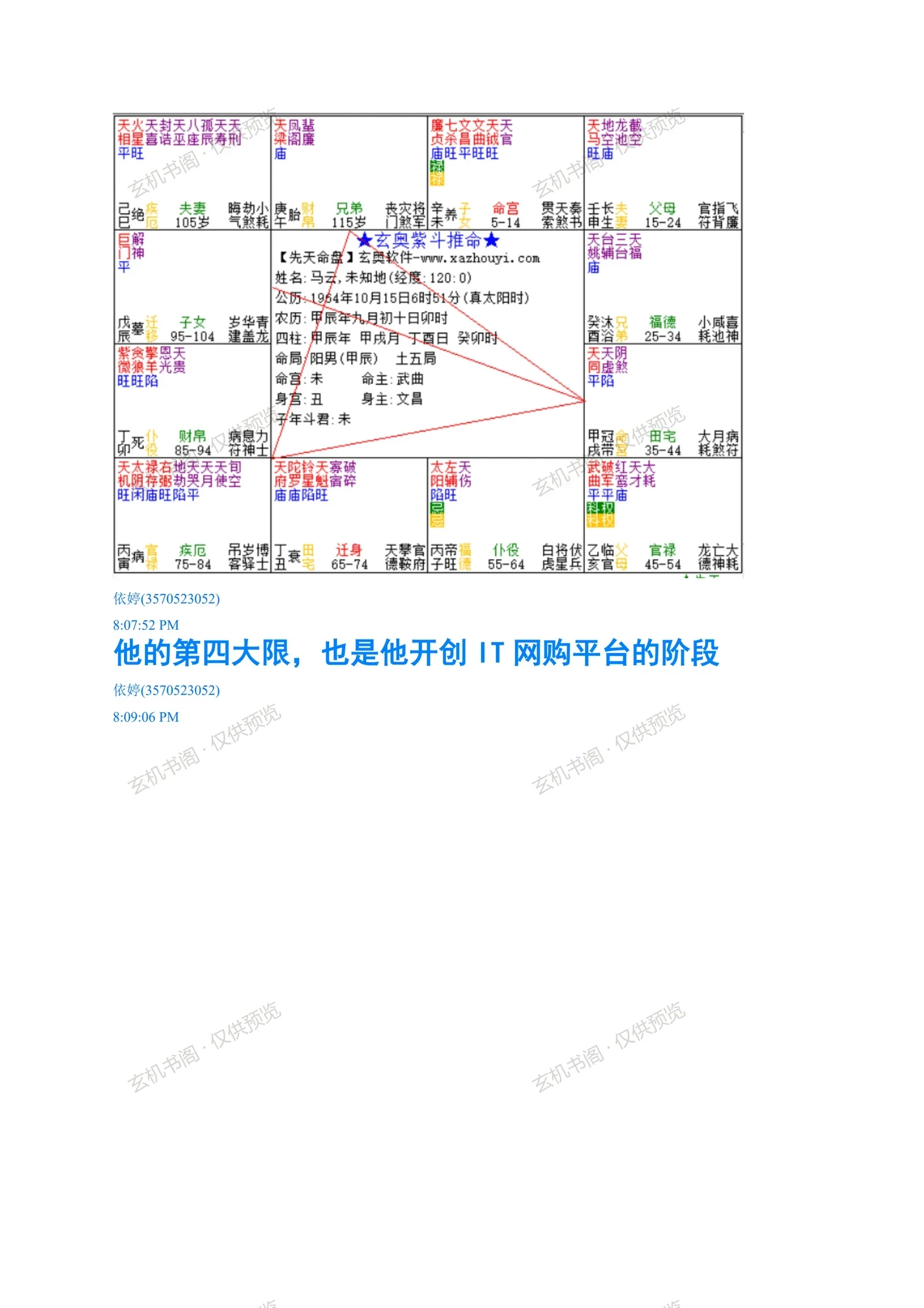
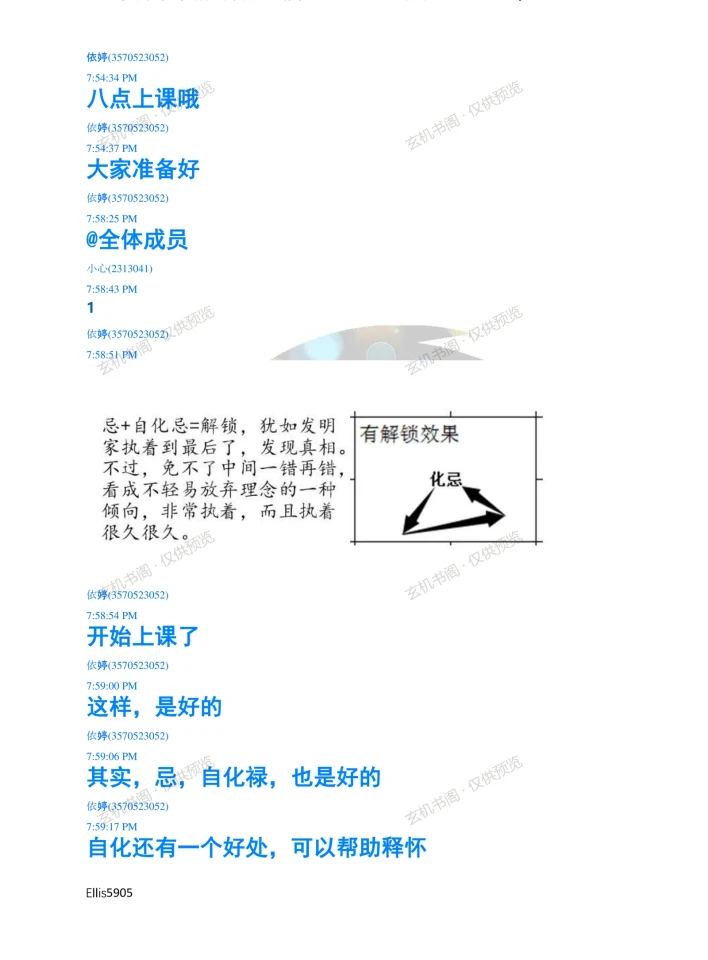
This is the handout for session 35 of Yi Ting's 2018 Zi Wei Dou Shu systematic course, presented as a chat-style class transcript with diagrams. The diagrams first connect the Spouse Palace with the Life Palace and Parents Palace to show clash-by-Ji (jichong), described as imbalance with strong malignant potential. When the Spouse Palace clashes the Parents Palace—which serves as the spouse's Property, Document, and litigation palace—it can indicate a broken household, marital paperwork or legal trouble, and is commonly read as a divorce pattern; the same configuration in a decade (daxian) suggests marital change or long separations. A section titled 'Other Key Points' ranks the force of single, double, and triple Ji, discusses tough stars turning to Quan, soft stars turning to Ke, Lu not always being auspicious at face value, the four transformations as a process, and Tuoluo transforming into Ji. Everyday examples—complaining about a job without quitting, or ignoring a minor illness—illustrate how double Ji adds pressure and triple Ji increases the burden. The final page shows a captured Jack Ma natal chart, noting that his fourth decade marked the launch of an IT e-commerce platform.
Contents
Clash-by-Ji between Life and Spouse palaces
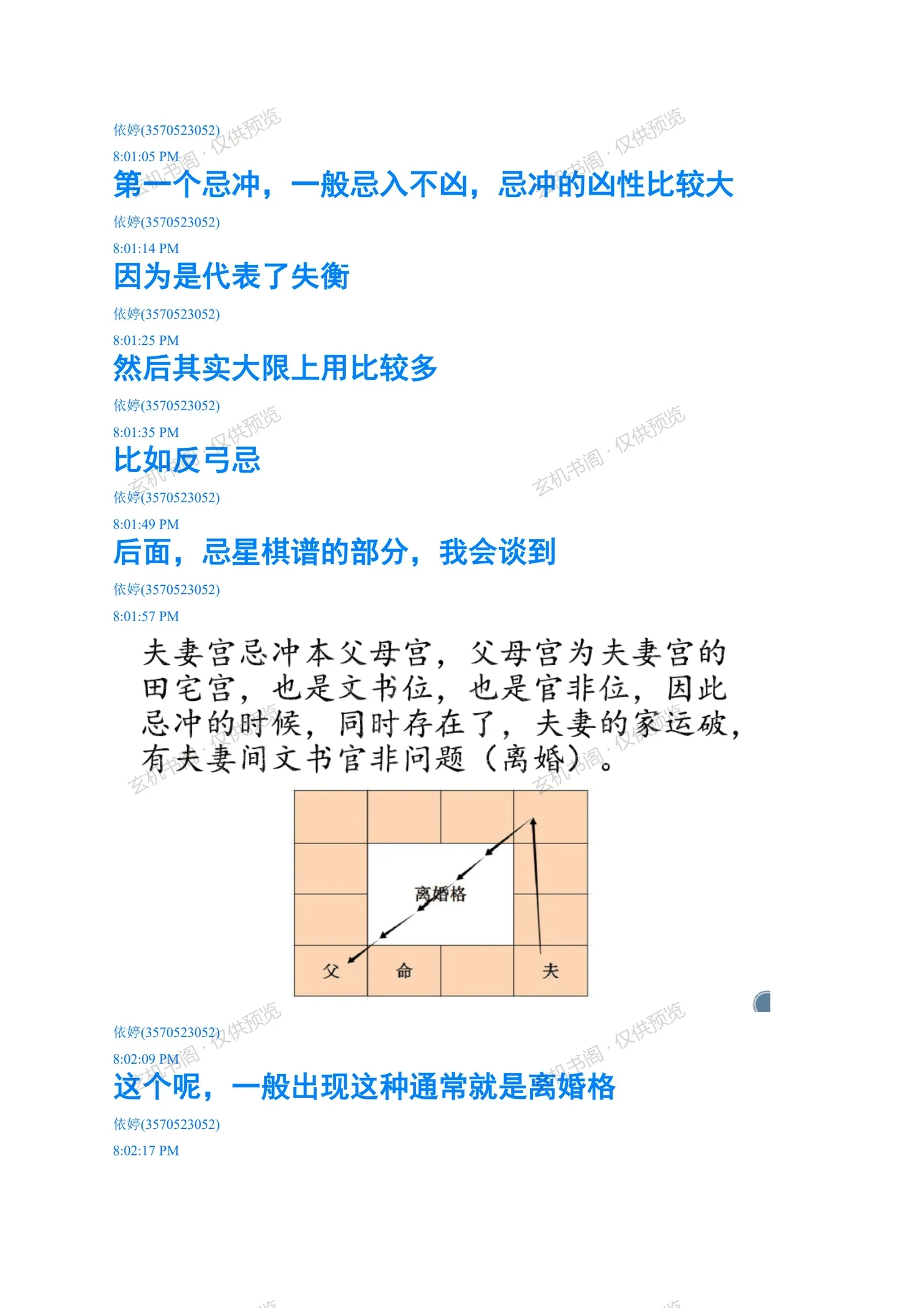
Spouse Palace clashing Parents Palace and divorce pattern
Decade clash on Spouse and Welfare palaces
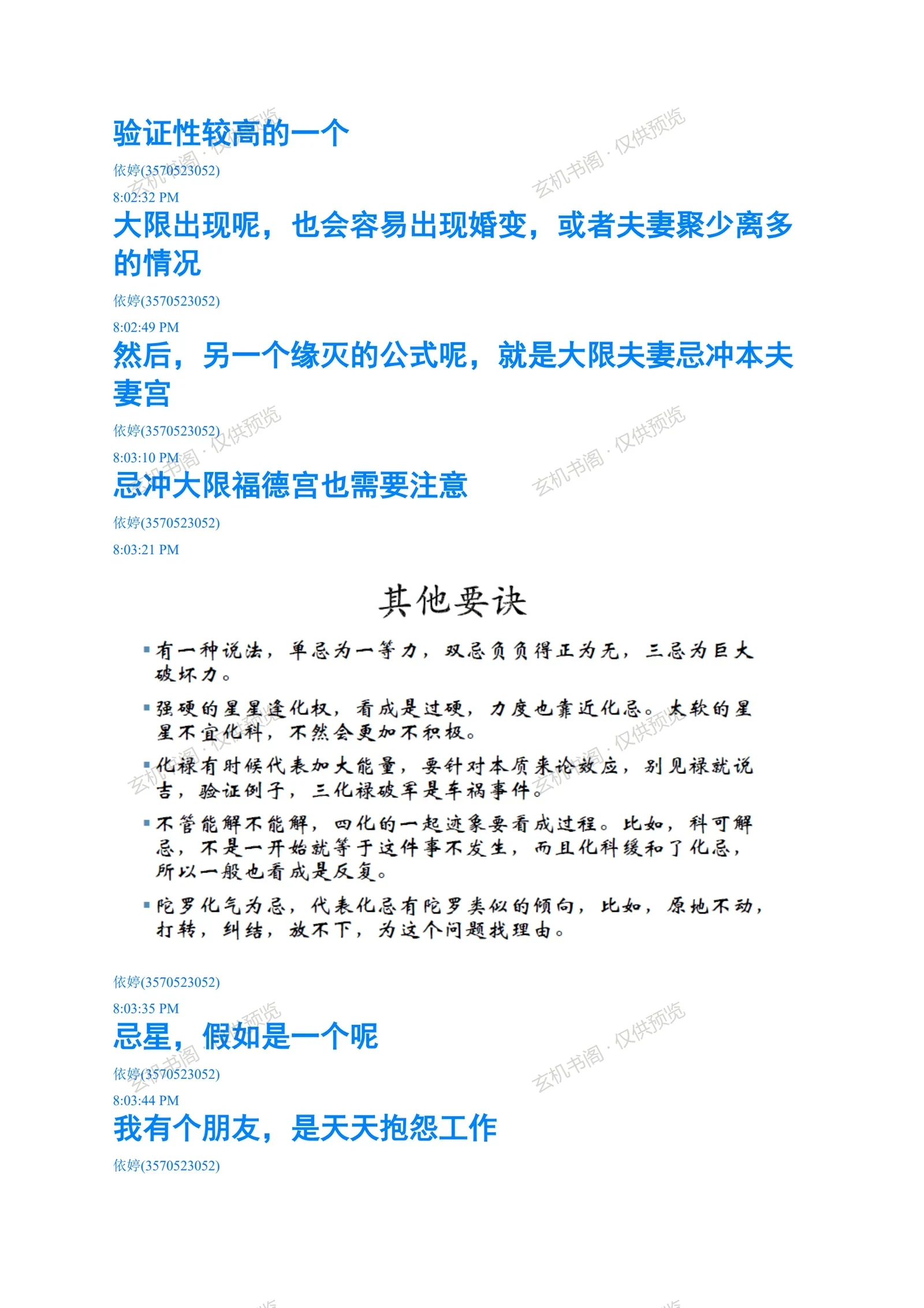
Other key points: single, double, triple Ji
Quan, Ke, Lu and Tuoluo as Ji
Pressure of double Ji and burden of triple Ji
Jack Ma chart: fourth decade example
Key Points
Clash-by-Ji often breaks relationships and is more malignant than Ji entering
Spouse Palace clashing Parents Palace can form a divorce pattern
Single Ji is balanced force; double Ji cancels out; triple Ji is highly destructive
Read the four transformations as a process; Ke eases but does not erase Ji
Tuoluo acting as Ji suggests spinning in place and being unable to let go