Reading guide
Content guideOverview
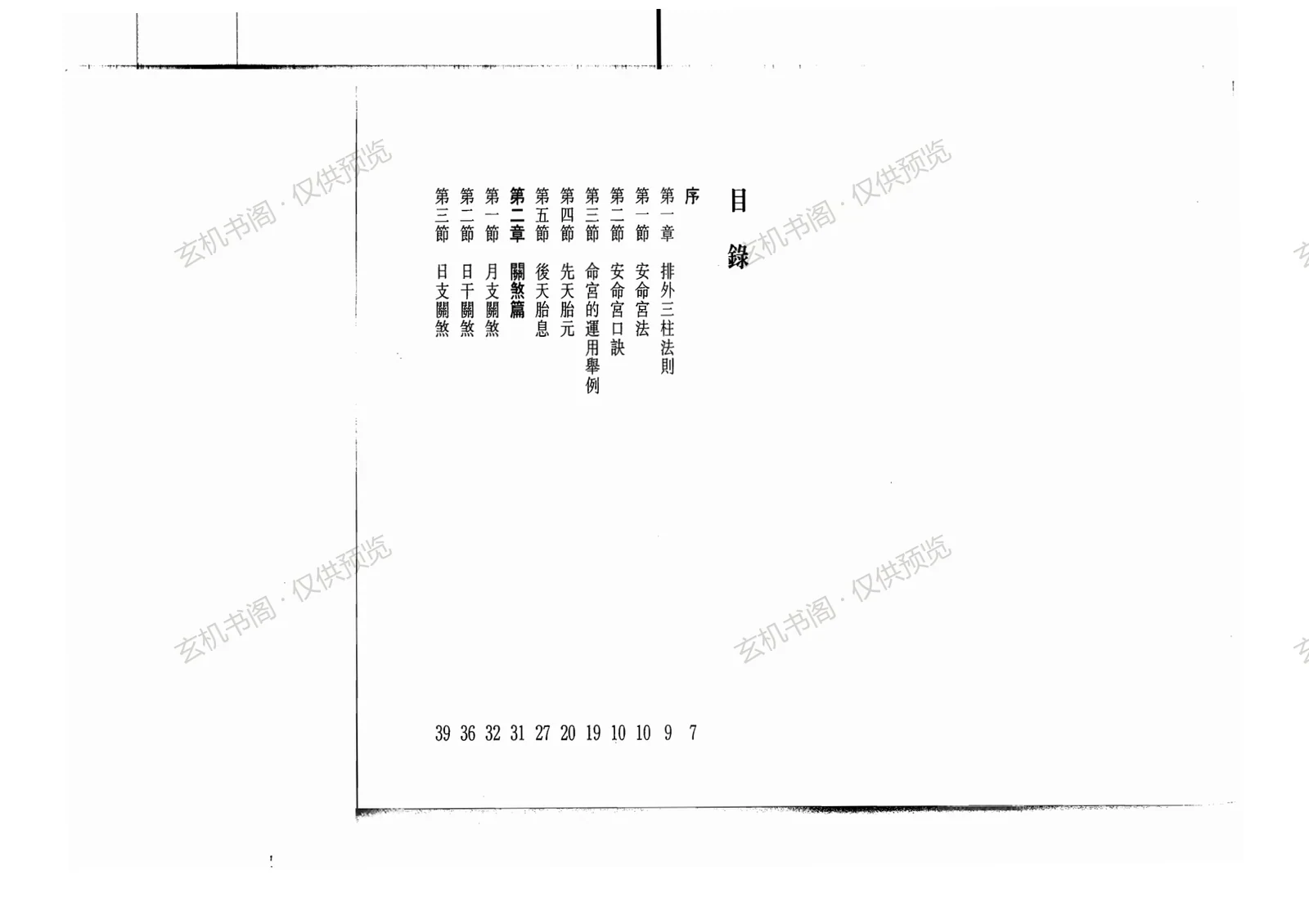
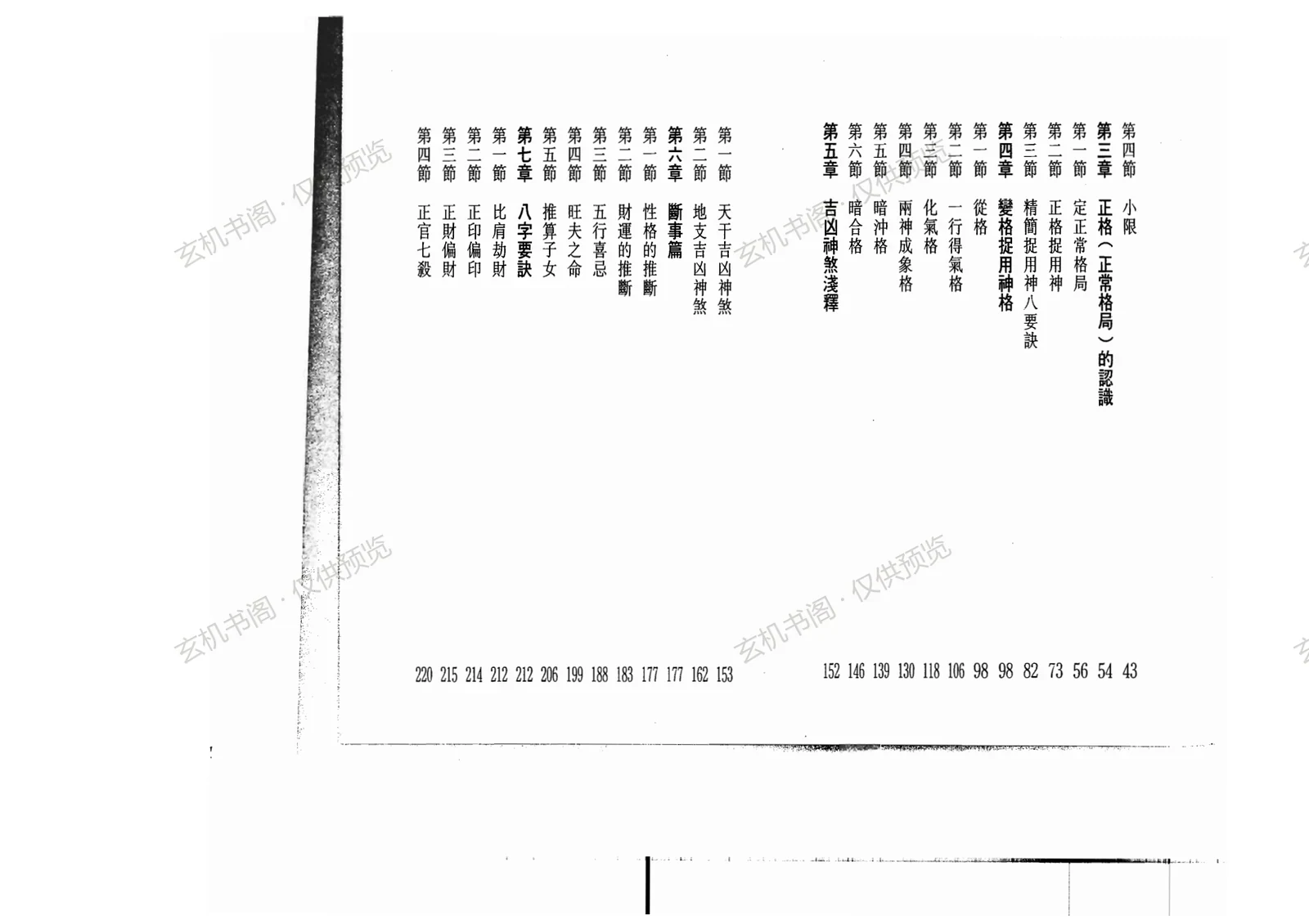
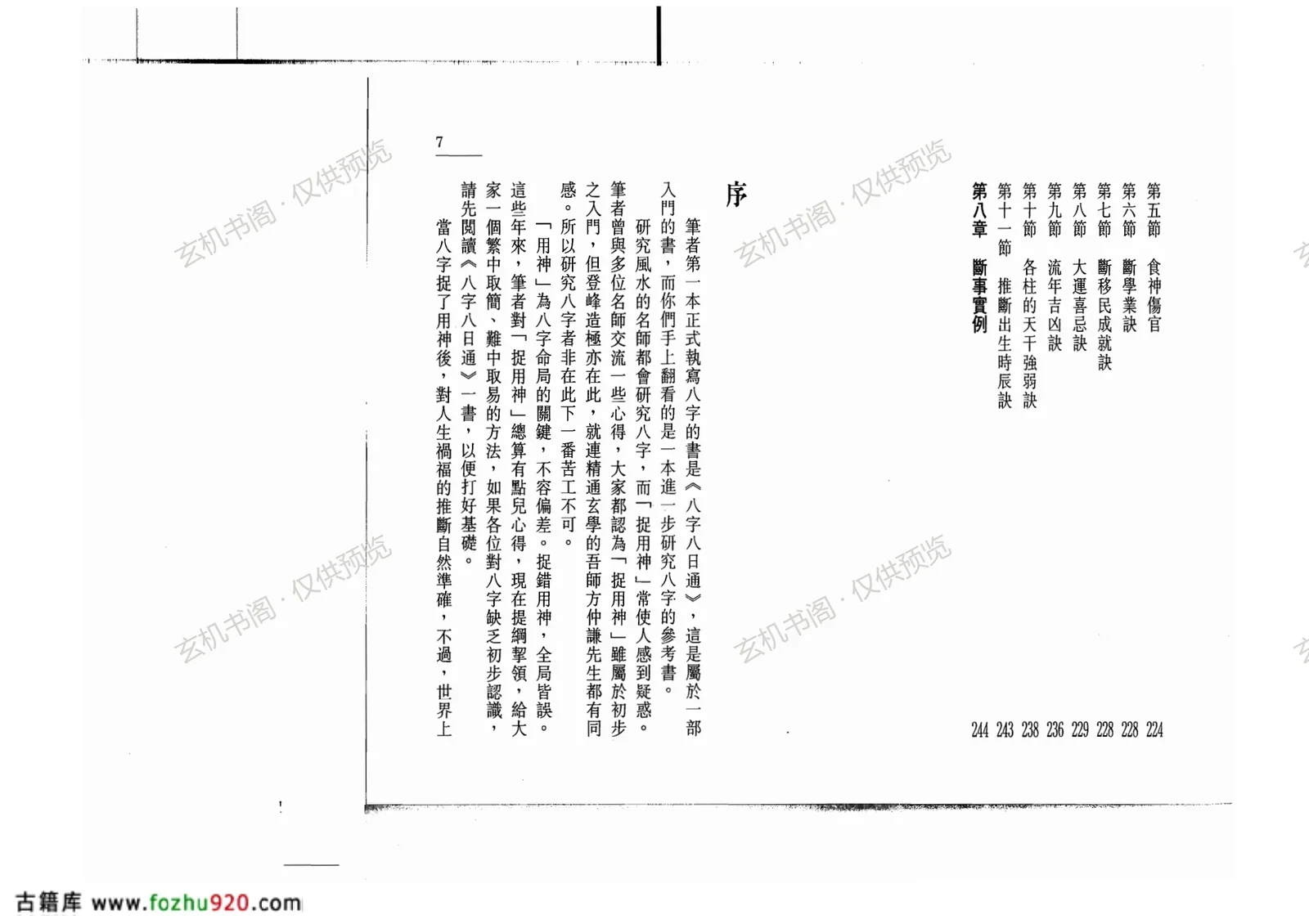
This is the ninth volume in Bai Heming's series on Chinese occult arts and centers on the hardest step in Four Pillars (Bazi) reading: determining the useful god. The contents move from basics to application. Chapter one covers constructing the four pillars, placing the life palace and worked examples of its use. Chapter two treats prenatal and postnatal fetal origin along with month, day-stem and day-branch "passes and spirits." Chapter three addresses regular structures, how to fix the structure, eight essentials for capturing the useful god, and transformed structures. Chapter four distinguishes follow structures, single-element configurations, transformation structures, two-god imagery, hidden clash and hidden combination. Chapter five briefly explains auspicious and inauspicious spirits. Chapter six covers judgment: hevenly-stem and earthly-branch spirits, temperament and wealth, five-element preferences, the fate of a supportive wife, and children. Chapter seven gives essentials for the ten gods grouped as peers, resources, wealth and officers. Chapter eight provides case studies on study, emigration, luck cycles, annual fortunes and birth-hour verification. The preface positions the book as a follow-up to a more introductory work and stresses that a wrong useful god ruins the whole reading.
Contents
Ch.1 Four pillars, life palace and worked examples
Ch.2 Fetal origin, fetal breath and branch/stem passes
Ch.3 Regular structures, eight essentials for the useful god
Ch.4 Transformed structures: follow, transformation, imagery, hidden clash
Ch.5 Brief notes on auspicious and inauspicious spirits
Ch.6 Judgment: spirits, temperament, wealth, children
Ch.7 Ten-god essentials: peers, resources, wealth, officers
Ch.8 Case studies: study, emigration, luck cycles, birth hour
Key Points
Useful-god selection is the core; one wrong choice misleads the whole reading
Chart construction and palace placement come first, then structures and selection
Regular and transformed structures are treated in separate chapters
Ten gods are grouped into peers, resources, wealth and officers for selection
Closing chapter demonstrates judgment through study, emigration and timing cases