Reading guide
Content guideOverview
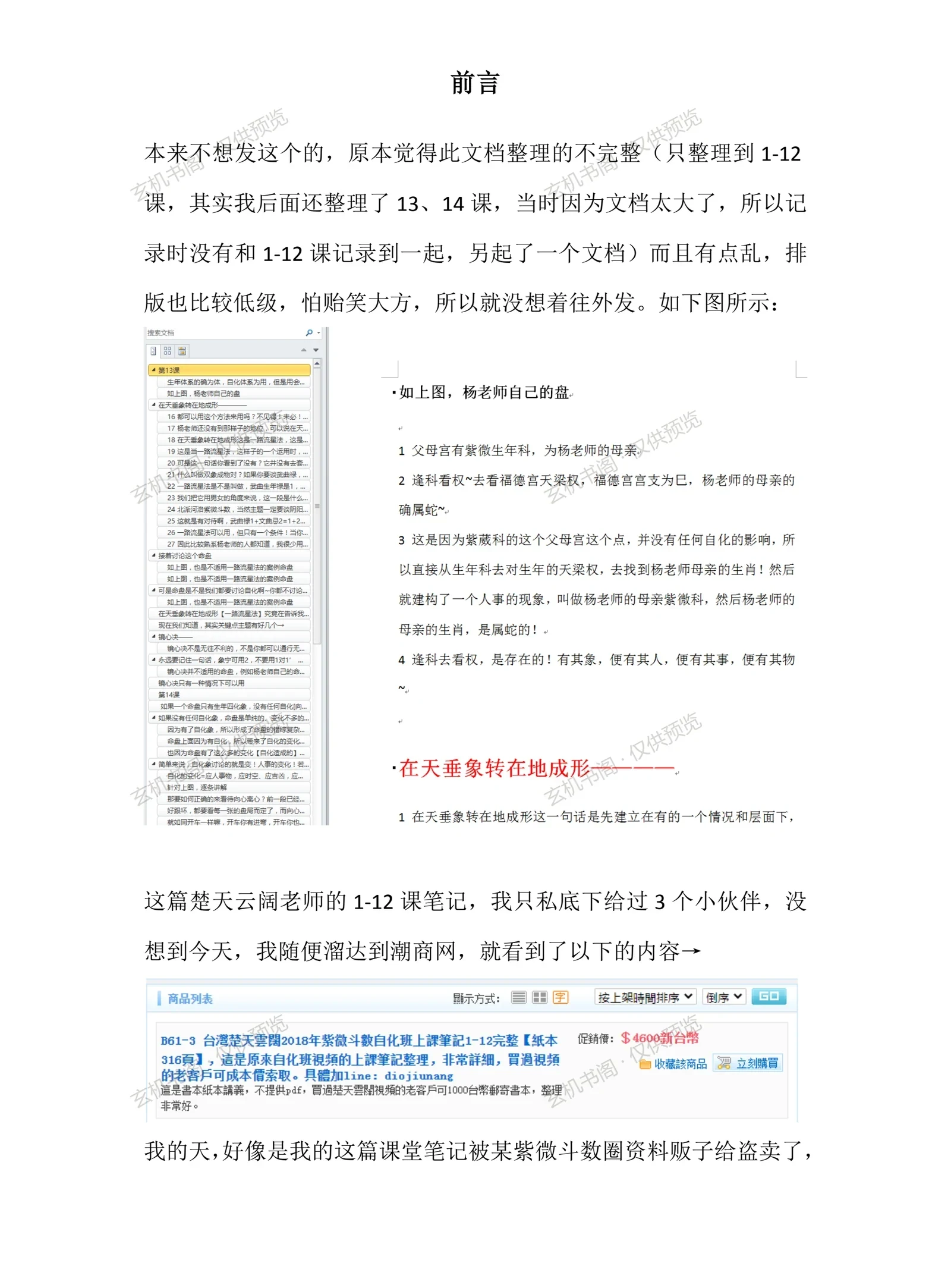
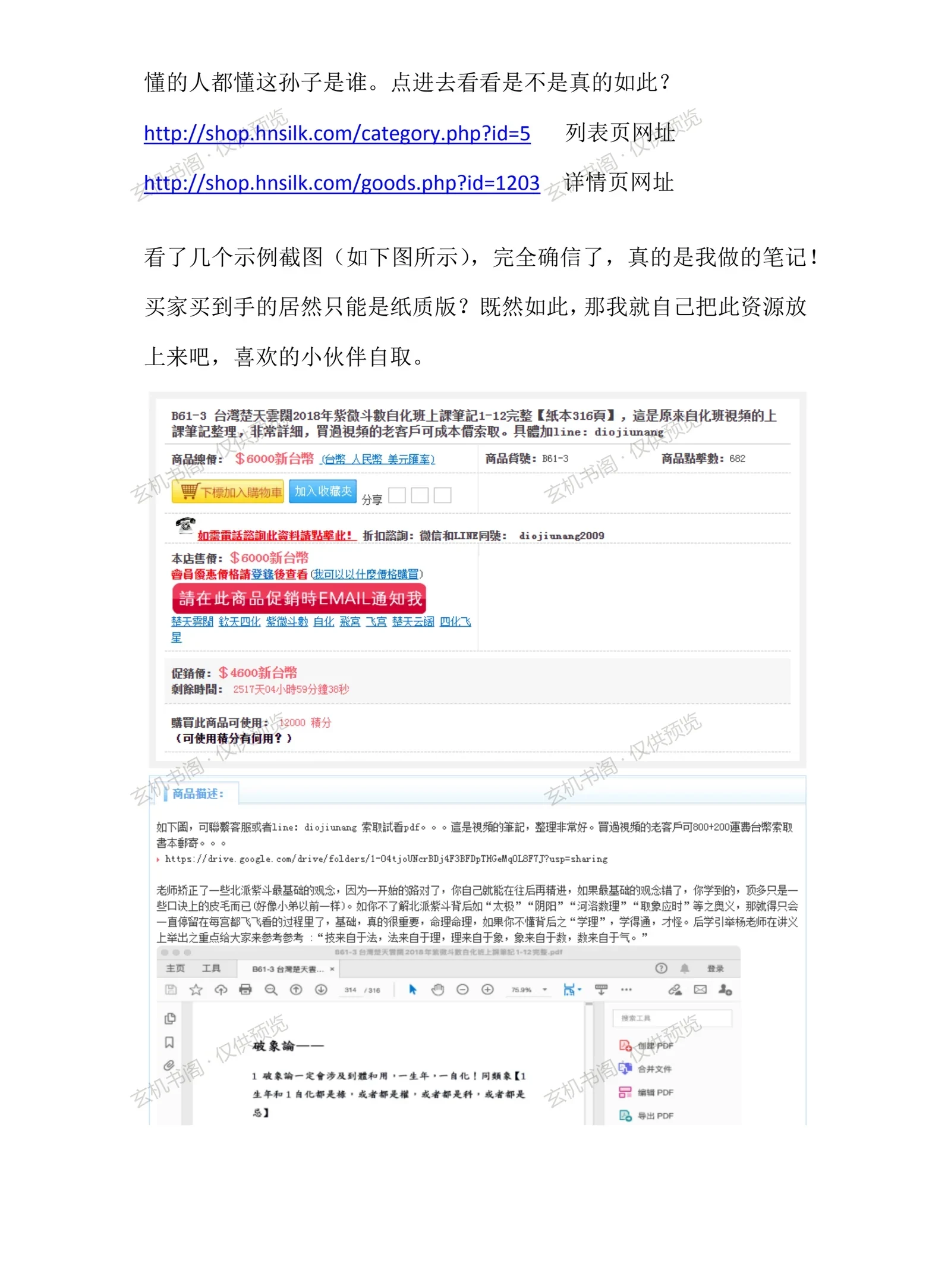
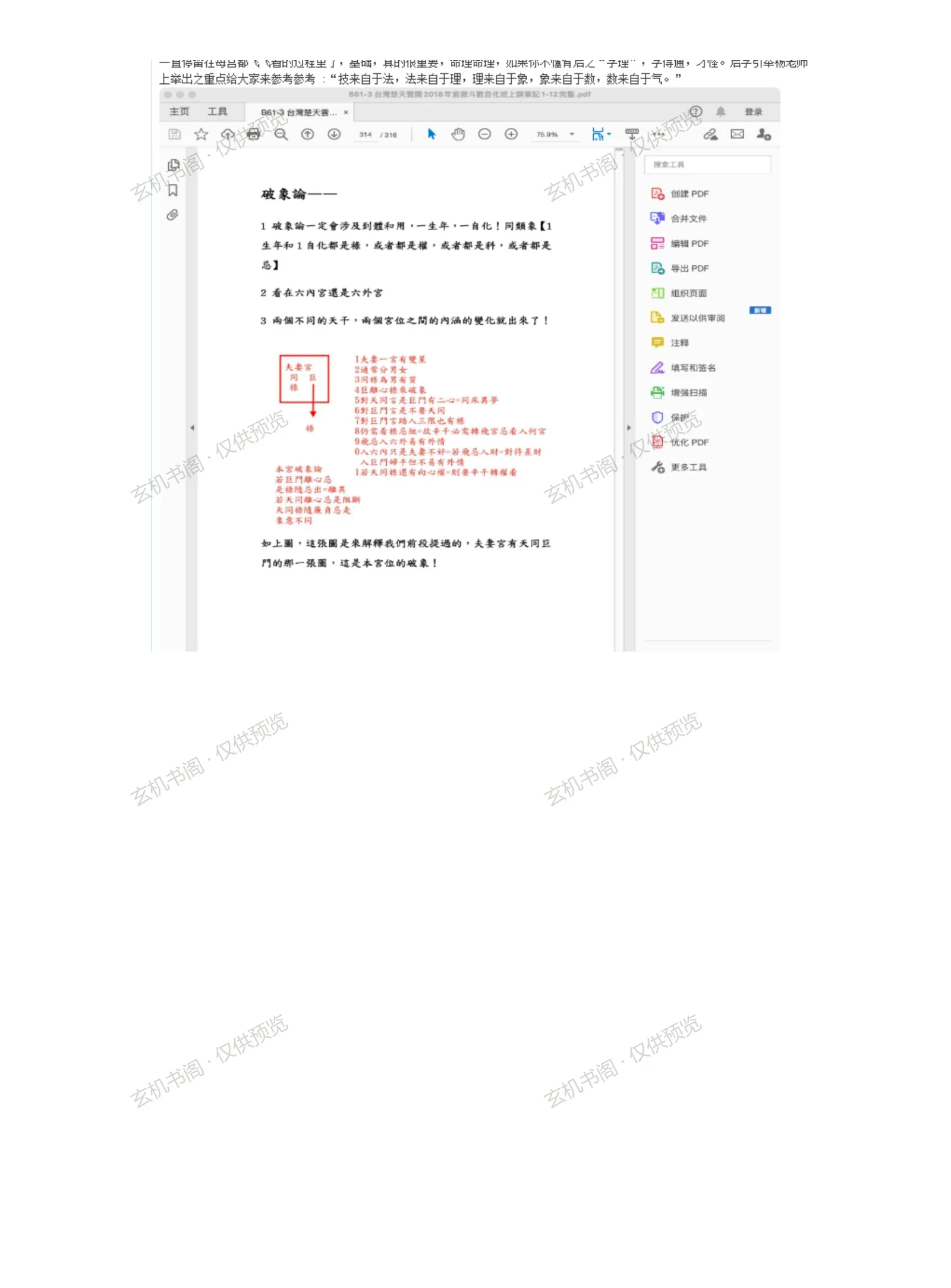
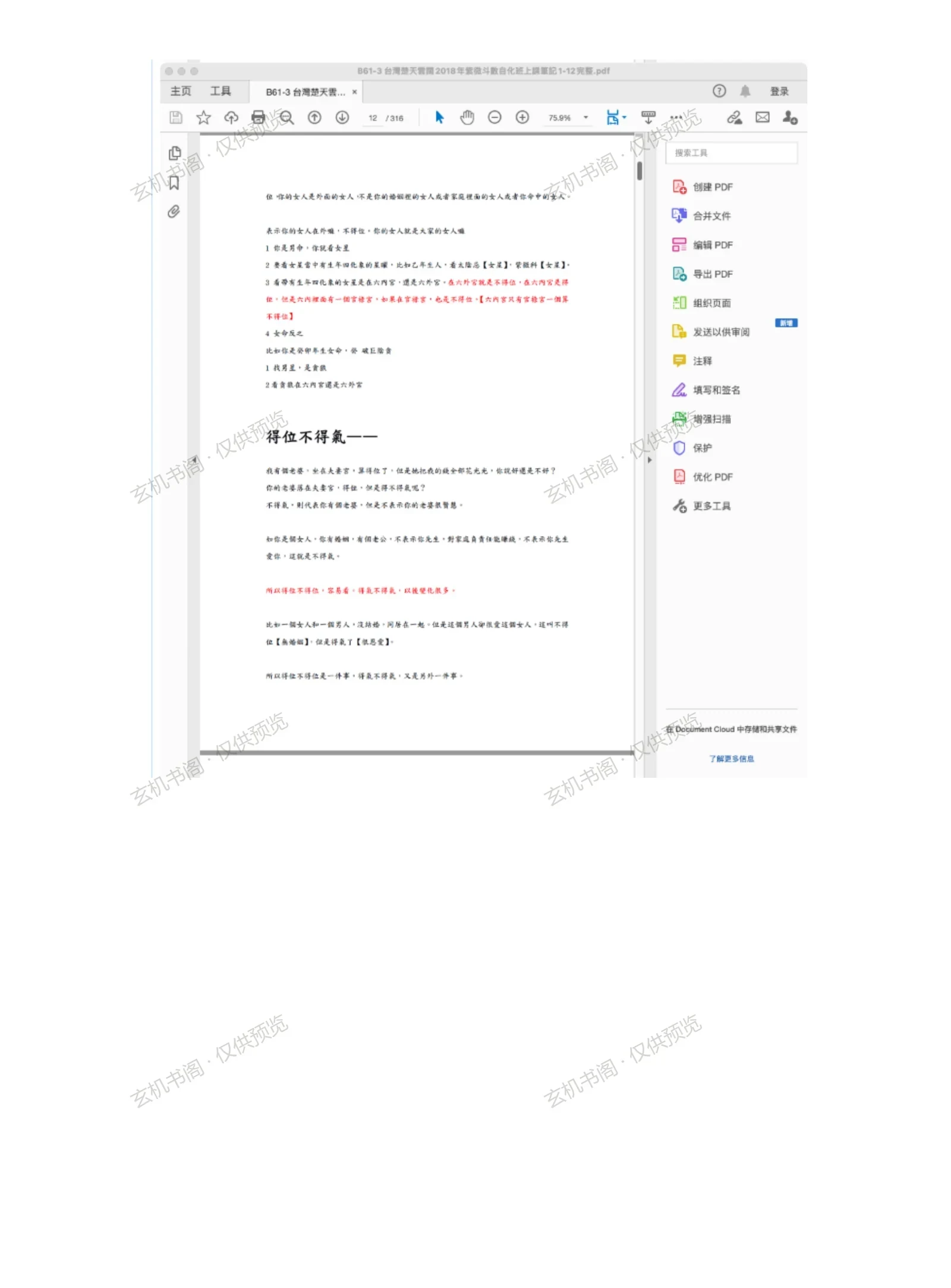
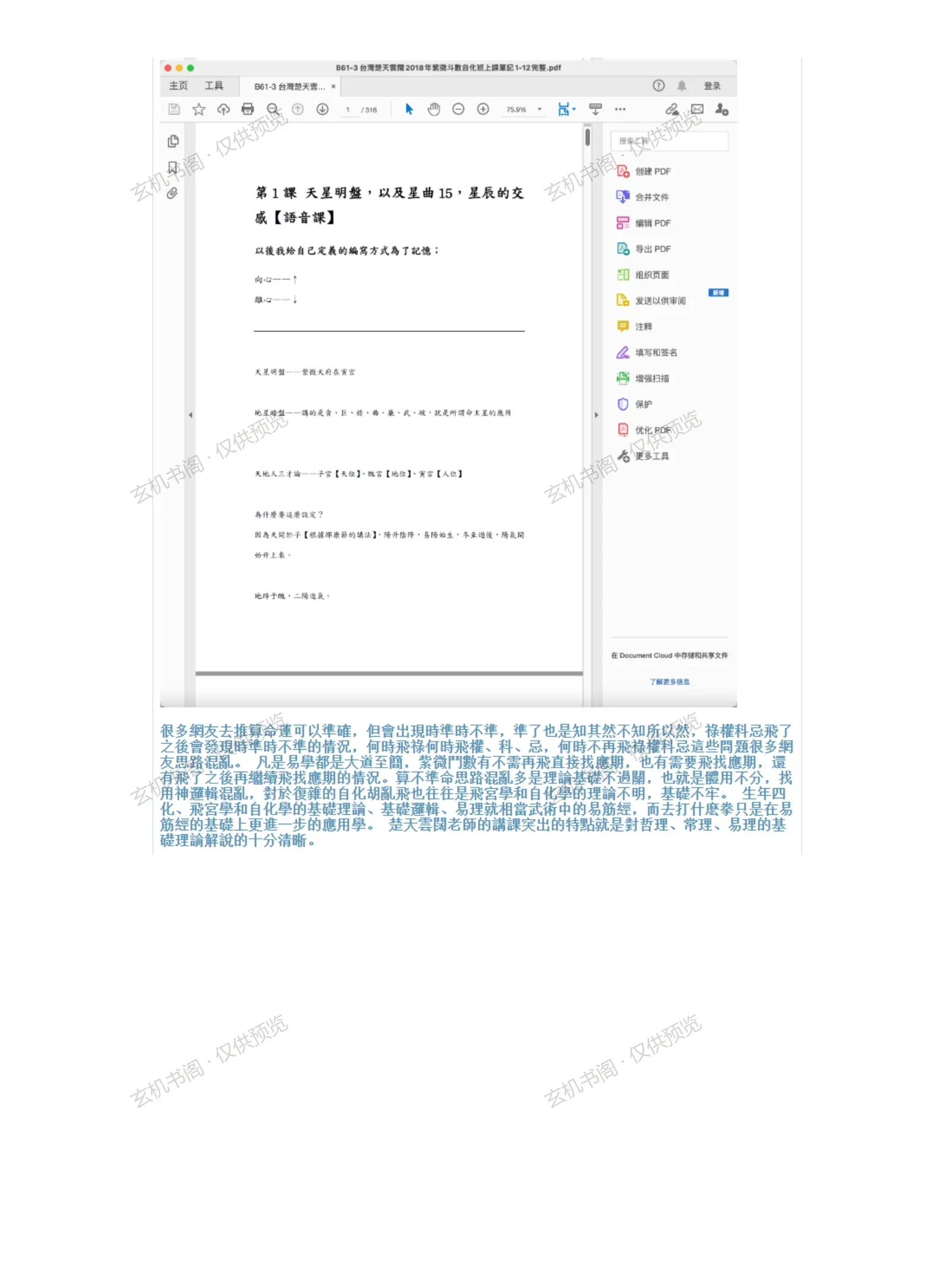
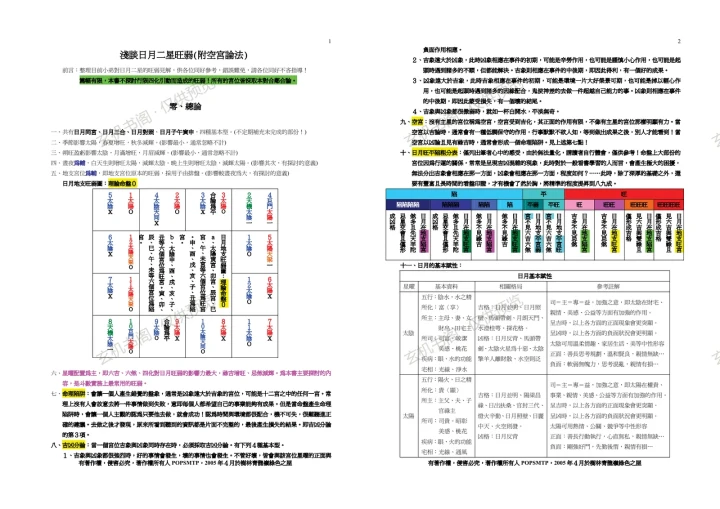
This PDF is a set of compiled classroom notes rather than a formally published Zi Wei Dou Shu text. According to the preface and page images, the content comes from the first twelve lessons of Taiwanese teacher Chen Tian Yun Kuo's 2018 Zi Wei Dou Shu self-transformation (zihua) course, organized by Nanpai Sansu from class recordings and blackboard notes; the compiler also mentions separately organized lessons 13 and 14. The visible pages cover the northern-school flying-star system: the arrangement of heavenly stars and the interactions of the fifteen stars, the three talents of heaven, earth, and humanity as applied to the spouse, career, and person palaces, poxiang theory on ti-yong, self-transformation, and shared images, the distinction between the six inner and six outer palaces, the interpretation of a spouse star in the spouse palace, and ideas such as obtaining position but not qi. The style is note-like and diagrammatic, suited to readers who already know basic Zi Wei Dou Shu and want to understand the logic of flying-star four transformations and the application of self-transformation and flying palaces. As private notes, the organization is informal, so readers should cross-check with the original course.
Contents
Lesson 1: star arrangement and the interaction of the fifteen stars
Three talents and the spouse, career, and person palaces
Poxiang theory: ti-yong, self-transformation, and shared images
Distinction between the six inner and six outer palaces
Spouse star in the spouse palace and flying-star imagery
Obtaining position but not qi and marriage palace analysis
Key Points
Focuses on birth-year and self-transformation four transformations, ti-yong, and shared images
Poxiang theory stresses the order of ti-yong and the layers of self-transformation
The six inner and six outer palaces help judge gain and loss inside and outside a palace
Imagery of a spouse star in the spouse palace is a key practical method for marriage analysis
Emphasizes theory before mnemonic formulas and the underlying logic of the system