Reading guide
Content guideOverview
This is a classroom handout for Zi Wei Dou Shu (Purple Star Astrology), titled 'Deep Dive into Stars: Po Jun (Part 2) and Chang Qu.' Presented as a chat transcript by instructor Yiting, it opens with a review of overlapping palaces (die gong), described as a penetrative tool for locating the relationship between the natal chart and a decade chart. Using the spouse palace as an example, it shows how the three directions and four positions of the decade palace define the key themes of that period. Several chart screenshots demonstrate 'stepping' (cai gong): stepping into the siblings palace triggers siblings-palace matters, and since the siblings palace is a treasury, overlapping with the wealth palace and emitting a Ji star indicates loss. The instructor also gives personal examples: 2015 stepping into the decade children palace plus natal travel palace corresponded to enrolling students; last year's decade spouse palace overlapping the natal illness palace corresponded to marriage, noting the illness palace can also signify marital union. The material is a live-class record suited to advanced students who already know the basics and are studying star combinations and palace interactions.
Contents
Review of overlapping palaces: penetrative positioning between natal and decade charts
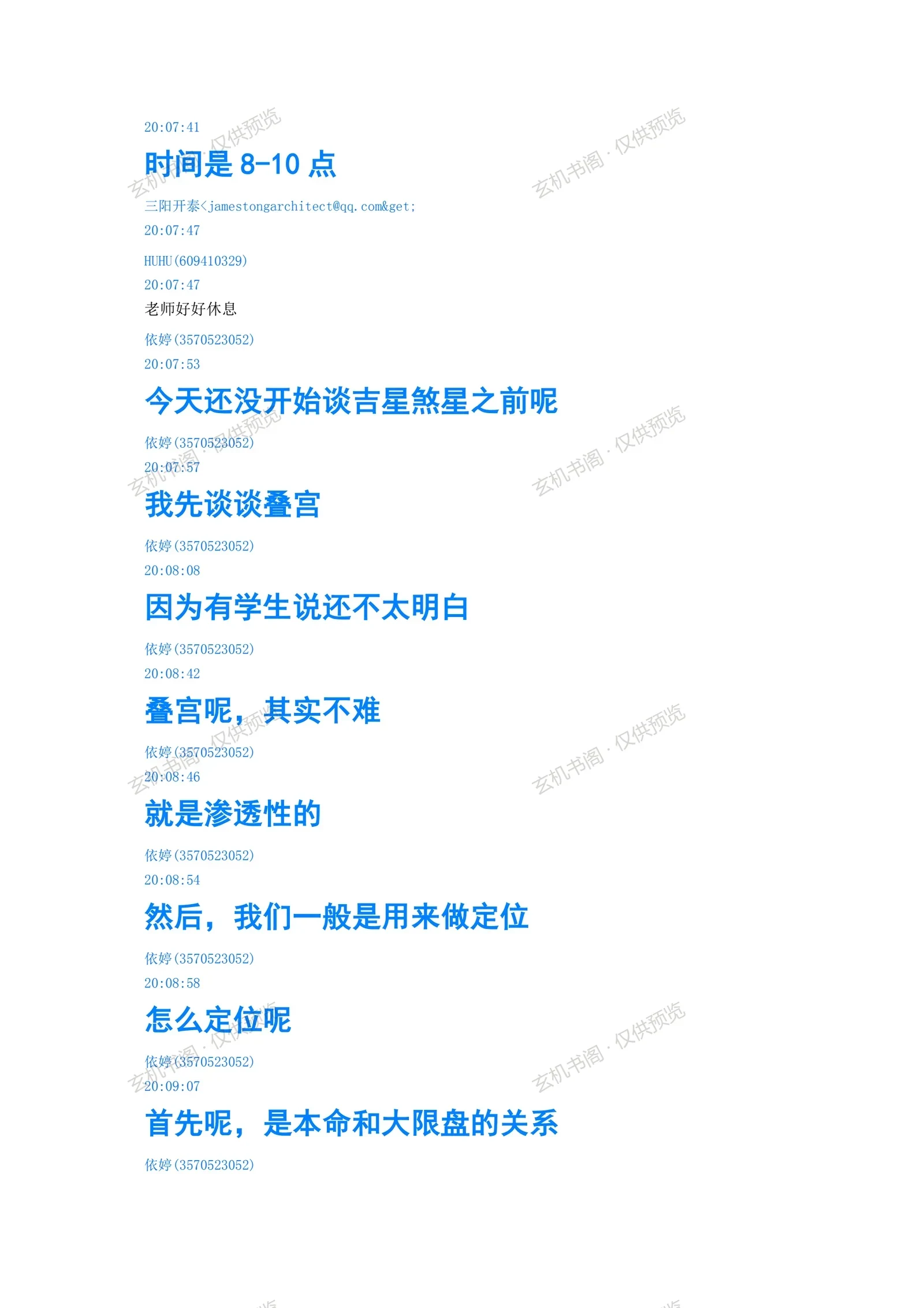
Using the decade spouse palace to explain three-directions-four-positions themes
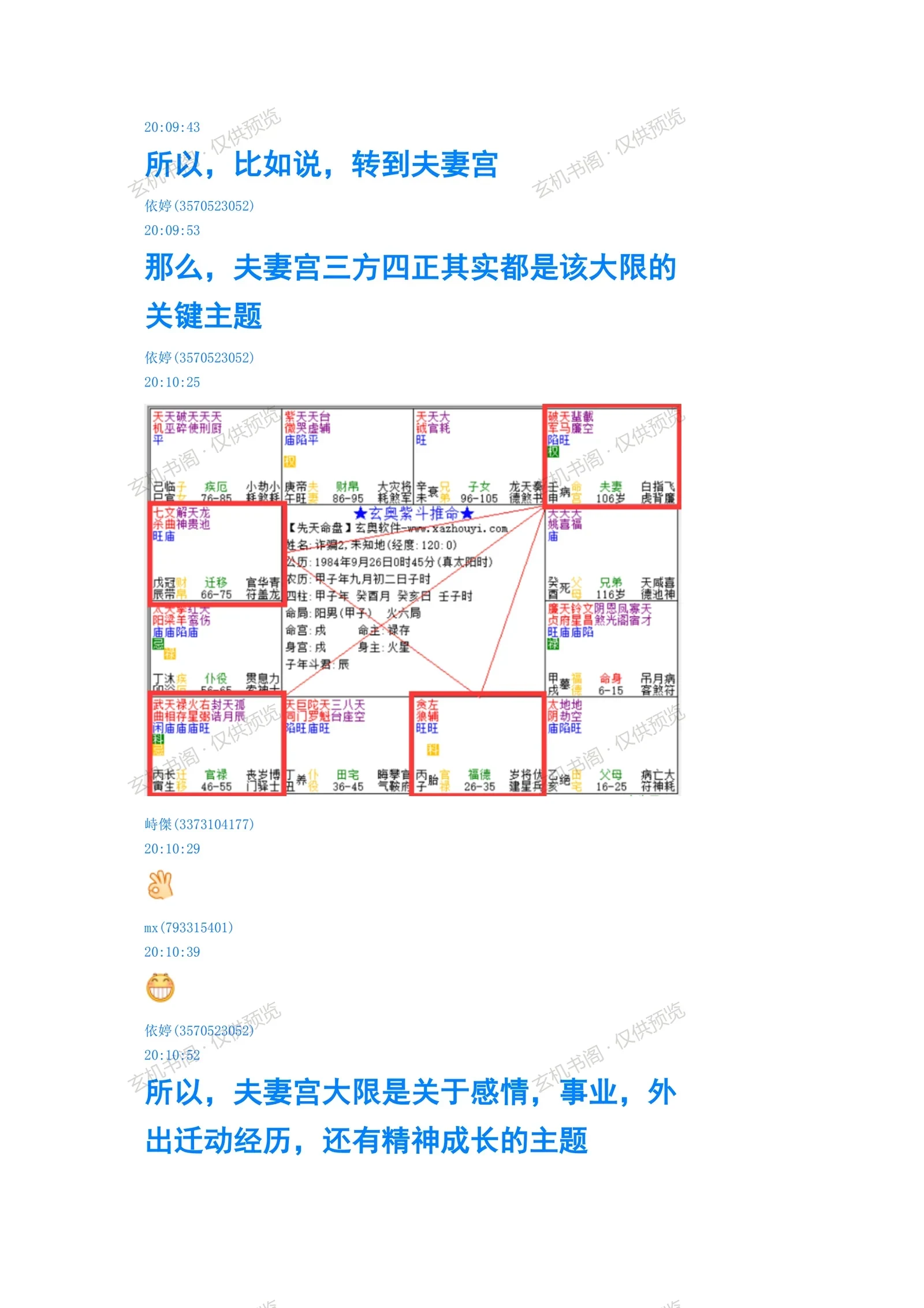
Looking at the children palace: fourth decade focuses on family and children
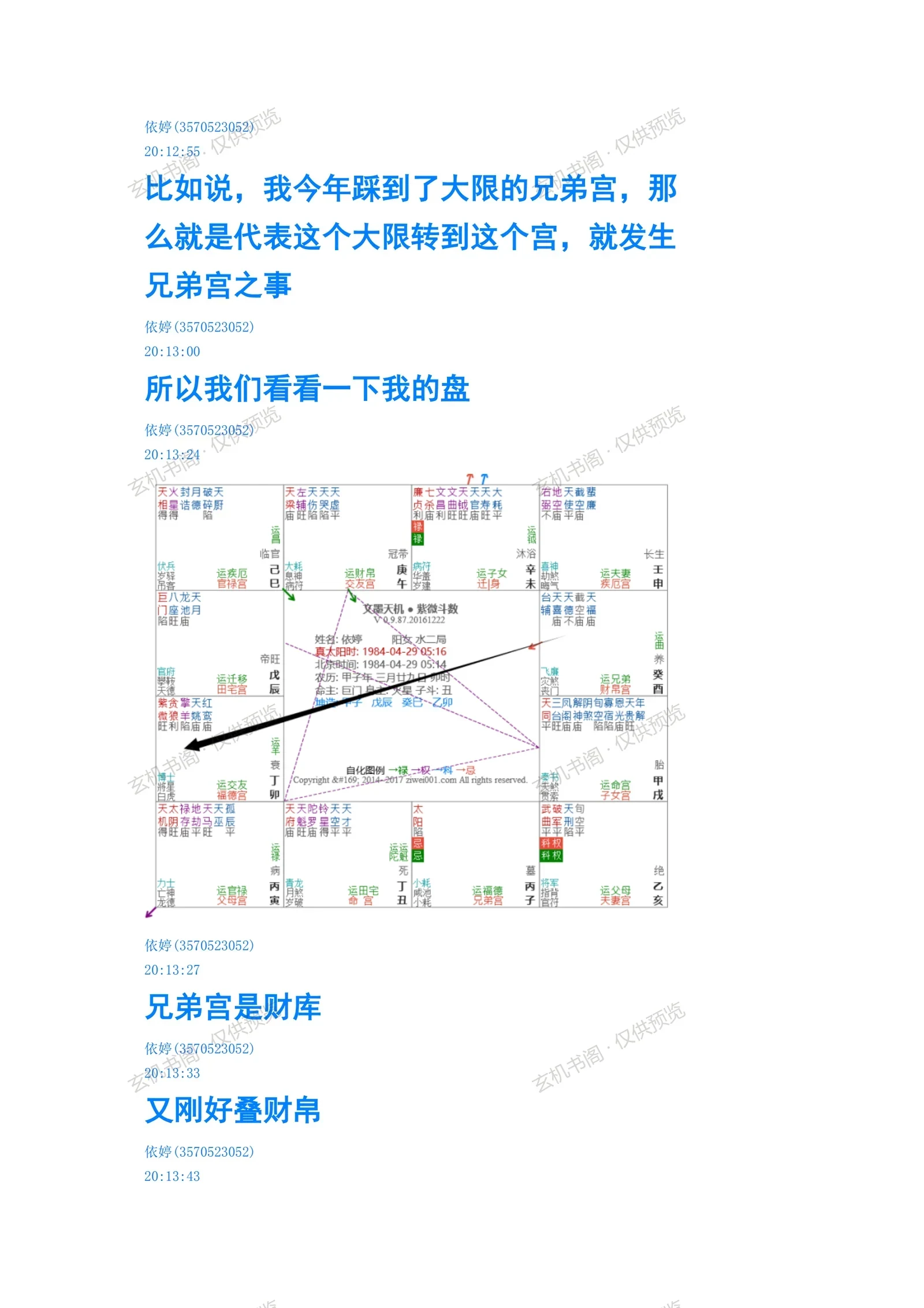
Stepping example: siblings palace as treasury, emitted Ji causes loss
Personal chart examples: enrolling students and marriage
Key Points
Overlapping palaces is a penetrative positioning tool, not simple superimposition
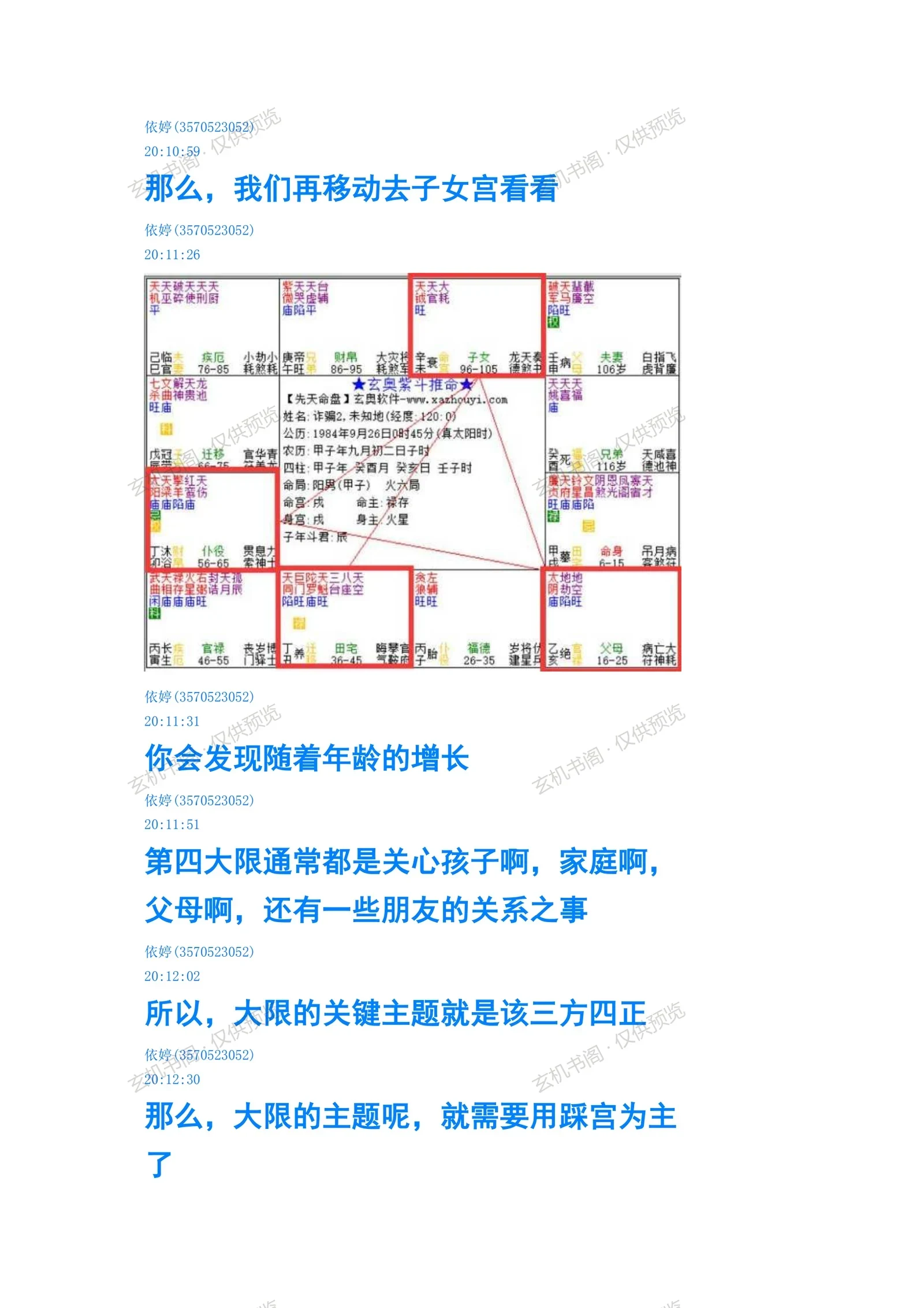
When a decade steps into a palace, its three-directions-four-positions set the decade's themes
The siblings palace can act as a treasury; overlapping wealth palace with emitted Ji indicates loss
Read primarily from the decade chart, with the natal chart as support