Reading guide
Content guideOverview
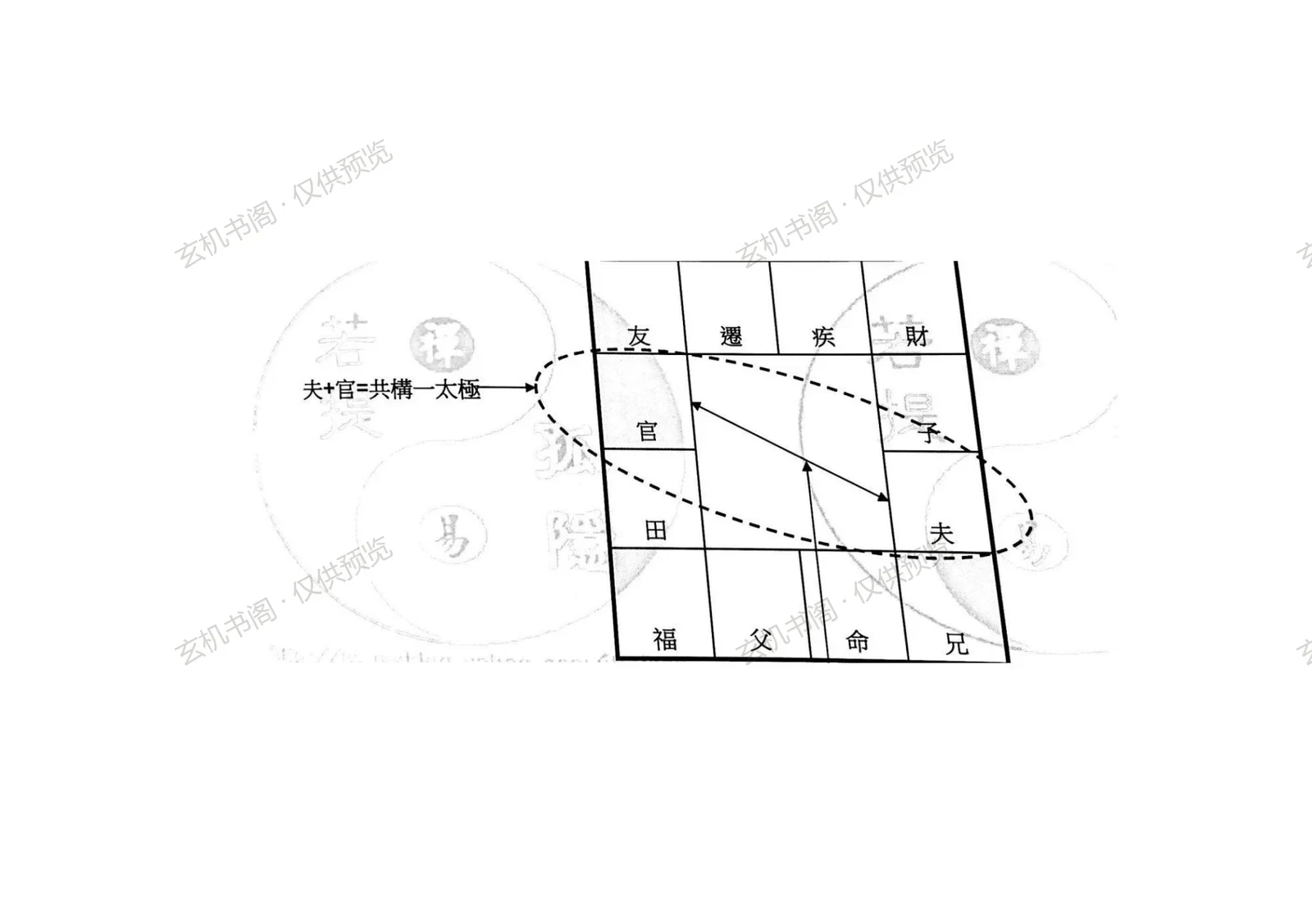
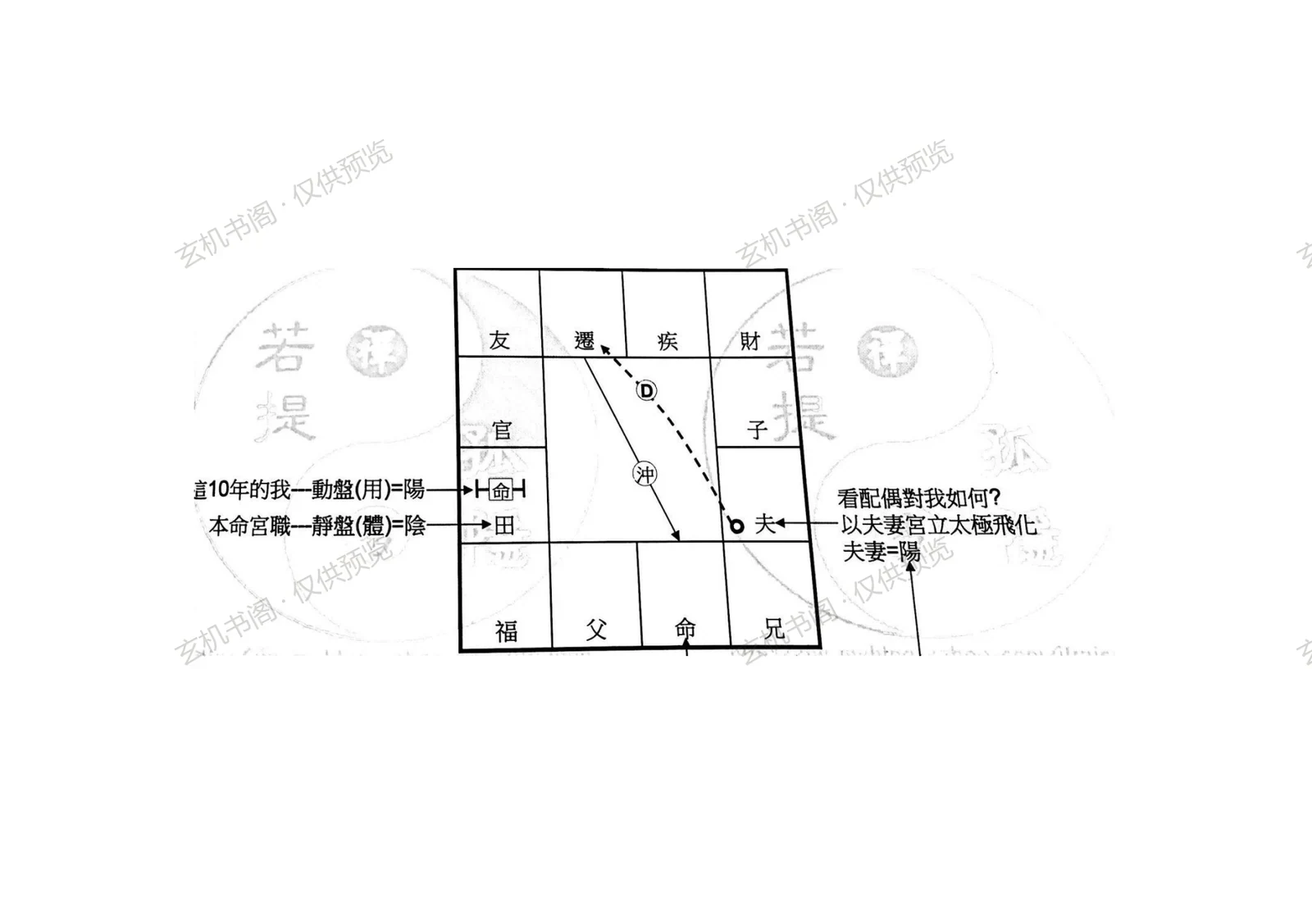
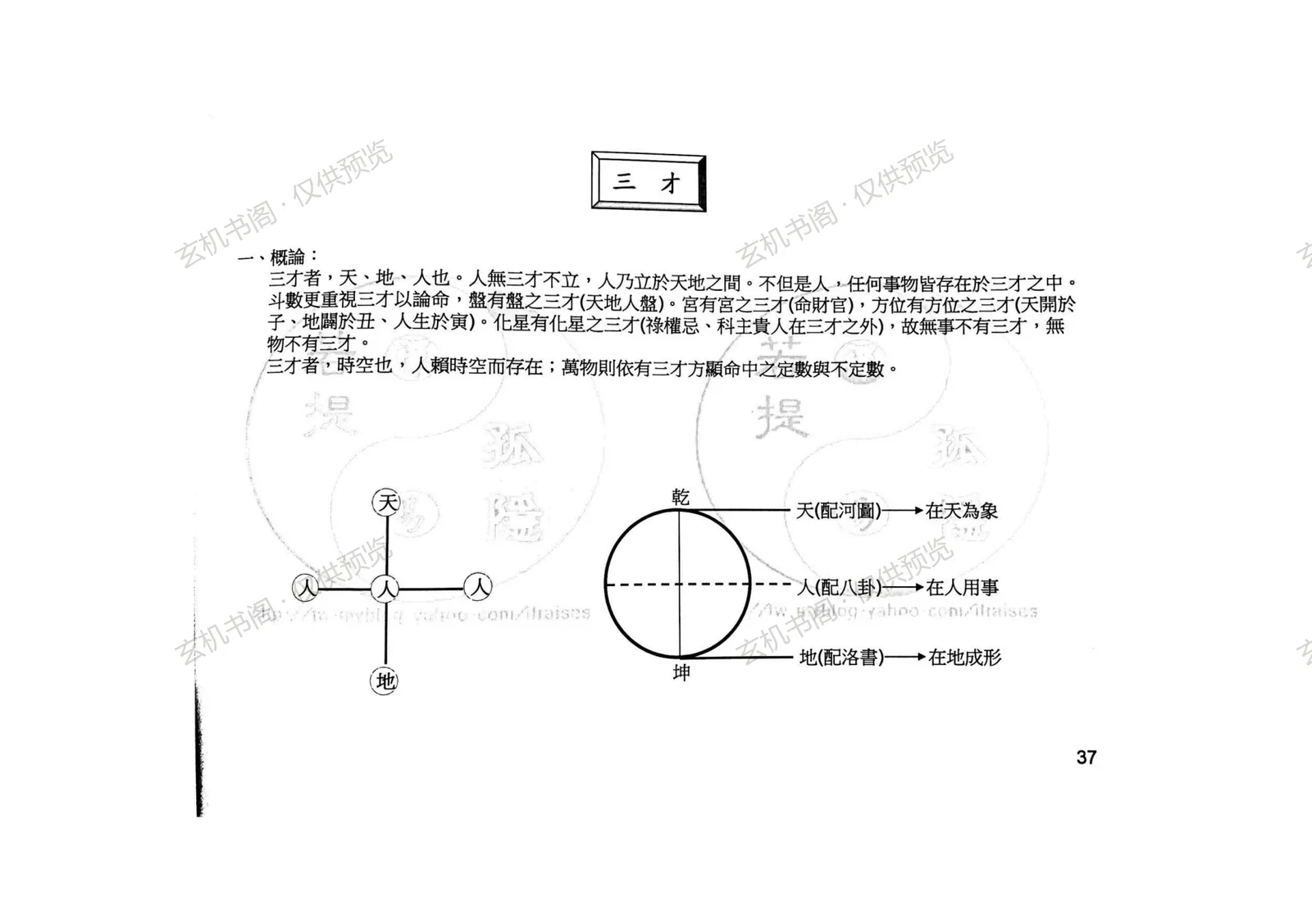
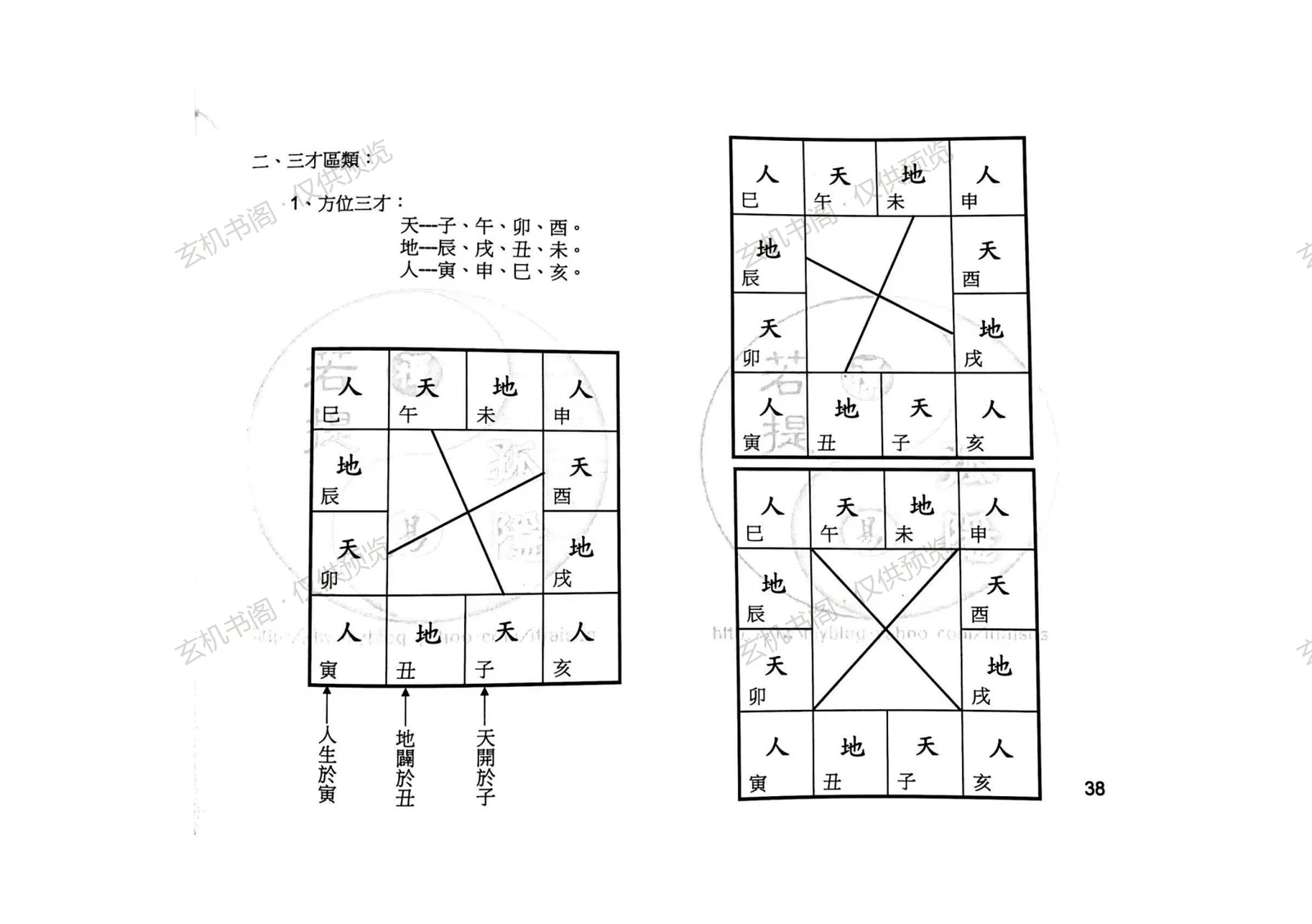
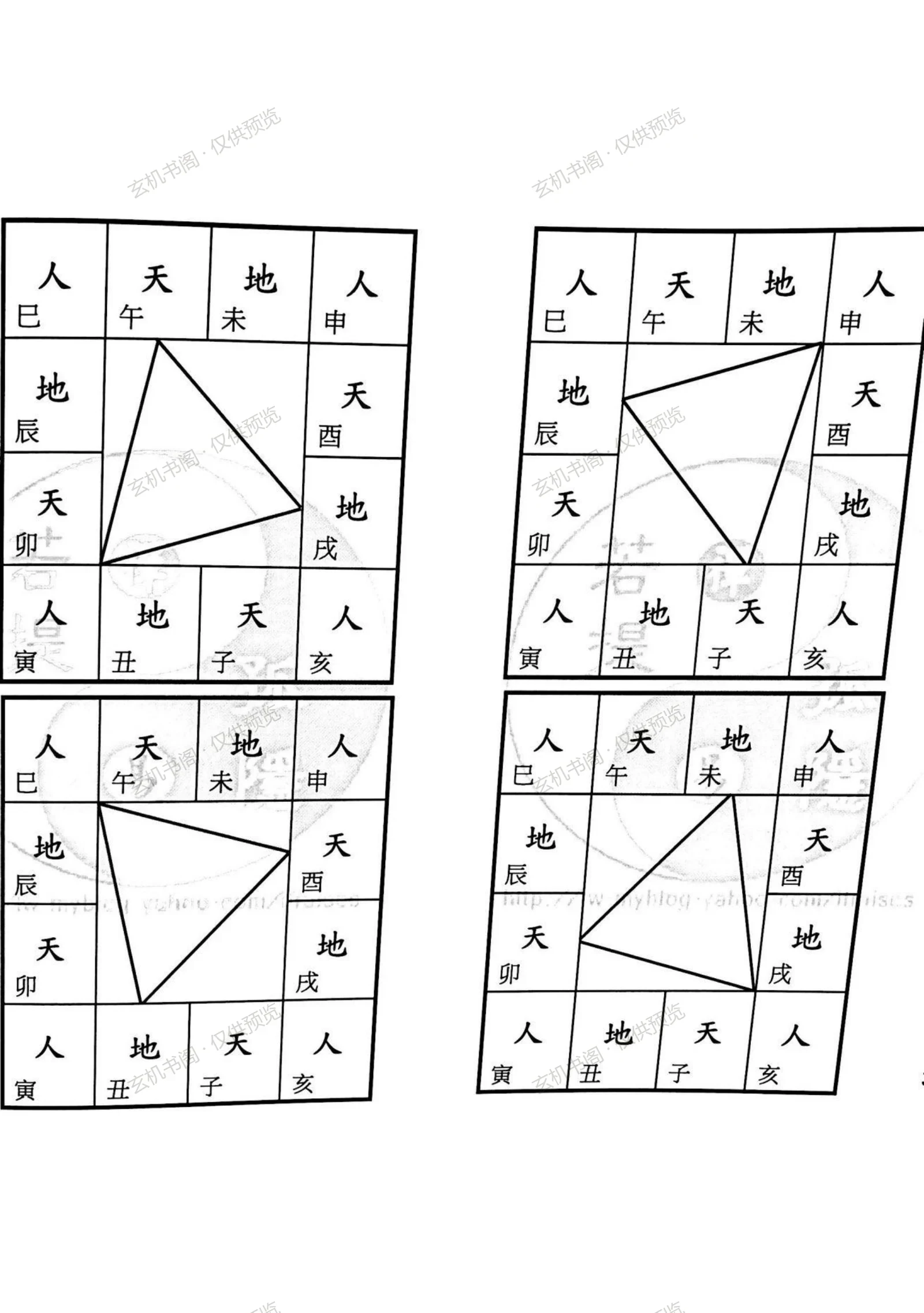
Part Two, Concepts of Yijing Principles, approaches Zi Wei Dou Shu through Yijing and the Three Powers (Heaven, Earth, Human). It opens with a table assigning male or female attributes to stars such as Tianji, Taiyang, Liuzhen, Ziwei, and Tanlang, noting that Liuzhen counts as male under the Jia stem transformation and female under the Bing stem. Diagrams then show the spouse and career palaces forming a shared Taiji, and a chart uses the spouse palace as a Taiji to examine a partner. From page 37 the text discusses the Three Powers, explaining that Dou Shu values the triad in the chart, the palaces, and the directions, with Hetu, Luoshu, and Bagua diagrams. Page 38 lists directional Three Powers: Heaven for Zi, Wu, Mao, You; Earth for Chen, Xu, Chou, Wei; Human for Yin, Shen, Si, Hai, illustrated with twelve-branch grids. It is an advanced treatment of qi logic and palace transformation.
Contents
Star table of male and female attributes
Spouse and career palaces sharing a Taiji
Reading a partner via the spouse palace
Overview of the Three Powers
Directional Three Powers on the twelve branches
Diagrams of Heaven, Earth, and Human origins
Key Points
Dou Shu reads fate through the Three Powers in chart, palace, and direction
Liuzhen's gender attribute shifts with Jia and Bing stem transformations
Spouse and career palaces can form a shared Taiji for relationship analysis
Heaven governs Zi Wu Mao You; Earth governs Chen Xu Chou Wei; Human governs Yin Shen Si Hai