Reading guide
Content guideOverview
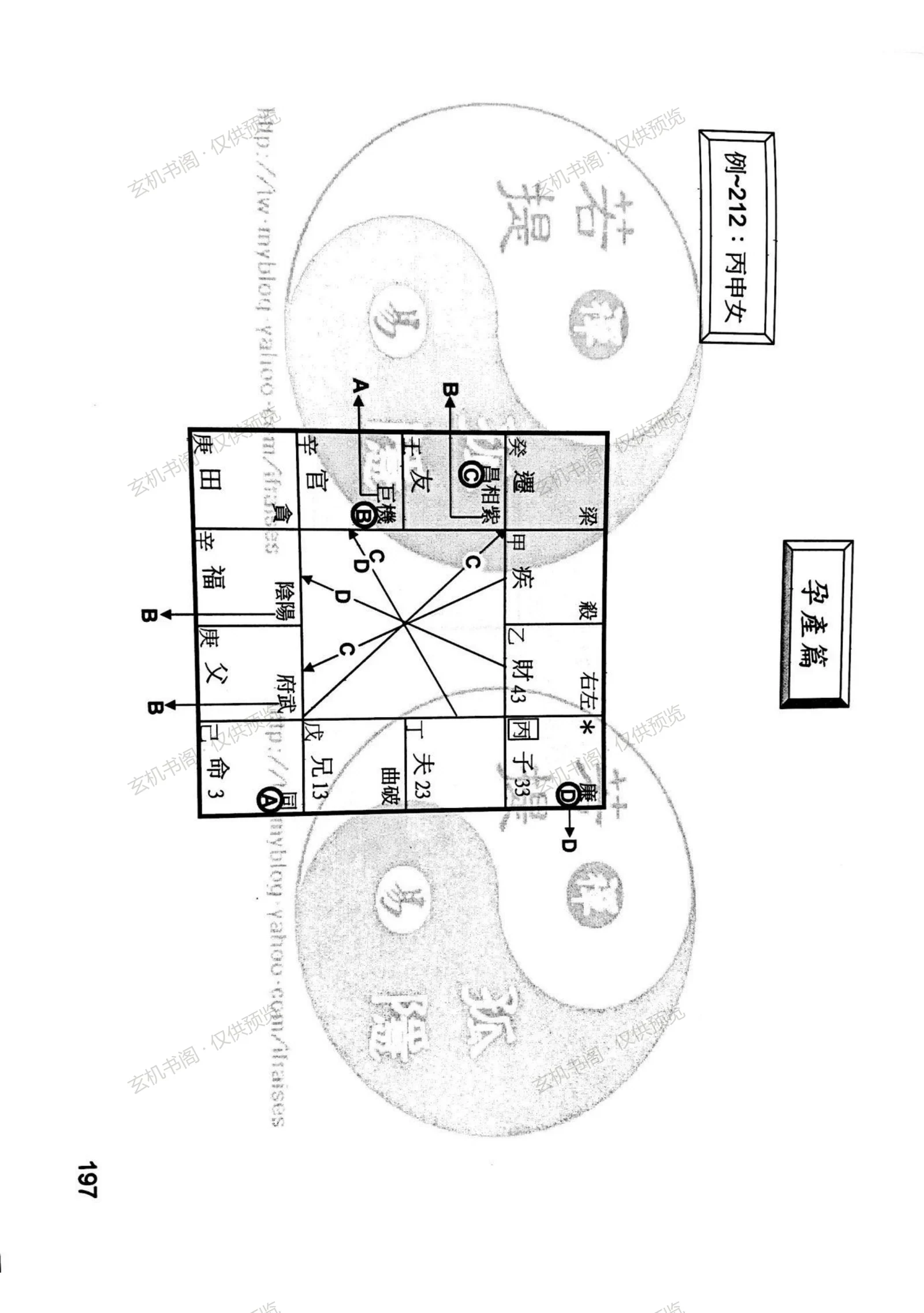
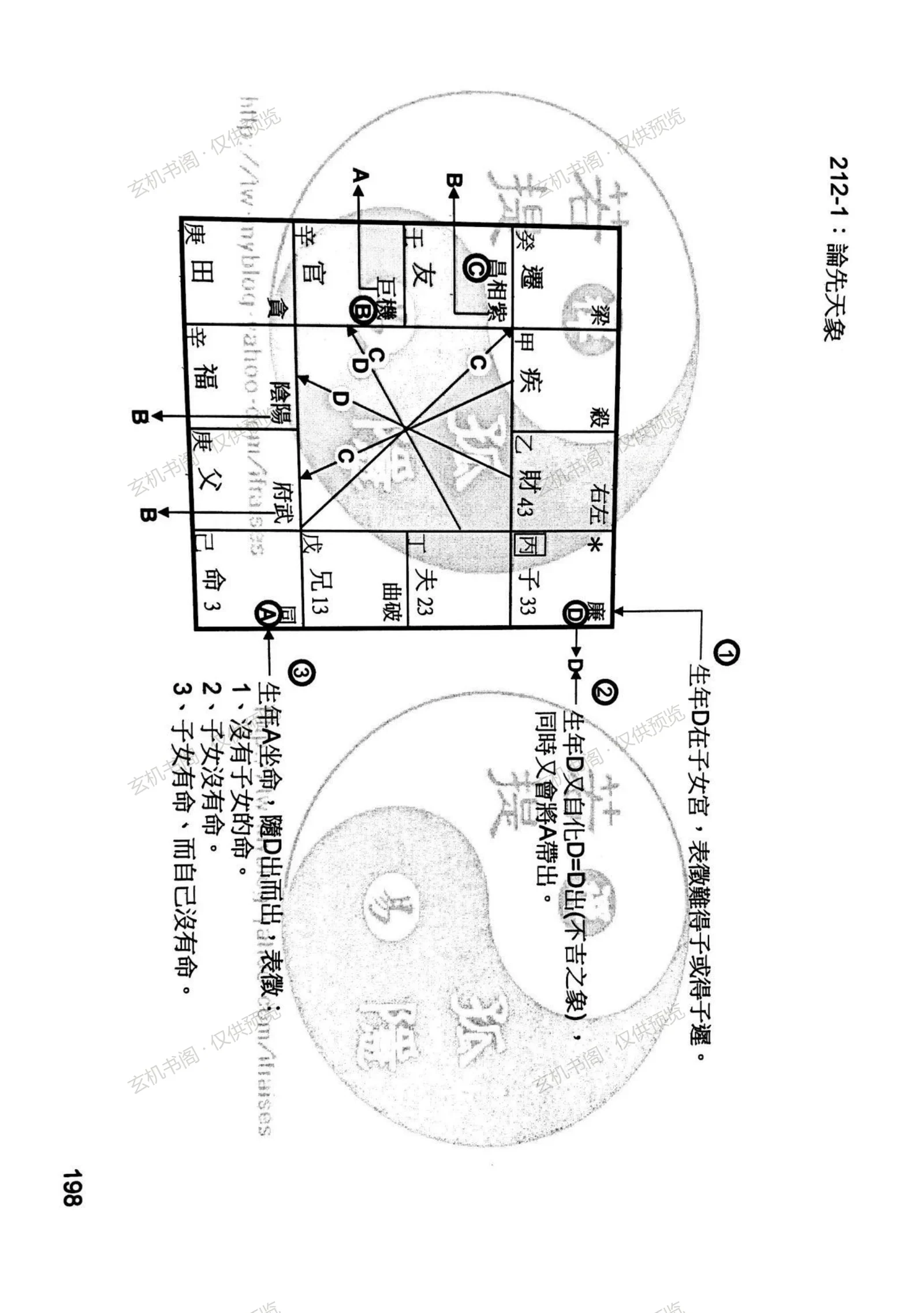
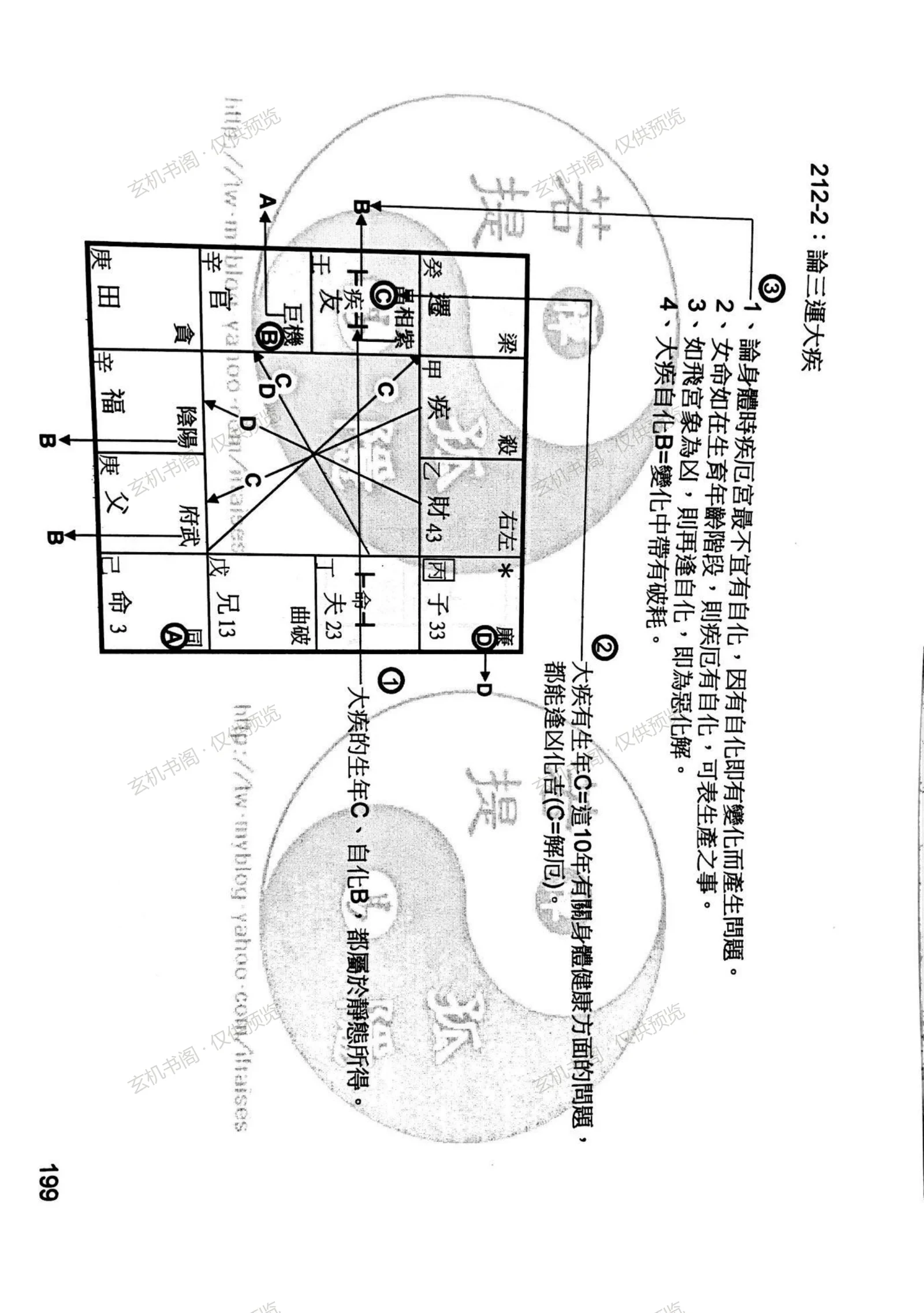
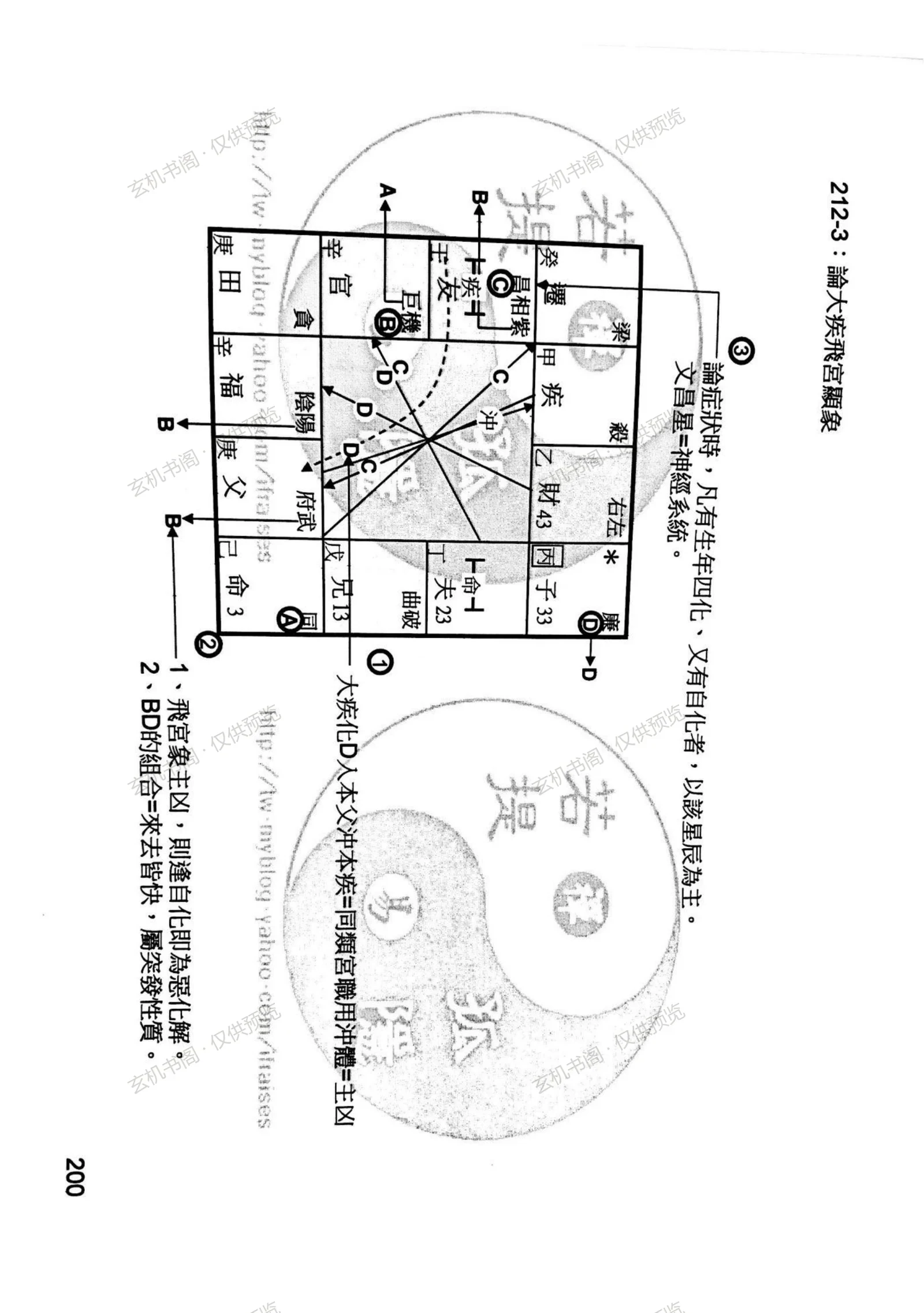
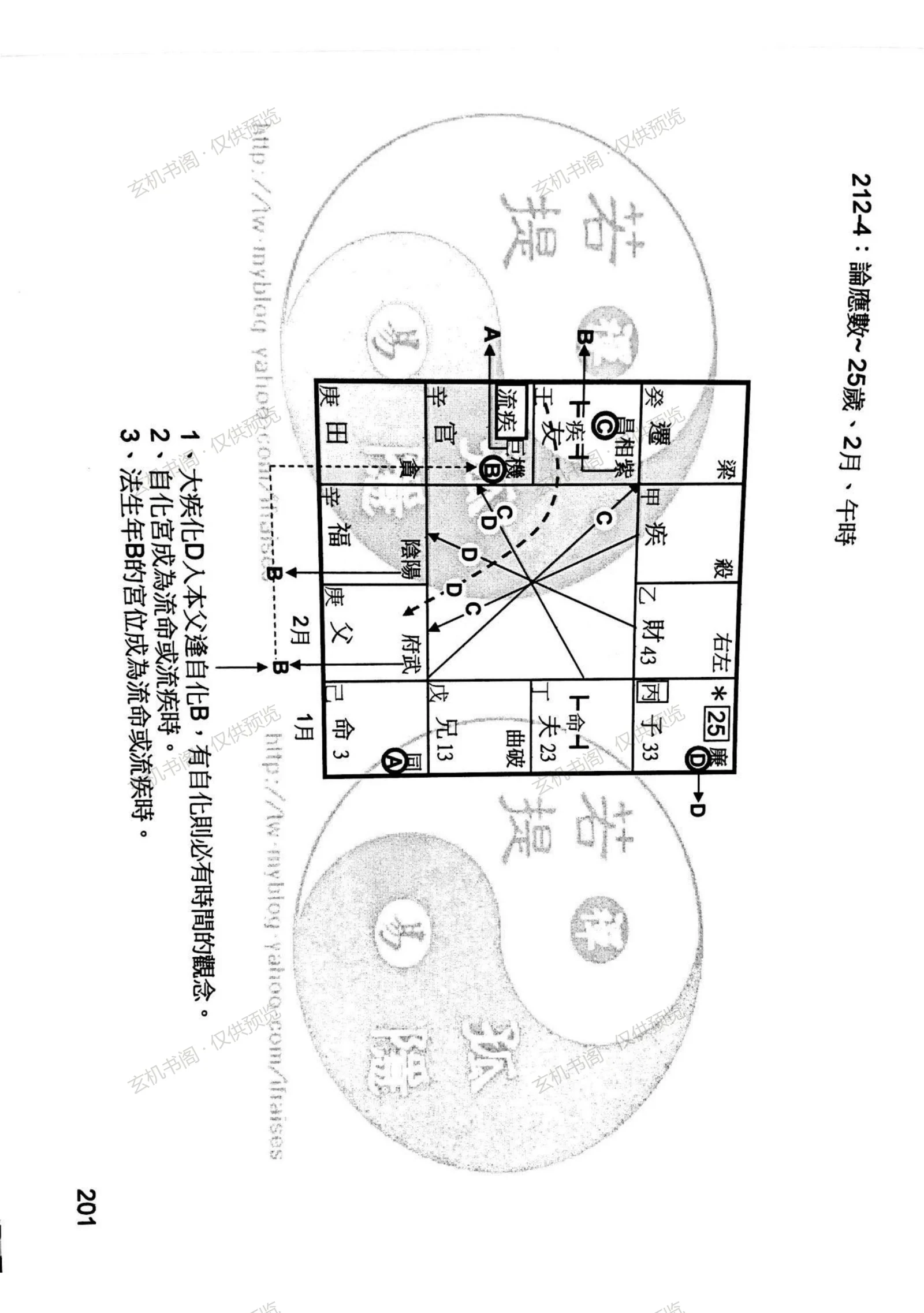
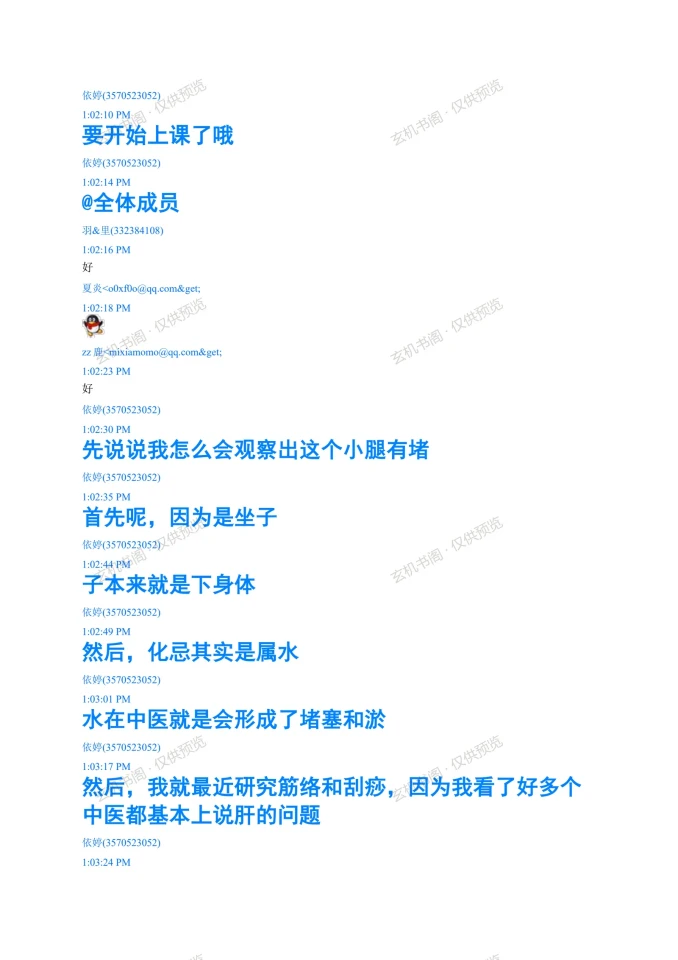
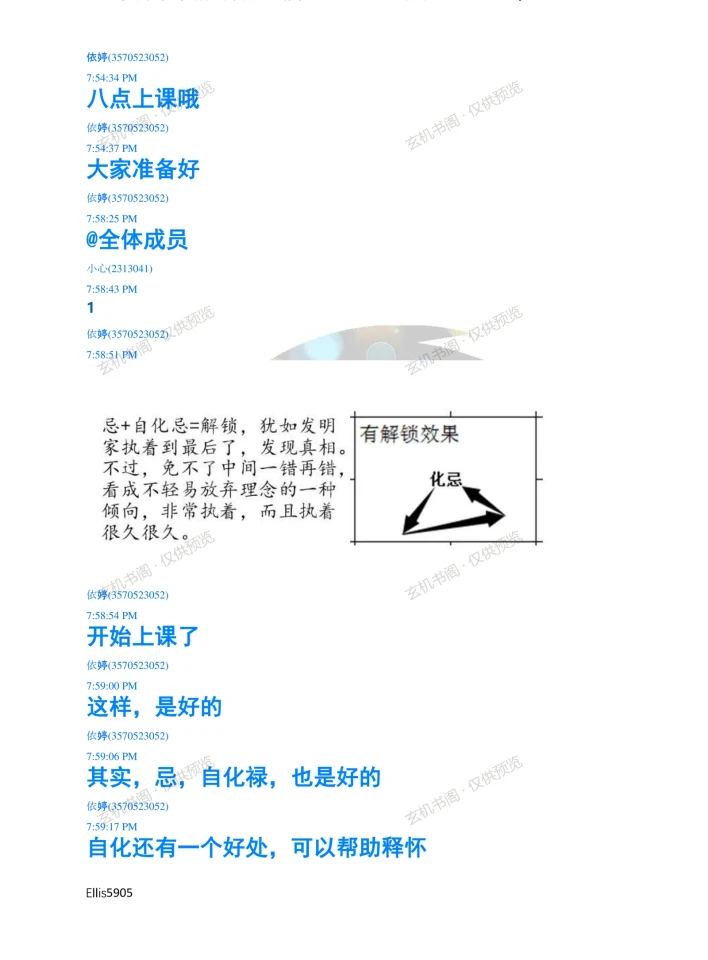
This volume is an advanced casebook of Zi Wei Dou Shu using flying-star four transformations. The visible pages pair square charts with taiji diagrams, marking birth-year transformations, self-transformations and flying lines. It opens with a discussion of timing, explaining why self-transformation often places events in the latter half of the month, such as the 17th or 23rd, when the path reaches the lu-ji exchanged palaces. A pregnancy section then uses a bing-shen female chart to discuss the prenatal image and the self-transforming D in the children palace, noting that birth-year D there indicates difficulty conceiving or late children, and listing scenarios of having or lacking children. The text turns to major illness, arguing that the illness palace should never self-transform, that self-transforming B brings depletion amid change, and that birth-year C in the major-illness palace governs a decade of health issues. A further section on decoding flying palaces uses Wenchang as the nervous system, showing that when birth-year transformation and self-transformation coexist the star itself becomes the focus, and that a flying palace meeting self-transformation marks deterioration. A final example sets the timing at age 25, second month, noon. The book teaches through charts and suits readers already familiar with four-transformation charting who want to study self-transformation and timing in practice.
Contents
Timing: self-transformation and lu-ji exchanges
Pregnancy: self-transforming children palace, bing-shen female
Prenatal image: birth-year D and children
Major illness: self-transformation in the illness palace
Decoding flying palaces: Wenchang and the nervous system
Timing example: age 25, second month, noon
Key Points
Self-transformation tends to place events in the latter half of the month, e.g. the 17th or 23rd
Birth-year D in the children palace suggests difficulty conceiving or late children
The illness palace should not self-transform; self-transformation brings change and trouble
Self-transforming B in major illness brings depletion amid change
When birth-year and self-transformation coexist, read the star as the symptom
A flying palace meeting self-transformation marks deterioration and helps fix year and month