Reading guide
Content guideOverview
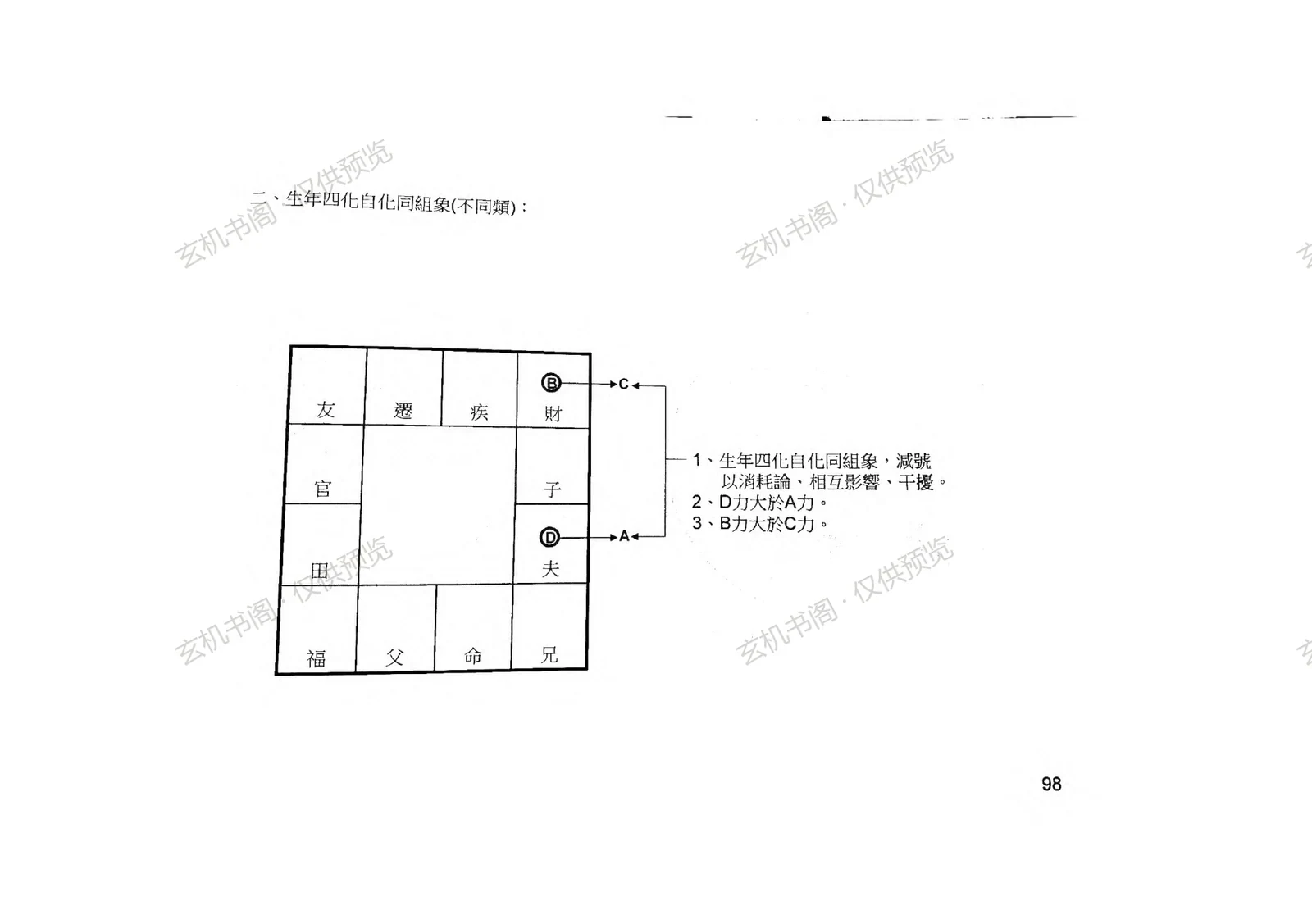
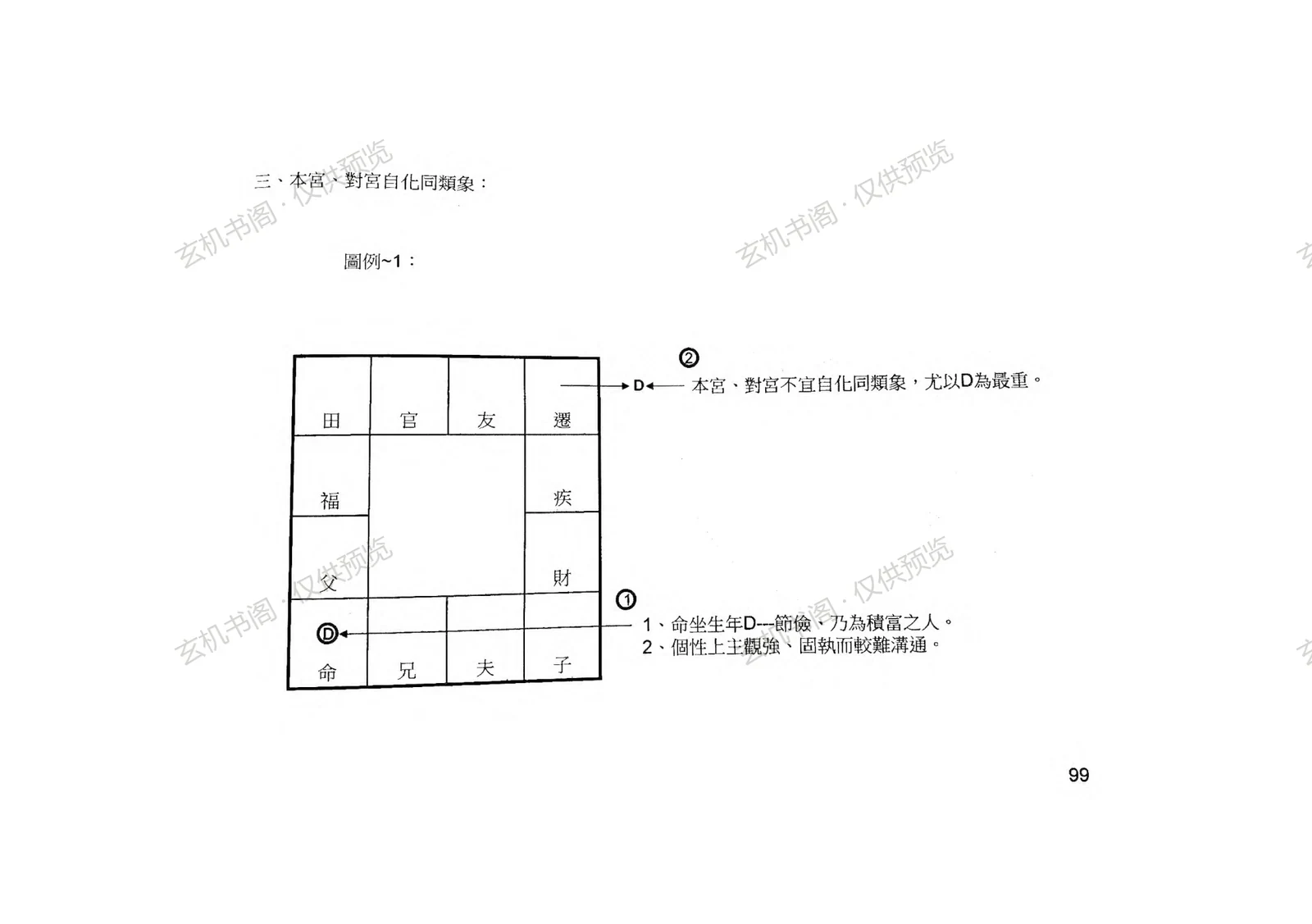
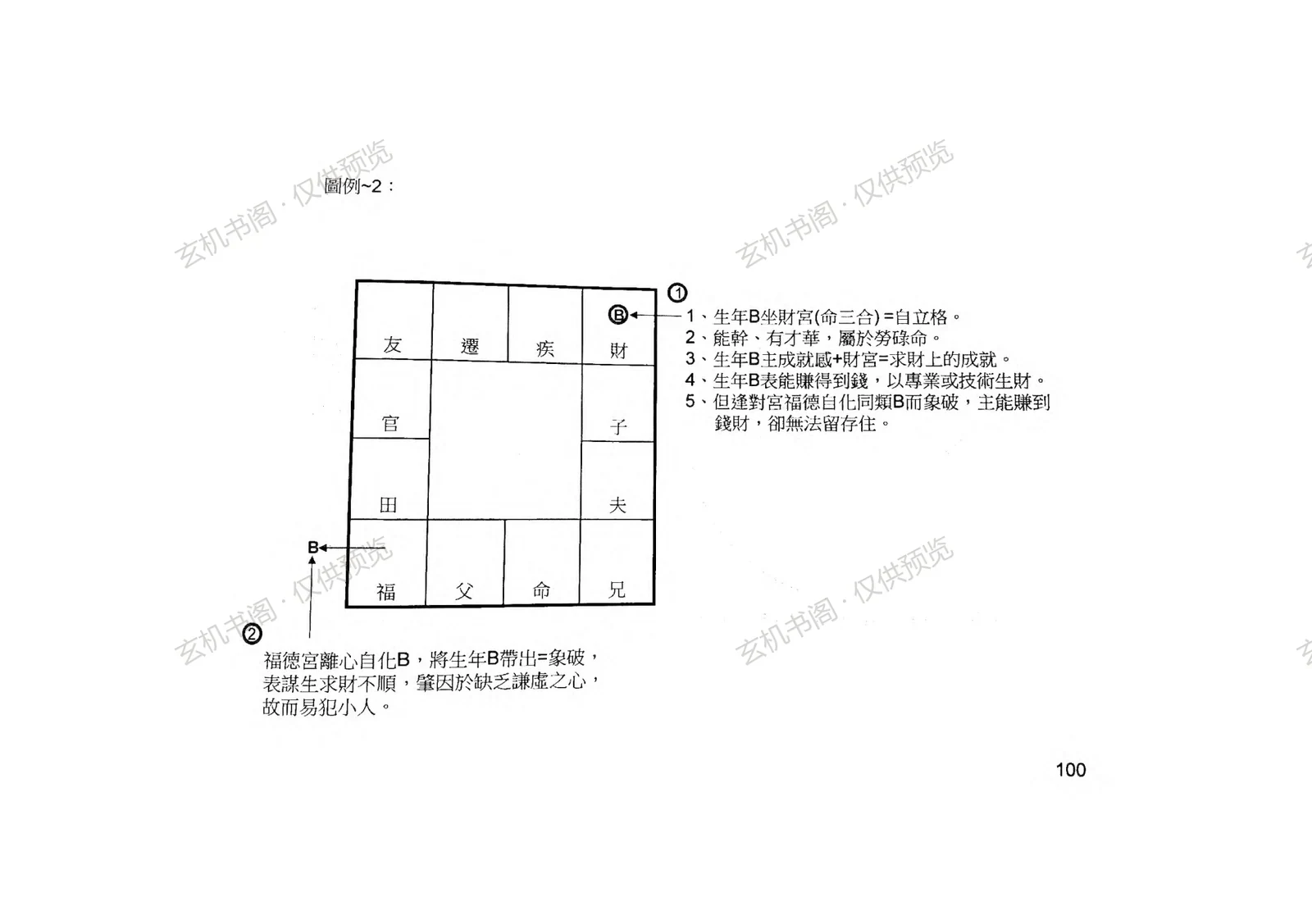
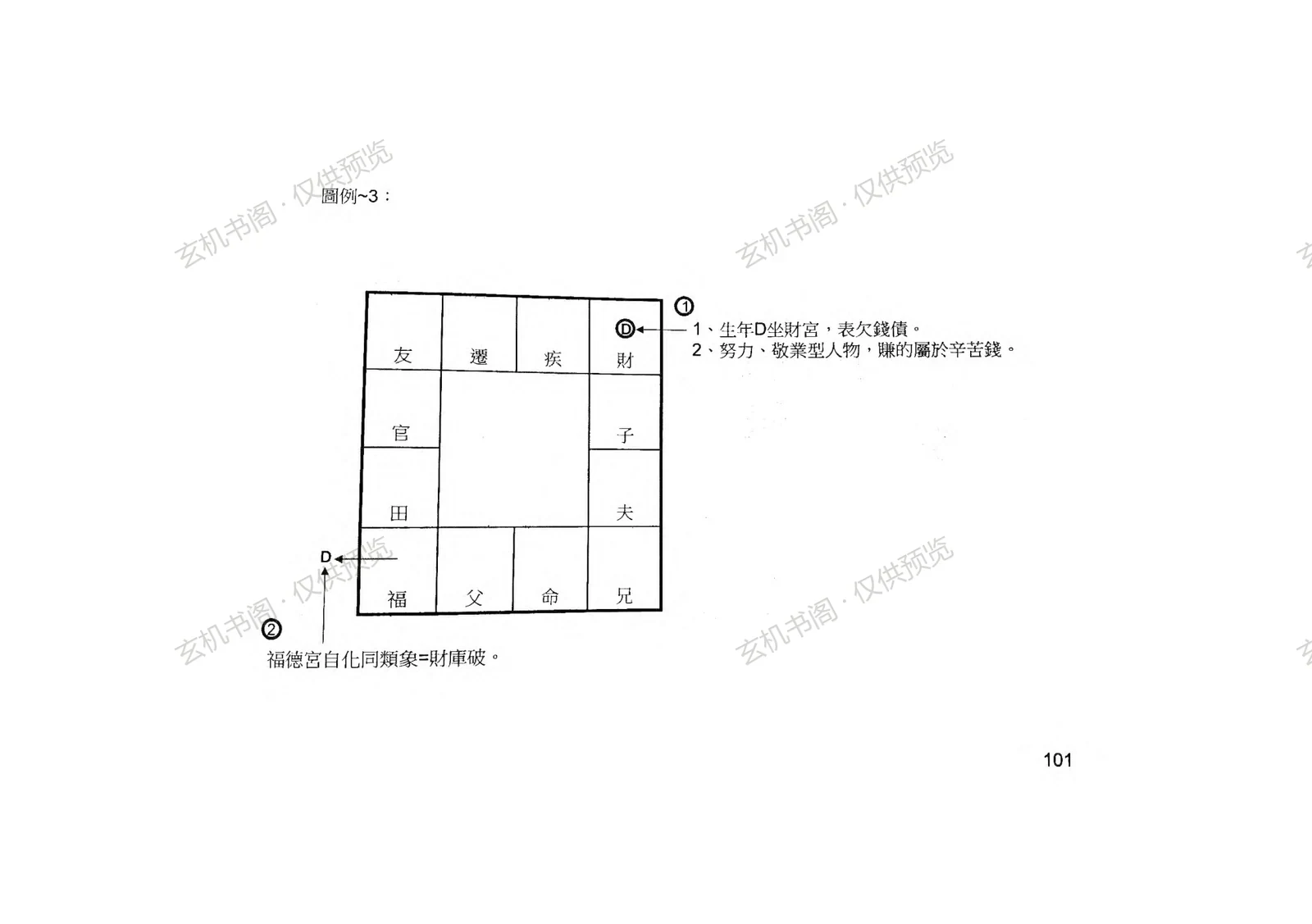
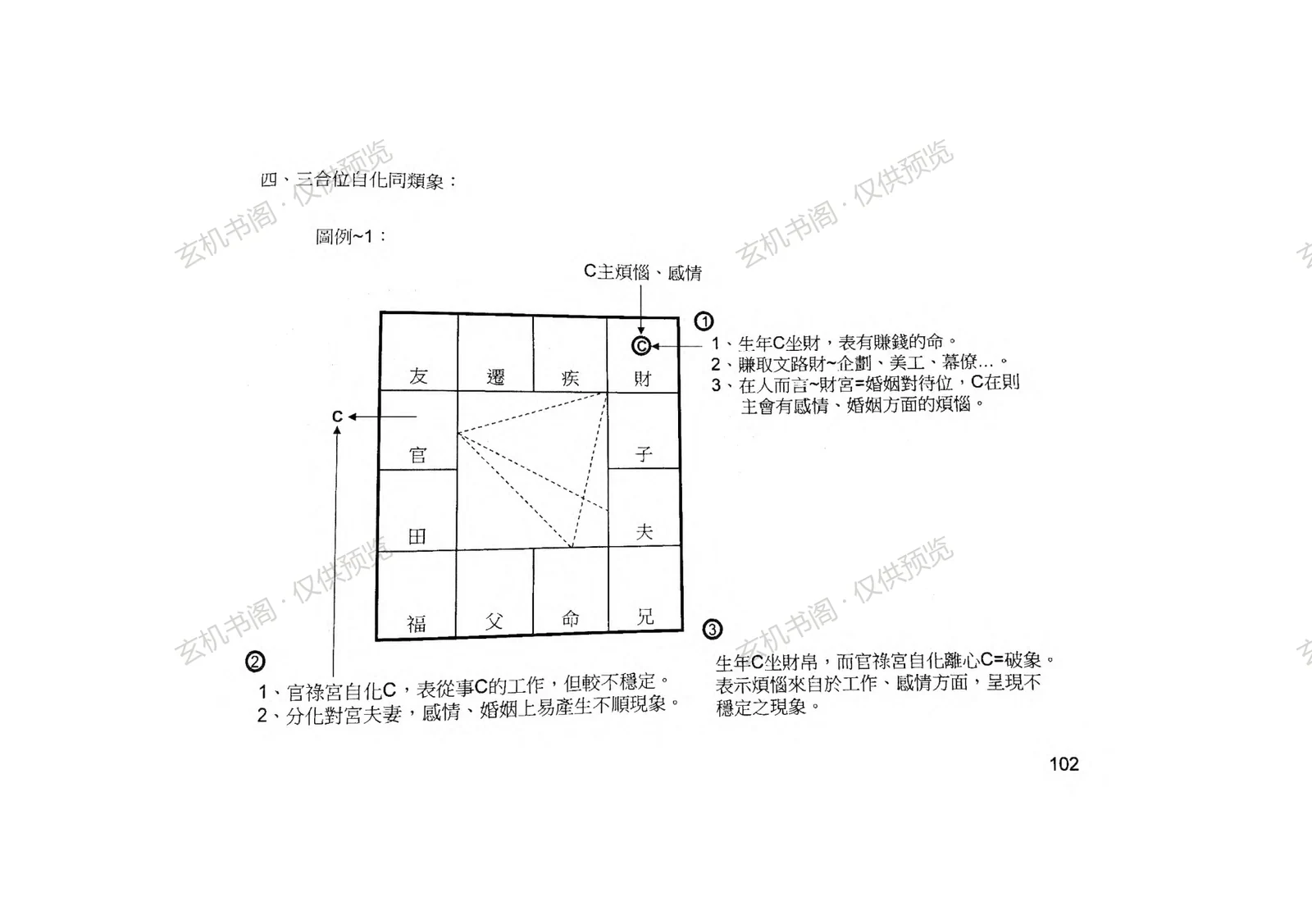
This is an advanced Zi Wei Dou Shu workbook on the four transformations. Using a twelve-palace grid on each page, it examines what happens when a birth-year transformation and a self-transformation share the same sign, sit in the same palace, face each other across the chart, or connect through the trine. Page 97 notes that when the male partner earns and the female partner spends, wealth does not stay. Page 98 discusses the waxing and waning of same-group transformations and the relative strength of the two forces. Page 99 warns against same-sign self-transformation in a palace and its opposite, especially for Hua Ji, and illustrates a birth-year Hua Ji in the Life Palace as frugal but stubborn and hard to communicate with. Pages 100–101 use examples of birth-year B and D in the Wealth Palace and the opposing Fortune Palace to explain broken configurations, self-reliant patterns, exhausting careers, unstable income, and a ruptured treasury. Page 102 covers self-transformation C in the Career Palace and birth-year C in the Wealth Palace, linking them to emotional, marital, and career instability. The format pairs brief aphorisms with chart diagrams, making it suitable for readers who already know the basics and want to practice chart reading.
Contents
Same-sign birth-year and self-transformation: same star vs. different star
Comparing the strength of birth-year and self-transformation in one group
Why a palace and its opposite should not share the same self-transformation
Self-transformation in the Fortune Palace and a broken treasury
Trine self-transformation: Career, Wealth, and Spouse palaces
Key Points
Distinguish same-star from different-star when birth-year and self-transformation share a sign
Same-group transformations involve waxing, waning, consumption, and mutual influence
A palace and its opposite should not share the same self-transformation; Hua Ji is the most serious
Self-transformation in the Fortune Palace often indicates a broken treasury
Trine self-transformation links work, emotions, and marriage