Reading guide
Content guideOverview
This section of an advanced Zi Wei Dou Shu study set begins with operational guidelines that define the single-image chart (each birth-year transformation sitting independently in separate palaces without overlap) and the double-image chart (two or three transformations in the same palace, its opposite palace, or adjacent palaces, always including Hua Ji). Four worked examples follow: double images in one palace forming a power-ji combination; double images without Hua Ji, where the reading shifts to the wealth palace; double images falling in the opposite palace forming a ke-ji combination; and a single-image chart where a transformation falls in an outer palace or a trine. Birth-year Ji is treated as the anchor of innate qi, even when it lands in outer palaces, making this a practical drill in four-transformation reasoning for readers already familiar with chart construction.
Contents
Guidelines: distinguishing single-image and double-image charts
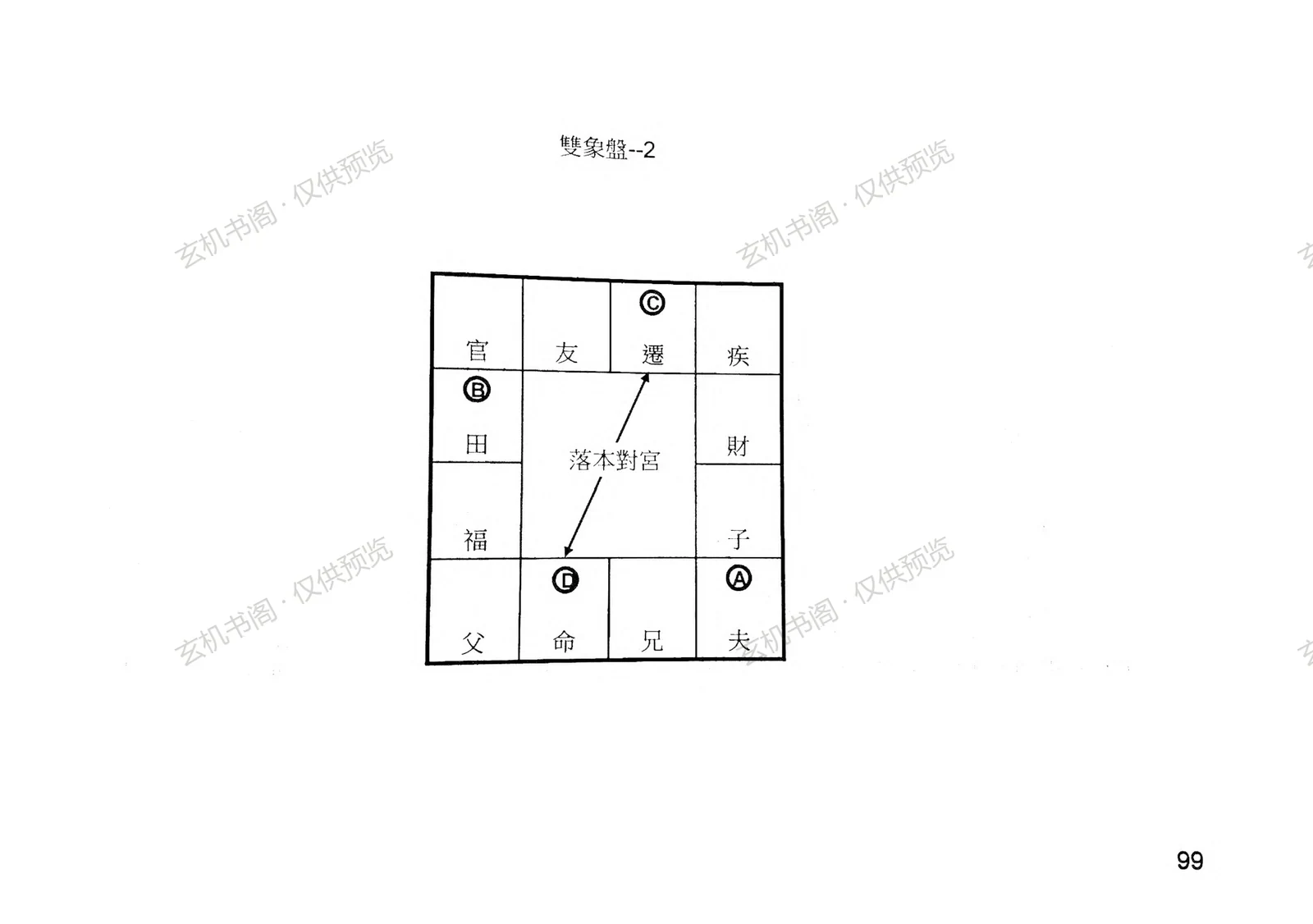
Double-image chart diagrams 1 and 2
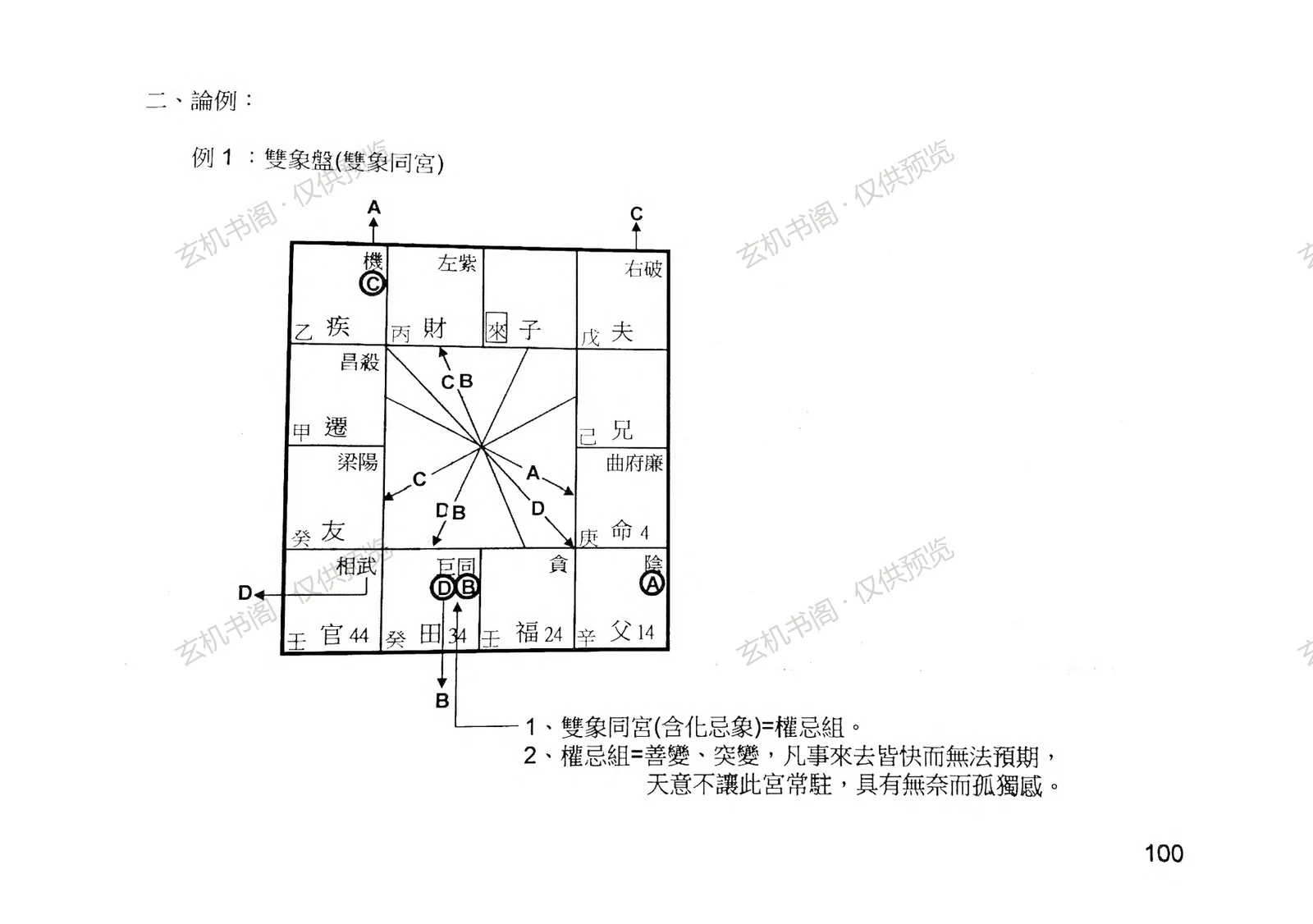
Example 1: double images in one palace, power-ji reading
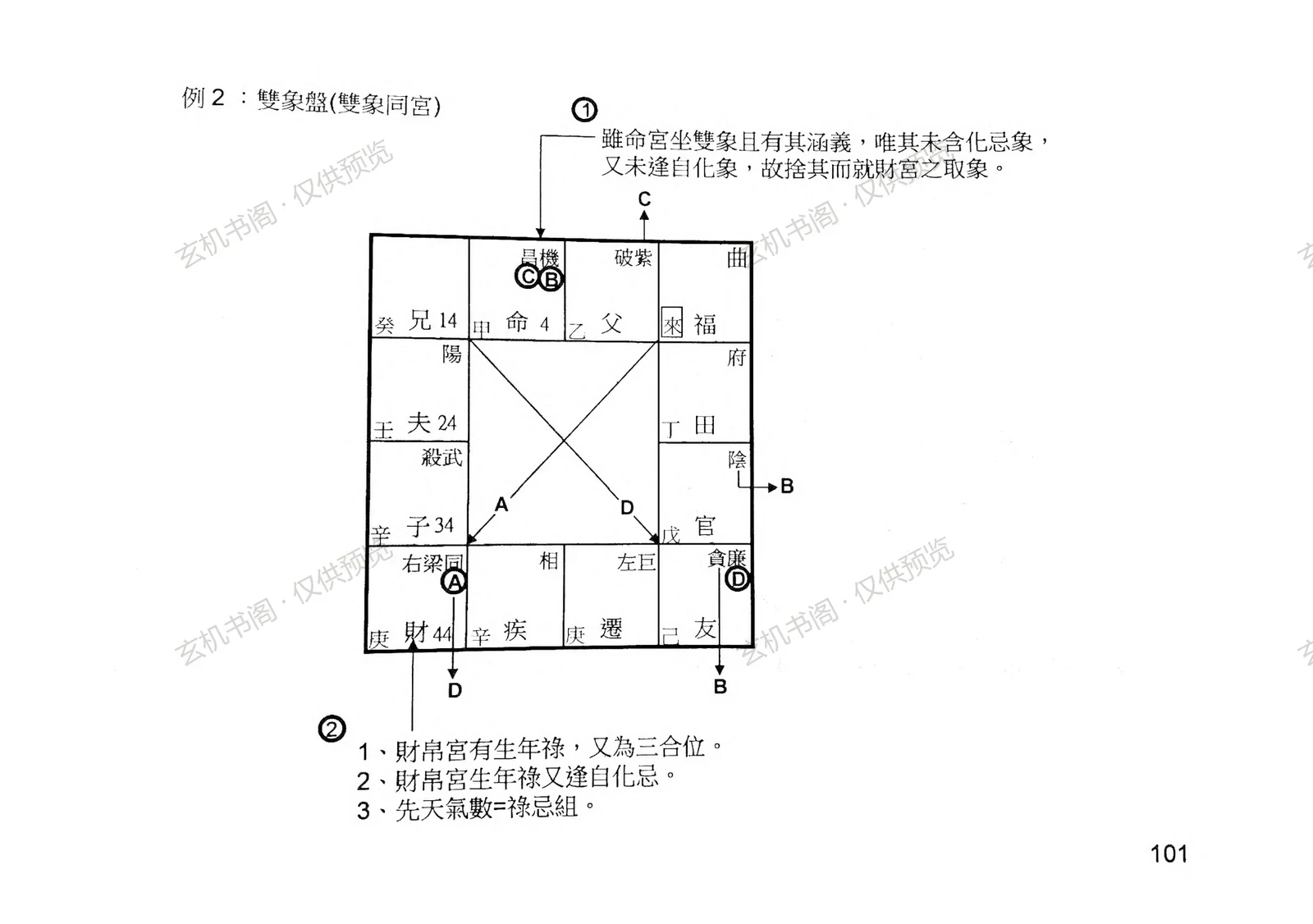
Example 2: double images without Hua Ji, reading the wealth palace
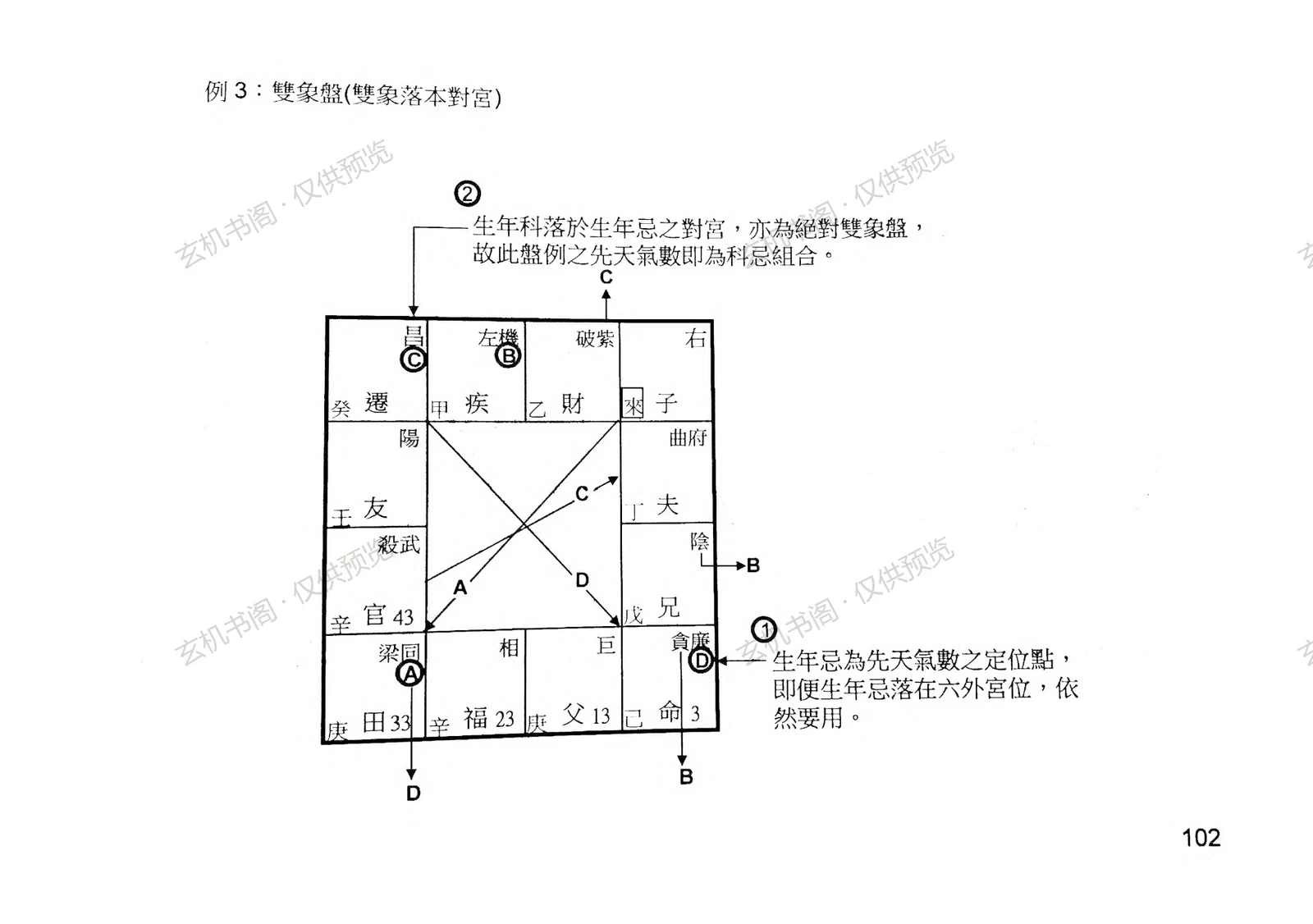
Example 3: double images in the opposite palace, ke-ji combination
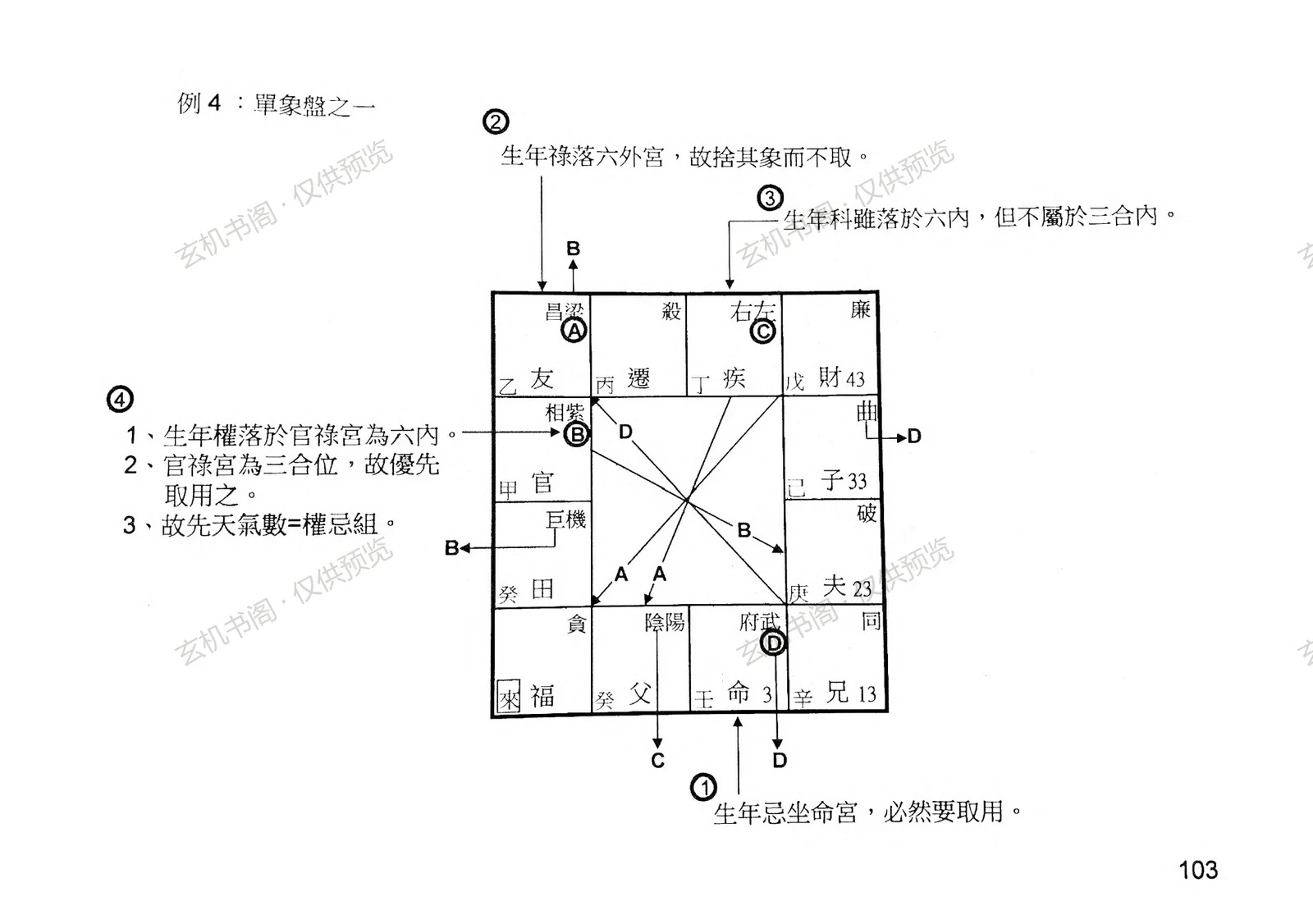
Example 4: single-image chart in outer palace and trine
Key Points
Single-image charts: four transformations sit apart without overlap
Double-image charts require two or three transformations together and include Hua Ji
Birth-year Ji anchors innate qi and is used even in outer palaces
Power-ji combinations suggest volatility and unpredictable change
Birth-year Lu in an outer palace may be set aside; trine positions take priority