Reading guide
Content guideOverview
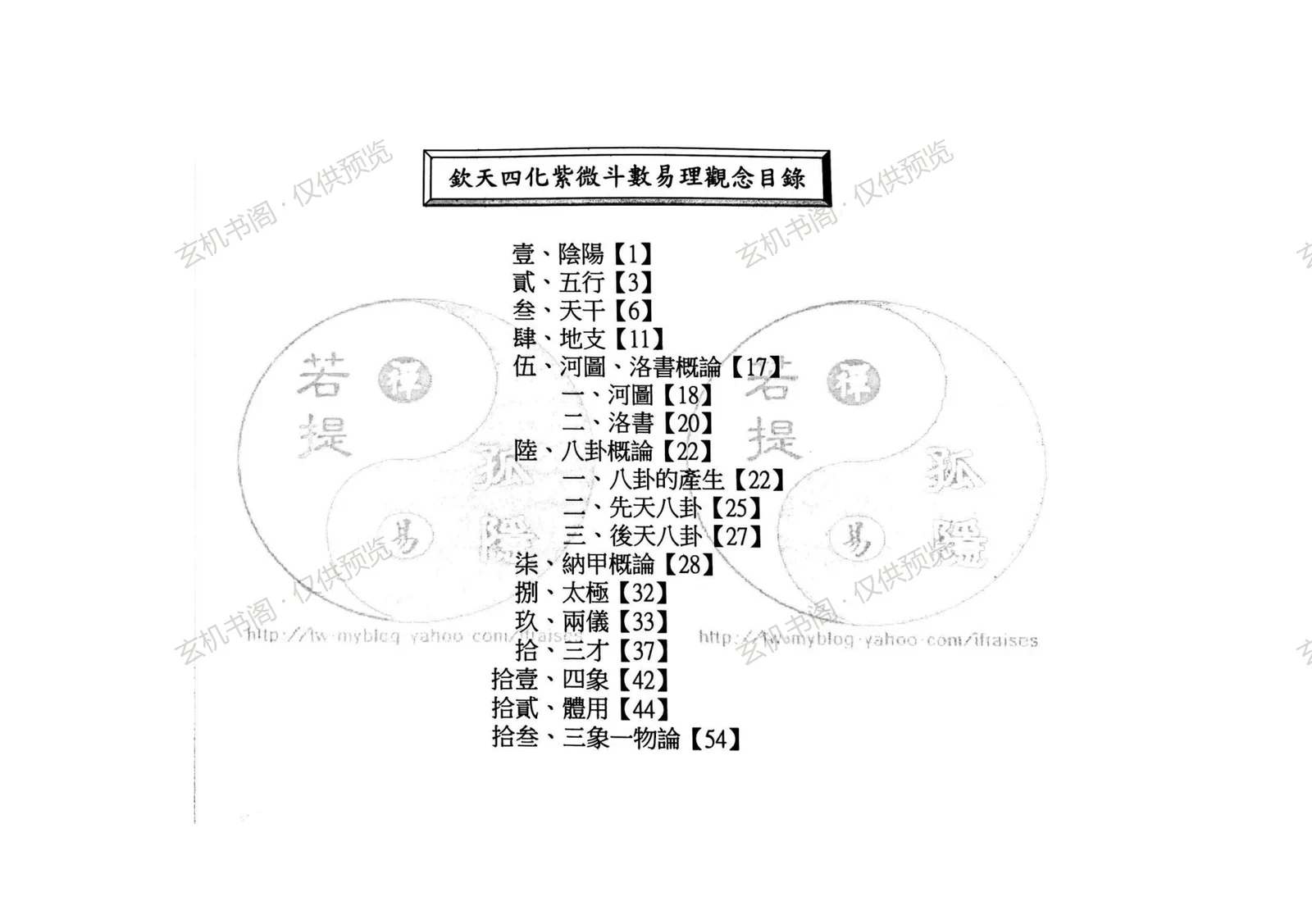
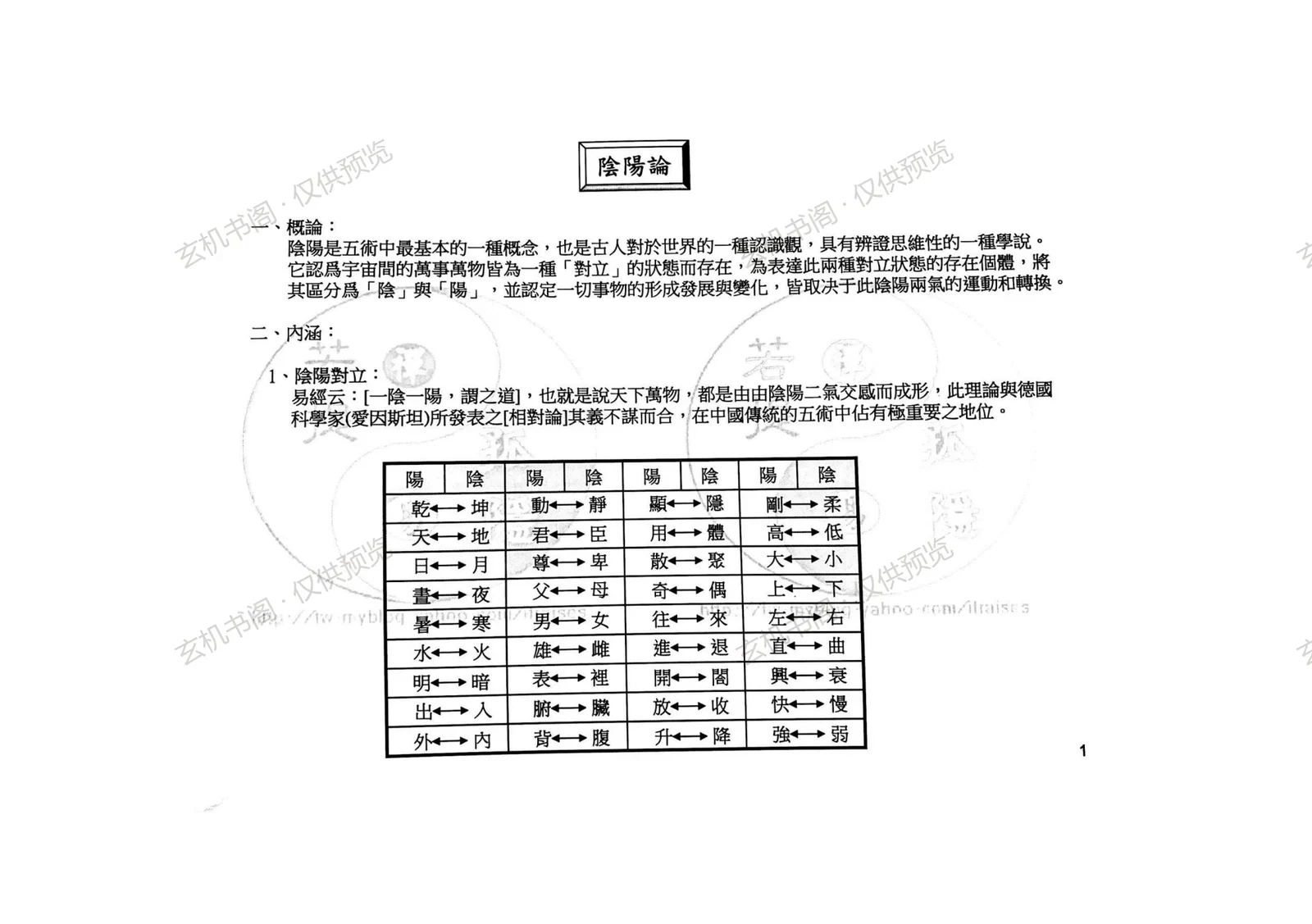
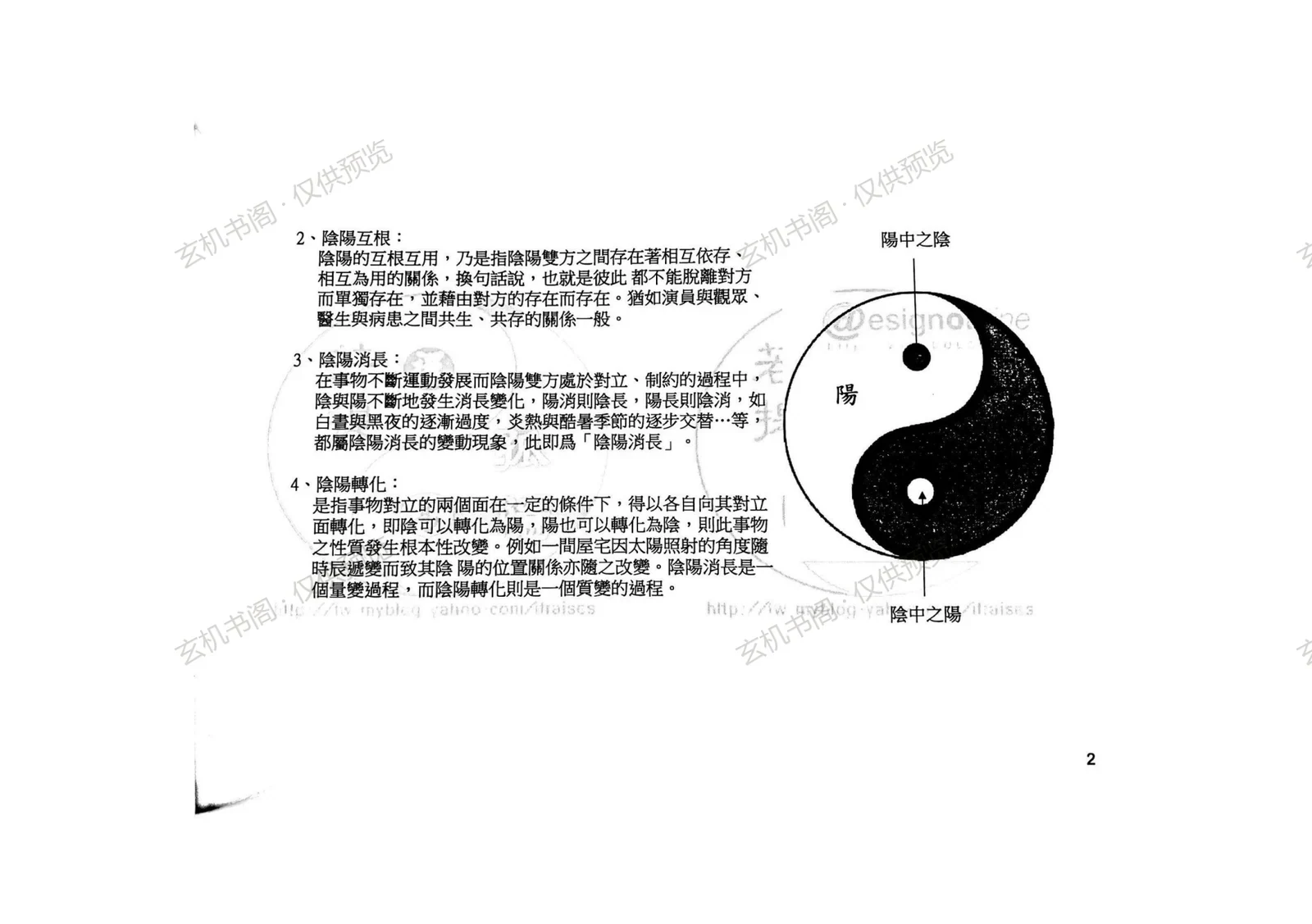
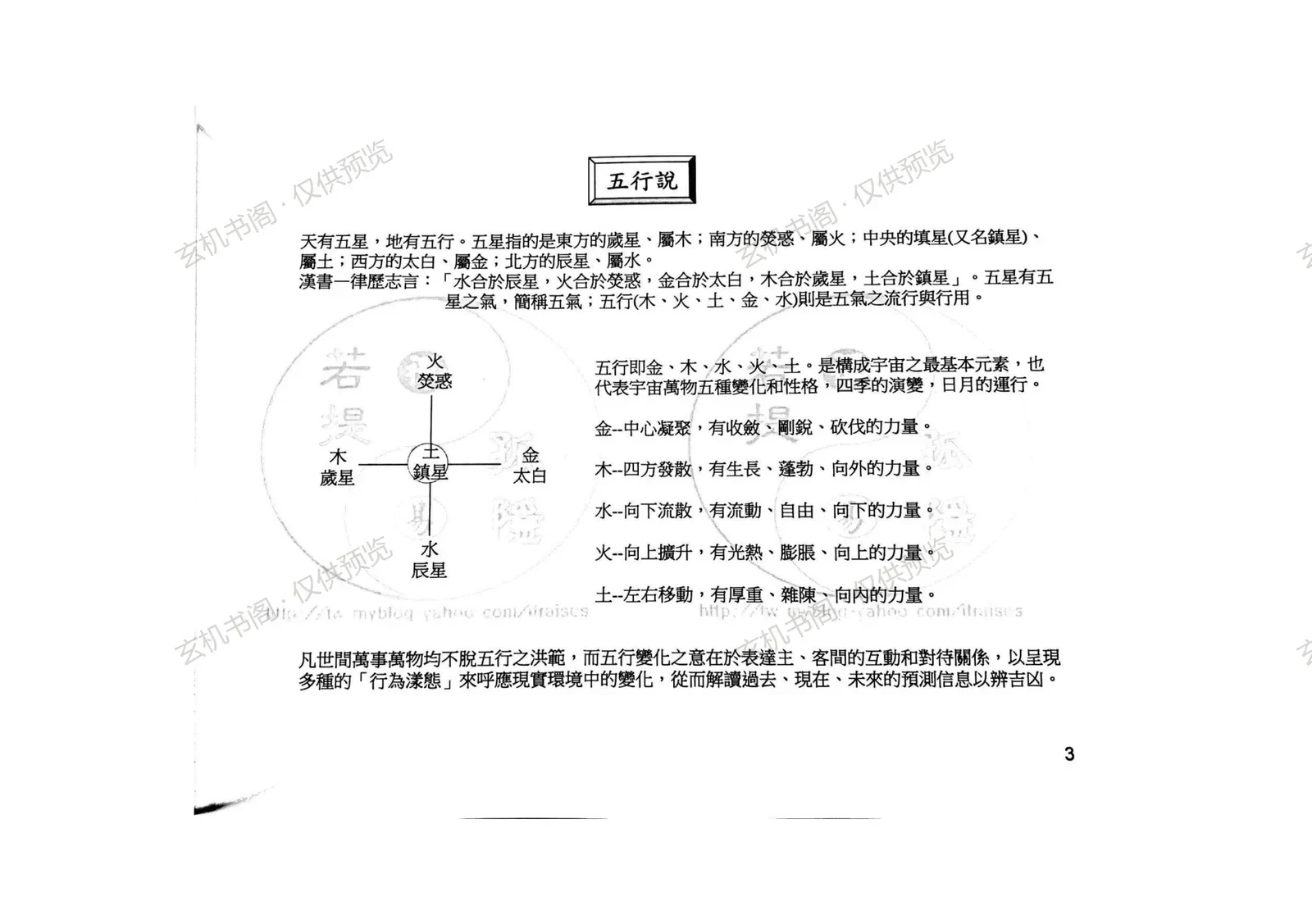
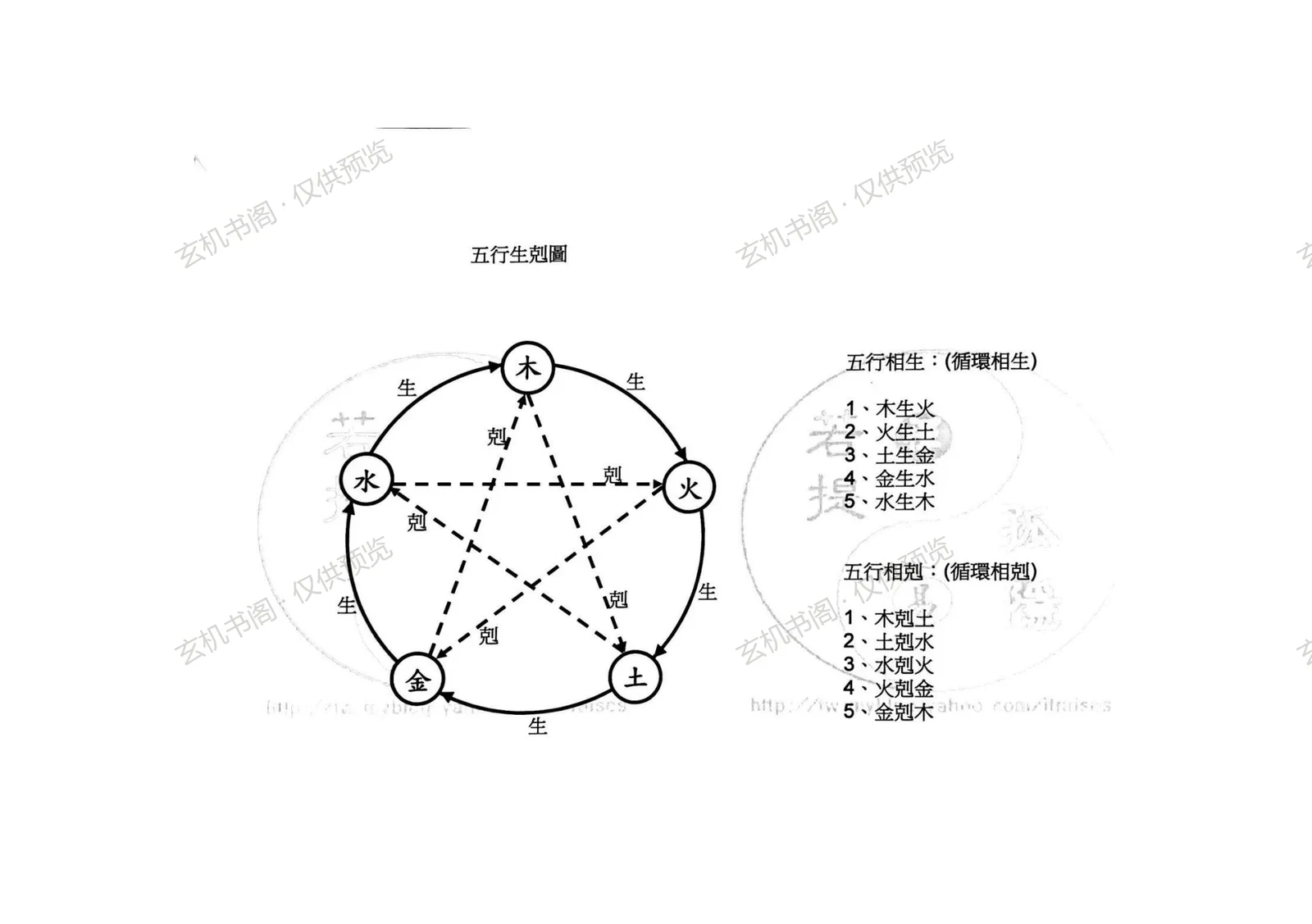
This is the second part of the Qintian Four Transformations Ziwei Doushu series, titled 'Yijing Concepts.' Its table of contents runs from yin-yang, the five phases, heavenly stems and earthly branches, to the Hetu and Luoshu, bagua, najia, taiji, liangyi, sancai, sixiang, tiyong and the 'three images, one thing' theory, thirteen sections spanning pages 1 to 54. The visible text covers the yin-yang chapter, which defines the four relations of opposition, mutual rooting, waxing-waning and transformation with an extensive table of paired opposites and a taiji diagram, and the five-phases chapter, which cites the Hanshu to link the five planets with the five phases, describes each phase's direction of force, and presents a generating-overcoming diagram with five cycles each way. The style is definition plus table and diagram, building a shared vocabulary of images and numbers rather than offering case readings. No author or publication data appears on the visible pages.
Contents
1 Yin-yang: overview and four relations
2 Five phases: planets, qualities, generating and overcoming
3 Heavenly stems
4 Earthly branches
5 Hetu and Luoshu overview
6 Bagua: origin, prior and posterior arrangements
7 Najia overview
8-13 Taiji, liangyi, sancai, sixiang, tiyong, three images
Key Points
Starts from the four yin-yang relations: opposition, mutual rooting, waxing-waning, transformation
Cites the Hanshu to pair the five planets with the five phases
Each phase has a direction of force: metal contracts, wood spreads, water sinks, fire rises, earth is heavy
Includes a generating-overcoming diagram with five cycles each way
Later chapters build the stem-branch, Hetu-Luoshu, bagua and najia framework