Reading guide
Content guideOverview
These are classroom notes from a Zi Wei Dou Shu (Purple Star Astrology) course, presented as a running dialogue. The teacher revisits a review method called 'seed theory': the starting year of an undertaking is treated as a seed, and that year's four transformations are read as the natal transformations of the undertaking, so its growth cycle and payoff moment can be traced. A company founded in 2019 (Ji-Hai year) serves as the example: its natal transformation is Wu Qu turning into Lu, and in 2021 that Lu falls into the annual wealth palace, suggesting the year profits begin. The notes also cover how to cast a 'company chart' using the hour zi of the effective date, comparable to Tai Sui entering a hexagram, and note this suits people who launch companies or long partnerships repeatedly; national charts follow a similar logic. The teacher stresses the method applies only to undertakings with lasting value, not to everyday events like moving house.
Contents
Review of the seed theory concept
Using the starting year's transformations as natal transformations
Casting a company chart with the zi hour
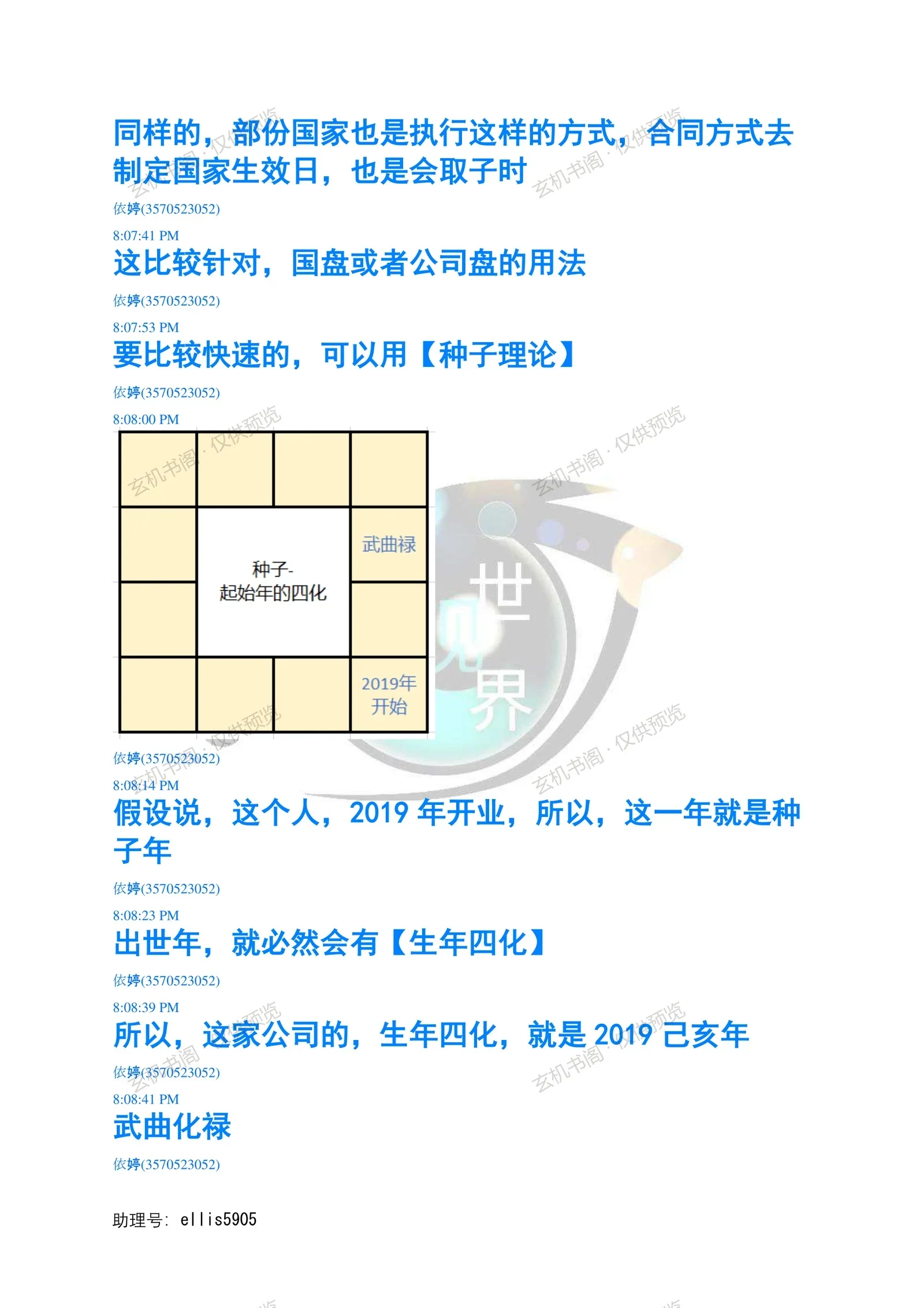
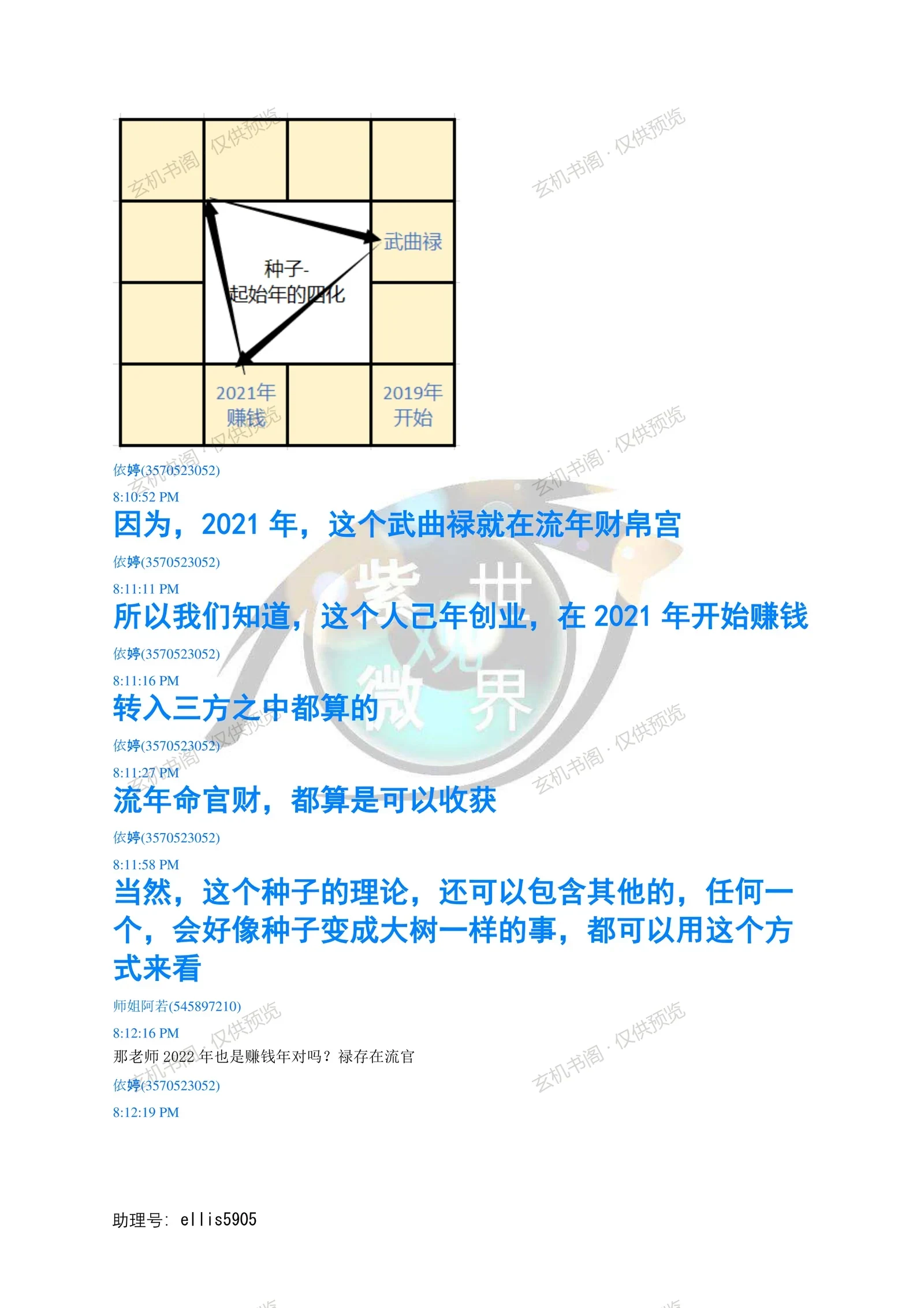
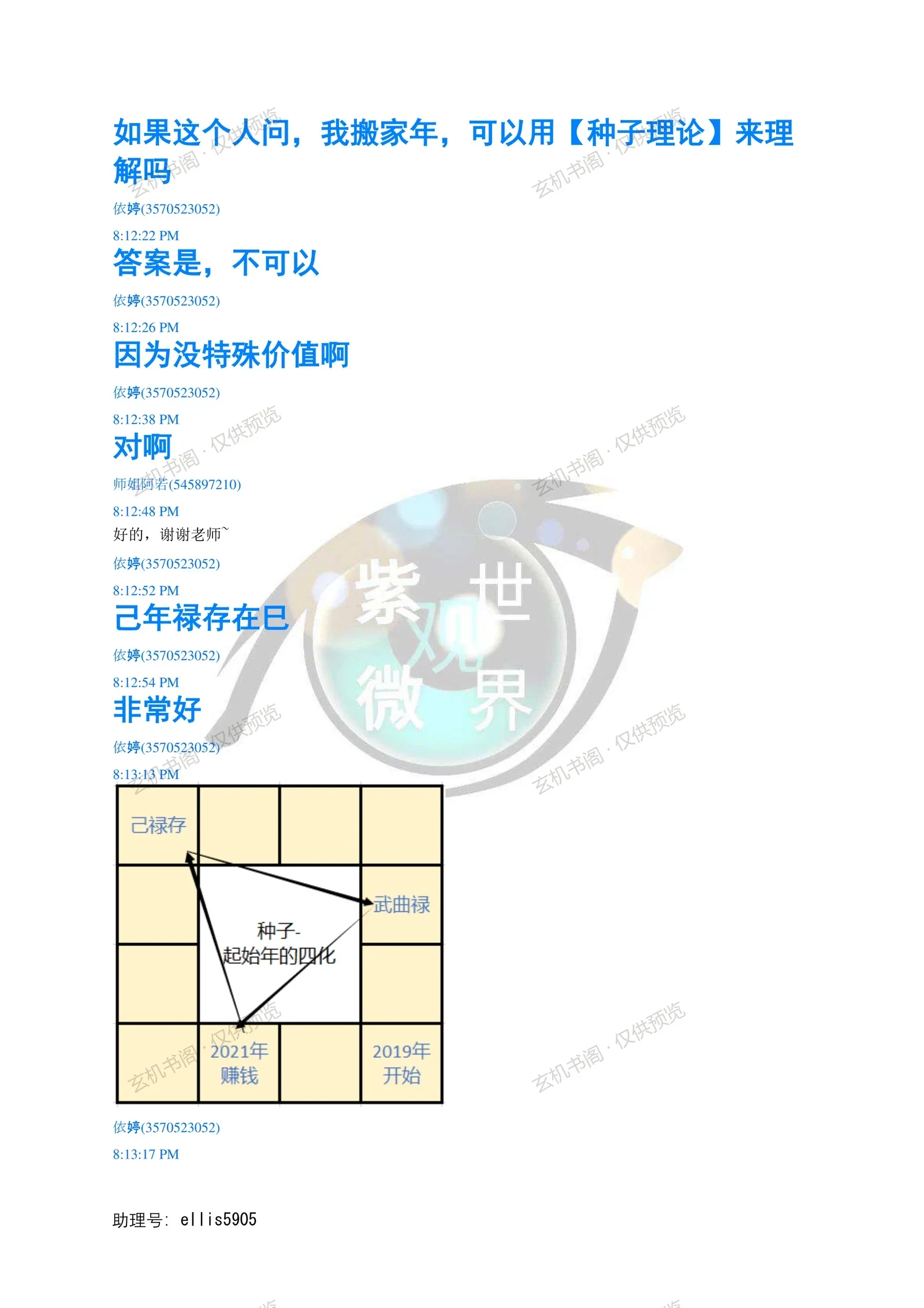
Worked example: a company founded in 2019
Wu Qu Lu entering the 2021 annual wealth palace
Scope and exceptions of seed theory
Key Points
Seed theory treats the starting year as the seed and its four transformations as natal
Company charts are cast at the zi hour of the effective date, similar to Tai Sui entering a hexagram
Wu Qu transforming to Lu marks gain, especially in the annual wealth palace
Payoff can be counted across the annual life, career and wealth palaces plus their trines
Events without lasting value, such as moving house, do not fit the method