Reading guide
Content guideOverview
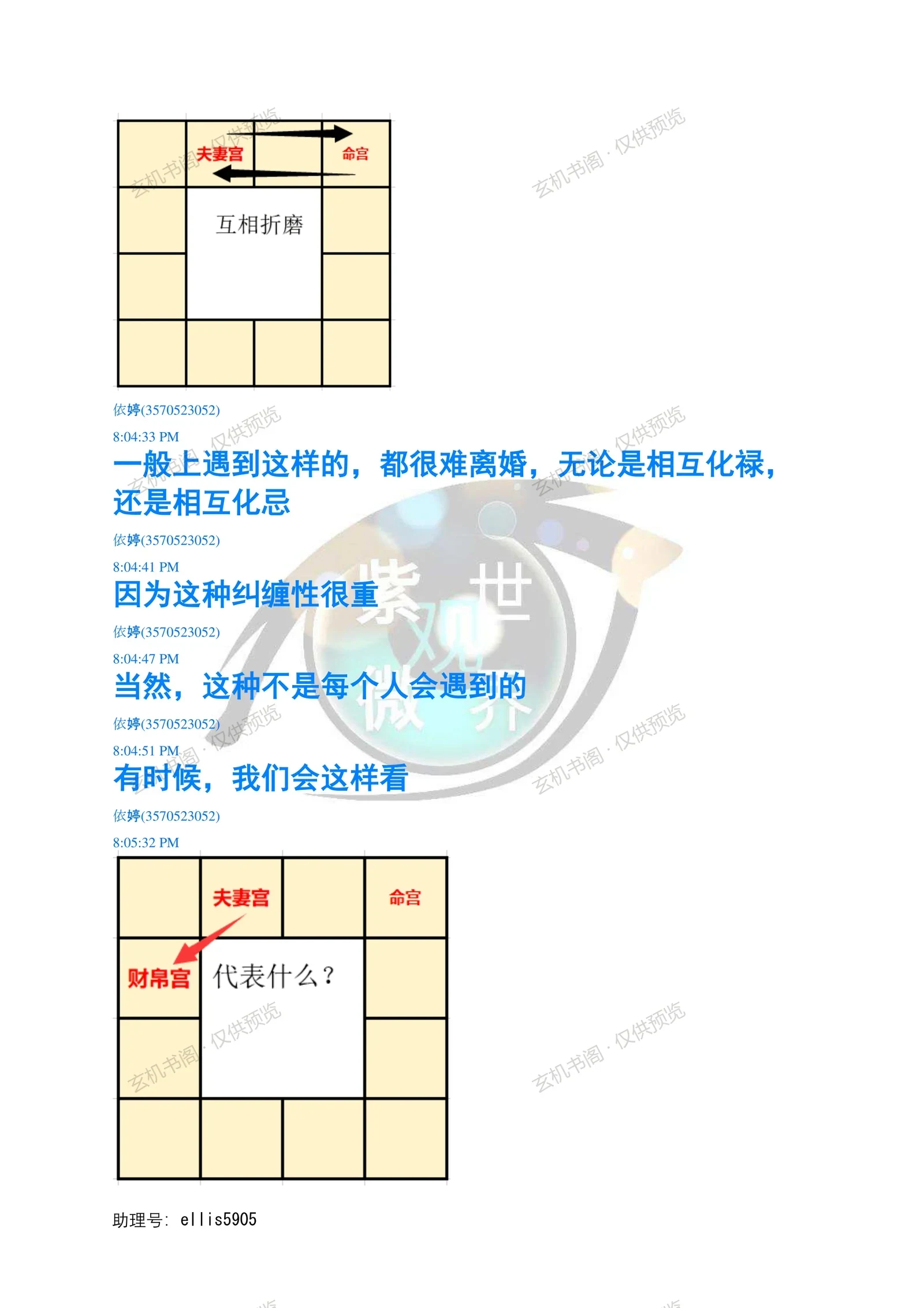
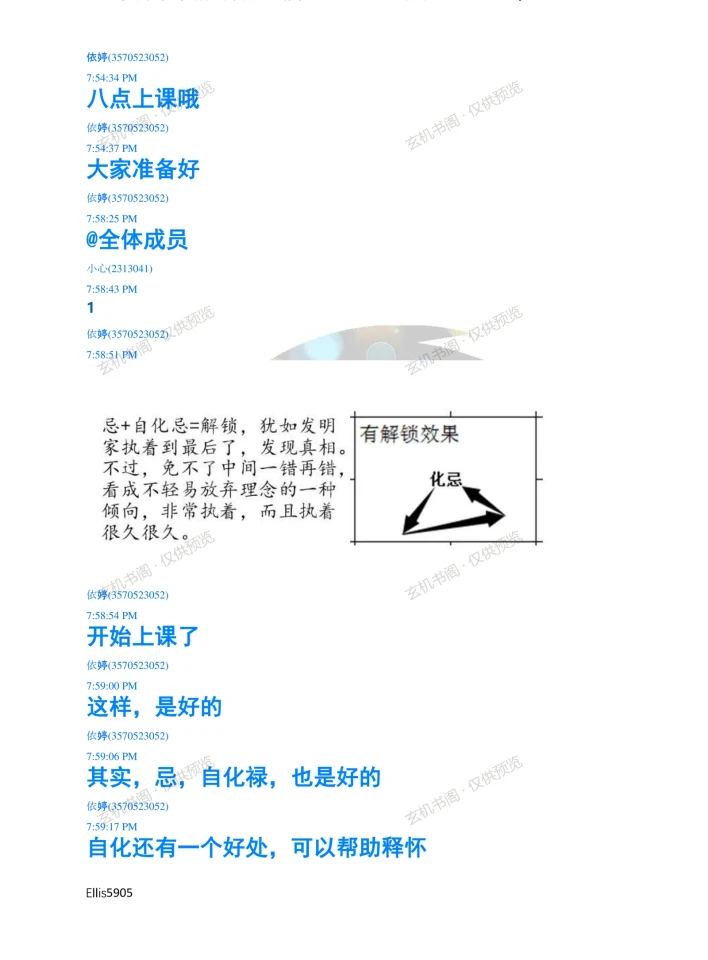
This PDF is a transcript-style record of a Zi Wei Dou Shu system class titled “34 Four Transformations, Part 2,” taught by Yi Ting. It opens with class announcements and then moves to flying stars, stressing that flying-star analysis begins with the palace stem. Using sample charts, the instructor shows how to select a palace stem and read the heavenly stem of each palace. Red, black, green, and blue arrows are used to mark flying Lu, Ji, Ke, and Quan respectively, illustrating how color corresponds to each transformation and how flying stars describe a palace’s “reaction.” The text then discusses new transformations triggered when a major limit “steps into” a palace, and the use of flying stars in palace interaction. Key examples include “A palace flying Ji into B palace indicates control” and “A palace flying Lu into B palace means I treat you well.” Mutual flying Lu or Ji between the Life Palace and Spouse Palace is used to explain mutual affection versus mutual torment, with a note that such entanglements seldom lead to divorce. The final page poses a question about the Spouse Palace flying Lu into the Wealth Palace. It is an intermediate-level practical handout for readers who already know the basic chart and the four transformations.
Contents
Class opening and continuing the four transformations
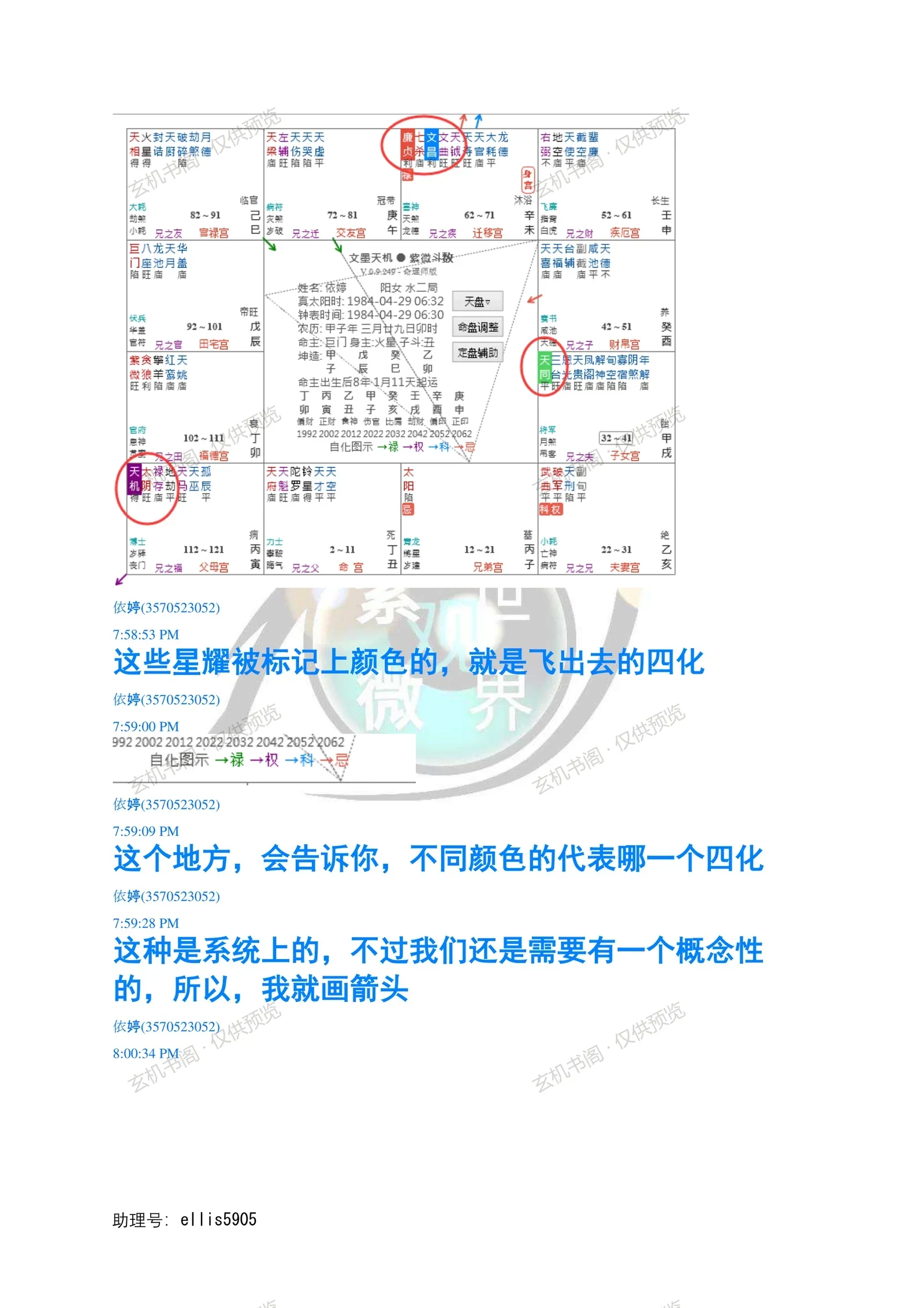
Flying stars start with palace stems
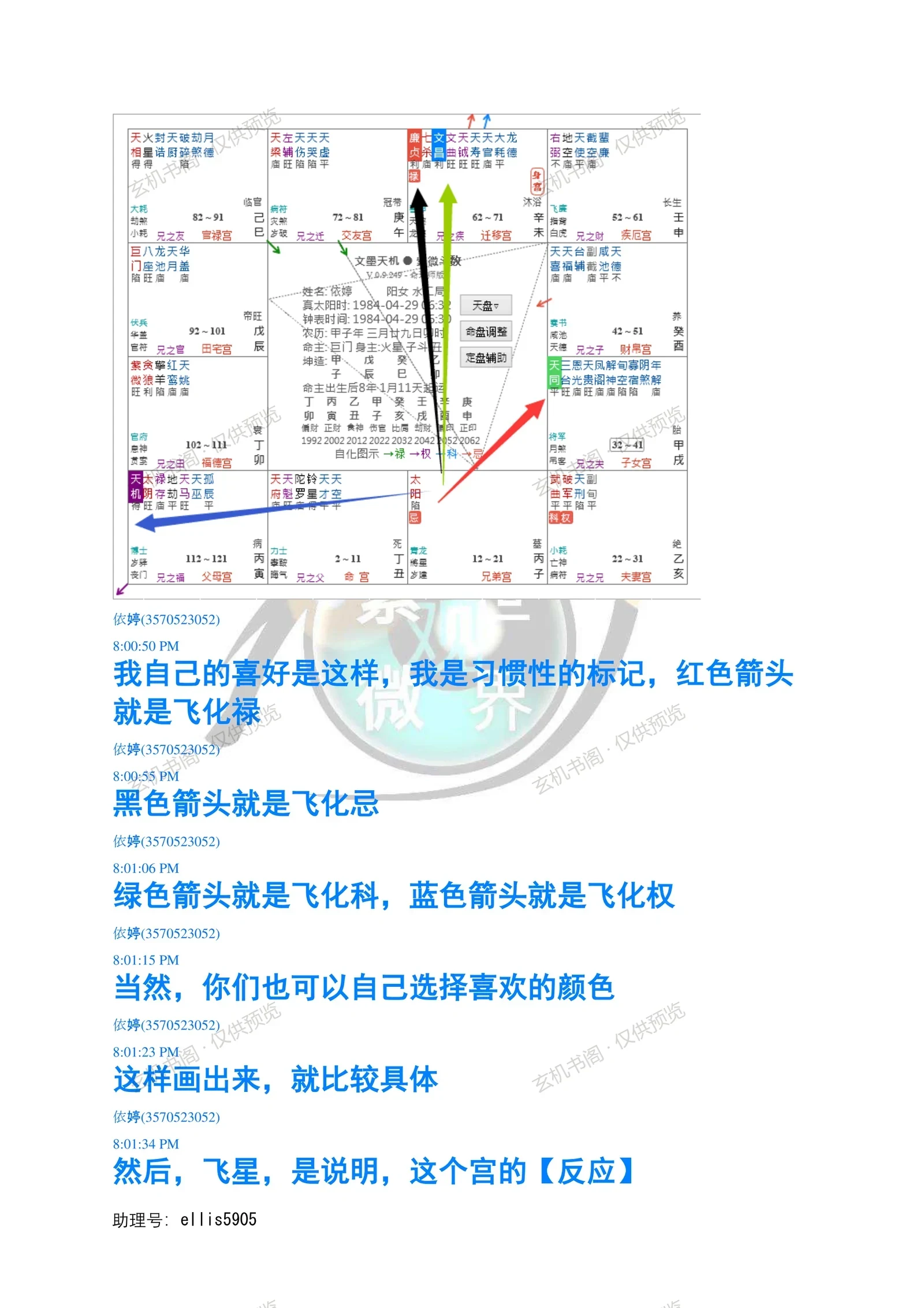
Color-coded arrows for Lu, Quan, Ke, Ji
New transformations when a major limit enters a palace
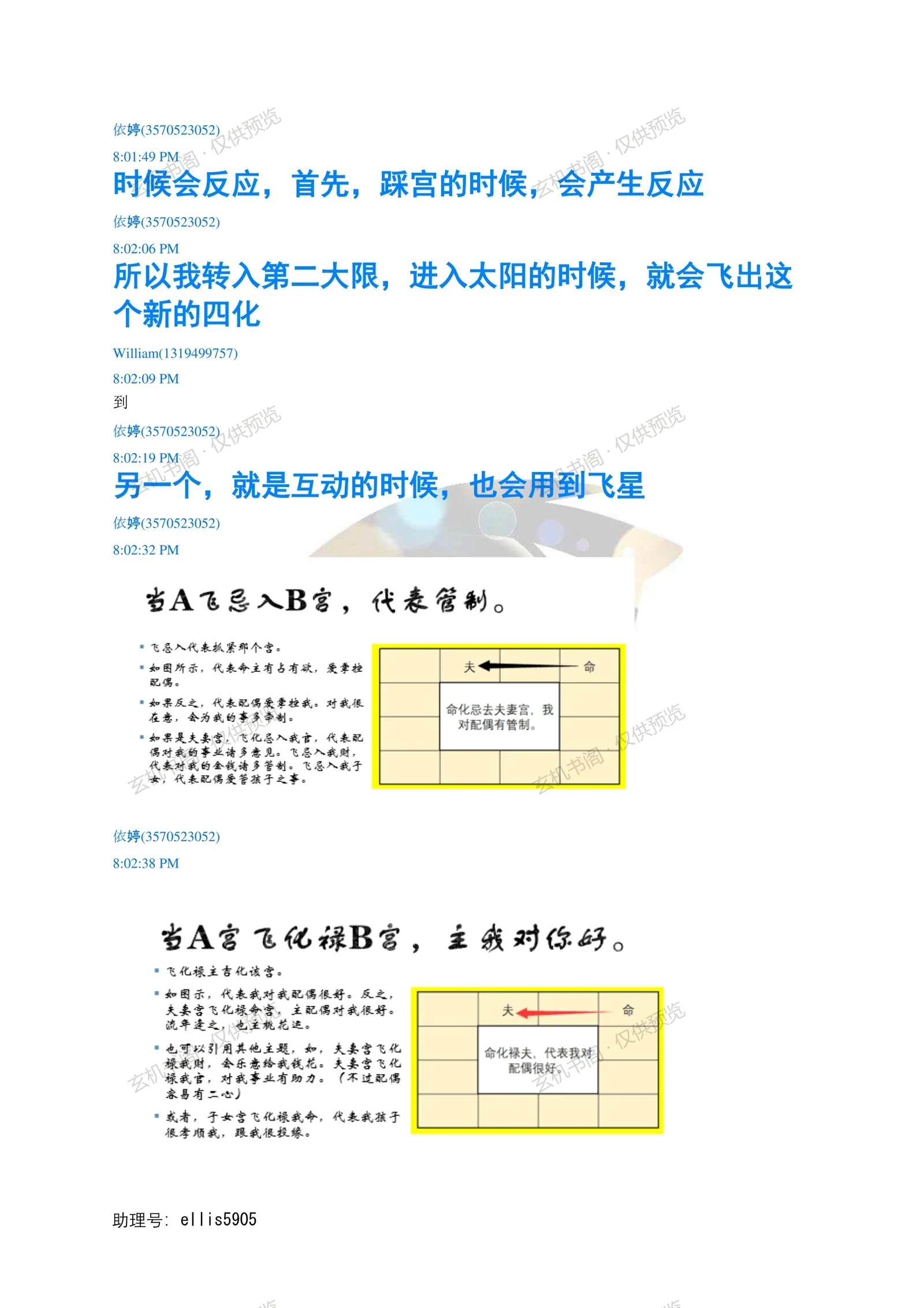
Flying Ji as control, flying Lu as kindness
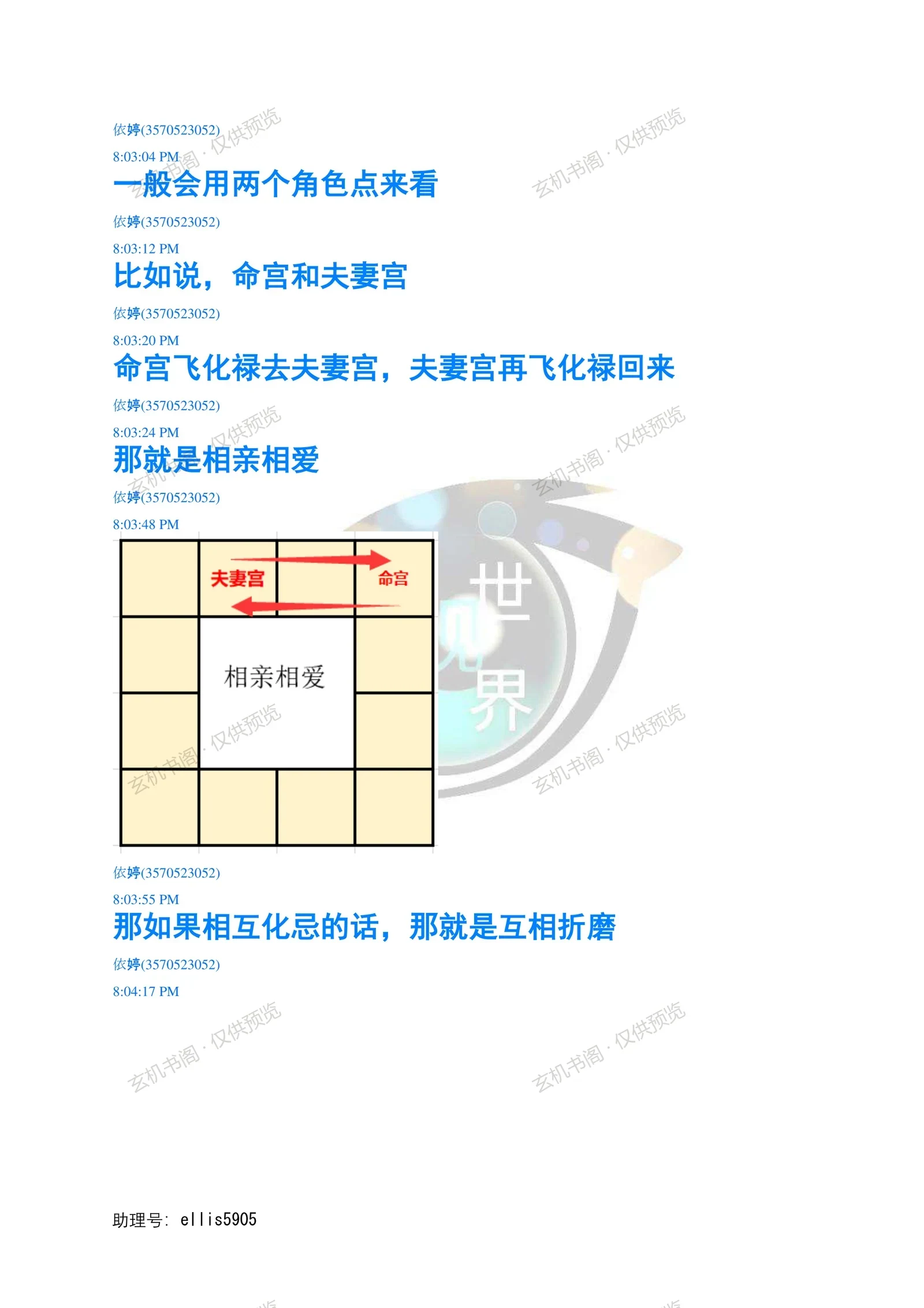
Mutual flying between Life and Spouse palaces
Key Points
The first step in flying-star analysis is reading the palace stem.
Colored arrows can mark flying Lu, Ji, Ke, and Quan.
Flying stars describe a palace’s reaction during limits or interactions.
A palace flying Ji into another often indicates control or concern.
A palace flying Lu into another suggests goodwill and giving.
Mutual Lu between Life and Spouse means affection; mutual Ji means friction.