Reading guide
Content guideOverview
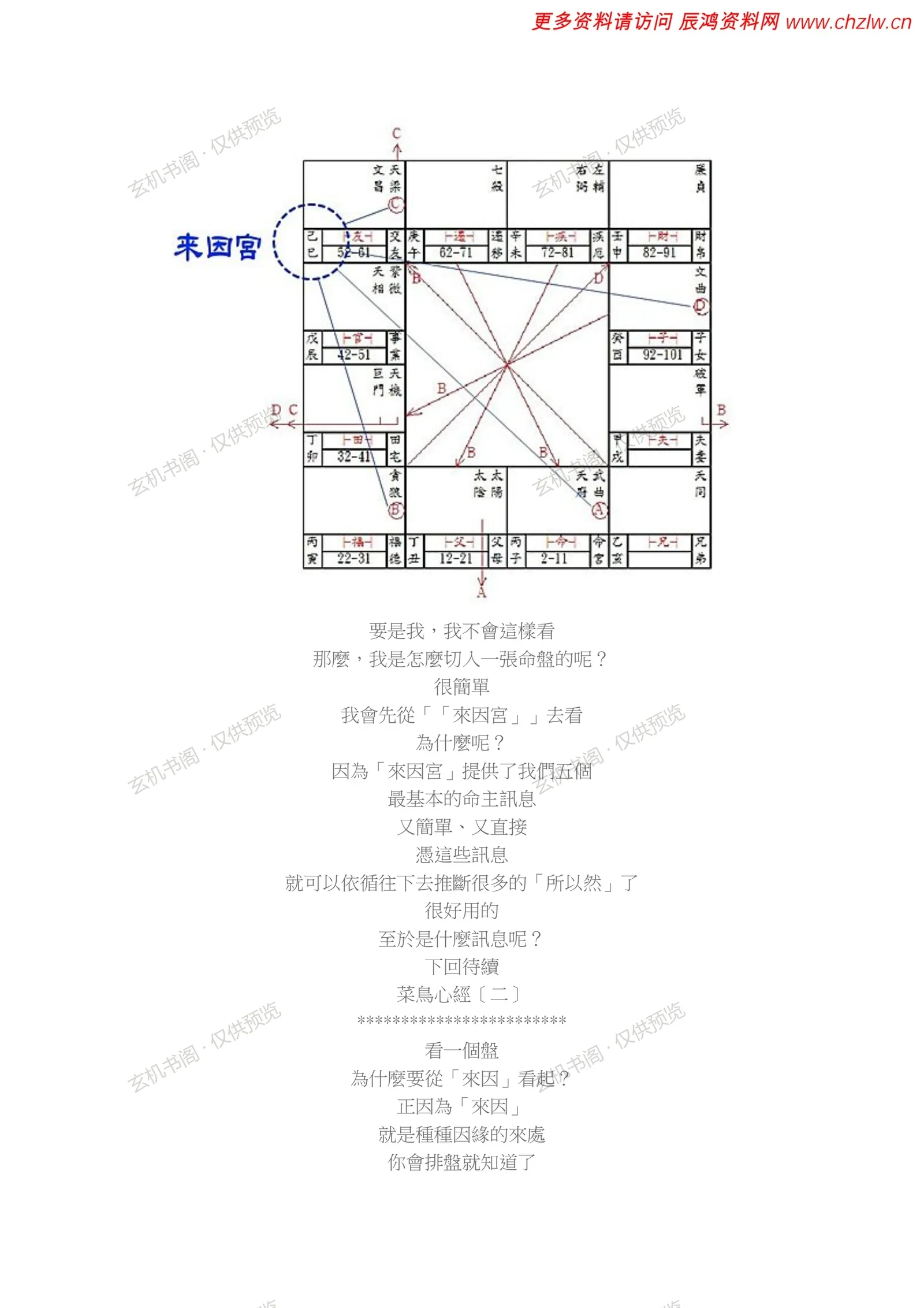
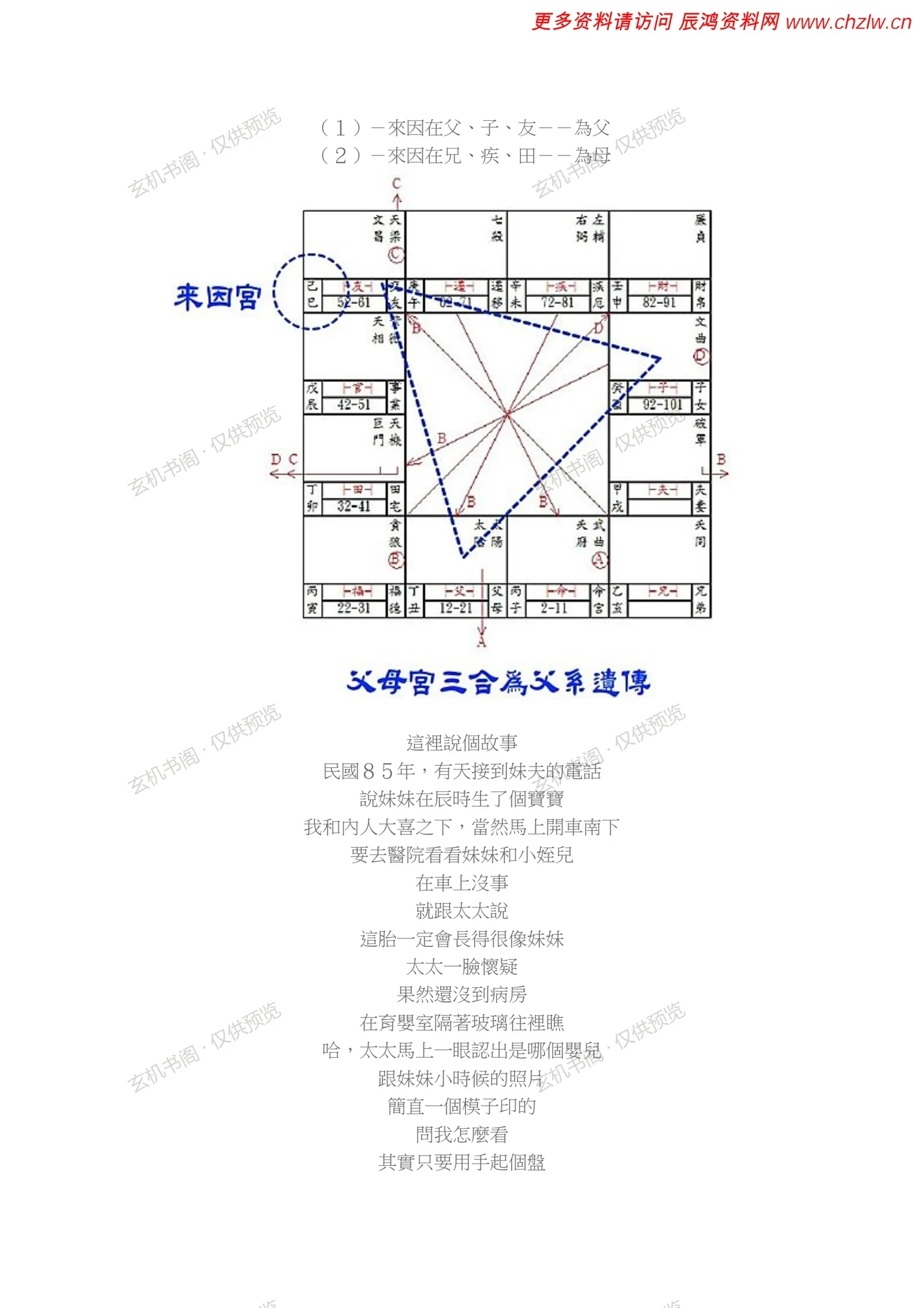
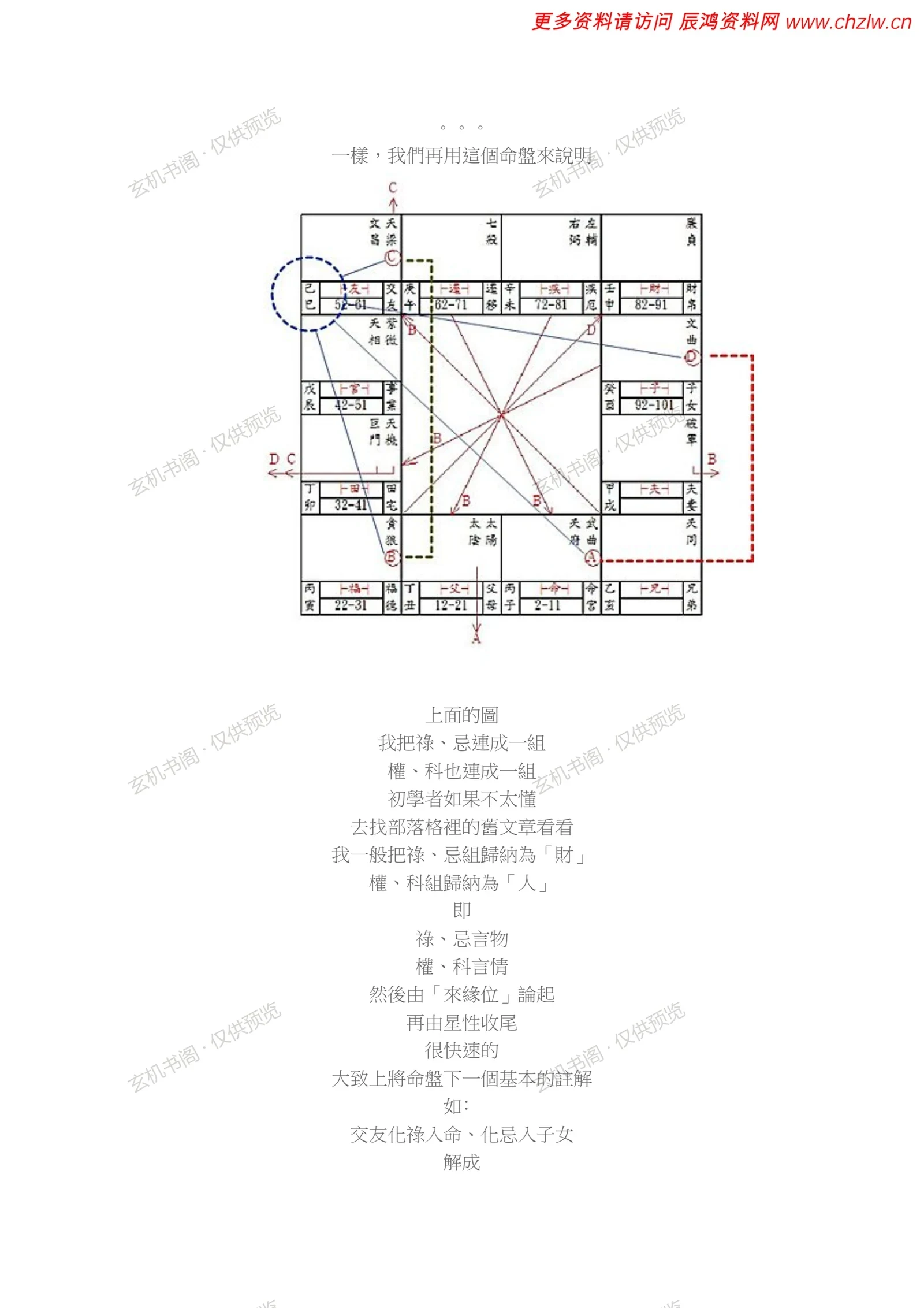
This is an introductory Zi Wei Dou Shu handout titled 'Beginner's Heart Sutra'. Rather than opening with theory about fate, the author asks where a beginner should first look when handed a chart. He argues against starting with the life palace stars, the triangle-fourfold, or the placement of birth-year transformations, and instead begins with the 'lai yin palace', which yields five basic clues about the native and is simple and direct. The lai yin position is divided into three types—in parents, in self, in marriage—corresponding to innate, self-standing, and other-standing patterns, with the parents palace trine read as paternal inheritance. A personal story about recognizing a newborn nephew as looking just like his sister illustrates reading the lai yin palace in the siblings palace with birth-year power entering parents and illness. The latter part groups lu and ji as 'wealth/matter' and quan and ke as 'people/emotion', then reads from the lai yin position and closes with star nature to give a quick basic annotation of the chart, stressing that this is only a beginner's entry method.
Contents
Lesson one: where to look first in a chart
The lai yin palace and five basic clues
Three lai yin positions: parents, self, marriage
Parents palace trine as paternal inheritance
Case: a nephew who looks like his aunt
Grouping lu/ji as wealth and quan/ke as people
From lai yin to star nature: quick chart notes
Key Points
Start from the lai yin palace, not the life palace stars or triangle-fourfold
Three lai yin types map to innate, self-standing and other-standing patterns
The lai yin palace supplies five basic clues that anchor the reading
The parents palace trine reflects paternal inheritance and resemblance
Group lu/ji as wealth/matter and quan/ke as people/emotion for fast annotation