Reading guide
Content guideOverview
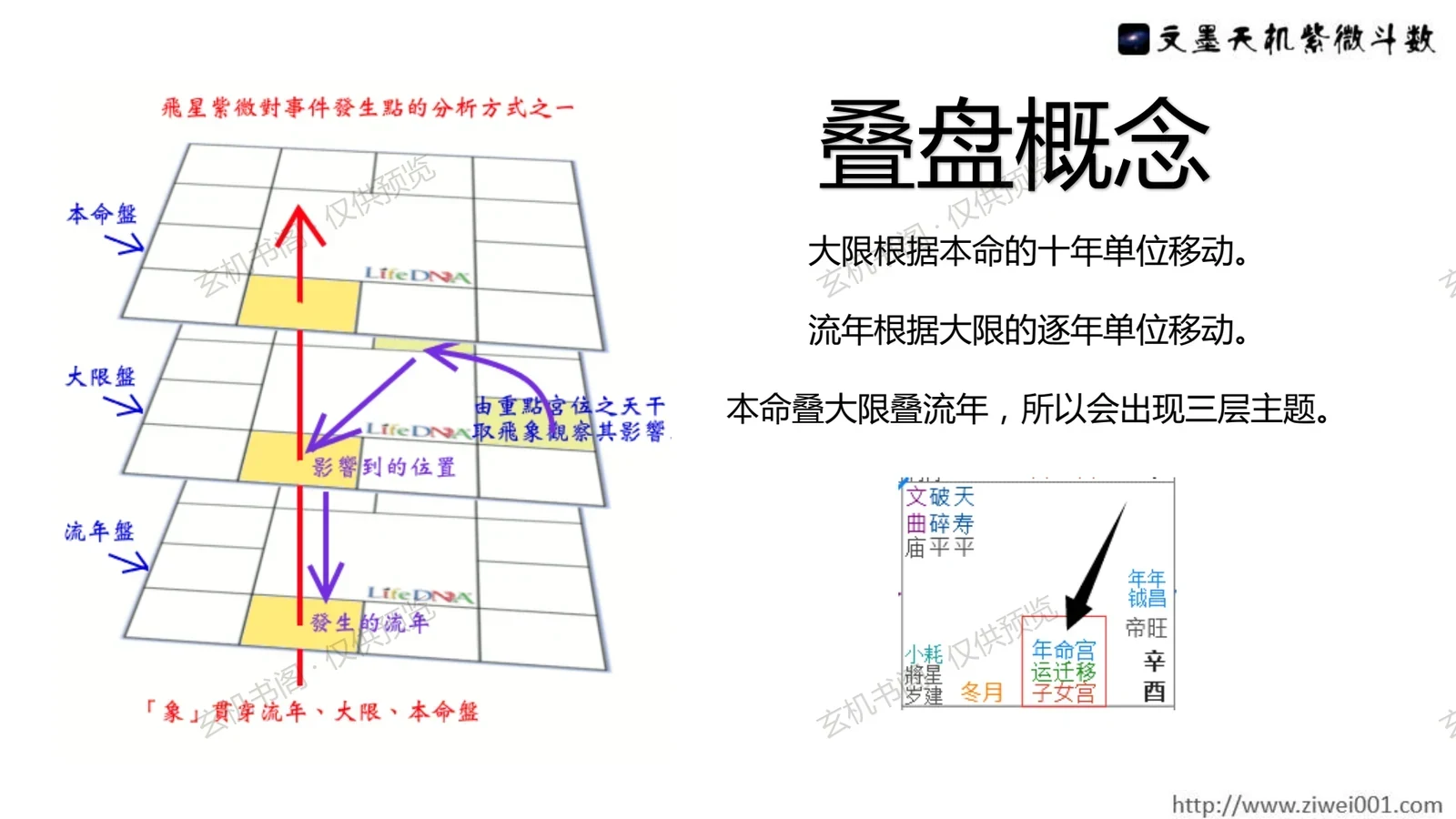
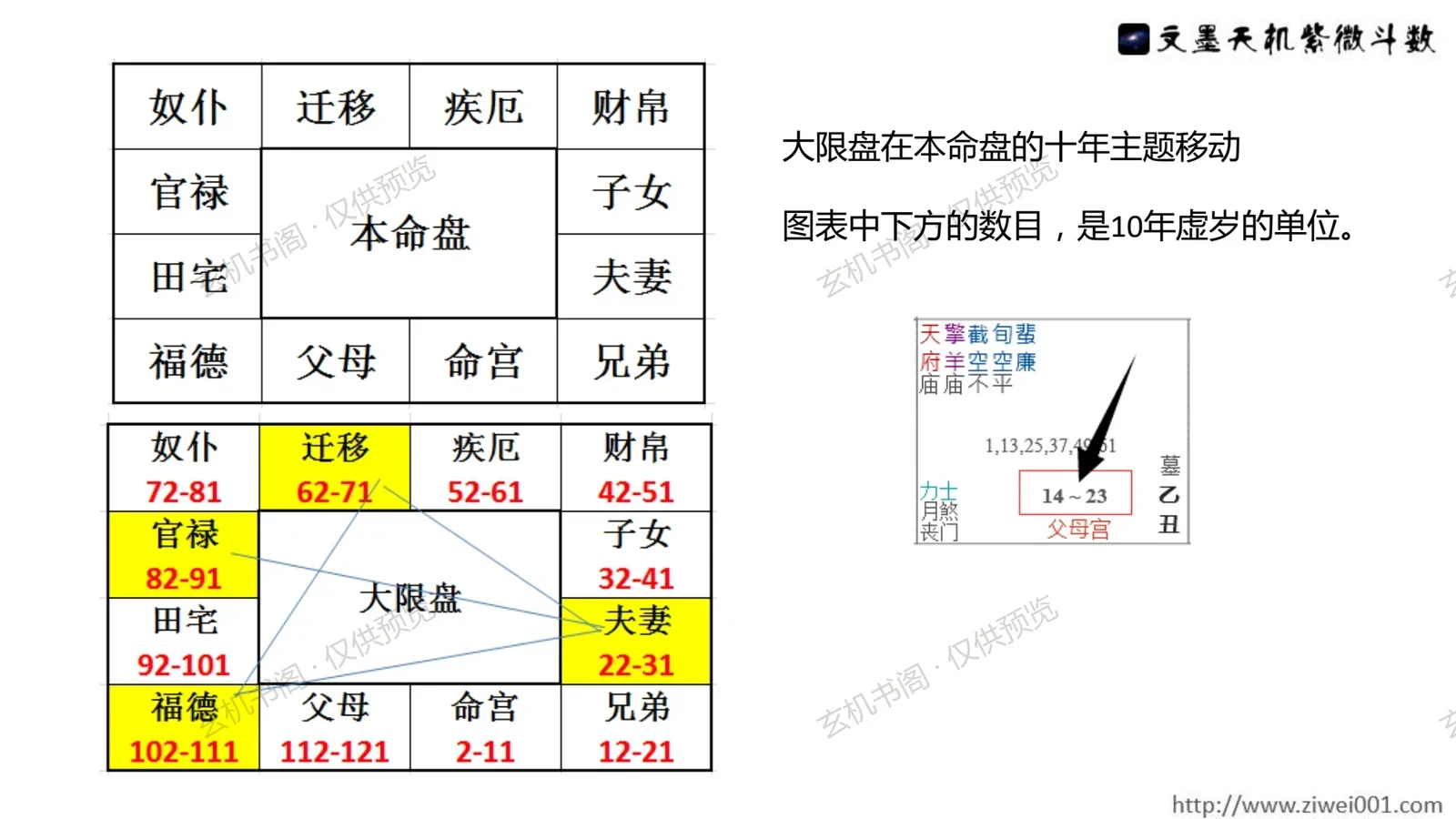
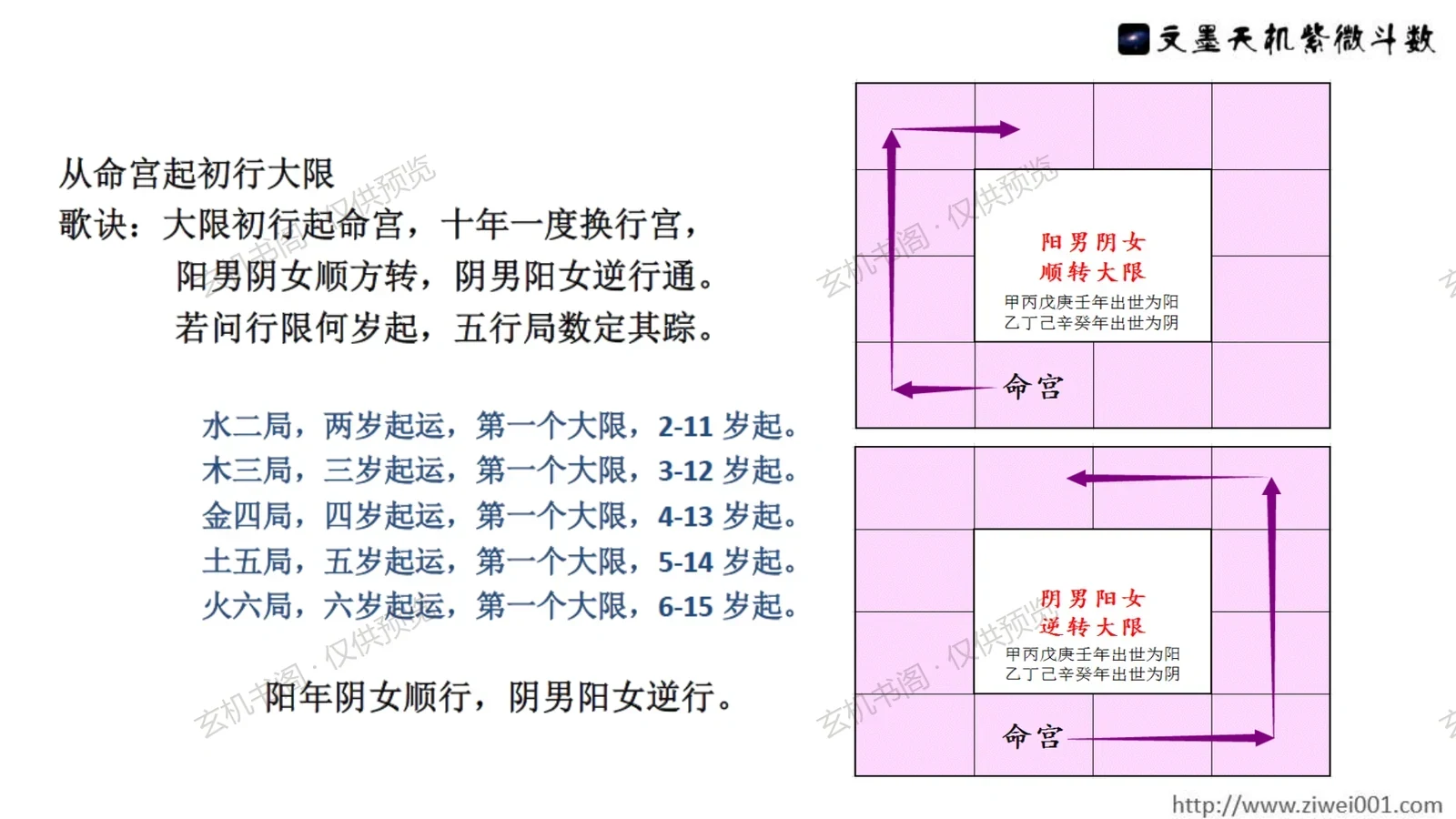
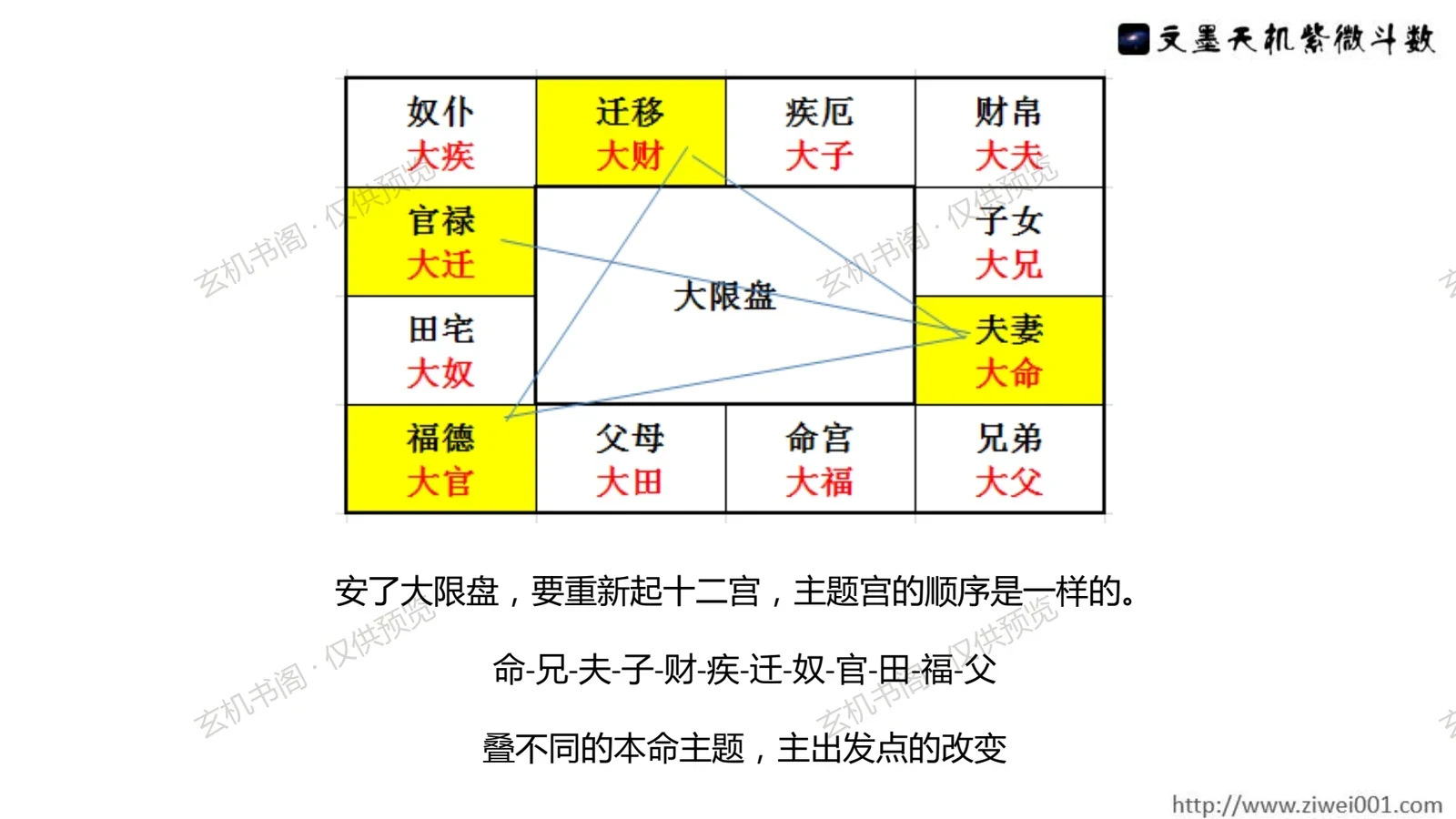
This six-page handout is part four of instructor Yiting's Zi Wei Dou Shu foundation class, published under the Wenmo Tianji Zi Wei Dou Shu series. The contents page lists four topics: decade and annual cycles, methods of time calculation, judging good and bad fortune, and judging finer details. The body introduces the idea of layered charts: the decade chart shifts one palace every ten years from the natal chart, the annual chart shifts one palace each year from the decade chart, and stacking natal, decade and annual charts produces three layers of themes, with flying stars used to trace where events land. Diagrams label the three layers and show how the same “image” runs through all of them. The handout then demonstrates how to set up the decade chart by marking the nominal-age ranges of each decade on the twelve natal palaces, stressing that the twelve palaces must be re-established on the decade chart in the same order (Life, Siblings, Spouse, Children, Wealth, Health, Travel, Servants, Career, Property, Fortune, Parents). A verse explains the starting direction and age: yang males and yin females go forward, yin males and yang females go backward, and the starting age depends on the five-element bureau—water two, wood three, metal four, earth five, fire six. The material is practical and suits readers who already know chart construction and the basic stars.
Contents
Decade and annual cycles
Methods of time calculation
Judging good and bad fortune
Judging finer details
Layered charts and the three layers
Setting the decade chart and the starting-age verse
Key Points
Natal, decade and annual charts stack into three layers of themes
The decade chart moves one palace per ten years; the annual chart moves yearly from it
After setting the decade chart, re-establish the twelve palaces in the same order
Yang males and yin females go forward; yin males and yang females go backward
Starting age follows the five-element bureau: water 2, wood 3, metal 4, earth 5, fire 6