Reading guide
Content guideOverview
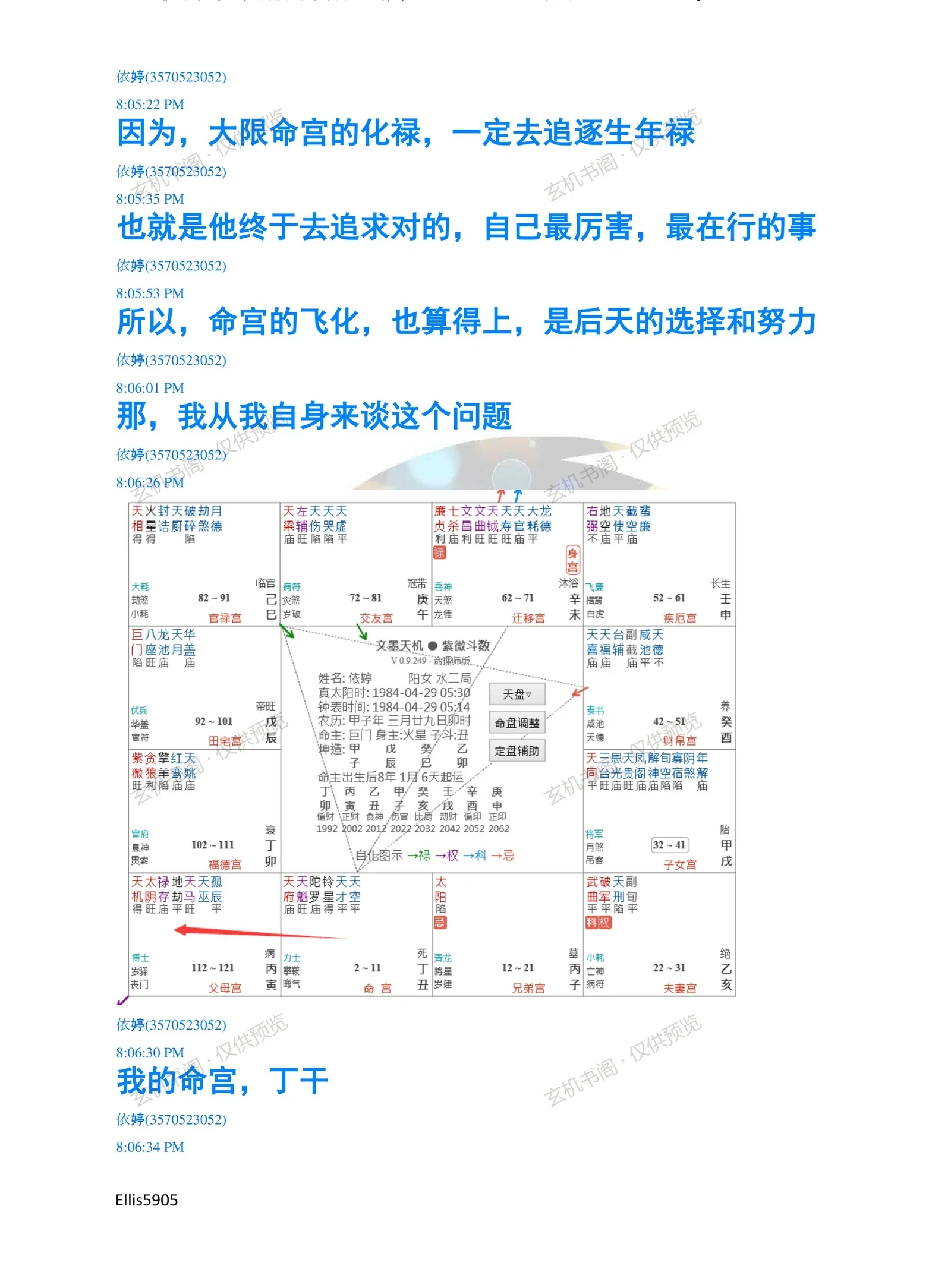
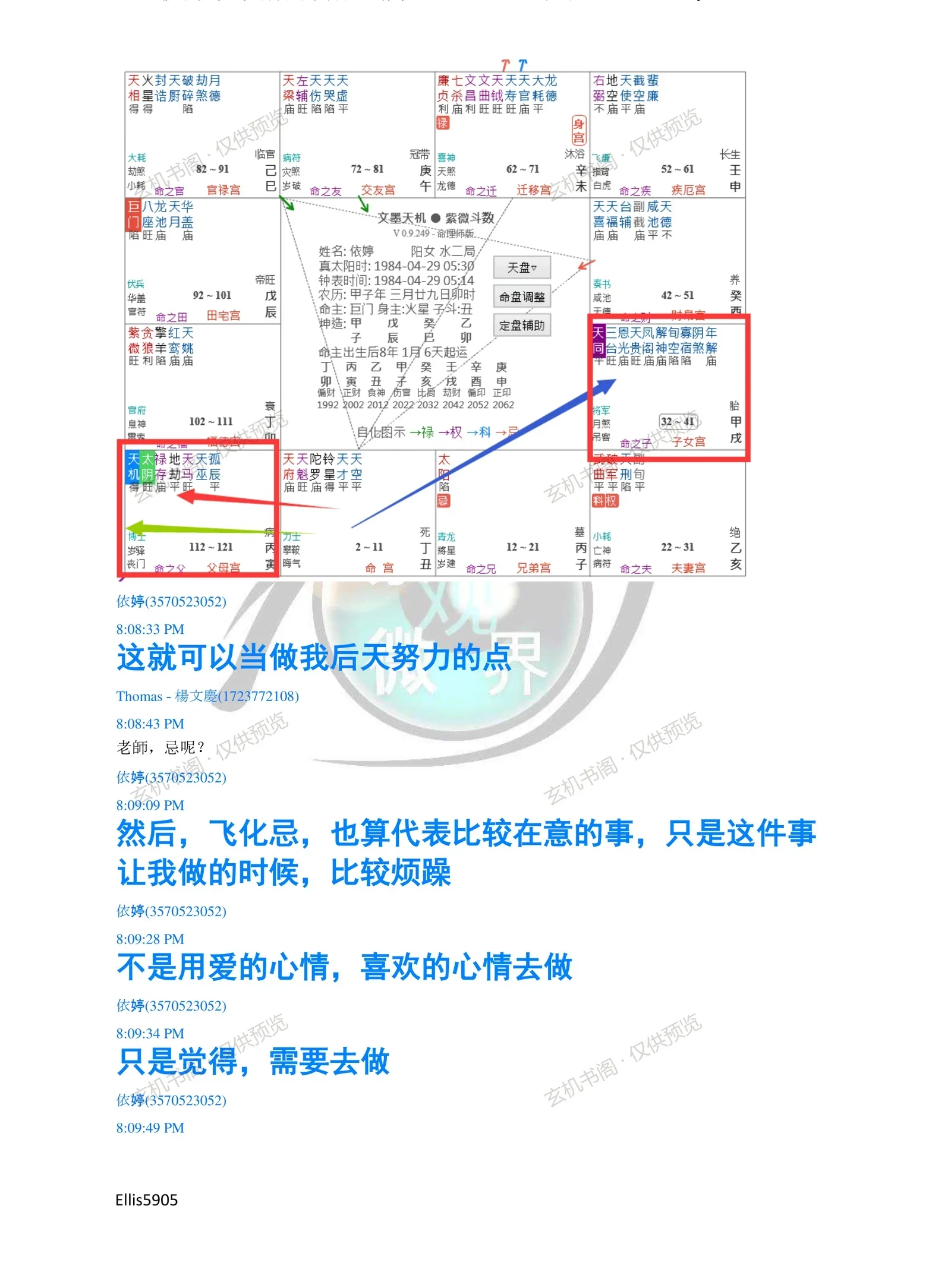
This handout is a written record of a Zi Wei Dou Shu systematic course session centred on two concepts: flying transformations from the natal Life Palace and the natal four transformations. The author treats natal palace flying as representing acquired choices and effort, with each palace acting as a point of activation, while natal four transformations tend toward inborn gifts and weaknesses. Using her own chart (female, Water 2 Bureau, Life Palace under Ding stem) she shows the Life Palace flying Lu to Tai Yin in the Parents Palace, which signifies a learned fondness for study, and contrasts it with flying Ji, which marks matters one cares about but finds irritating to perform, illustrated by Ju Men Ji and the habit of scolding while tidying. She also discusses flying Ke and Quan as forms of effort, and how the Lu transformed by a decade's Life Palace tends to chase the natal Lu. The material is an advanced exercise in reading palace interactions and suits readers already comfortable with chart construction and the four transformations.
Contents
Natal palace flying transformations and acquired effort
Natal four transformations as innate gifts and weaknesses
Case study: Life Palace Ding stem flying Lu to Tai Yin
Flying Ji as caring about but disliking a task
Flying Ke and Quan also representing effort
Decade Life Palace Lu chasing natal Lu and the origin palace
Key Points
Natal palace flying is read as the activation point of acquired choices and effort.
Natal four transformations mainly indicate inborn strengths and weak spots.
Life Palace flying Lu into the Parents Palace points to love of learning and gain through knowledge.
Flying Ji marks matters one cares about but performs with irritation, e.g. Ju Men for complaints.
A decade's Life Palace Lu tends to chase the natal Lu; the origin palace can trigger a decade.