Reading guide
Content guideOverview
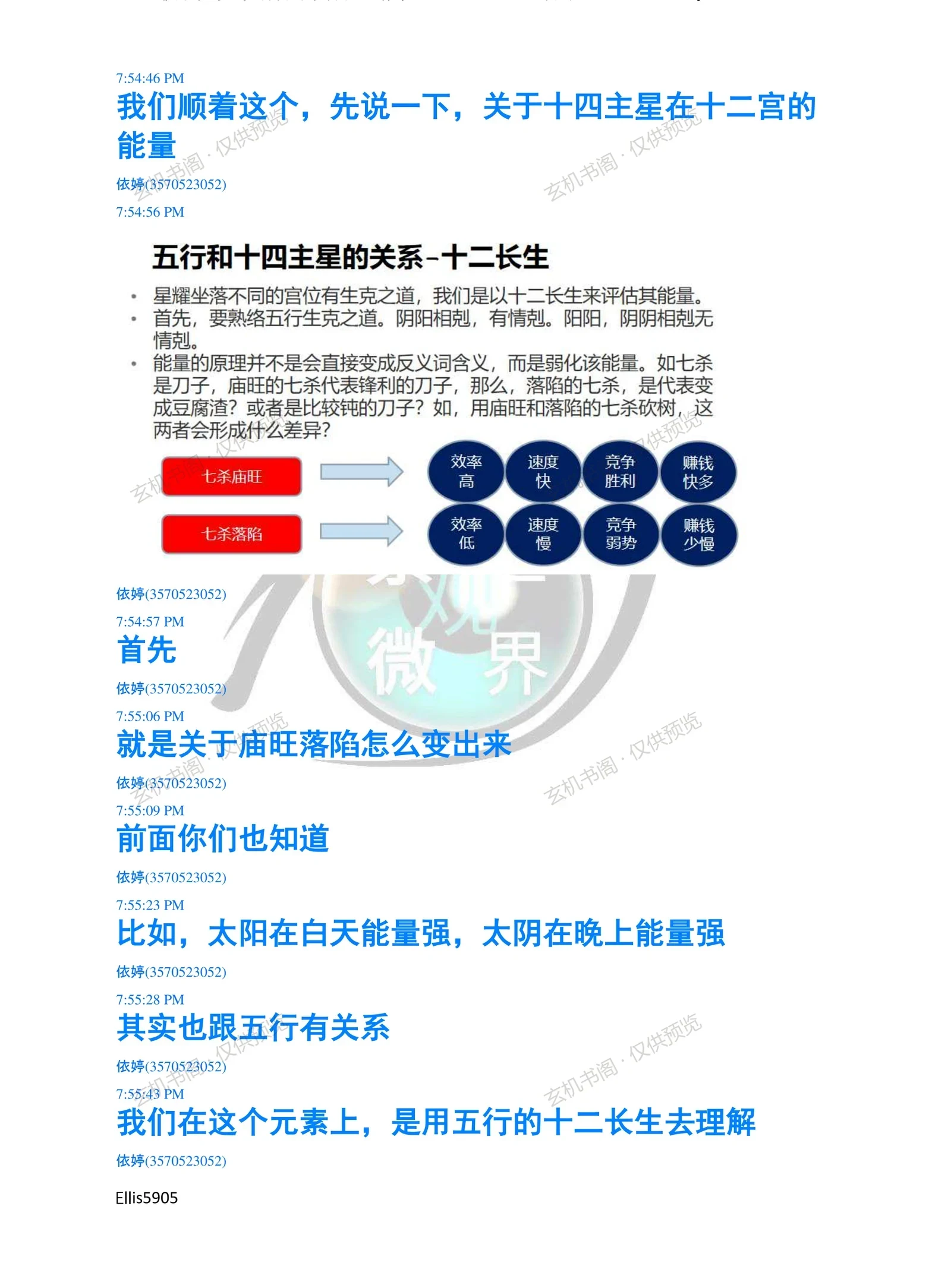
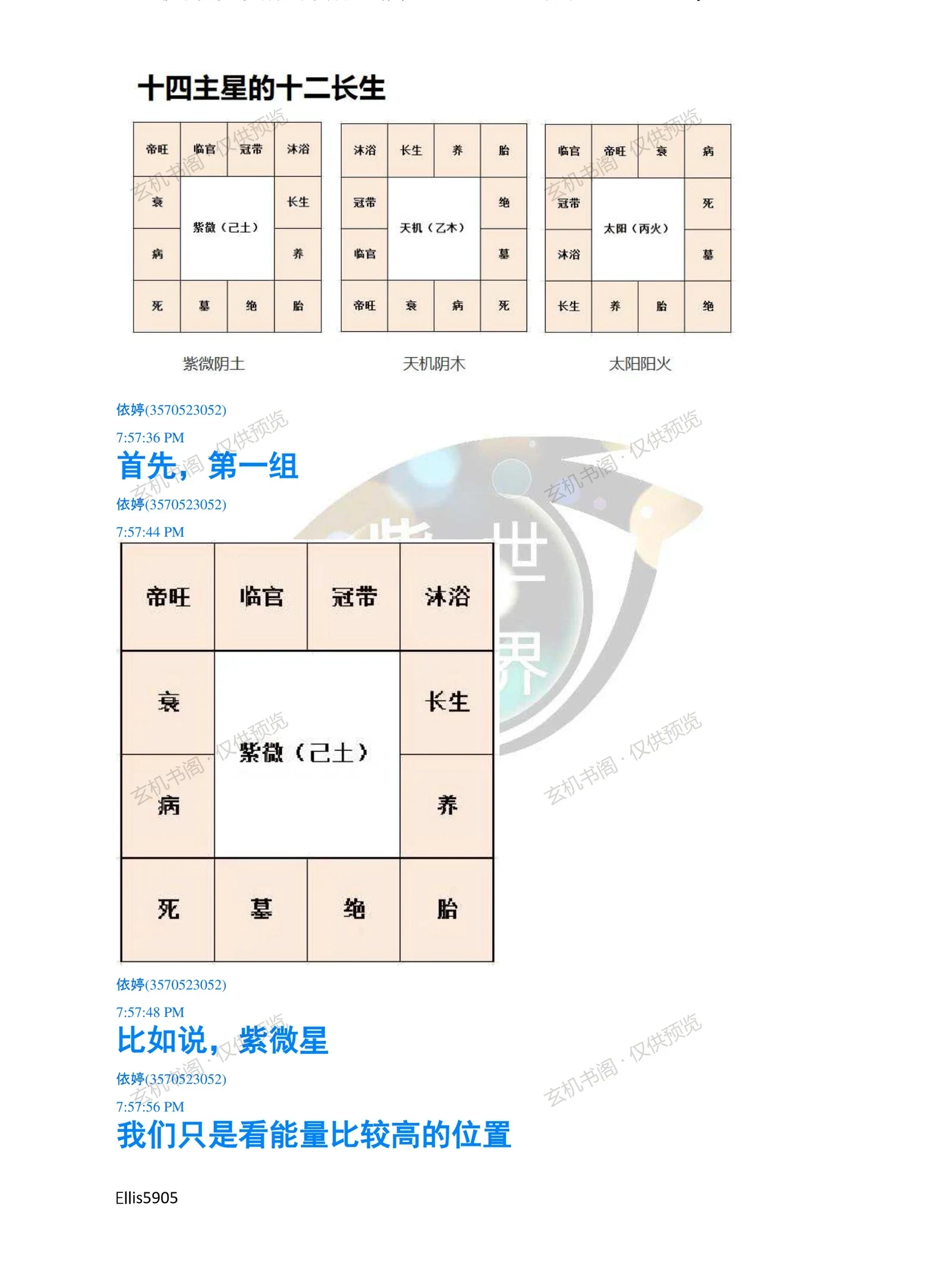
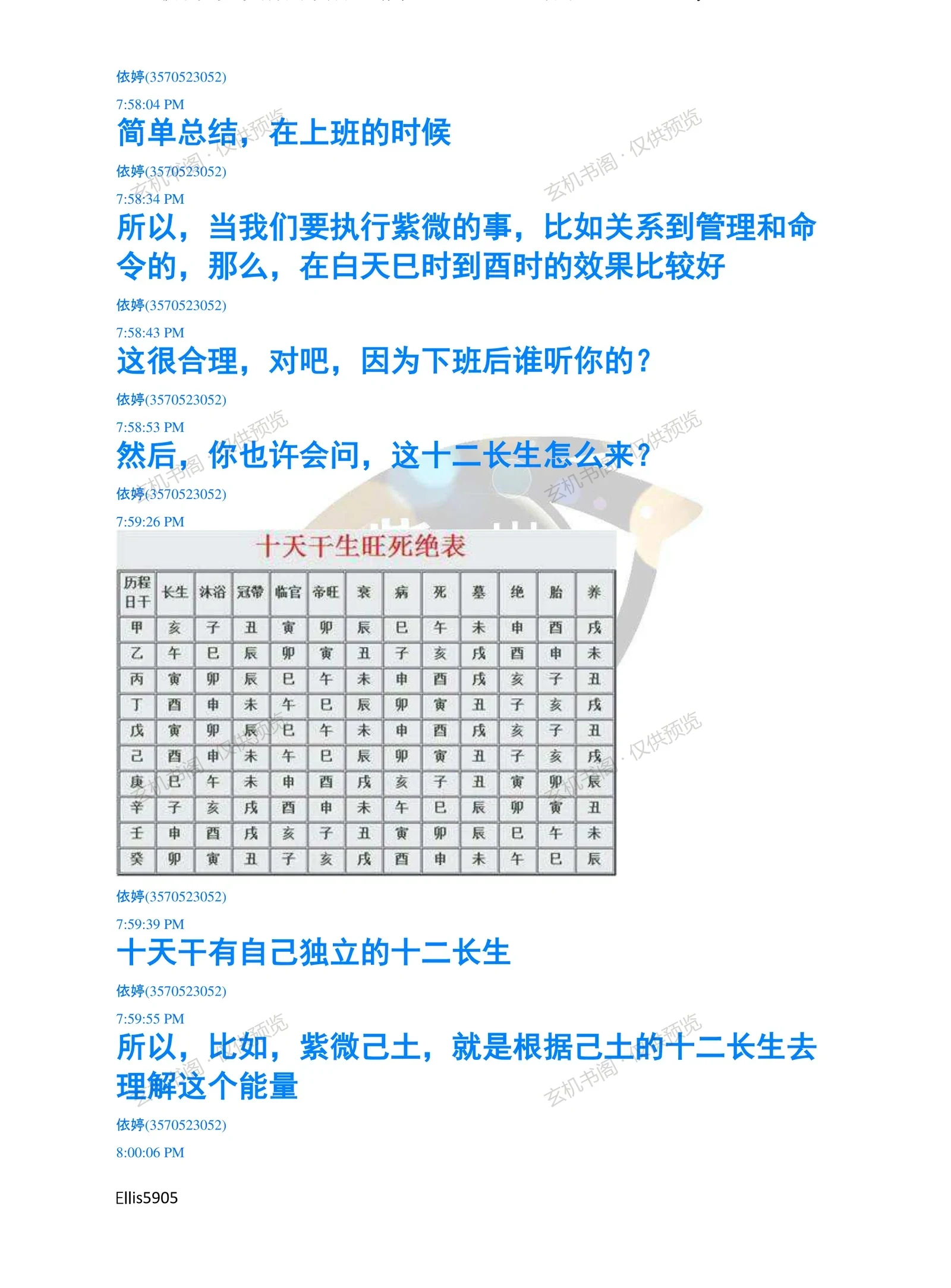
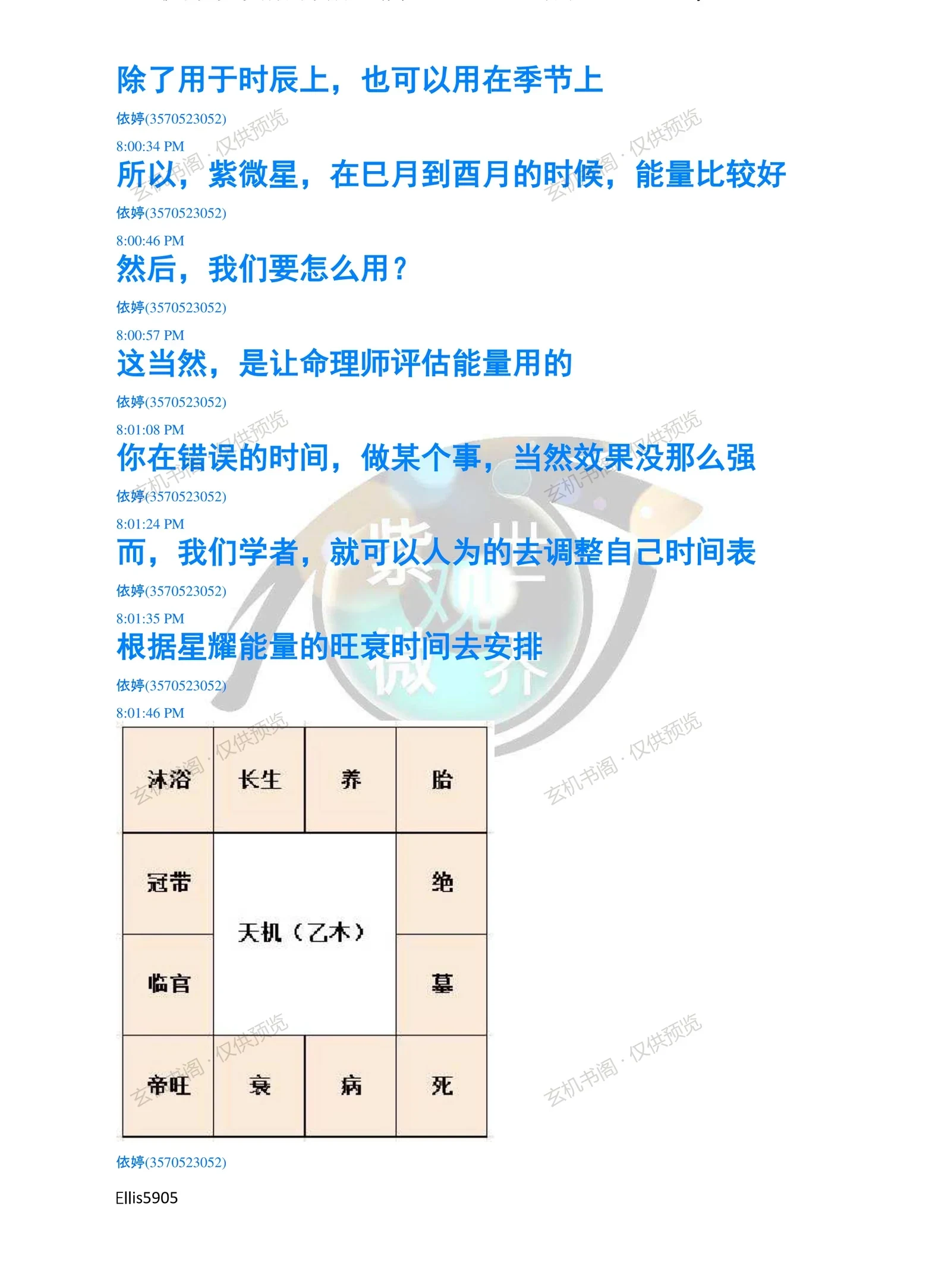
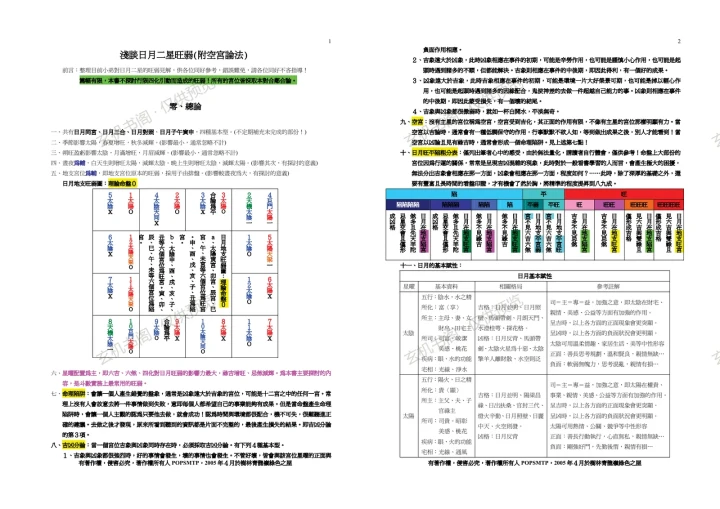
This handout is an excerpt from a Zi Wei Dou Shu systematic class, focusing on the energy of the fourteen major stars across the twelve palaces. Students are first asked to memorize the five elements of the palaces and stars, then taught to judge a star's strength by the twelve stages (birth, bath, cap, office, peak, decline, illness, death, tomb, extinction, embryo, nurture) of its associated heavenly stem. A comparison of Qi Sha in peak versus fallen positions illustrates that weakness lowers efficiency, speed and competitiveness without removing the star's function; a fallen main star with a malefic in the same palace is nearly as weak as an empty palace. Charts for Zi Wei (Ji earth), Tian Ji (Yi wood) and Tai Yang (Bing fire) are shown, followed by the full stem-by-stage table, clarifying that Zi Wei's strength follows the Ji earth sequence. The method is then applied to hours and months: Zi Wei performs better from the Si hour to the You hour, and from the Si month to the You month, which can guide timing for management and command-related matters. It is a technique-oriented handout suited to readers with basic Zi Wei knowledge.
Contents
Opening and review of star five-element theory
Energy of the fourteen stars in the twelve palaces
Qi Sha in peak versus fallen positions
Twelve-stage charts for Zi Wei, Tian Ji, Tai Yang
The ten-stem stage table and Ji-earth Zi Wei
Applying the stages to hours and seasons
Key Points
Strength is judged by the stem's twelve stages, not by direct good or bad labels
Peak or fallen mainly changes efficiency, speed and competitiveness, not function
A fallen main star with a malefic is close to an empty palace in weakness
Zi Wei belongs to Ji earth, so its strength follows the Ji-earth stage table
The stages can be extended to hours and months for timing decisions