Reading guide
Content guideOverview
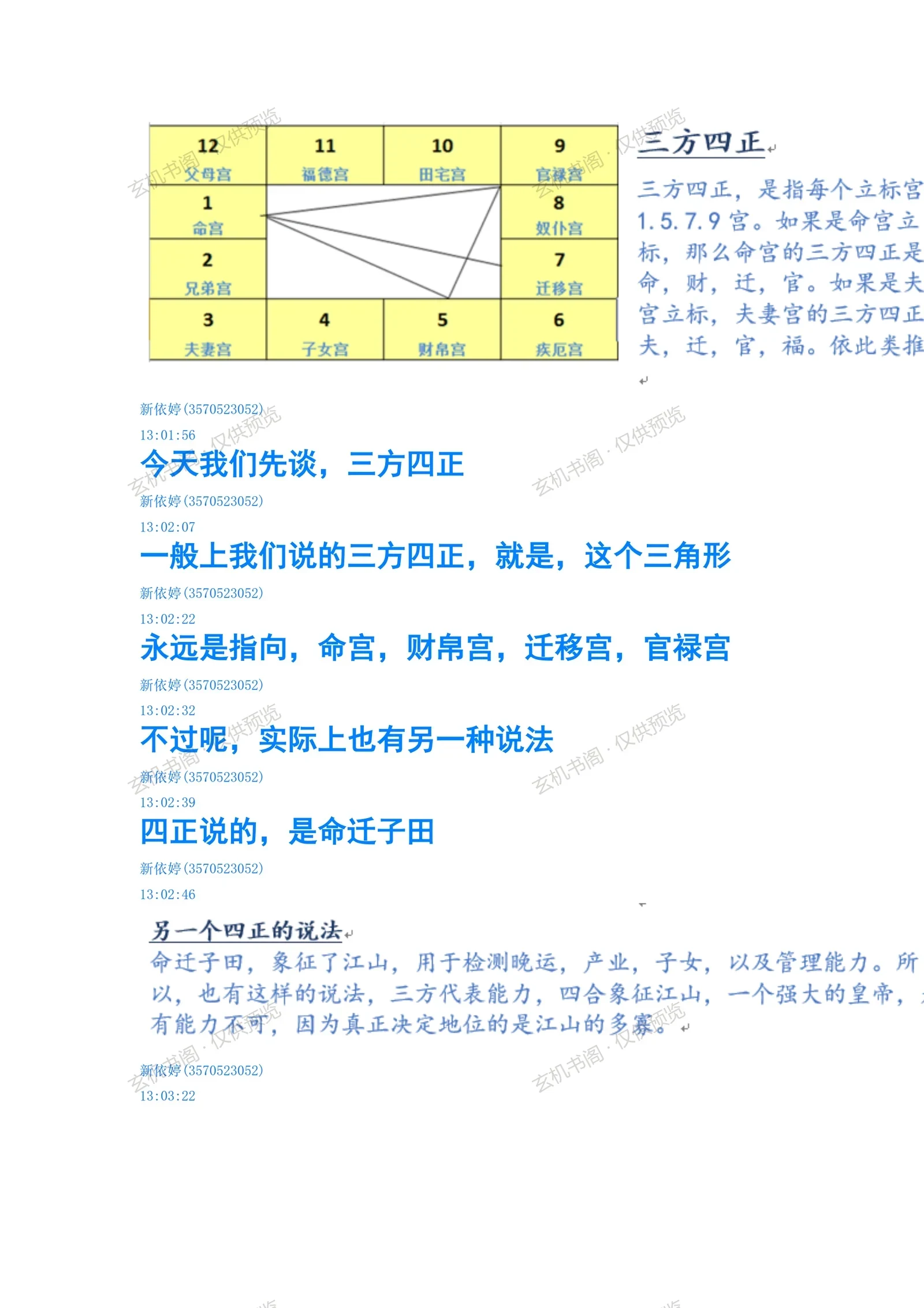
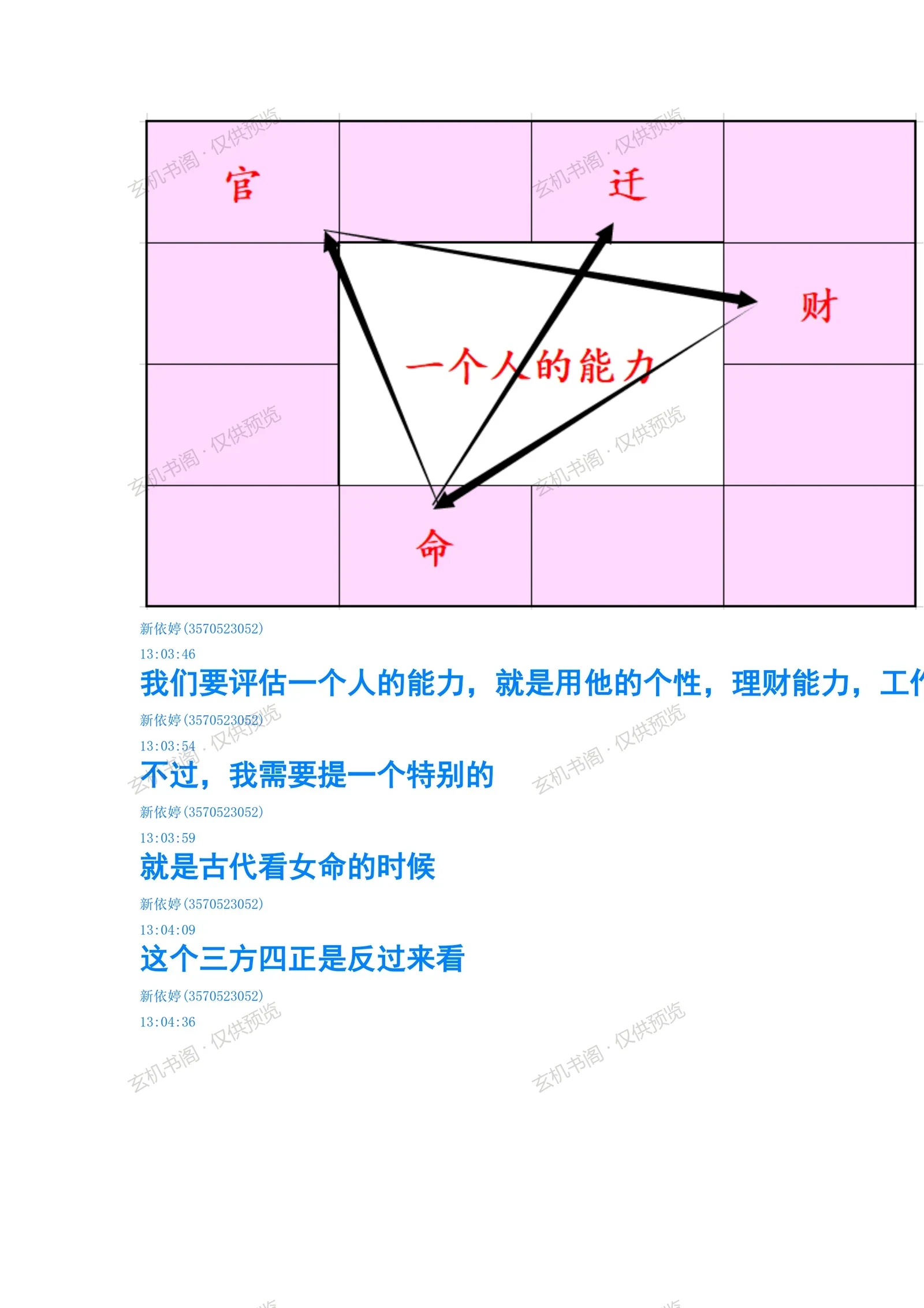
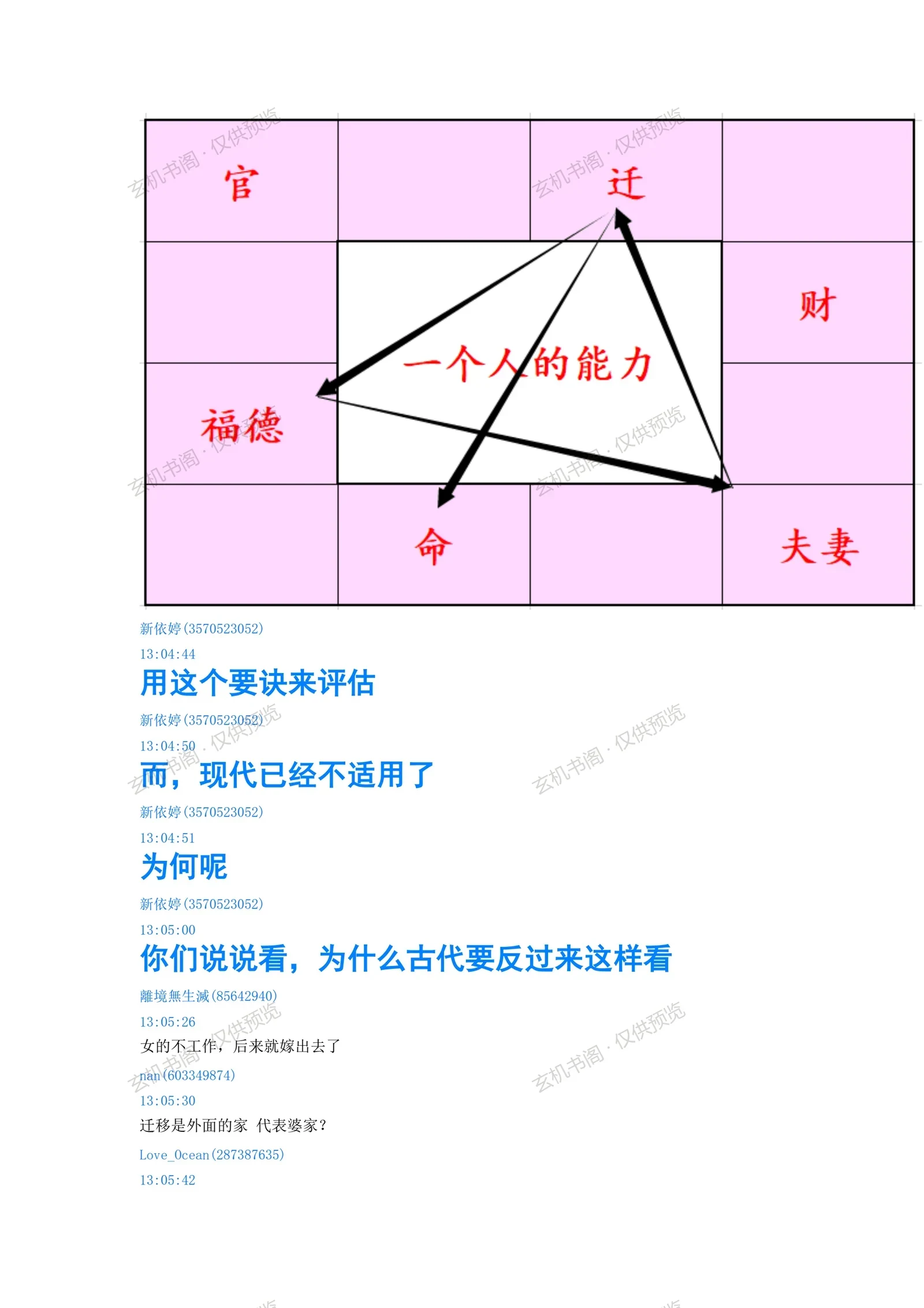
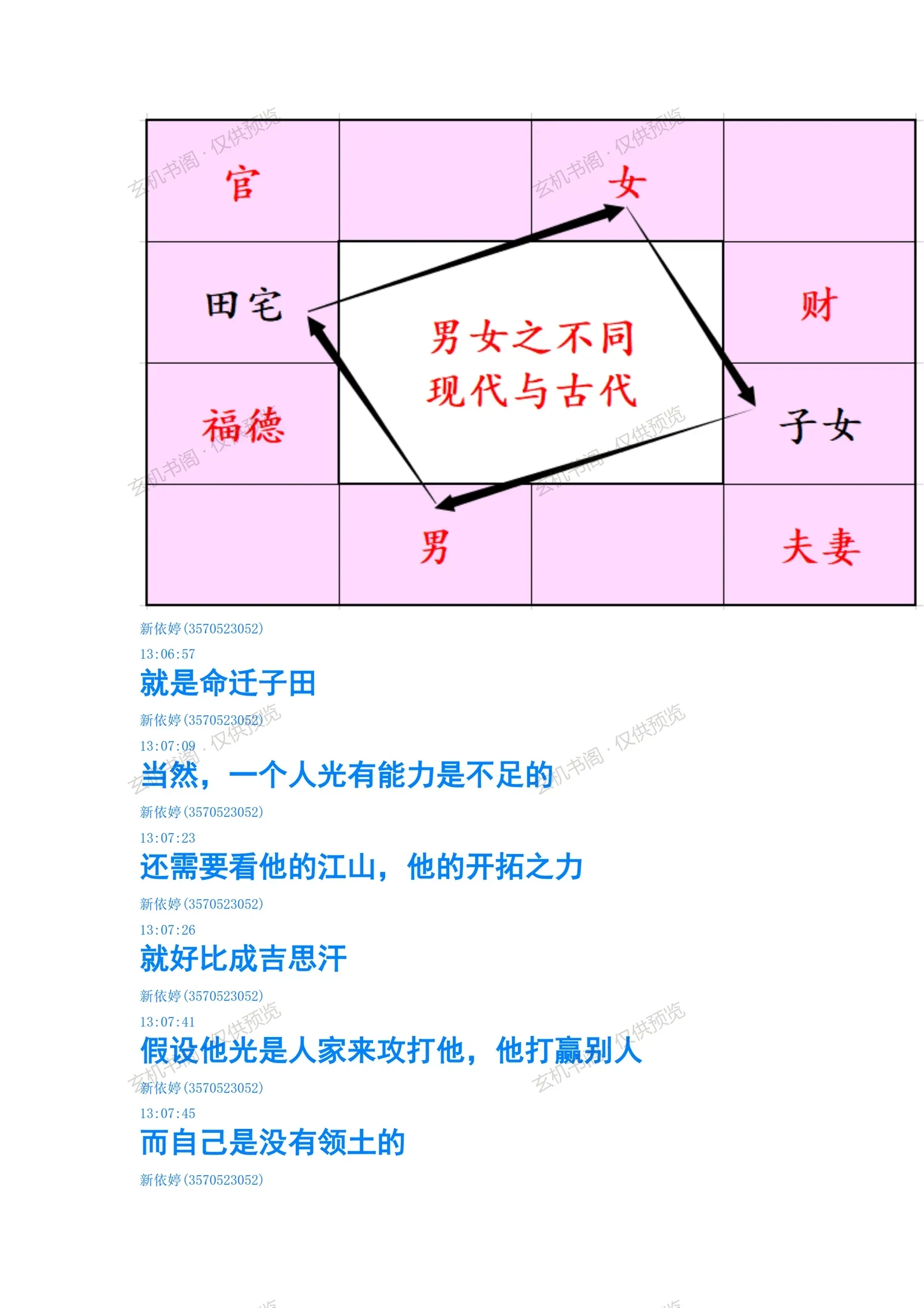
This volume is the written transcript of the second lesson in Yiting's systematic Zi Wei Dou Shu course, centered on the key mapping device known as the 'three directions and four positions.' It opens with a diagram of the twelve palaces in fixed order, marking the ming, cai, guan, qian, fu and tian positions, then explains the conventional method: when the Life Palace is taken as the reference, the four palaces of ming, cai, qian and guan are read together to assess personality, financial skill and work capacity. The lesson then introduces a second reading called ming-qian-zi-tian, in which the Life, Travel, Children and Property palaces form a group symbolizing territory, used to examine late-life fortune, property, children and managerial ability, illustrated with arrow diagrams on the board. The author goes on to discuss why classical readings of female charts reversed the triangle: in the old social order women moved out upon marriage and served the husband, so inner cultivation and virtue carried more weight. Modern social conditions have changed, making that reading no longer fully applicable. The session closes with a comparison chart of male and female charts past and present, using Genghis Khan as an analogy for capability without territory, stressing that ability must be paired with a foundation. The text preserves classroom interaction and teacher reminders, forming a practical segment within the larger course.
Contents
Twelve-palace diagram and palace order
Basic definition of the three-directions-four-positions method
Ming, cai, qian, guan and the assessment of ability
Ming-qian-zi-tian: territory, property and late fortune
Why classical female charts reversed the triangle
Differences in male and female charts, past and present
Key Points
With the Life Palace as reference, the method reads ming, cai, qian and guan for personality, money and work ability
The alternative ming-qian-zi-tian group symbolizes territory and is used for property, late fortune, children and management
Classical female charts often reversed the triangle, reflecting marriage and domestic roles
Modern social change makes the older reading only partly applicable
Capability must be paired with territory, illustrated through the Genghis Khan analogy