Reading guide
Content guideOverview
This volume compiles lecture notes from the sixteenth session of Yi Ting's Zi Wei Dou Shu systematic course, presented as a mix of classroom chat logs and handout text. The opening reviews the six basic charts of the Chessboard Formula and its use in defining occupational roles and overall major-limit changes, distinguishing platform background, outer circumstances and role qualities in each palace to compare gains and losses rather than relying on auspicious or inauspicious stars and the four transformations. The middle uses Zi Wei Tian Xiang versus Zi Wei Qi Sha, and Po Jun at Zi-Wu versus Chen-Xu, to demonstrate judging whether stars are well placed through star-nature comparison, and explains how pattern names arise. The later section discusses how the Chessboard Formula rotates with major limits and annual cycles, that strong patterns should appear in the golden phase of life (roughly the third to fifth major limits), and illustrates flexibility with an example of date selection for childbirth. The final page shows the Zi Wei Tian Fu chart at Yin and Shen, noting that Zi Fu at Yin indicates a new stable enterprise and at Shen an old one, mostly salaried workers.
Contents
Summary and use of the six Chessboard charts
Understanding the Chessboard Formula: roles and platforms
Comparison: Zi Wei Tian Xiang vs Zi Wei Qi Sha
Well placed vs poorly placed: Po Jun Zi-Wu vs Chen-Xu
The Chessboard Formula rotates with limits and years
Timing of strong patterns and date selection
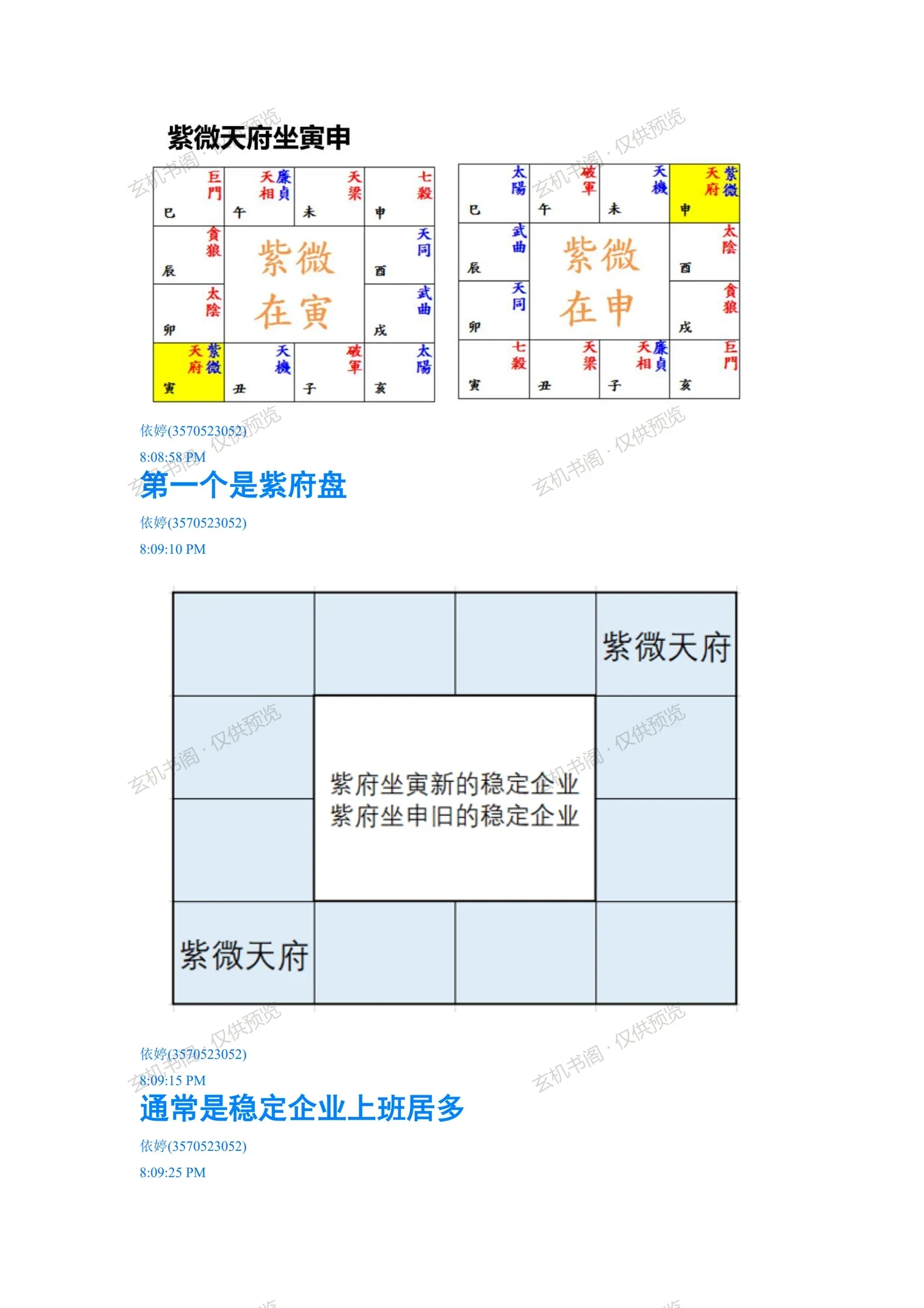
Zi Wei Tian Fu at Yin and Shen chart examples
Key Points
The Chessboard Formula reads role qualities, not stars or transformations
Well-placed and poorly placed stars are judged by star-nature comparison
The formula rotates with limits and years; strong patterns suit the golden phase
A strong third or fourth major limit matters more than a strong natal chart
Zi Fu at Yin and Shen mostly indicates stable-enterprise employees