Reading guide
Content guideOverview
This is the 26th handout of Yi Ting's Zi Wei Dou Shu systematic course, centered on the 'chemical reaction' between stars and flowing limits. The core technique is the 'passing palace' (guogong) method: take the native's nayin element as the self and the palace qi of the current limit as the environment, then judge the fortune of each major limit through the five-element generating and overcoming relations. The text introduces the basic idea of guogong, lists the sixty Jiazi nayin table and the concept of 'five-element bureau and palace qi', and distinguishes cases such as bureau generating palace, palace generating bureau, bureau overcoming palace, and palace overcoming bureau. Using a Ming palace of Dingwei Tianhe Water as an example, it demonstrates both forward and reverse major-limit sequences, explaining the fortune and personality symbolism when entering palaces such as Dayi Earth, Chai Chuan Metal, Sang Zhe Wood, Fu Deng Fire, and Jin Bo Metal. It concludes by suggesting deeper annotation through the original meaning of nayin and refers to the relevant chapter in Quanxue Zhaizhu's introductory Zi Wei text. The material is technical and example-driven, suited to readers with basic Zi Wei Dou Shu knowledge who wish to deepen their understanding of flowing limits and palace qi.
Contents
Chemical reaction of stars and flowing limits
Passing palace method and five-element comparison
Five-element bureau and palace qi relations
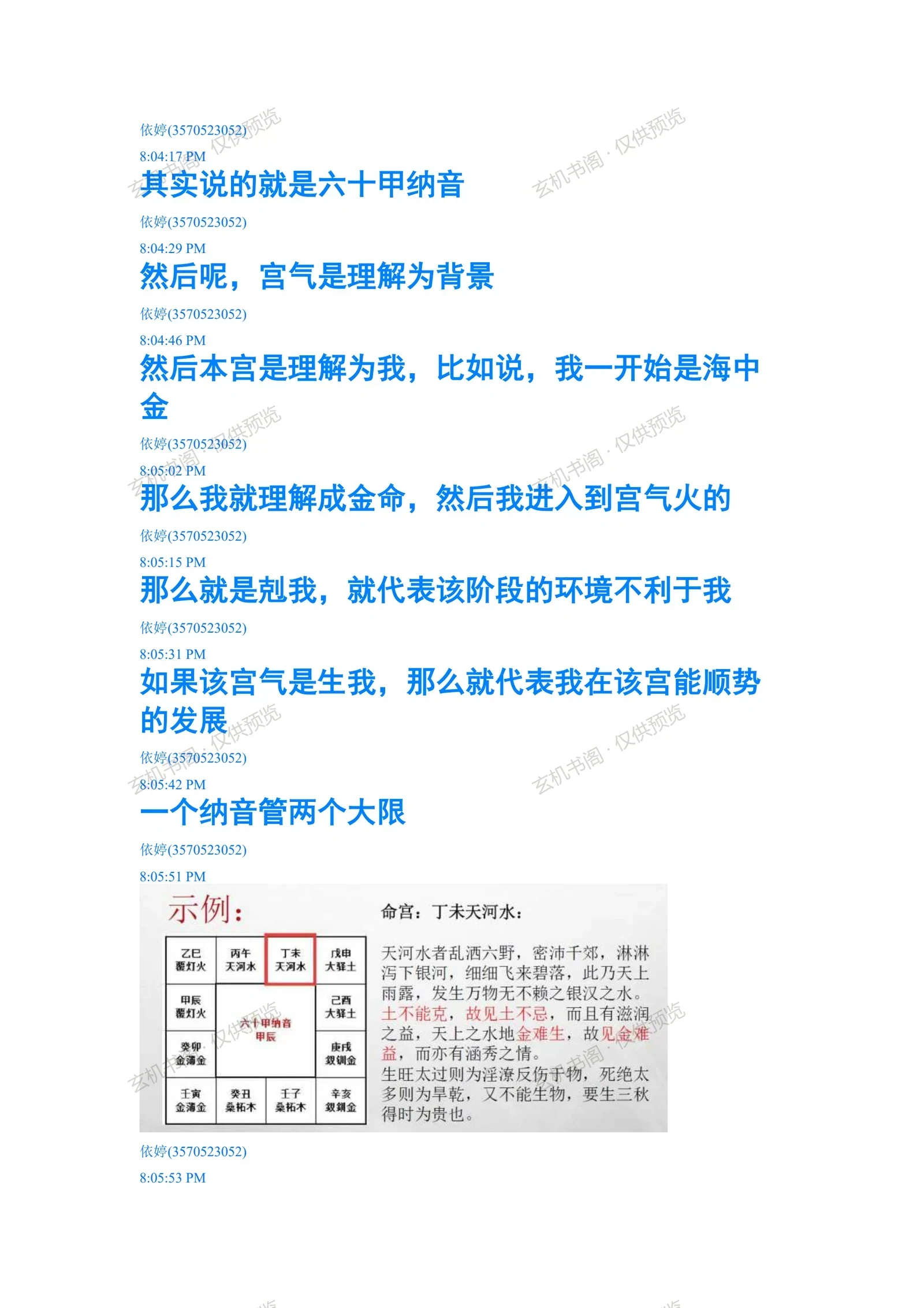
Sixty Jiazi nayin and palace qi background
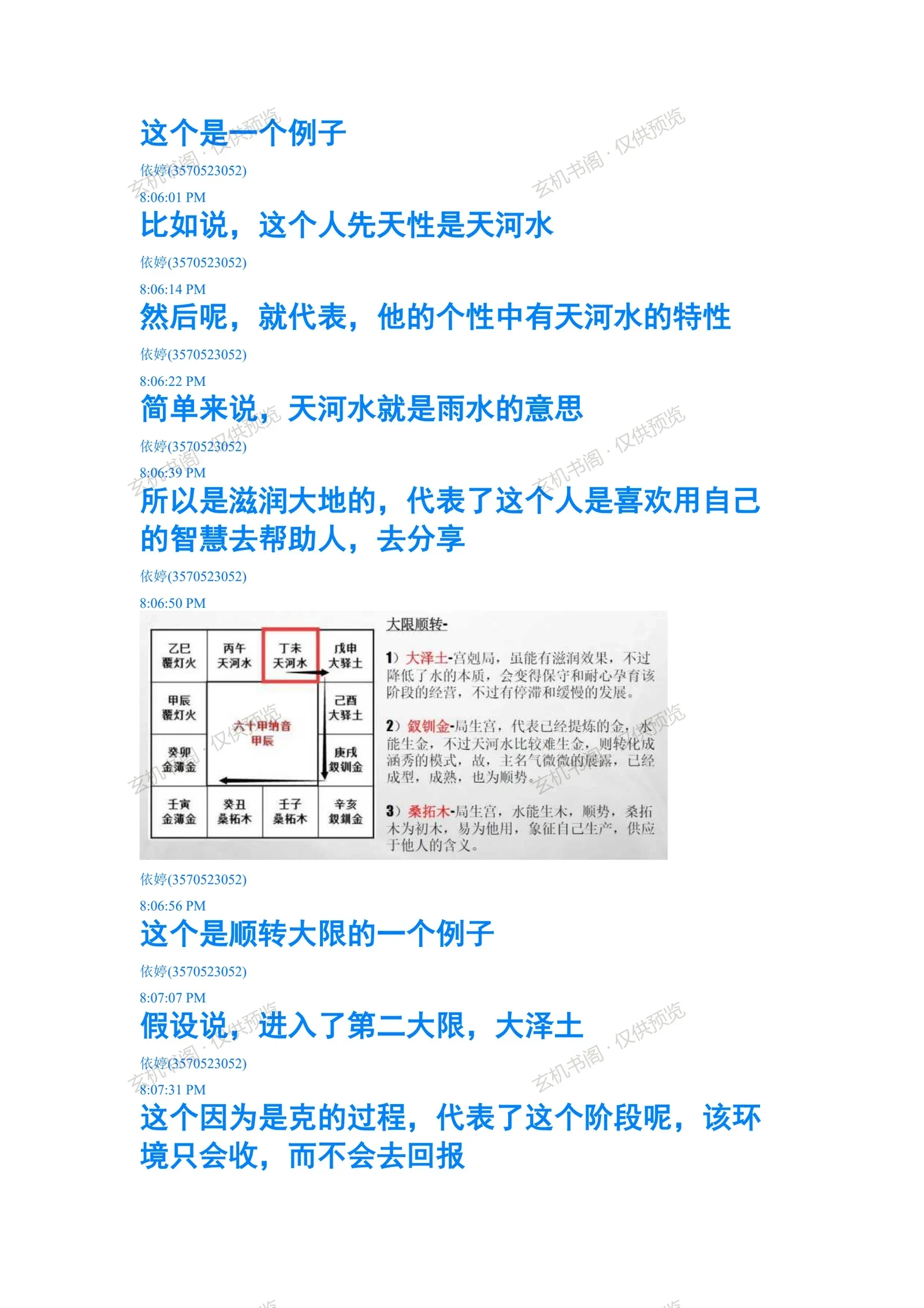
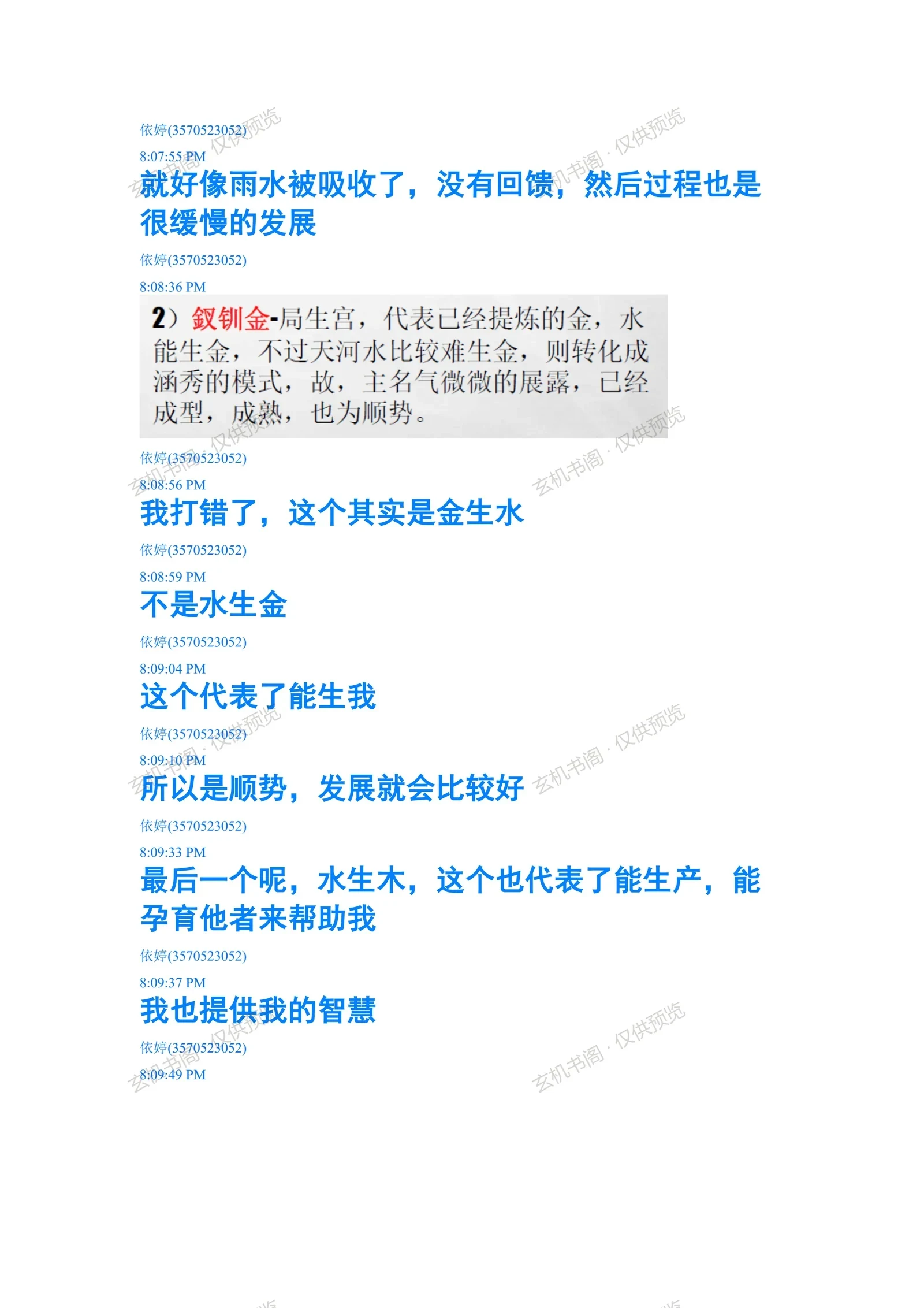
Forward limit examples: Dayi Earth, Chai Chuan Metal, Sang Zhe Wood
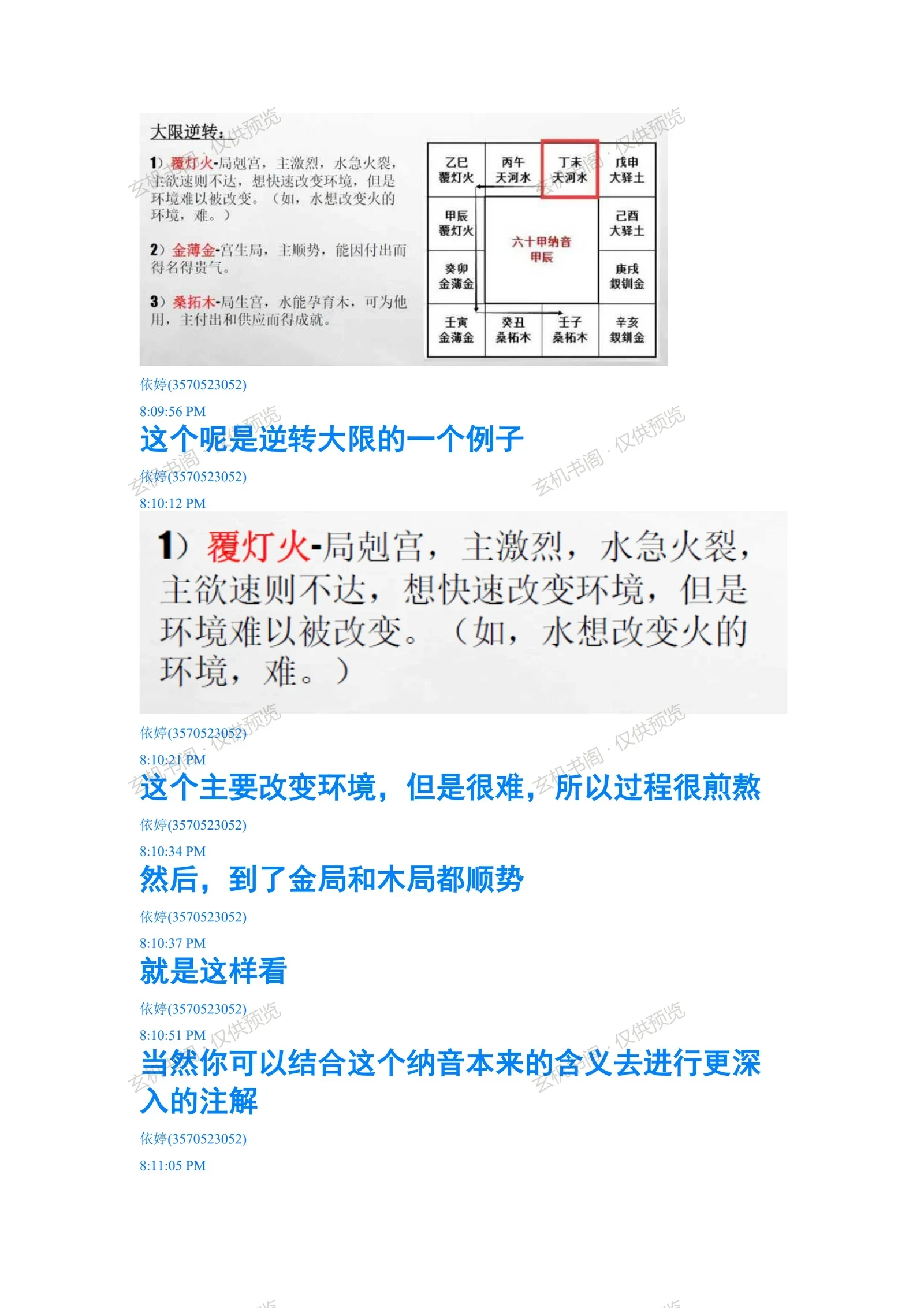
Reverse limit examples: Fu Deng Fire, Jin Bo Metal, Sang Zhe Wood
Nayin original meaning and personality symbolism
Key Points
Guogong uses the native nayin as self and limit palace qi as environment to judge fortune.
Palace qi is the background; generating the self is smooth, overcoming the self is hardship.
One nayin governs two major limits; forward and reverse sequences require separate analysis.
Nayin meanings help judge personality, e.g., Tianhe Water signifies wisdom and helping others.
Bureau generating palace or palace generating bureau is smooth; overcoming indicates difficulty.