Reading guide
Content guideOverview
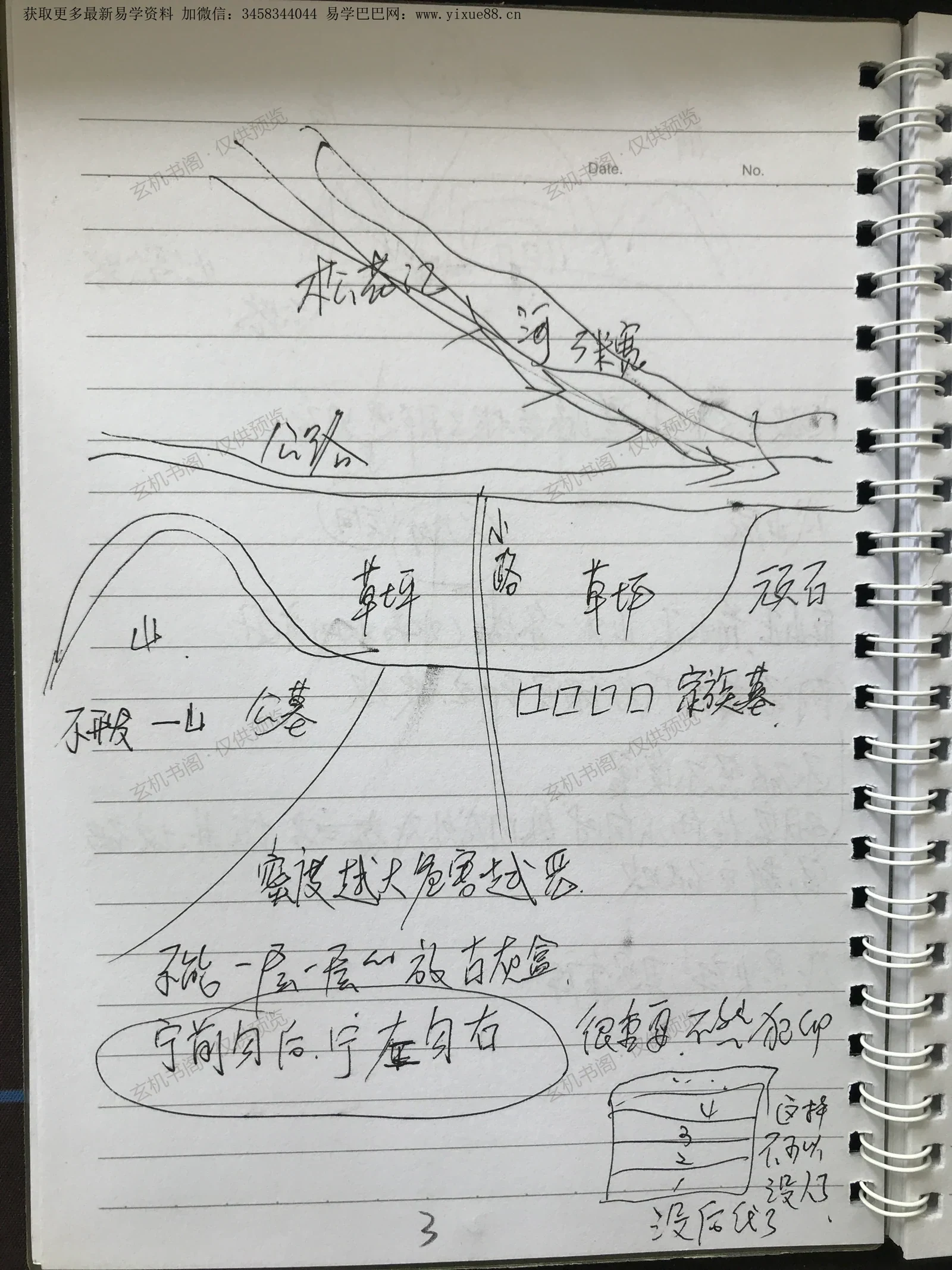
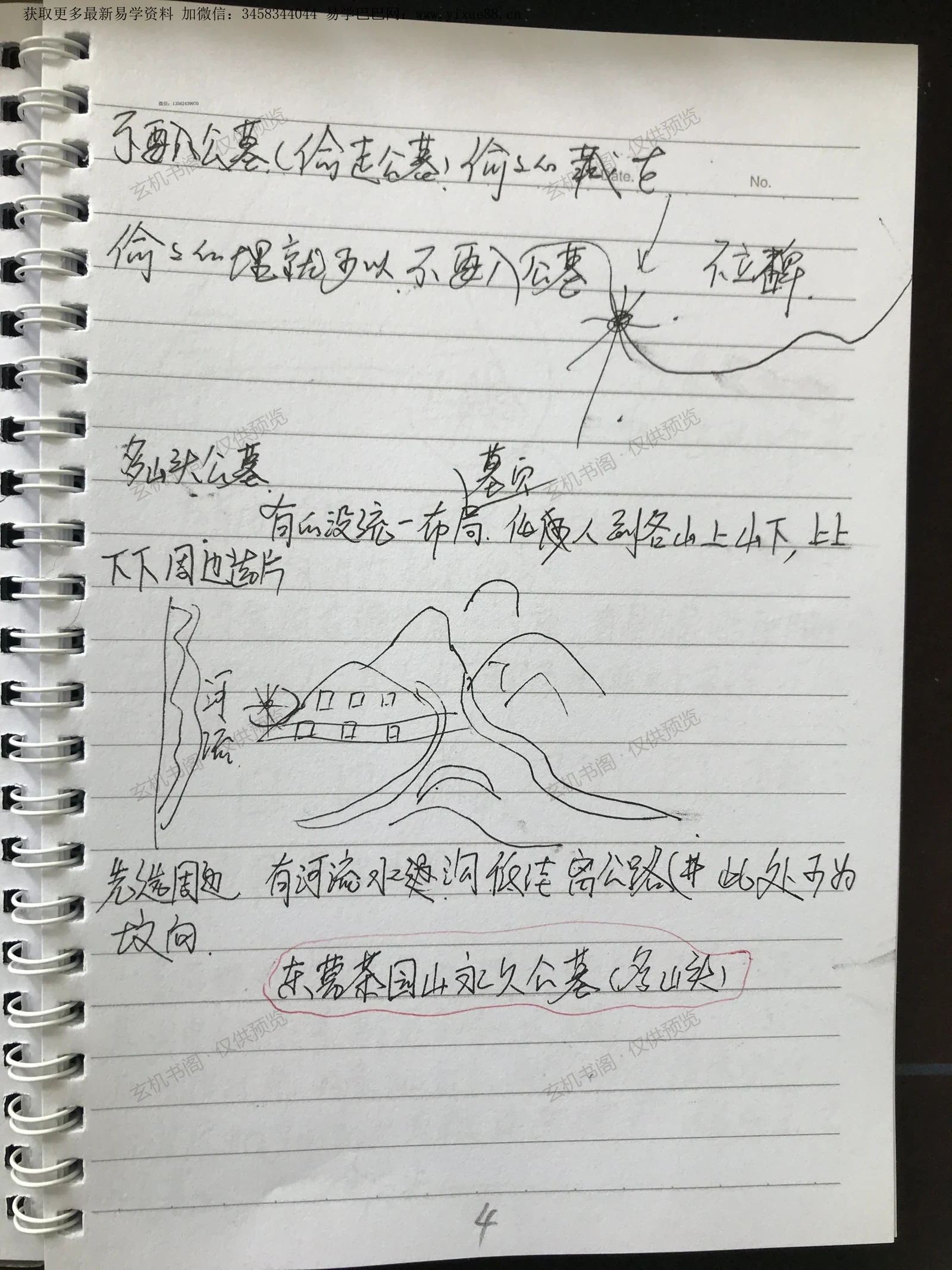
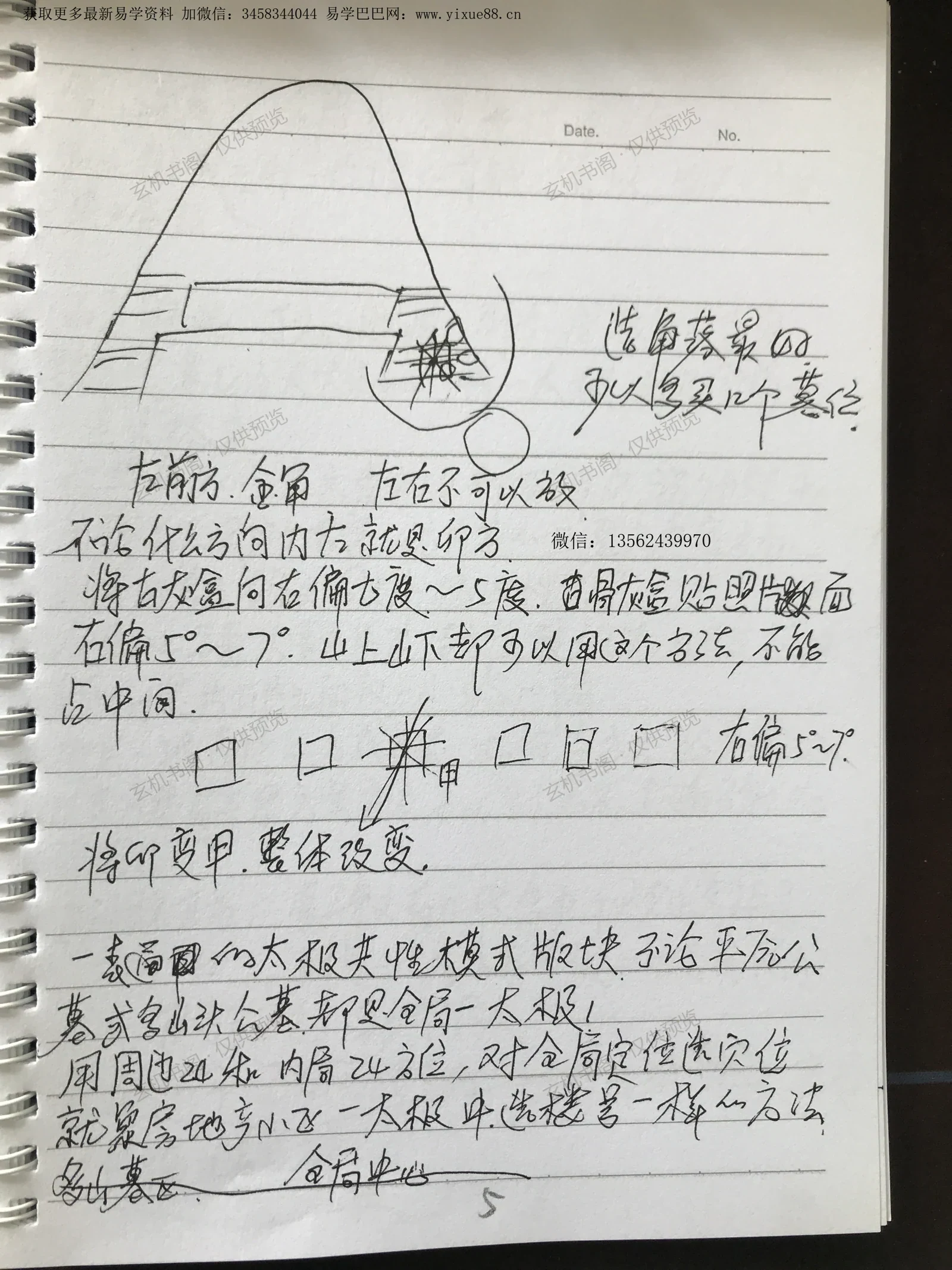
These are handwritten lecture notes on yinzhai feng shui, likely from a training session. The visible pages discuss using the luopan at grave heads, 72 mountain-direction options, the avoidance of bagua, and the shaping of dragon heads and reverse bow water. Later pages address broken palaces, the importance of aligned rear mountain and front water, and the layout of public cemeteries, including ash box placement and the principle of preferring front over back and left over right. The notes also present a taiji-based method for dividing cemetery areas and examining epitaphs to infer descendants' fortunes and illnesses. The style is practical and diagram-heavy, suitable for readers with basic feng shui knowledge.
Contents
Luopan and 72 mountain-direction fenjin rules
Dragon head and reverse bow water
Broken palaces and mountain-water alignment
Cemetery ash box placement principles
Multi-hill cemeteries and taiji positioning
Epitaph directions and descendants' fortunes
Key Points
72 mountain-direction options for yinzhai luopan; bagua is not used.
Aligned rear mountain and front water are auspicious.
Broken palaces inside or outside indicate decline.
Cemetery areas can be analyzed via taiji center points.
Epitaph positions relate to descendants' health and fate.