Reading guide
Content guideOverview
This book examines 'self-transformation' (zihua) within Zi Wei Dou Shu. It argues that self-transformation has no substance of its own; it is a time-driven change that depends on the natal four transformations and serves as their function. The text first distinguishes the natal four transformations as body from self-transformation as function, explaining how excess or deficiency produces gain, loss, and fortune. It then contrasts inward self-transformation, which gathers and is passive, with outward self-transformation, which disperses and is spontaneous, relating both to palace position and yin-yang principles. Further sections describe serial and parallel self-transformation patterns and how flying four transformations restore balance. Numerous chart diagrams accompany the prose, turning abstract time effects into concrete palace relationships. It is an advanced theoretical reference for readers already familiar with four-transformation charting who want a deeper grasp of self-transformation and flying-palace methods.
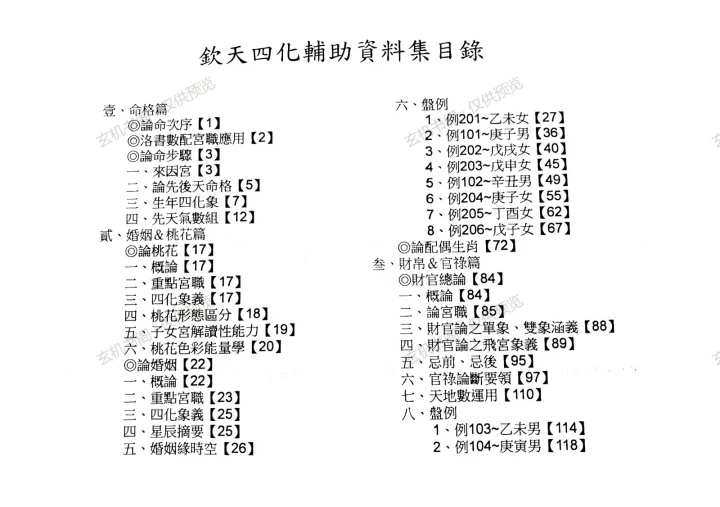
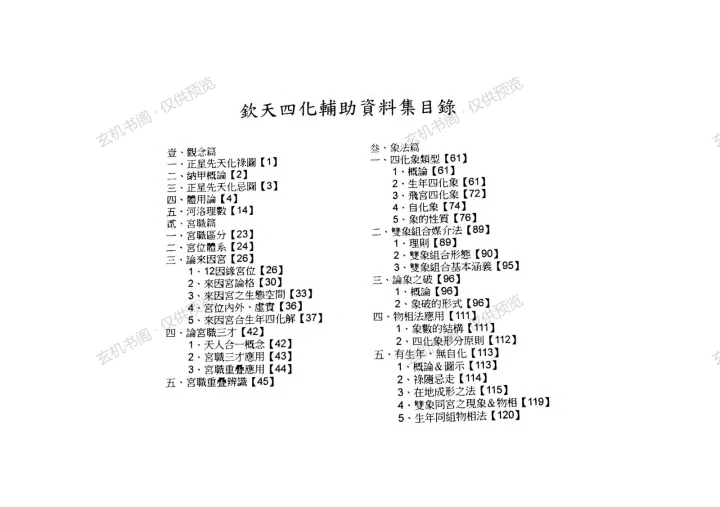
Contents
Overview: definition of self-transformation and body-function relation
Natal four transformations and qualitative/quantitative change
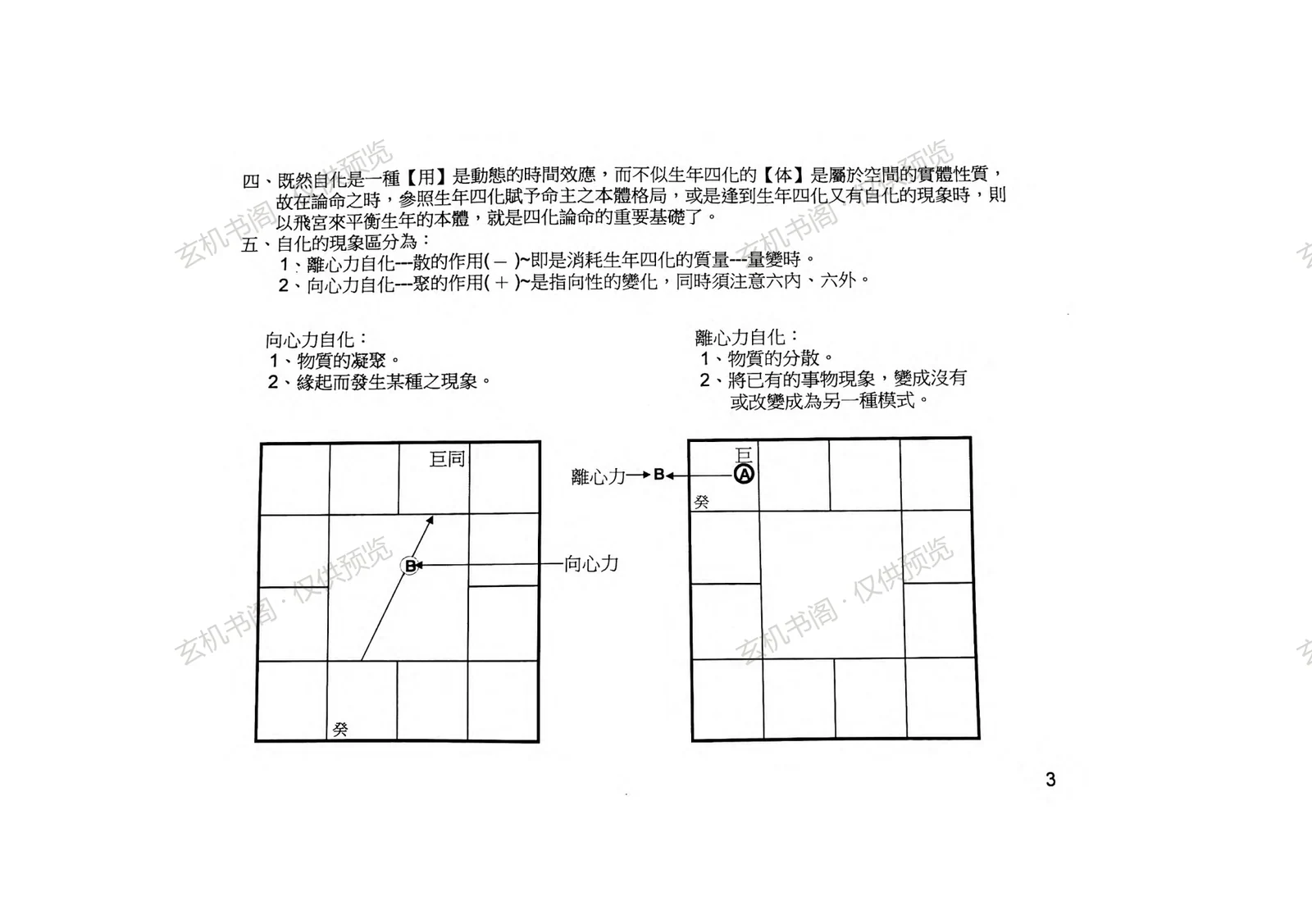
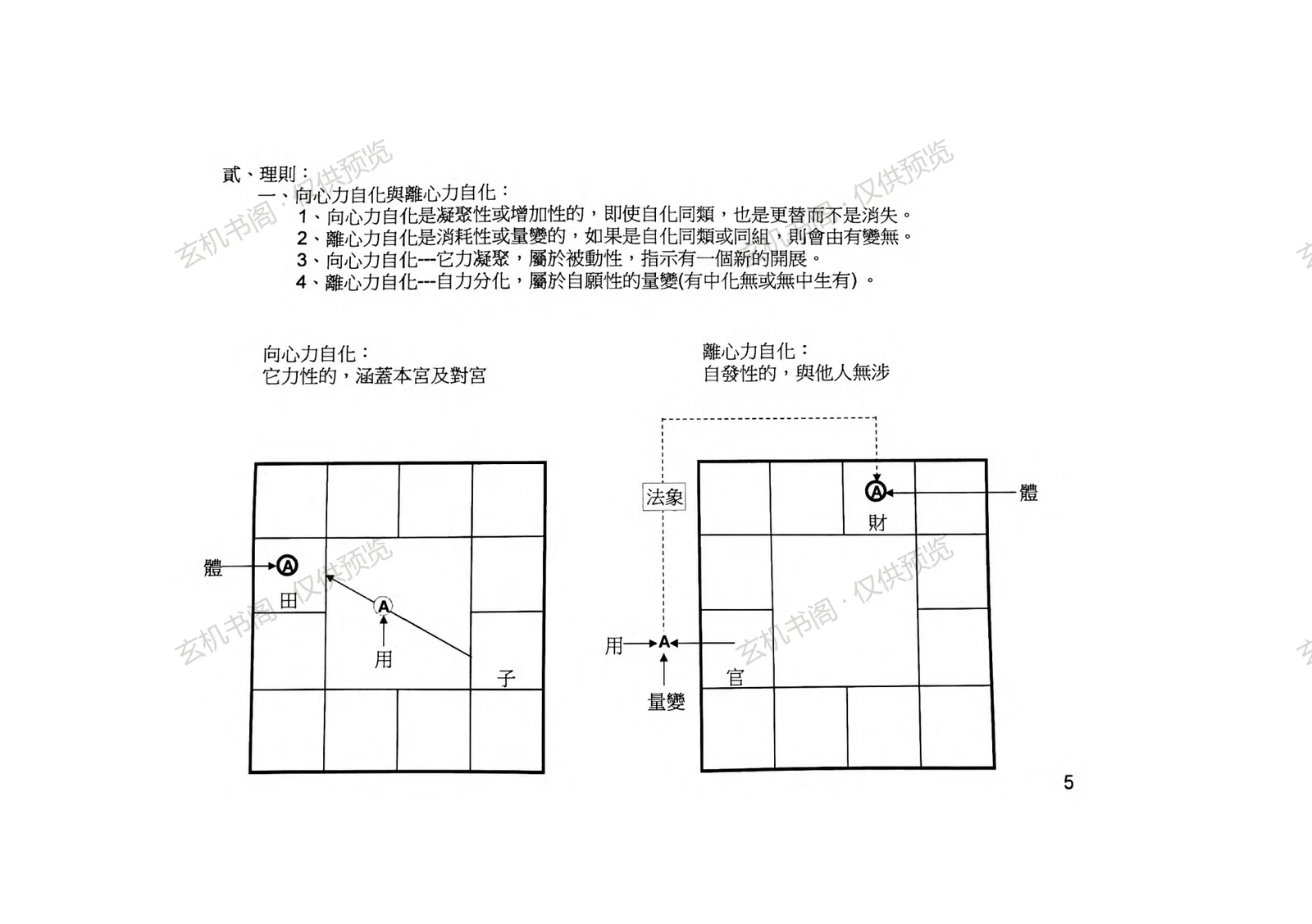
Inward versus outward self-transformation
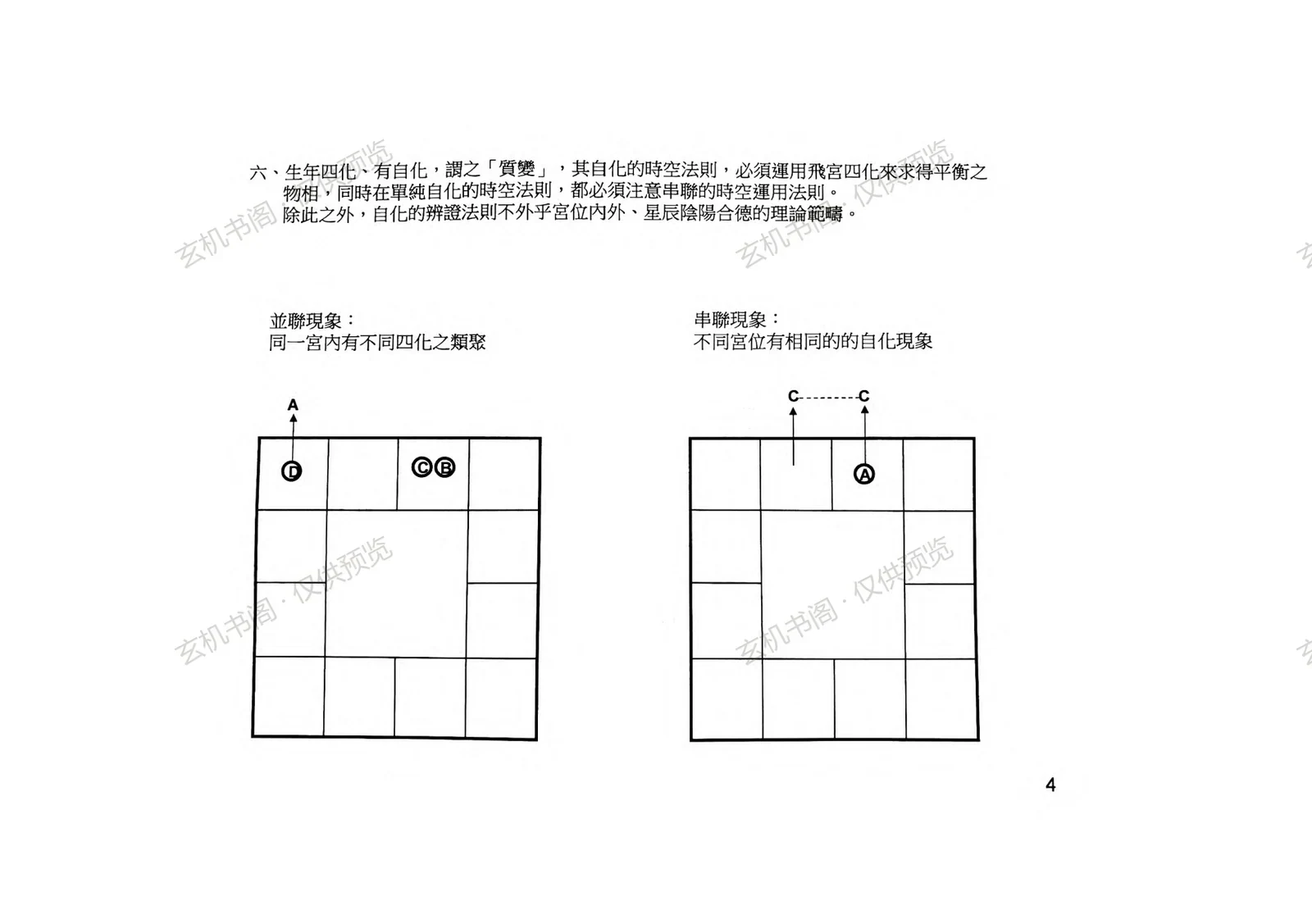
Serial and parallel self-transformation patterns
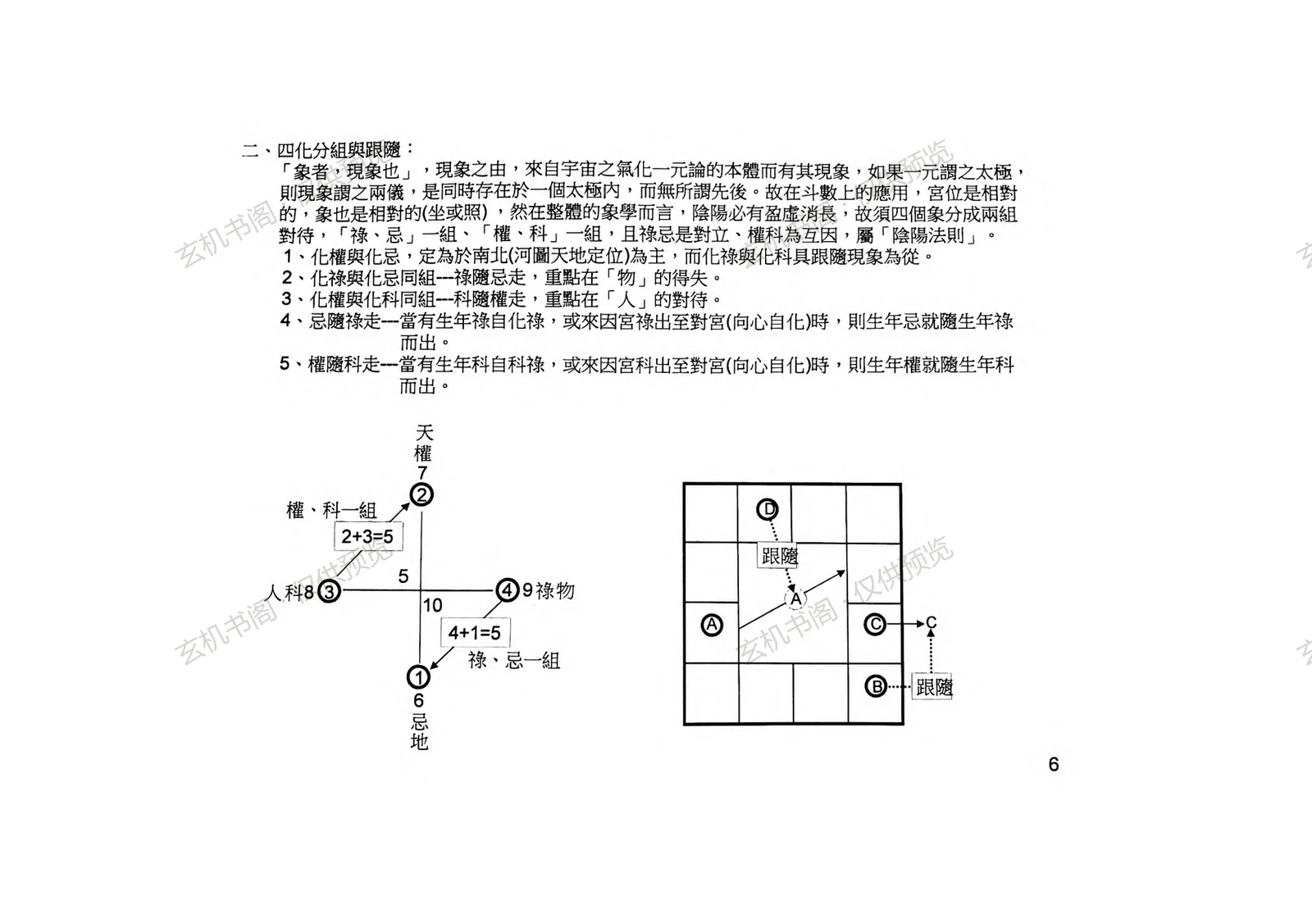
Principles: four-transformation grouping and lu-ji following
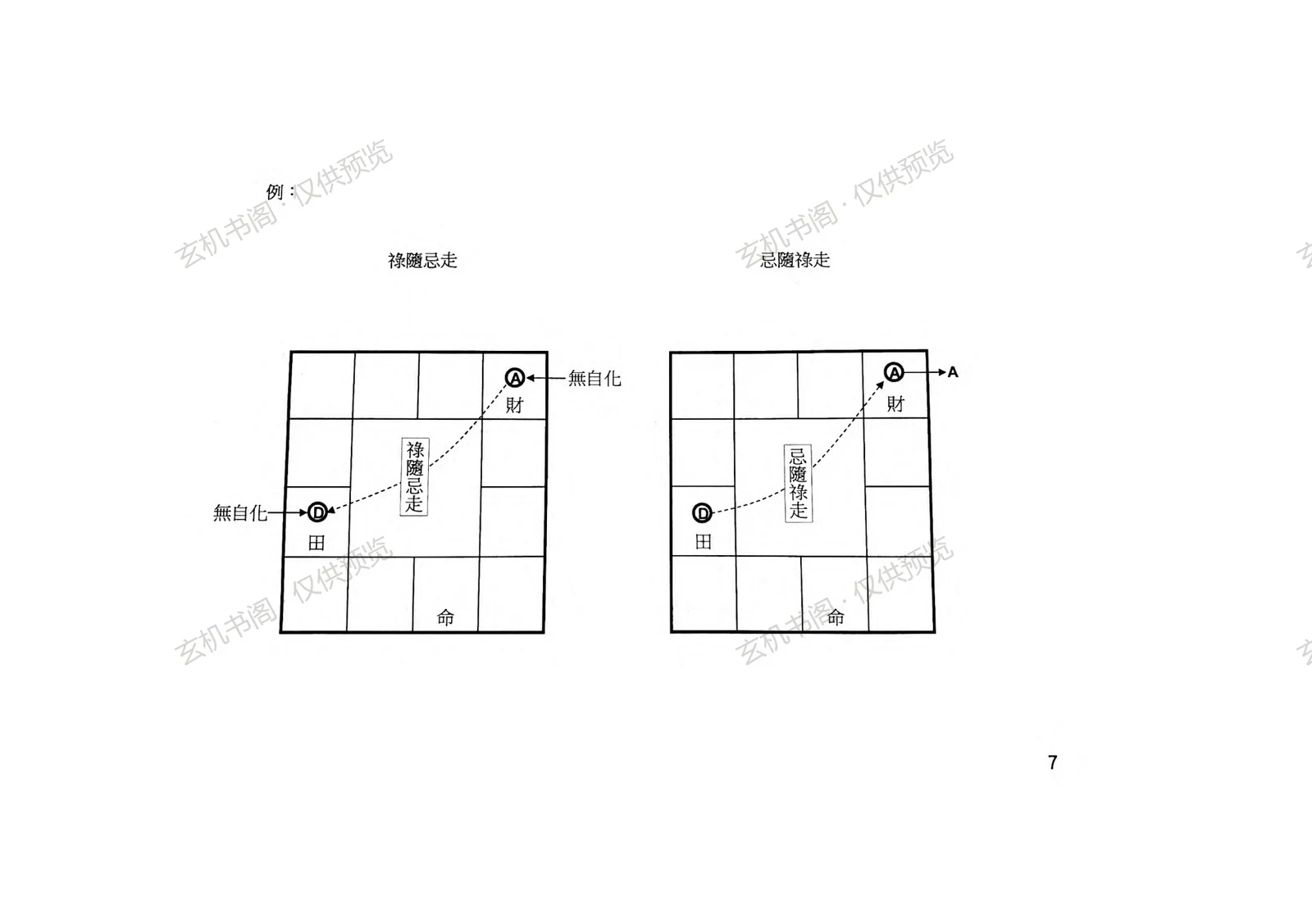
Examples of lu following ji and ji following lu
Key Points
Self-transformation has no substance; it depends on natal four transformations and is function, not body.
Inward self-transformation gathers and is passive; outward self-transformation disperses and is spontaneous.
Natal four transformations with self-transformation mark qualitative change, balanced by flying four transformations.
Self-transformation appears as serial (same palace, different transformations) or parallel (different palaces, same transformation).
Lu and Ji form one group, Quan and Ke another; Lu-Ji concerns things, Quan-Ke concerns people.