Reading guide
Content guideOverview
This is Part Four of the Qintian Four Transformations Zi Wei Dou Shu series, focused entirely on the birth-year four transformations. The contents run through eight chapters: the principles of the four transformations, pairing the four seasons and the Hetu heavenly stems with lu, quan, ke and ji; the basic meaning of the birth-year transformations as an innate 'body' whose quality does not change; interpretations of the transformations falling into each of the twelve palaces; combined forms of paired images; the original meaning and transformation of images; the laiyin palace as the source of transformed qi; discussion of earlier and later heaven charts; and finally 'three images, one thing'. The text uses twelve-palace charts to show how an image in heaven takes form on earth, and uses palace stems to explain the phenomenon and its timing, following the flying-star approach of the Qintian school. It suits readers with some Zi Wei Dou Shu background who want to go deeper into four-transformation imagery and flying-palace methods.
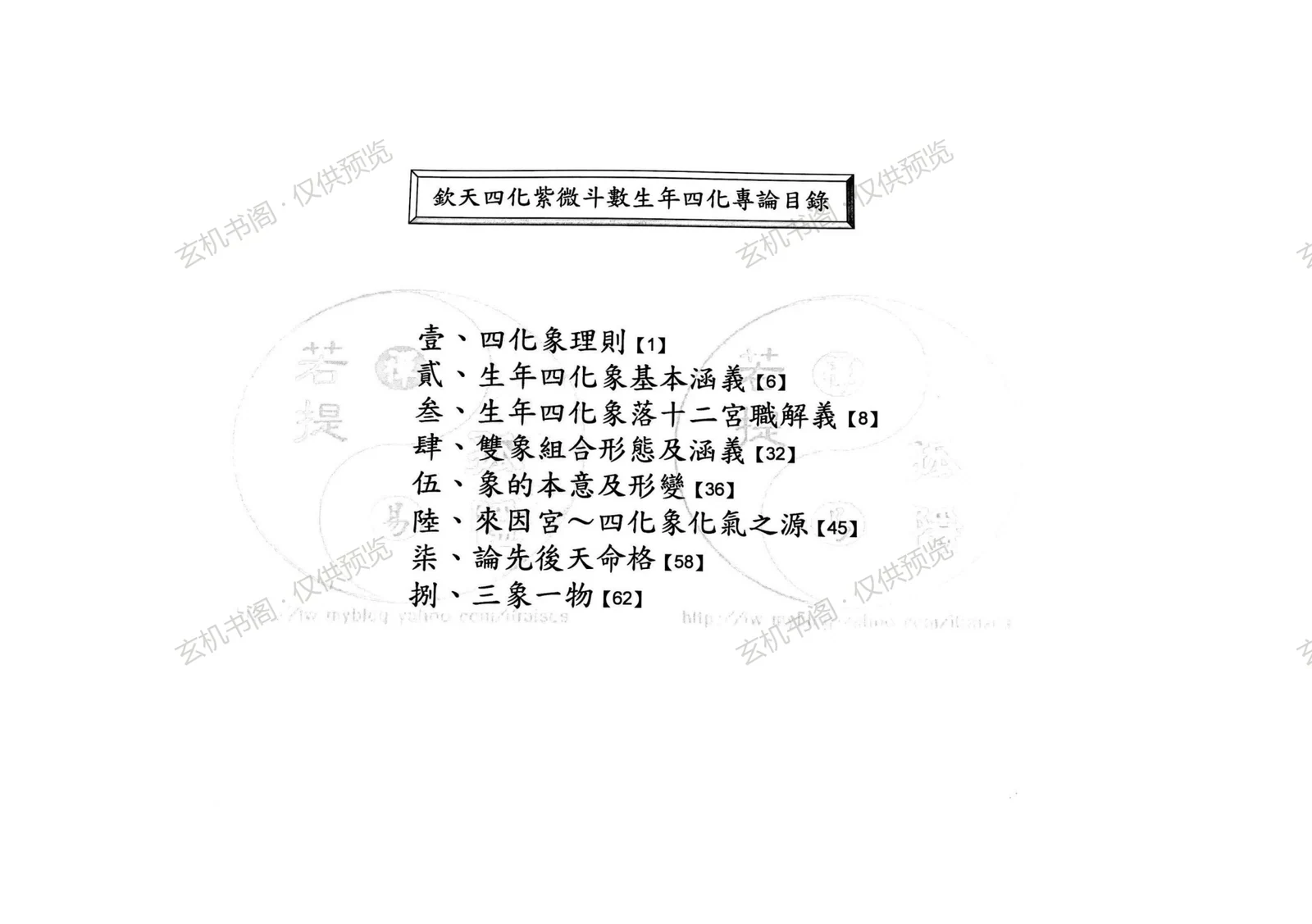
Contents
1. Principles of the four transformations
2. Basic meanings of birth-year transformations
3. Transformations in the twelve palaces
4. Combined forms of paired images
5. Original meaning and change of images
6. Laiyin palace as source of transformed qi
7. Earlier and later heaven charts
8. Three images, one thing
Key Points
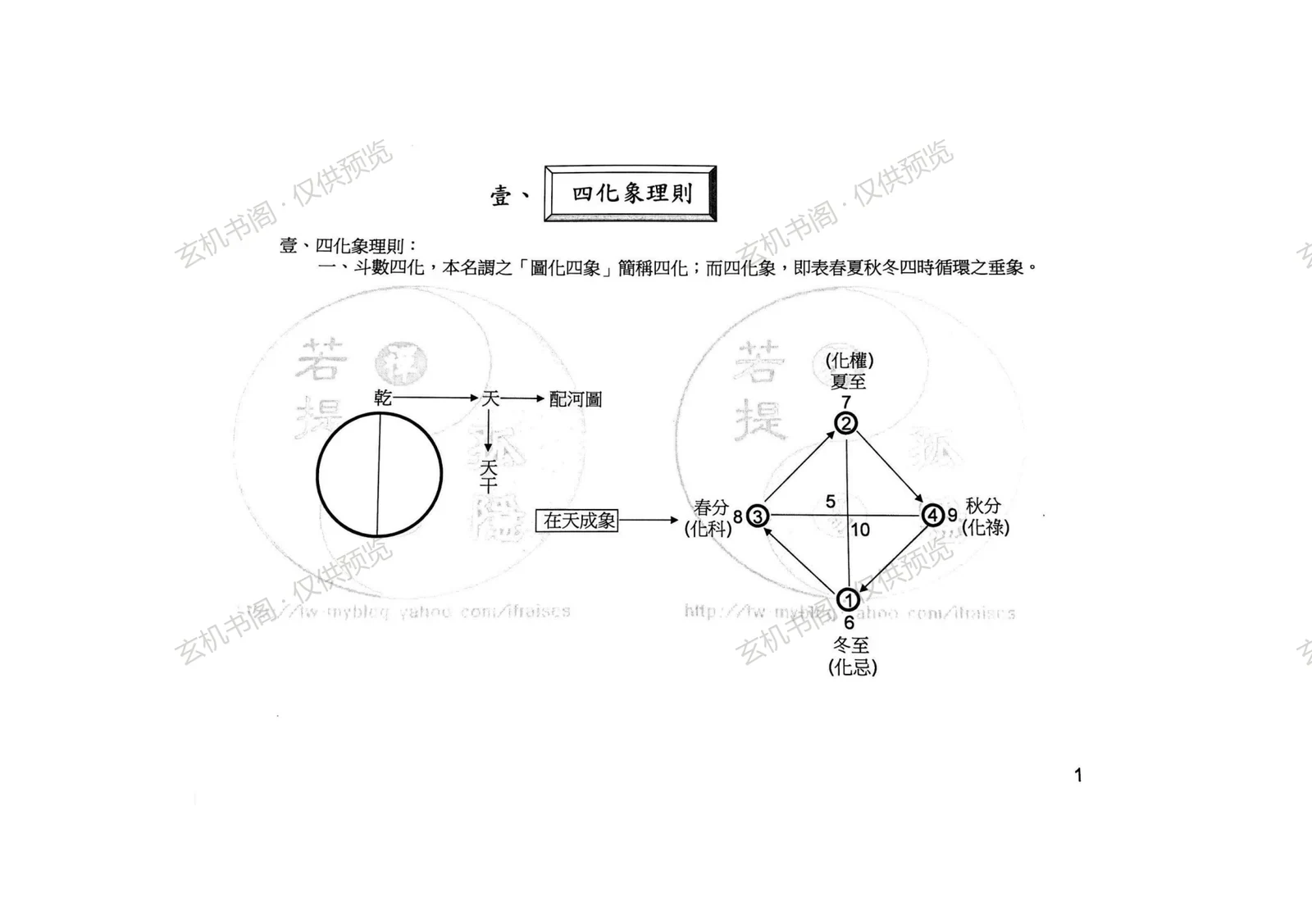
Maps the four seasons and Hetu stems onto lu, quan, ke and ji
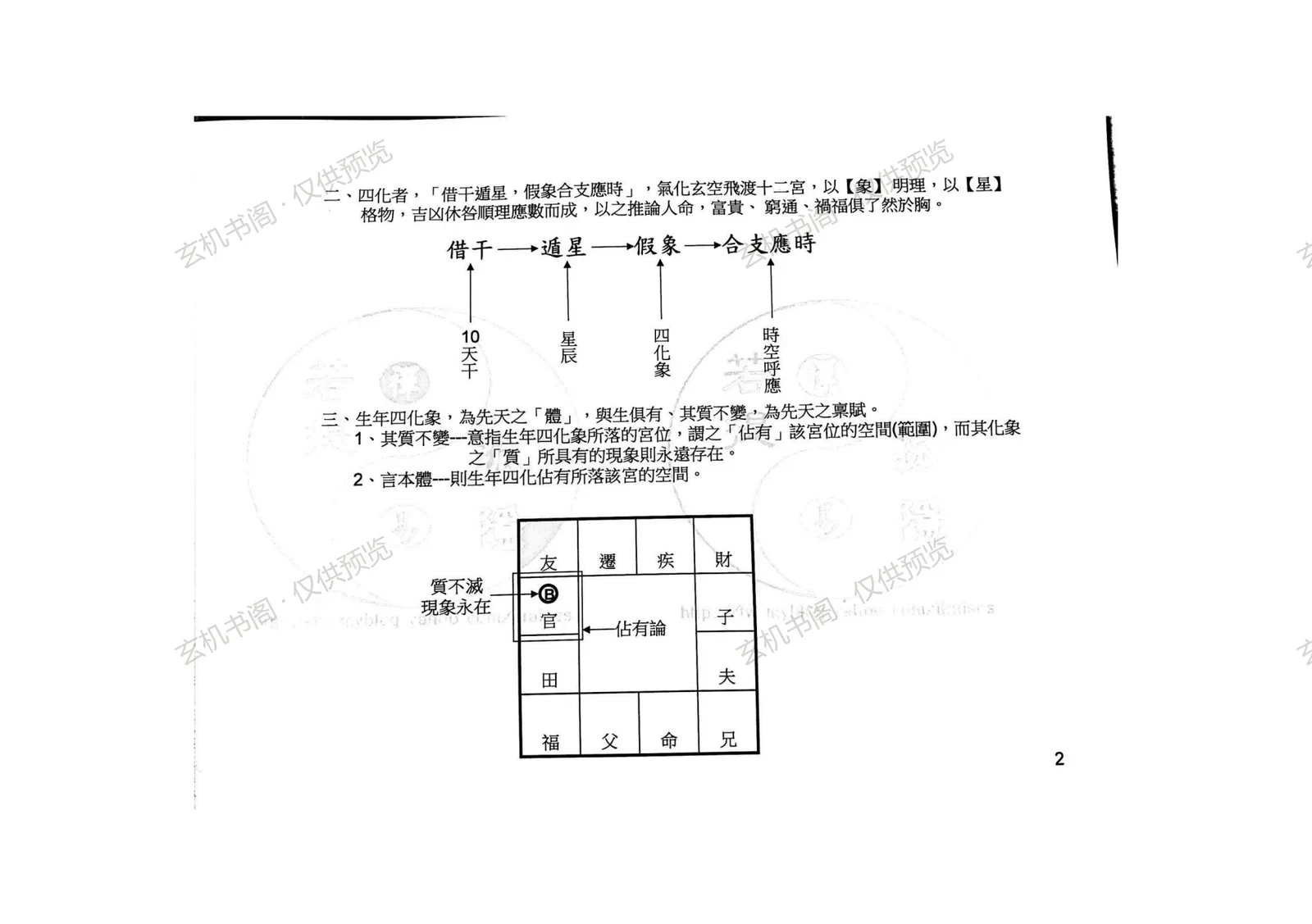
Treats birth-year transformations as an unchanging innate body occupying a palace
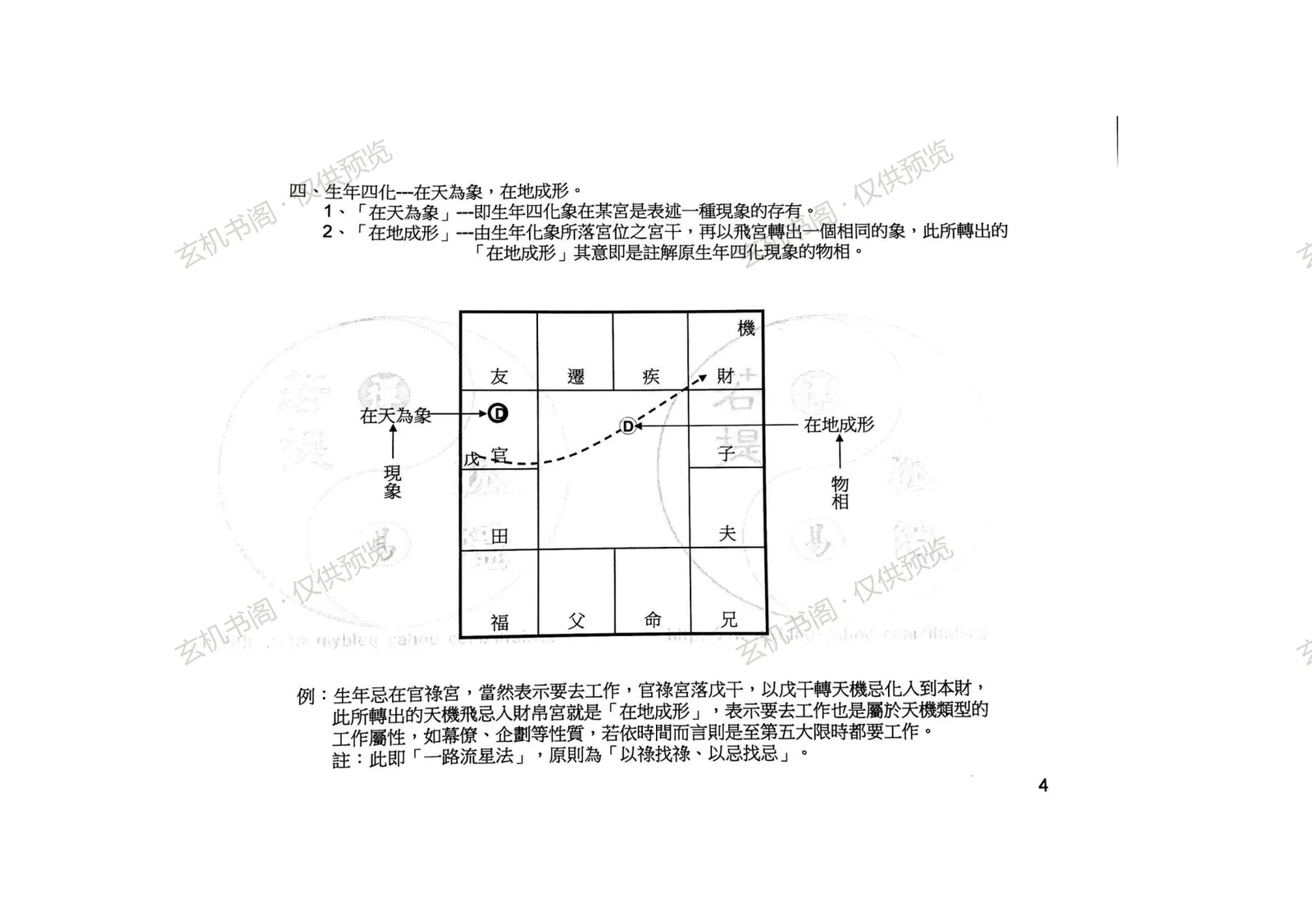
Uses the rule 'image in heaven, form on earth' and palace-stem flying to explain phenomena
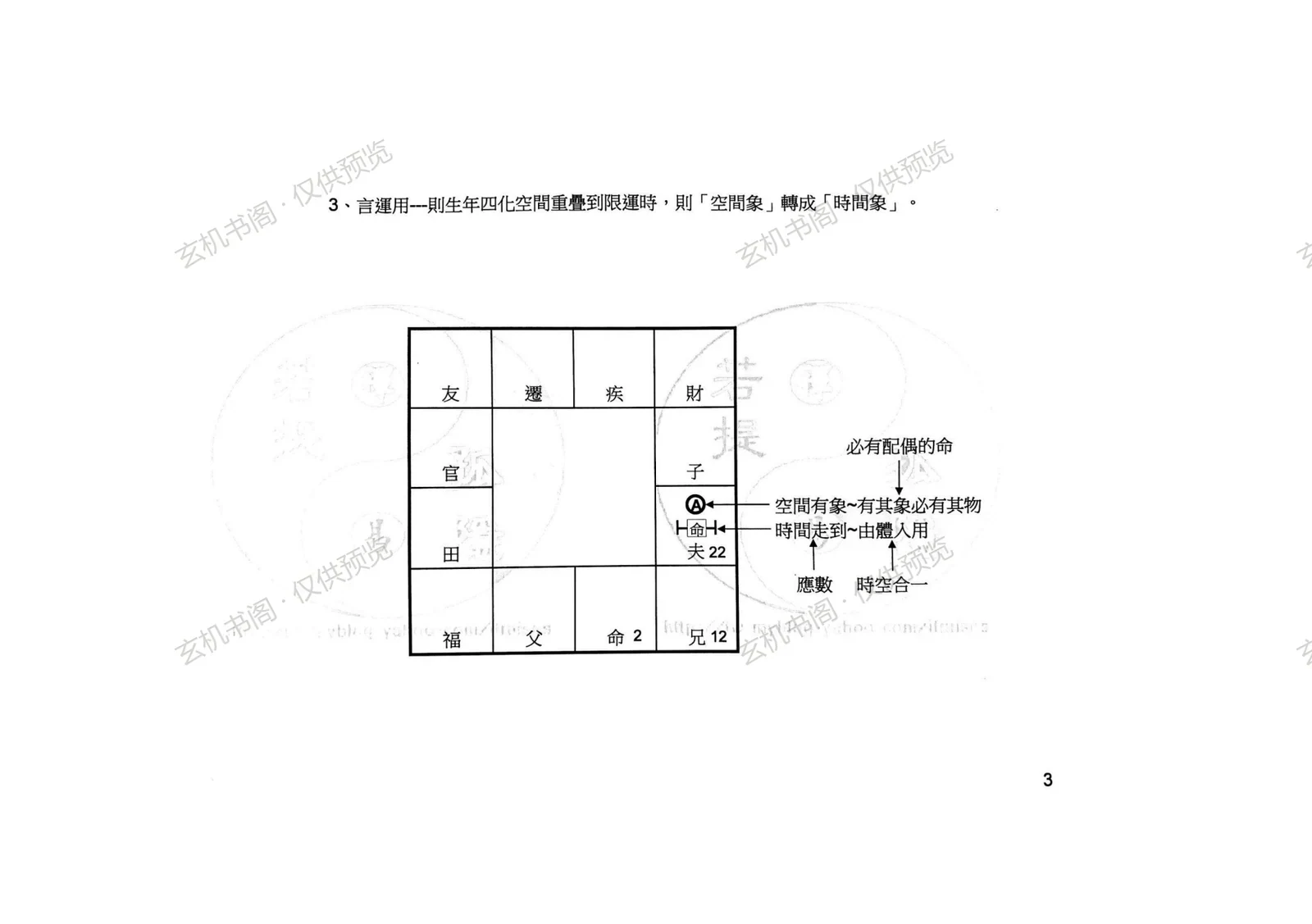
Converts spatial images into temporal images to show when events appear
Identifies the laiyin palace as the source of transformed qi