Reading guide
Content guideOverview
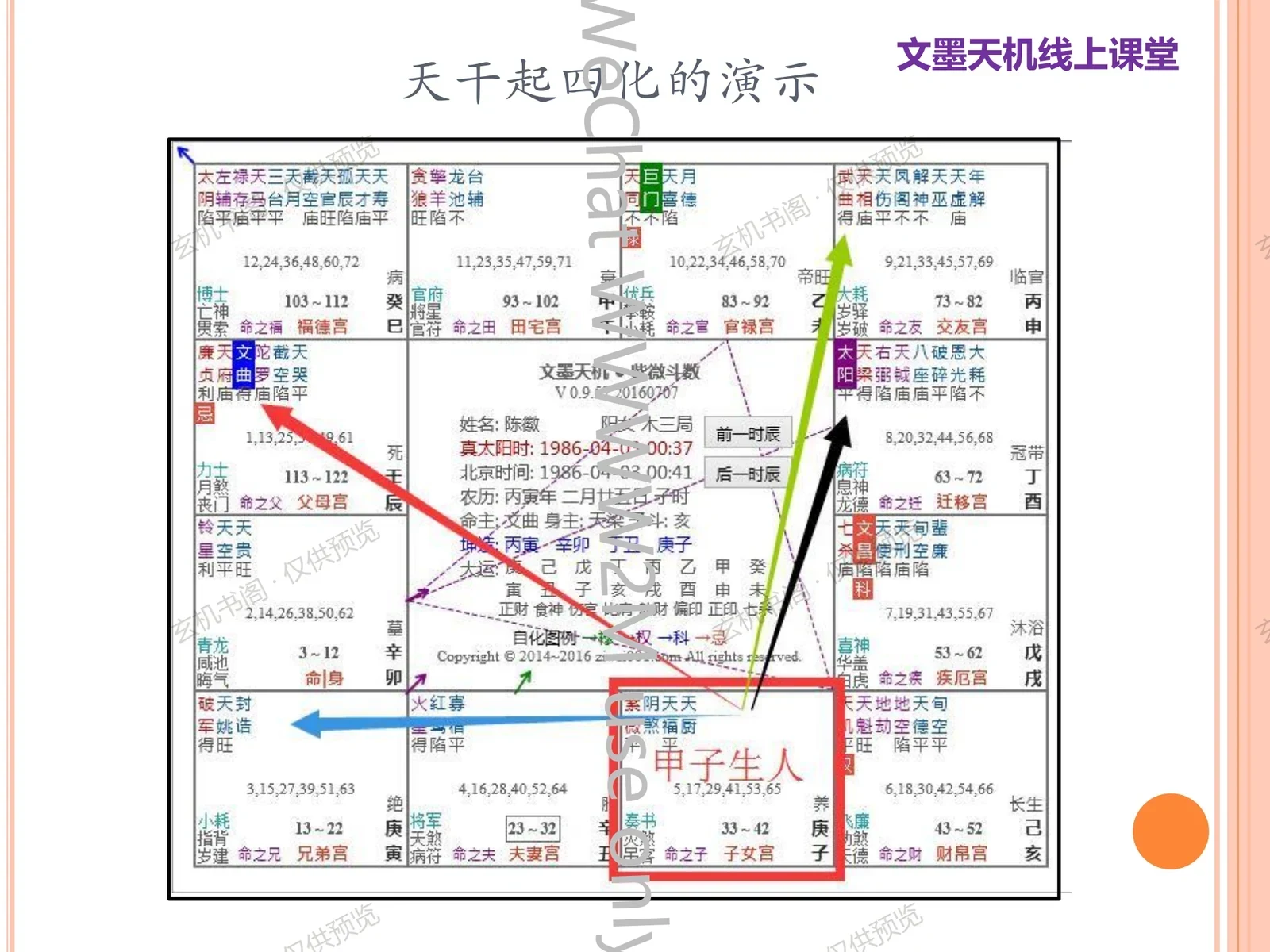
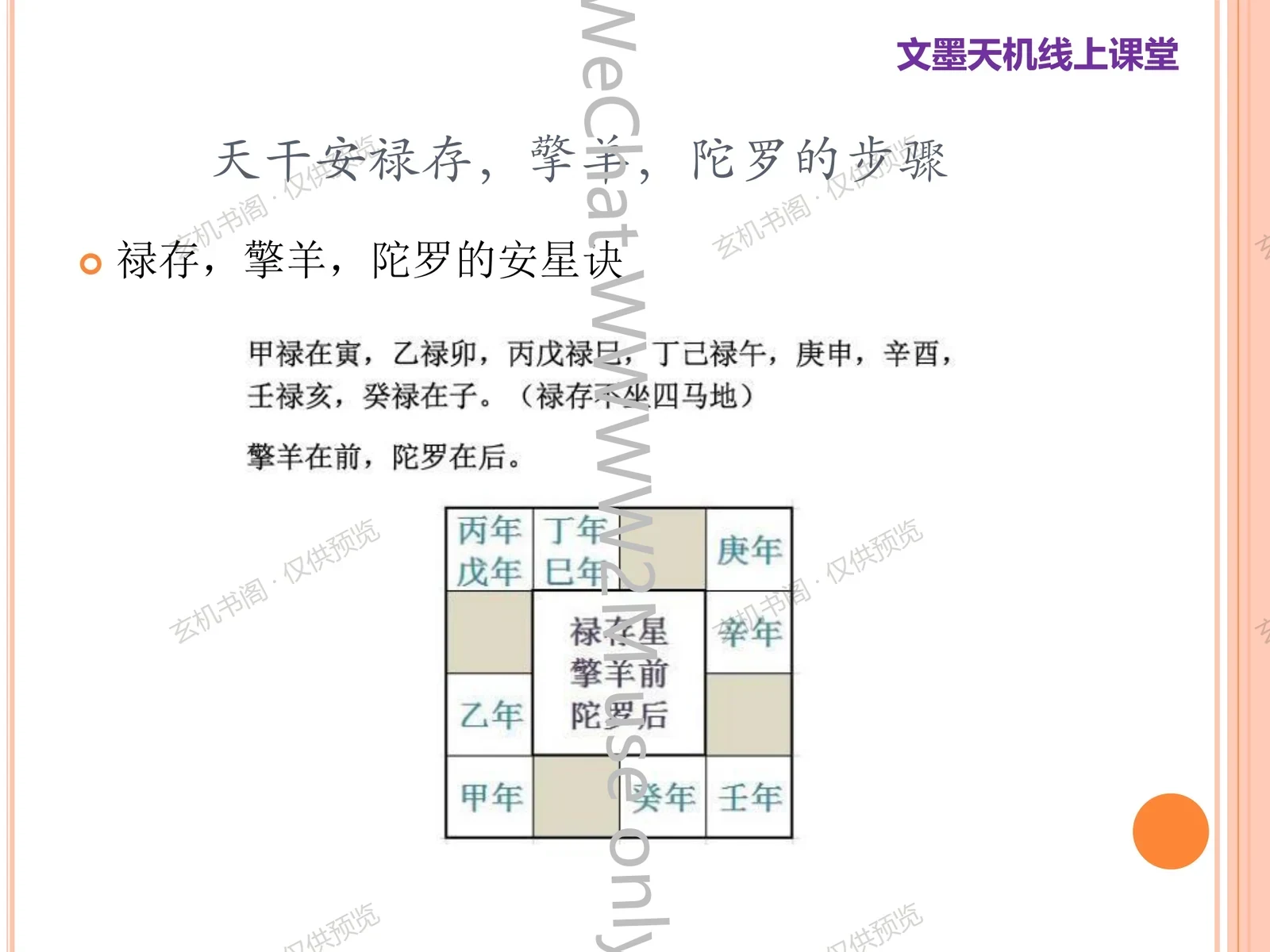
This PPT handout from a Wenmo Tianji online class, lectured by Yiting, covers Part 2 of 'Multi-Angle Interaction and Preferences in Zi Wei Dou Shu.' It begins by noting the high rate of identical charts based solely on birth hour, then introduces the 'Tai Sui hexagram method' attributed to Zi Yun as a way to refine a chart. The handout details the steps of compatibility charting: taking the other person's birth year stem and branch, inserting them into one's own chart, replacing the corresponding palace's stem, and then deriving the Four Transformations and placing Lu Cun, Qing Yang, and Tuo Luo. It further explains how the year stem's Four Transformations (Lu, Quan, Ke, Ji) are interpreted when falling into various palaces, affecting career, relationships, and control. A sample chart labeled 'Person born in Jia Zi year' with transformation arrows is included, along with mnemonic verses and a directional diagram for placing Lu Cun, Qing Yang, and Tuo Luo. The material is a practical guide to compatibility techniques in Zi Wei Dou Shu, suitable for learners with foundational knowledge.
Contents
Function of compatibility charts and the Tai Sui method
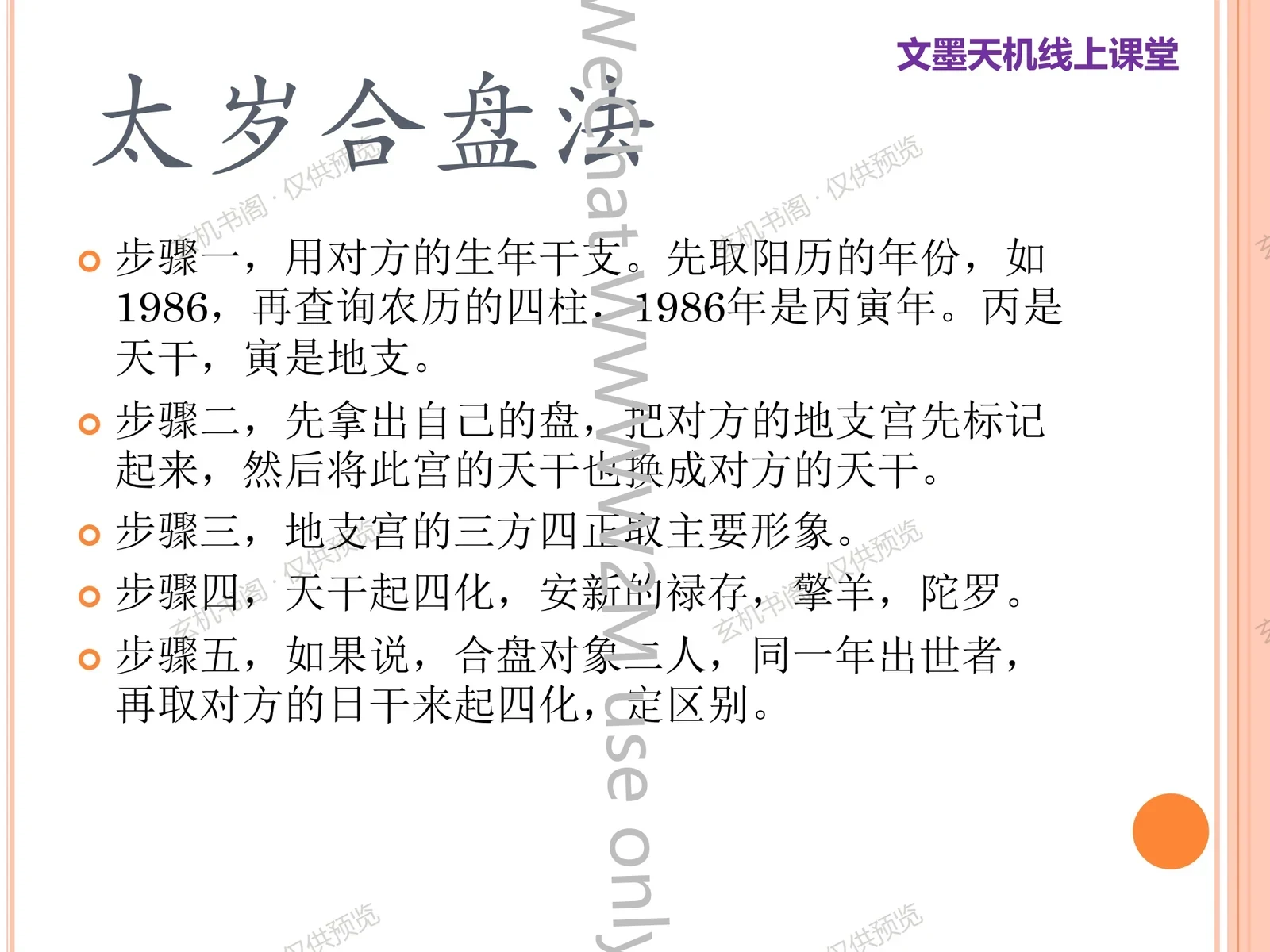
Five steps of the Tai Sui compatibility charting method
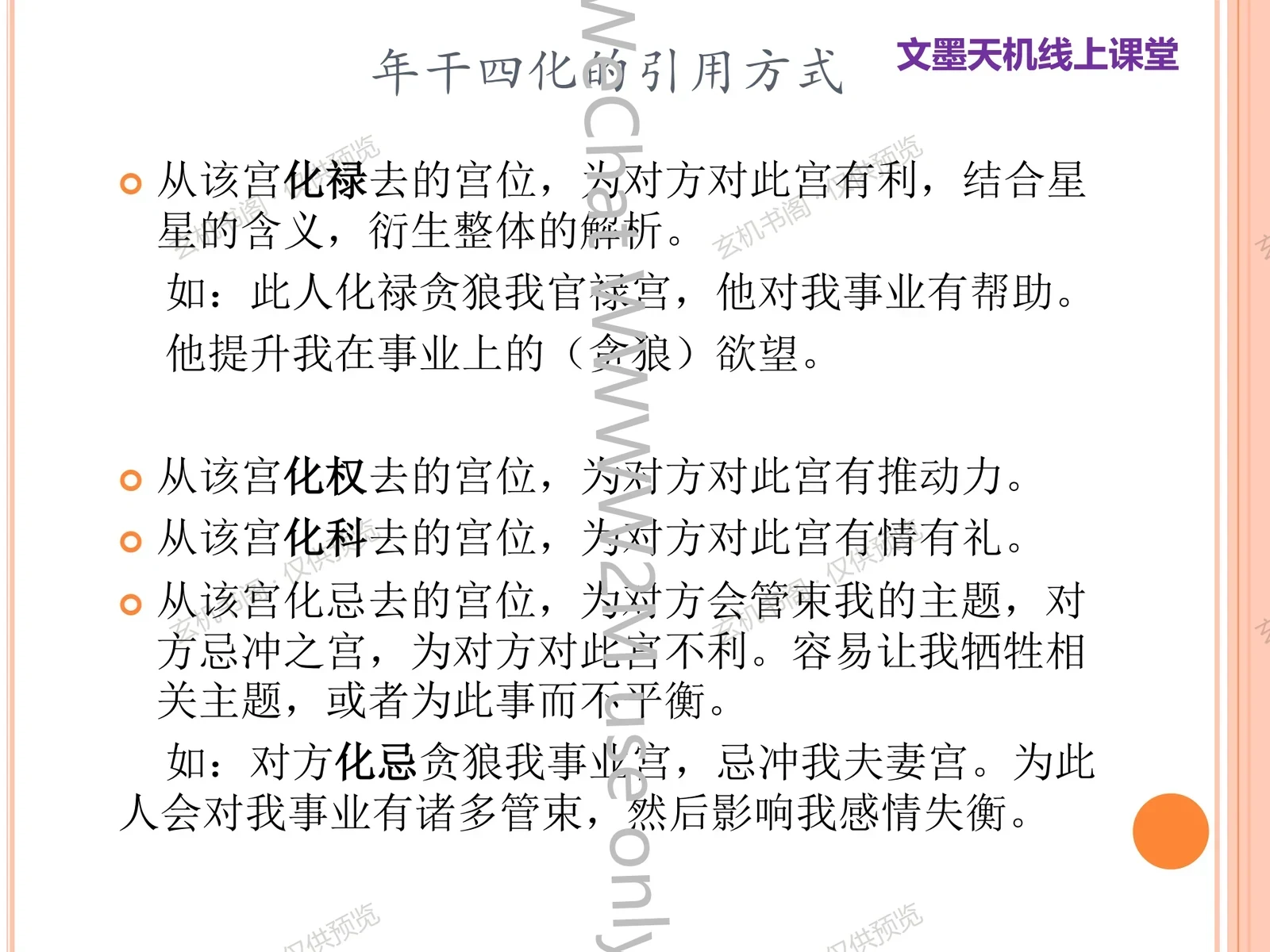
Application of year-stem Four Transformations and palace effects
Steps and mnemonics for placing Lu Cun, Qing Yang, and Tuo Luo
Key Points
The Tai Sui method refines identical charts using parents' or spouse's input
Charting steps: take the other's year stem-branch, insert into the branch palace, and swap the stem
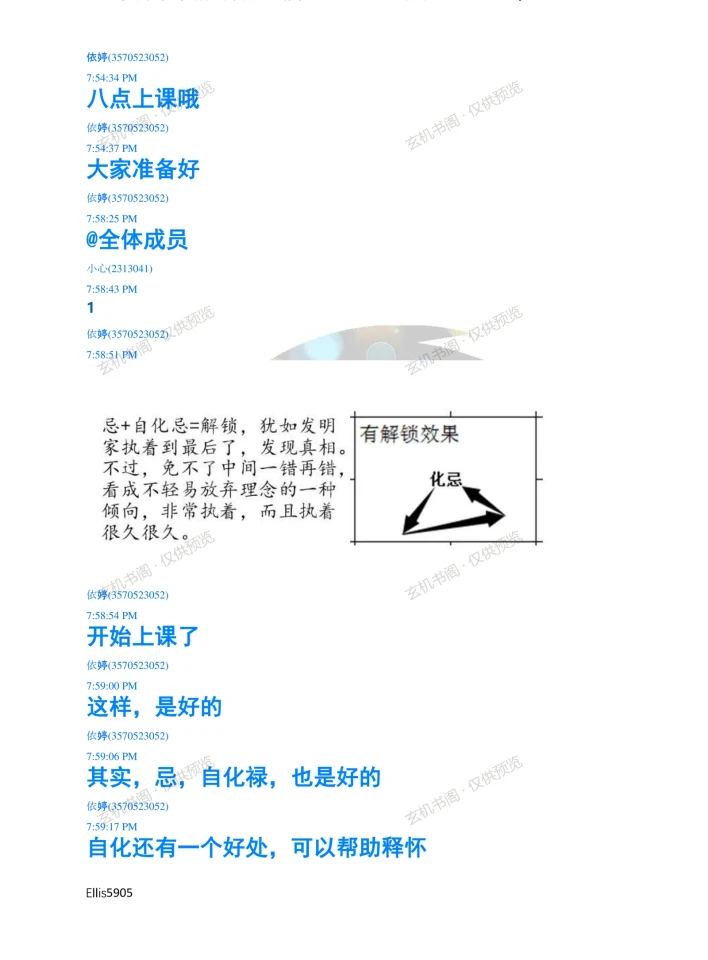
Year-stem Lu, Quan, Ke, and Ji represent support, drive, courtesy, and control respectively
Placement mnemonic: Lu Cun and Qing Yang ahead, Tuo Luo behind