Reading guide
Content guideOverview
This is a transcript of Yi Ting's online Zi Wei Dou Shu class under the Wen Mo Tian Ji studio, recorded on the evening of 13 July 2016. As the second part of The Interaction and Influence of Roles, it moves from the previous lesson's palace positioning and role identification into the advanced topic of chart combination (he pan). The instructor first notes the limits of a single birth-hour chart: many people share the same hour, collision rates are high, and one natal chart cannot specify a partner's surname, height or profession. She therefore introduces Tai Sui entry (tai sui ru gua), inserting the partner's birth year into the chart so that two charts can be read together and their resonance assessed. Examples show that charts from different birth dates may display identical star arrangements, differing only in the day pillar of the Ba Zi. The material suits readers who already know Zi Wei Dou Shu chart construction and palace basics and want to study two-chart synthesis.
Contents
Opening and review of palace positioning
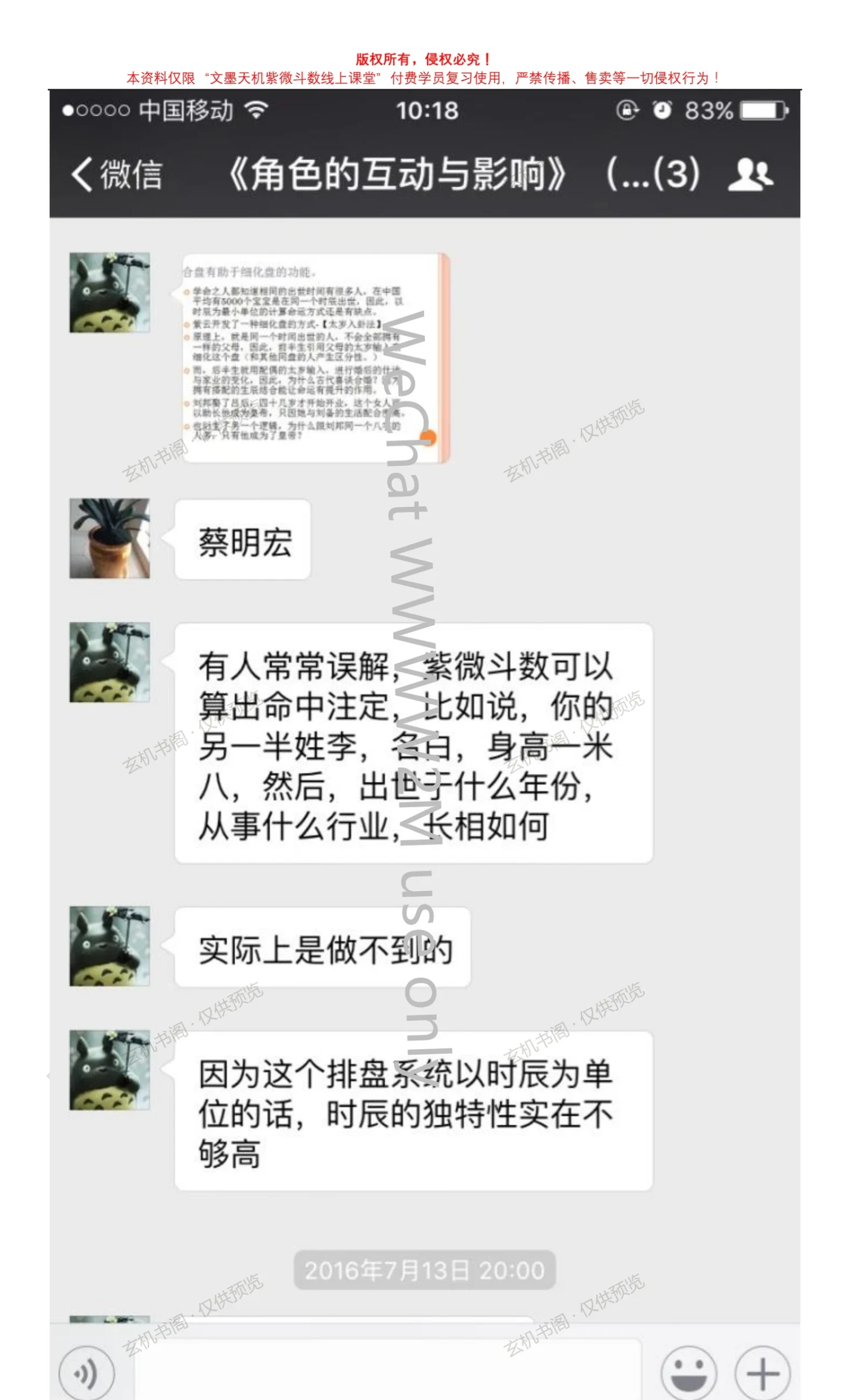
Limits of birth-hour charts and chart collisions
Tai Sui entry: adding the partner's birth year
Reading relationship match and mutual influence
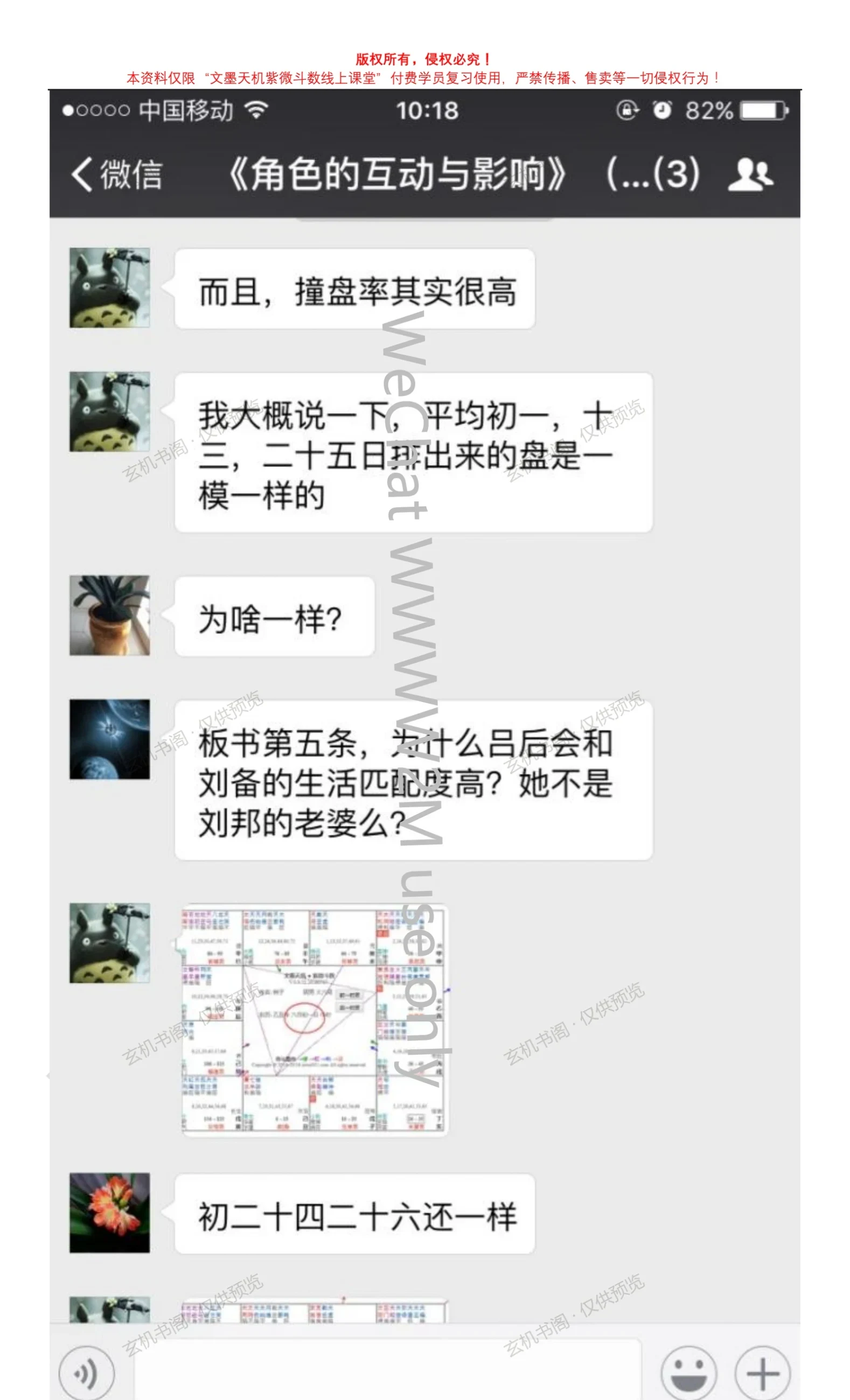
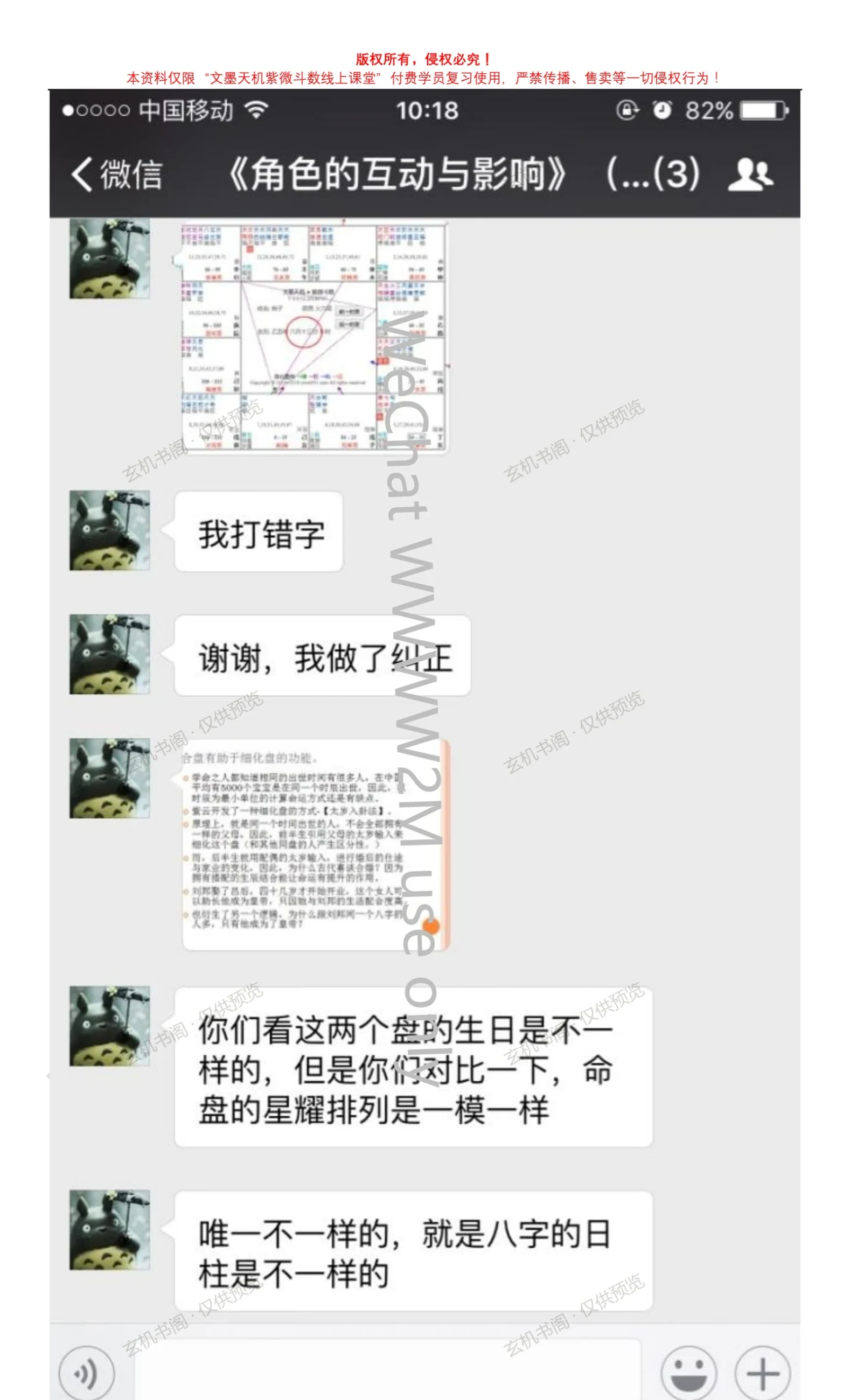
Case comparison of identical star arrangements
Key Points
Continues palace-role work from part one into chart combination
Argues birth-hour charts collide too often to be unique
Uses the partner's birth year as a refinement method
Combined charts reveal relationship match and interaction
Cases show different dates can yield identical star layouts